

Truck Accidents | Serving Florida Families
Truck Accident Fatality Statistics and Your Options
When a large truck crash takes a life, the numbers behind it can feel impossible to face. Here is what the data shows, what families in Florida can do next, and how CHG Personal Injury Lawyers can help you understand your options.
By CHG Lawyers · Published October 13, 2026
Truck Accident Fatality Statistics: What the Data Shows

If you are researching a fatal or catastrophic truck crash and wondering what your family should do next, reach out for a free case evaluation. Talk it through with our team — the first consultation is free, confidential, and carries no obligation.
Large Truck Accident Fatality Statistics: What the Data Shows
In 2024, 5,340 people died in U.S. crashes involving large trucks. That is down slightly from 2023. But it is up substantially over the past decade.
These numbers are more than statistics. Behind each one is a family. There is a loss. And often, one hard question: What happens now?
Understanding fatal truck crashes can help survivors and families know they are not alone. Legal help may be available.
Why Large-Truck Fatality Data Matters
Large trucks make up only a small share of all registered vehicles. Yet they are involved in a disproportionately high share of fatal crashes.
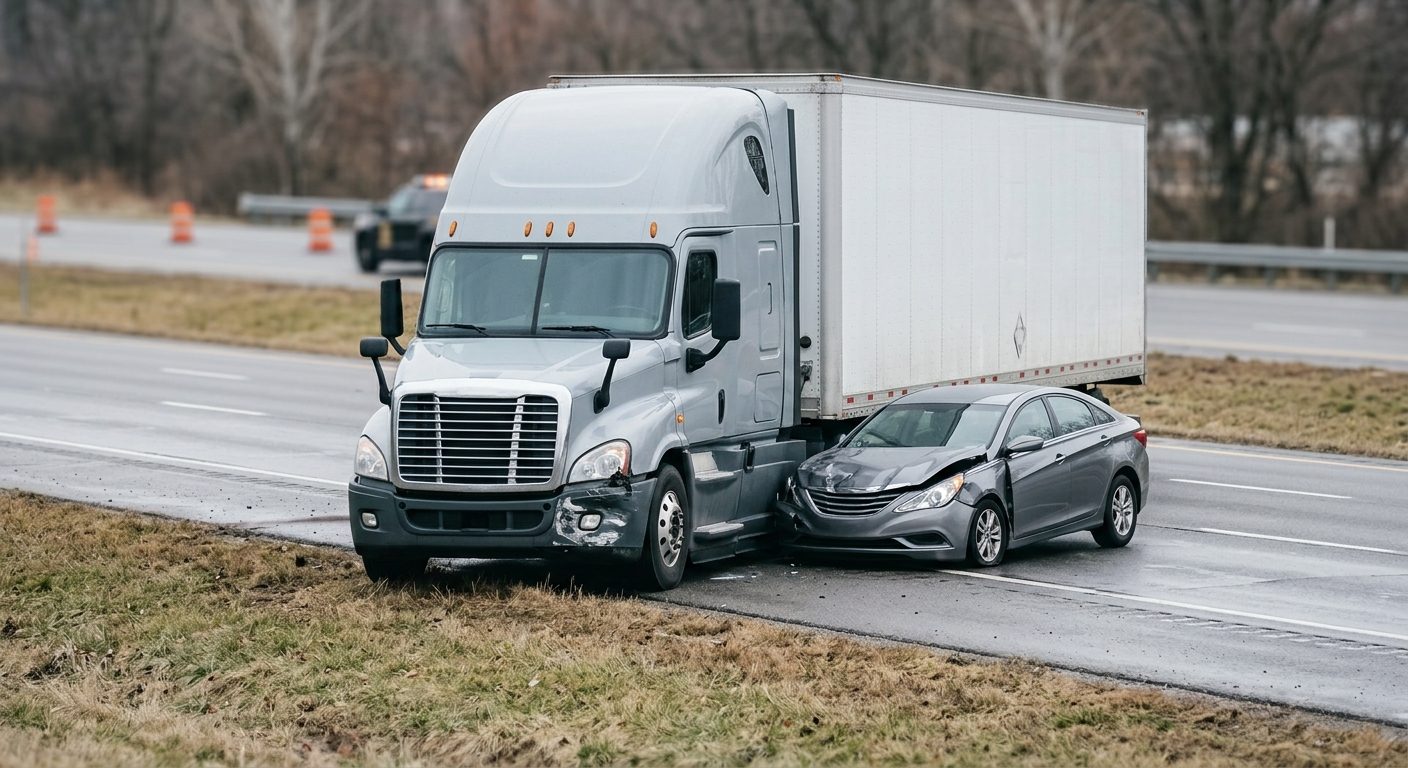
The reason is physics. An 80,000-pound truck that hits a 4,000-pound passenger vehicle creates enormous force. Occupants of the smaller vehicle often cannot survive.
NHTSA’s Fatality Analysis Reporting System (FARS) is the federal database that tracks all fatal motor-vehicle crashes in the U.S. FARS data is sorted by vehicle type, driver factors, weather, and crash cause.
Researchers, safety advocates, and attorneys use this data. They use it to spot patterns. It also helps them understand what causes these tragedies.
Large-truck fatality statistics can help families make informed decisions about legal options. They can also confirm what you may already sense. A catastrophic truck crash is rarely random.
Systemic factors often play a role. These are larger, built-in problems, not just one moment of error. They include driver fatigue, poor maintenance, unsafe loading, or negligence by other drivers. Negligence means carelessness that causes harm.
What Percent of Fatal Accidents Involve Large Trucks?
Large trucks are involved in a larger share of fatal crashes than their numbers on the road would suggest. Yet they make up only a small share of registered vehicles.
In fatal crashes between a large truck and a passenger vehicle, the people in the passenger vehicle are far more likely to die.
The National Safety Council reports that in 2024, large-truck fatal crashes resulted in about 5,340 deaths. Of those deaths:
- Most were occupants of passenger vehicles
- A smaller share were truck occupants
- The rest were pedestrians or cyclists
This pattern shows how vulnerable anyone sharing the road with a large truck can be.
The high fatality rate is consistent from year to year. It is not random. It reflects a built-in safety problem. That problem includes the physics of truck-versus-car collisions. It also includes driver fatigue, mechanical failures, and weak enforcement of safety rules.
Truck Accident Fatality Statistics Over Recent Years
NHTSA FARS data shows that fatal large-truck crashes have stayed high over the past five years. In 2022 and 2023, large trucks were involved in thousands of fatal crashes each year.
These crashes claimed thousands of lives each year.
Trends vary by region, season, and road type. Rural interstate crashes tend to be more severe than urban crashes. The main reasons are higher speeds and longer stopping distances. Weather, time of day, and the presence of pedestrians or cyclists also affect fatality patterns.
The rise over the past decade suggests several possible causes. These include more truck traffic, pressure on drivers to meet tight schedules, and aging vehicle fleets. A fleet is a company’s group of vehicles.
These patterns matter. They help show where responsibility lies. They also help show what systemic failures may have caused your crash.
What Is the Leading Cause of Death for Truck Drivers?
For truck drivers, motor-vehicle crashes are the leading workplace cause of death. Truck drivers face unique dangers. They spend long hours behind the wheel. They share the road with reckless drivers. Large vehicles are also harder to maneuver.
Driver fatigue is a major factor. Some drivers work beyond legal limits to meet delivery deadlines. These are called hours-of-service violations. Hours-of-service rules are federal limits on how long drivers may work and drive.
Violations impair judgment and reaction time. The effect can be as severe as alcohol impairment.
Mechanical failures, poor maintenance, and unsafe loading also play major roles in fatal truck crashes.
In the catastrophic-injury cases we handle, we often find that several factors led to the crash. For example:
- A driver may have worked excessive hours.
- A truck may have had known brake defects that the company failed to repair.
- Another driver may have failed to keep a safe following distance.
Identifying each factor and each responsible party is essential. It is how people are held accountable.
Not sure what your next step is?
Talk it through with our team — the first consultation is free, confidential, and carries no obligation.
What Are the Fatality Statistics for Truck Drivers?
Truck drivers who survive crashes often suffer catastrophic injuries too. Catastrophic means very serious and life-changing. These injuries include spinal cord injuries from rollover crashes. They also include traumatic brain injuries from impact. Some drivers suffer amputations from entrapment or crushing. Entrapment means being trapped inside a vehicle or wreckage.
Many of these injuries cause permanent disability, chronic pain, and lost earning ability.
Families of truck drivers who die may have claims against negligent third parties. Survivors may have them too. These parties may include other drivers, maintenance providers, shippers, carriers, or manufacturers. Carriers are trucking companies.
An investigation into the cause of the crash and the parties responsible is the critical first step.
Common Factors in Fatal Large-Truck Crashes
FARS data and crash investigations consistently point to several contributing factors:
Speed and road conditions. Trucks need longer stopping distances than passenger vehicles. Driving too fast on curves, in rain or snow, or on steep grades makes crashes more severe. It also makes them harder to avoid.
Driver error and fatigue. Hours-of-service violations, not getting enough rest, and distraction contribute heavily to fatal crashes. Distractions include cell phone use, eating, and adjusting controls.
Mechanical failure. Brake defects, tire blowouts, and steering failures appear in FARS data and crash investigations. Federal law directs regulators to judge whether a motor carrier (a trucking company) is fit to operate safely.
Other-driver negligence. Passenger-vehicle drivers often misjudge a truck’s stopping distance. They may merge unsafely or cut off trucks. This forces emergency moves that can cause rollovers or jackknife crashes. A jackknife happens when the trailer swings out sideways.
Inadequate maintenance and inspection. Carriers that fail to maintain vehicles or follow safety rules raise the risk of mechanical failure. They also raise the severity of crashes.
Unsafe loading. Cargo that is not secured properly can shift. Loads that are too heavy also cause problems. Both affect stability, braking, and maneuvering. This is especially dangerous on curves or during emergency stops.
Understanding NHTSA FARS Data
FARS is a census of all fatal motor-vehicle traffic crashes reported to state highway safety offices. A census counts every case, not just a sample.
It is the most complete source of U.S. crash fatality data. It is updated every year. Researchers, safety advocates, and attorneys use FARS data. They use it to find trends, support policy arguments, and build legal cases.
FARS data is public and coded in detail. The codes cover:
- Vehicle type and driver age and gender
- Driver factors such as alcohol, fatigue, and distraction
- Environmental conditions like weather, lighting, and road surface
- Crash details, such as the angle of impact and the number of vehicles involved
This detail makes it possible to study specific crash patterns. It also helps find systemic risks.
FARS has one important limit. It covers only fatal crashes. Non-fatal catastrophic injuries are tracked separately. These include paralysis from spinal cord damage, traumatic brain injury, and amputation.
FARS does not reflect these injuries. So the full toll of truck crashes on health and family finances is far larger than fatality numbers alone suggest.
The Human Impact Behind the Numbers
Each death affects a family. A spouse, children, parents, or siblings are left to grieve and rebuild their lives. Each death also means lost income, lost potential, and a permanent gap in everyday life.
Survivors of fatal crashes often face money problems right away. They may owe medical bills and funeral costs. They may lose income. They may also need long-term care.
A surviving spouse may lose a partner’s income. Children lose a parent. Parents lose an adult child.
Catastrophic injuries that do not cause death can also carry huge lifetime costs.
- Spinal cord injuries may require lifelong care.
- Traumatic brain injuries can affect thinking and independence.
- Amputations may require prosthetics, or artificial limbs, and rehabilitation.
All of these demand steady financial and emotional resources.
Florida law gives families and survivors the right to pursue claims against negligent parties who caused the crash. These claims can help cover medical costs and lost income. They can also cover pain and suffering.
In wrongful-death cases, families may seek compensation for the loss of companionship and support. A wrongful-death claim is brought by the family after a loved one dies because of someone else’s wrongdoing.
These rights are time-limited. That is why the investigation should start quickly, while evidence is still fresh.
Your Next Step After a Fatal or Catastrophic Truck Crash
If you or a loved one was killed or catastrophically injured in a large-truck crash, the cause matters. So do the responsible parties. They matter for your family’s financial recovery. They also matter for accountability.
Finding out who is liable, meaning legally responsible, often takes a full investigation. It may include:
- Driver records and maintenance logs
- Electronic data from the truck’s onboard computer
- Witness statements
- Analysis by outside professionals at the crash scene
Key questions include:
- Was the driver tired or breaking hours-of-service rules?
- Did the truck have known mechanical defects?
- Was the cargo loaded improperly?
- Did another driver’s negligence contribute to the crash?
Florida sets time limits for filing many personal-injury and wrongful-death cases. It is the legal deadline to file a lawsuit. The limits are set out in Fla. Stat. § 95.11.
Time is limited. Talking with an attorney early is critical. An attorney who handles truck-accident cases can help.
An attorney who handles truck-crash cases can help you understand the data. They can help identify liable parties. They can also help pursue the compensation your family deserves.
If you are researching a fatal or catastrophic truck crash and wondering what your family should do next, reach out for a free case evaluation. We are here to listen and help you understand your options.
Have questions about what happened?
Ask our team directly. The first conversation is free, confidential, and there is no obligation to continue.
FAQ
What is NHTSA FARS?
FARS (Fatality Analysis Reporting System) is the federal database kept by the National Highway Traffic Safety Administration. It tracks all fatal motor-vehicle crashes reported to state highway safety offices. This makes it the most complete source of U.S. crash fatality data.
How many people die in large-truck crashes each year?
In 2024, 5,340 people died in large-truck crashes in the United States, according to the National Safety Council. That is down 2.5% from 2023. It is up 30% over the past 10 years.
Who is most likely to die in a large-truck crash?
In crashes between a large truck and a passenger vehicle, the people in the passenger vehicle are far more likely to die than the truck driver. This is because of the large difference in weight and momentum, meaning the force of motion.
What is the statute of limitations for a wrongful-death claim after a truck crash in Florida?
Florida law requires many kinds of legal actions to be commenced within set time periods (Fla. Stat. § 95.11). It is the legal deadline to file a lawsuit. Talking with an attorney early is critical.
What factors commonly contribute to fatal truck crashes?
Common factors include driver fatigue and hours-of-service violations. Speeding, mechanical failures like brake defects and tire blowouts, and poor vehicle maintenance also contribute. So do unsafe loading and negligence by other drivers.
Why Families Turn to CHG Personal Injury Lawyers
Florida-Based Firm
CHG Personal Injury Lawyers is based in Florida and represents people and families across the state after serious and fatal crashes.
Licensed Attorneys
Our attorneys are licensed to practice law and admitted to The Florida Bar.
Focus on Catastrophic Cases
Our practice focuses on catastrophic injuries and wrongful death, including truck accident cases, where the stakes for a family are highest.
No Fees Unless There Is a Recovery
CHG charges no attorney's fees and no case costs unless there is a recovery.
A Helpful Step While Details Are Fresh
If you can, write down what you remember about the crash, keep the crash report number, and save photos, medical records, bills, and any letters from insurance companies. These records help show what happened and how it affected your family. Keep them together in one place.
What Families Can Do Next
Gather the Facts
Collect the crash report, witness names, and any photos or video. Accurate records make it easier to understand how the crash happened.
Protect Your Family's Records
Keep medical records, bills, pay stubs, and receipts for funeral and household costs. These documents help show the full impact of the loss.
Be Careful With Insurance Calls
Insurance adjusters may contact you soon after a crash. You can speak with an attorney before giving a recorded statement or agreeing to anything.
Talk With a Florida Attorney
A free, confidential case evaluation gives you a chance to ask questions, learn how Florida law may apply, and decide what comes next at your own pace.
Talk With a Florida Truck Accident Attorney Today
Related practice areas
- Long-Term Costs of a Catastrophic Truck Injury: Lifetime Care
- Why Truck Crashes Cause Such Devastating Injuries
- Truck Driver Fatigue and Hours-of-Service Violations: How They Cause Deadly Crashes
- Trucking Company Liability Beyond Driver
- Statute of Limitations for Truck Accident and Wrongful Death Claims in Florida
- Spinal Cord Injuries: A Guide for Victims and Families Facing Paralysis