

Amputation Injuries | Serving Florida
Losing a Limb Changes Everything. You Do Not Have to Face the Path Ahead Alone.
Clear answers for injured people and families across Florida, from the first days after an accident to the decisions that follow.
Why Families Contact CHG Personal Injury Lawyers
Florida
Based in Florida, serving clients throughout the state
Licensed
Attorneys admitted to The Florida Bar
Free
Confidential first consultation, with no obligation to continue
By CHG Lawyers · Published November 18, 2026
Amputation Injuries: A Plain-Language Guide for Florida Families
Did you or someone you love lose a limb in an accident? Did someone else’s carelessness cause it? Did a property owner fail to keep people safe? If so, you may be able to recover money for the harm done. Amputation is one of the most serious injuries a person can suffer. It changes daily life. The loss is permanent.
This guide answers the questions families ask first. What are these injuries? How does healing work? What do prosthetics involve? How do the bills add up? What legal options might Florida law allow?
It is written for injured people and their families, not for lawyers.
This is educational information. It is not medical or legal advice about your own situation. Follow your doctors’ care.
Not sure what your next step is?
Talk it through with our team — the first consultation is free, confidential, and carries no obligation.
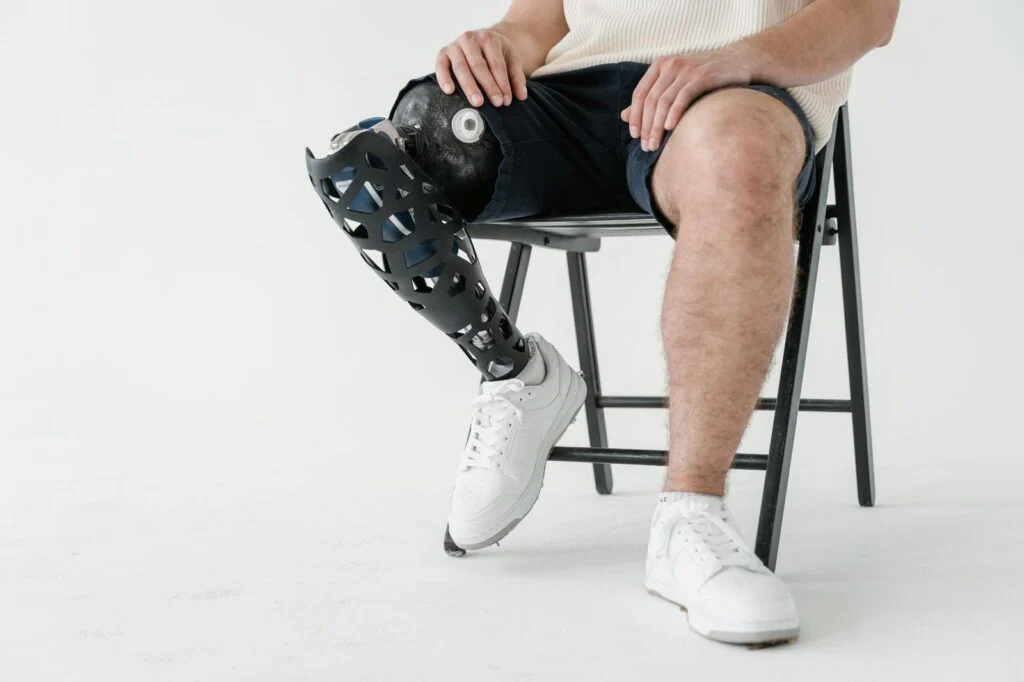
What an Amputation Injury Is
An amputation is the loss of all or part of a limb or body part. This can be an arm, leg, hand, foot, finger, or toe. Sometimes the limb is torn away at the scene of an accident. Other times, surgeons must remove it to save a life or stop a spreading infection.
The Cleveland Clinic describes amputation as surgery to remove all or part of a body extremity. When a limb is lost in an accident rather than in surgery, MedlinePlus calls it a traumatic amputation.
- In a complete amputation, the part is fully cut off.
- In a partial amputation, some soft tissue still connects it.
These injuries do not heal and go away. They permanently change how you move, work, and live. That is why they are treated as catastrophic injuries. Their physical, emotional, and financial effects can last for decades.
Traumatic and Surgical Amputations
Amputation injuries fall into two broad groups.
- Traumatic amputations happen at the scene of an accident.
- Surgical amputations are performed by doctors when a limb cannot be saved.
Doctors also describe limb loss by level.
- Upper-limb loss includes fingers, a hand, or loss below the elbow (transradial), above the elbow (transhumeral), or at the shoulder.
- Lower-limb loss includes toes, a foot, or loss below the knee (transtibial), above the knee (transfemoral), or at the hip.
The level matters. A higher amputation usually means:
- Longer rehabilitation
- A more complex prosthetic
- More energy needed to walk
- Higher lifetime costs
A partial amputation may keep more function than a complete one. These medical details also shape the value of a claim. They define the care you will need for years to come.
How Amputation Injuries Happen
Most catastrophic amputations come from high-force trauma, unsafe conditions, or severe illness. Our lawyers have seen these causes come up again and again.
Car and motorcycle crashes. A motorcycle rider has little protection between the road and a limb. In a car crash, a door frame, dashboard, or crumpled body panel can trap or crush an arm or leg. Sometimes the damage is beyond what surgeons can save.
Truck accidents. A loaded commercial truck is far heavier than a passenger car. When that weight hits a smaller vehicle, it can crush the passenger space and trap a limb. Learn more on our page about amputation injuries from truck accidents.
Construction sites. Heavy machinery, saws, cranes, and falling materials can crush or cut off a limb. The NHS lists serious trauma to a limb, such as a crush or blast injury, among the reasons amputation becomes necessary. Infection and poor blood flow are also on that list.
ATV, jet ski, and boating accidents. Rollovers, propeller strikes, and collisions at speed can cause severe limb trauma. These cases often raise questions. Who controlled the equipment? Was it maintained and operated safely?
Electrocution. Contact with live electrical current can cause deep tissue damage. Sometimes that damage leaves a limb impossible to save.
Violent attacks on unsafe property. Imagine you were shot, stabbed, or beaten at an apartment complex, a parking garage, a hotel, a gas station, or a store. Your limb was so badly injured that doctors had to amputate.
Did the property owner fail to provide reasonable security? Examples include working locks and gates, good lighting, security cameras, or guards. If so, you may have a claim against that owner. Lawyers call this negligent security. Read more on our page about amputation injuries and negligent security.
Severe burns and infection. Deep, full-thickness burns can destroy tissue so badly that a limb cannot survive. Untreated complications can also force amputation.
Medical Treatment, Recovery, and Prosthetics
Care usually starts with emergency treatment to stop bleeding and save life. Next come surgery, healing, and long-term rehabilitation. This is a general overview, not medical advice.
For a traumatic amputation, MedlinePlus explains that first aid focuses on two things. Stop the bleeding. Keep the person calm.
If possible, the severed part is saved in case doctors can attempt reattachment. Keep it clean, wrapped, and cool. Do not place it directly on ice.
In the hospital, surgeons clean the wound. They cut away damaged tissue, a step called debridement. They then shape the remaining limb, called the residual limb or “stump.” They work to prevent infection.
Reattachment is sometimes possible, but not always. Even when it succeeds, a reattached limb may not regain full function.
Recovery takes months and often years. Physical and occupational therapy rebuild strength. They also teach new ways to handle daily tasks. A typical care team can include surgeons, rehabilitation doctors, therapists, prosthetists, and mental-health professionals.
Prosthetics play a central role for many people with limb loss. A prosthetic must be fitted, aligned, and refitted as the residual limb changes shape. Devices wear out. They need repair or replacement. Children who lose a limb need new prosthetics again and again as they grow.
Phantom Limb Pain and the Emotional Toll
Limb loss affects the whole person. It reaches into the mind, relationships, and sense of identity.
Many amputees have phantom limb pain. This is pain or sensation that seems to come from the missing limb. MedlinePlus describes it as real and common after amputation. It can also be hard to treat.
The emotional toll is just as real. Grief, depression, anxiety, and post-traumatic stress are common after sudden limb loss. Families feel it too.
- A spouse may become a full-time caregiver.
- Children watch a parent struggle.
- Tasks like driving, dressing, or going back to work become daily challenges.
This lasting harm is at the heart of both recovery and any legal claim.
Not sure what your next step is?
Talk it through with our team — the first consultation is free, confidential, and carries no obligation.
The Money Questions Families Ask
The first hospital bill is only the beginning. Most families ask the same questions about money. The answers depend on the facts of each case. No amount can be promised here.
Medical bills. Florida law sets the rules for proving medical costs. Under Fla. Stat. § 768.0427, evidence of medical expenses that have already been satisfied is limited to the amount actually paid. This applies no matter where the payment came from.
Some providers treat patients under a letter of protection. The statute defines this as an arrangement in which a provider treats a patient in exchange for a promise of payment from any judgment or settlement. The statute requires that a copy of such a letter be disclosed in the claim.
Prosthetics and future care. Under Fla. Stat. § 768.81(1)(b), “economic damages” include past and future lost income reduced to present value, medical and funeral expenses, and other economic losses caused by the injury. It also includes future lost income, reduced to present value. See Fla. Stat. § 768.81. Prosthetics wear out, and children outgrow devices. That is why future costs are usually built with medical projections and life-care planning, not guesses.
Lost income. Many amputees cannot return to the same work. This lowers current wages and future earning power. Both past and future lost income are part of the economic losses a claim can address under the same statute.
Medicare and other liens. A lien is a legal claim on money from a settlement. It lets a payer get repaid. If Medicare paid for your care, federal law addresses its interest.
Under 42 U.S.C. § 1395y(b)(2), the Secretary has a 65-day response period after notice of a settlement. In some cases, that period may be extended by 30 additional days.
As CMS explains, Medicare may pay conditionally. That payment is subject to later recovery if there is a settlement, judgment, or other payment. Lien issues must be identified and handled before any money is paid out to you.
Taxes. Federal law addresses damages received “on account of personal physical injuries or physical sickness.” See 26 U.S.C. § 104. How this applies to your settlement depends on the details of your case. Ask us to review it with you.
When You May Have a Legal Claim
You may have a claim if someone else’s carelessness caused your amputation. You may also have one if a property owner failed to keep you reasonably safe. The key question is simple. Did another person or company act unreasonably and cause your harm?
Common at-fault parties include:
- Careless drivers and the companies that employ or own their vehicles
- Property owners who failed to provide reasonable security
- Makers of equipment or products that may have caused or worsened the injury
Florida law may also hold a vehicle owner responsible. Under the dangerous instrumentality doctrine, an owner who voluntarily lets someone else drive a motor vehicle may be held liable. This applies when that driver’s negligent operation injures another person. The Florida Supreme Court’s decision in Aurbach v. Gallina describes this rule. Adopted in 1920, Florida’s dangerous instrumentality doctrine imposes strict vicarious liability upon the owner of a motor vehicle who voluntarily entrusts that motor vehicle to an individual whose negligent operation causes damage to another (Aurbach v. Gallina).
In a property case, your status on the property can matter. Florida courts describe different duties owed to uninvited licensees and trespassers. See Ruiz v. Wendy’s Trucking, LLC.
First, another party’s conduct was a reasonably close cause of your injury. Second, you suffered actual loss or damage. Florida courts describe these elements in Clay Electric Cooperative, Inc. v. Johnson.
Evidence drives these cases. Medical records, crash or police reports, photographs, maintenance and security records, and witness statements all help build the picture.
Florida Deadlines and Shared-Fault Rules
Deadlines. Florida generally allows two years to file an action founded on negligence. See Fla. Stat. § 95.11. Under Fla. Stat. § 95.11(3)(d), an action for injury to a person founded on the design, manufacture, distribution, or sale of personal property that is not permanently incorporated in an improvement to real property, including fixtures, must be commenced within two years.
Which period applies depends on the facts. Deadlines can be missed. Contact us early.
Shared fault. Under Fla. Stat. § 768.81, in a negligence action, fault chargeable to you diminishes proportionately the amount awarded. Your damages are reduced in proportion to your percentage of fault, but if you are found more than 50 percent at fault for your own harm, you may not recover any damages.
These rules depend on the facts. That is why an early review matters.
No outcome can be promised. The specific facts of each case decide what is possible.
Compensation Categories in Amputation Cases
An amputation claim can seek money for losses you can count. It can also seek money for losses that are harder to measure. Common categories include:
- Medical costs: past and future treatment, surgeries, and prosthetics.
- Lost earnings and earning power: wages already lost and reduced future earning ability.
- Pain and suffering: the physical pain and emotional harm you have endured and will endure.
- Future care: long-term therapy, in-home help, and equipment replacement.
- Loss of enjoyment of life: activities and independence you can no longer enjoy.
Future losses are the center of a catastrophic-injury claim. Limb loss is permanent. The value of any case turns on its own details. For a closer look at what affects a claim, see our page on amputation case value and compensation.
If a Limb Loss Is Followed by a Death
Sometimes an amputation injury is followed by a death in the family. When that happens, the family’s next steps matter most.
Under Florida’s approach, as described in Ripple v. CBS Corp., a surviving spouse does not bring a separate loss of consortium claim. Thus, under the Act, a surviving spouse may also recover for loss of the decedent’s companionship and protection and for mental pain and suffering from the date of injury (Ripple v. CBS Corp.). See § 768.21(2).
Families facing this loss can contact us. We will explain what comes next, at a pace that works for them.
Not sure what your next step is?
Talk it through with our team — the first consultation is free, confidential, and carries no obligation.
How CHG Personal Injury Lawyers Can Help
CHG Personal Injury Lawyers is a Florida-based firm. We focus on catastrophic, life-altering injuries, including amputation and limb loss. We handle personal-injury cases of every severity.
The responsible lawyer for this page is Igor Hernandez. He is a Florida lawyer admitted to The Florida Bar. Our lawyers serve clients throughout Florida from Miami, Orlando, Tampa, and Jacksonville. Our team approaches every client with an authoritative and empathetic manner, in plain language.
Fees and costs. CHG charges no attorney’s fees and no case costs unless there is a recovery.
Local pages for amputation injuries in Florida, Orlando, Tampa, and Jacksonville are also available.
Frequently Asked Questions About Amputation Injuries
What causes most amputation injuries?
Traumatic amputations most often come from serious crashes, crush injuries, truck collisions, and violent attacks. Surgical amputations often follow severe burns, infection, or loss of blood flow.
Can an amputated limb be reattached?
Sometimes. Surgeons may attempt reattachment when the severed part is properly saved and the injury allows it. It is not always possible. A reattached limb does not always regain full function.
Do I have a legal claim if I lost a limb because of someone else’s negligence?
You may. Another party’s carelessness may have caused the injury. Or a property owner may have failed to keep you reasonably safe. Each case turns on its own details.
Can I file a claim if poor security led to an attack that cost me a limb?
Possibly. Did a property owner fail to provide reasonable security? Examples include working locks, lighting, cameras, or guards. If so, you may have a negligent security claim against that owner.
How long do I have to file an amputation lawsuit in Florida?
Florida generally allows two years to file a negligence action under Fla. Stat. § 95.11. Deadlines vary, so contact us promptly.
How much does an amputation injury lawyer cost?
CHG charges no attorney’s fees and no case costs unless there is a recovery.
Talk to Us About Your Options
You do not have to sort out your legal options alone. If an accident or someone else’s failure caused your amputation, we are here to listen. The same is true if a death followed a serious injury.
La consulta inicial es gratuita, confidencial y sin compromiso de continuar.
Contact us for a free case evaluation and let us help you understand your next steps. CHG Personal Injury Lawyers is based in Florida and represents clients throughout Florida.
Versión en español: Lesiones por amputación
Perder una extremidad cambia la vida. Esta guía explica, en lenguaje sencillo, las causas de las amputaciones, la recuperación, las prótesis, los gastos y las fechas límite que aplican en Florida.
Qué son las lesiones por amputación. Una amputación es la pérdida de una parte de una extremidad o de toda ella. Puede ocurrir en el lugar del accidente, cuando la extremidad se desprende, o en una cirugía que los médicos realizan para salvar una vida o detener una infección. Siga siempre el cuidado que indiquen sus médicos.
Causas que vemos con frecuencia. Choques de automóviles y motocicletas, accidentes de camiones comerciales, accidentes en obras de construcción, accidentes con vehículos todo terreno (ATV) y motos acuáticas, electrocución, y ataques violentos en propiedades donde el dueño no proporcionó seguridad razonable, como cerraduras y portones que funcionen, iluminación, cámaras o guardias. En algunos casos, el dueño de la propiedad puede ser responsable ante la víctima.
Gastos y reclamos. Bajo la ley de Florida, Fla. Stat. § 768.0427, la prueba de gastos médicos ya pagados se limita al monto realmente pagado. Los pagos de Medicare pueden estar sujetos a reembolso si hay un acuerdo, según CMS. No podemos prometer ninguna cantidad de dinero.
Plazos. Florida generalmente permite dos años para presentar una acción por negligencia, según el Fla. Stat. § 95.11. Los plazos pueden ser complejos, así que comuníquese con nosotros pronto.
Honorarios. CHG no cobra honorarios de abogado ni costos del caso a menos que haya una recuperación.
Abogado responsable: Igor Hernandez, admitido en The Florida Bar. Nuestro equipo atiende a clientes en toda Florida desde Miami, Orlando, Tampa y Jacksonville.
La consulta inicial es gratuita, confidencial y sin compromiso de continuar.
How Our Team Helps Amputation Injury Families
Plain-Language Guidance
We explain medical terms, legal steps and what to expect, so you can make decisions with clear information.
Careful Case Investigation
We work to gather accident reports, medical records, prosthetic and rehabilitation documentation, and other evidence that shows what happened.
Support for the Whole Family
A limb loss affects spouses, children and caregivers too. We listen to everyone impacted and account for their needs.
No Fees Unless There Is a Recovery
CHG charges no attorney's fees and no case costs unless there is a recovery. Our first consultation is free, confidential and without obligation.
Important: Protect Your Health and Your Claim
Follow your doctors' care plan, keep every appointment, and keep records of treatment, prosthetics and expenses. Legal deadlines apply to injury claims in Florida, so contact a lawyer promptly rather than waiting.
Common Questions Families Ask Us
What should I do first?
Get emergency and follow-up medical care, document the scene if you can, and speak with a lawyer before giving recorded statements to insurance companies.
Does a limb loss claim cover future needs?
Amputation cases often involve lifelong prosthetics, therapy, home modifications and lost earning ability. Our team reviews these needs with your medical providers.
Can a family pursue a claim after a fatal accident?
We help surviving family members understand their options.
Will I have to pay upfront?
No. CHG charges no attorney's fees and no case costs unless there is a recovery.