

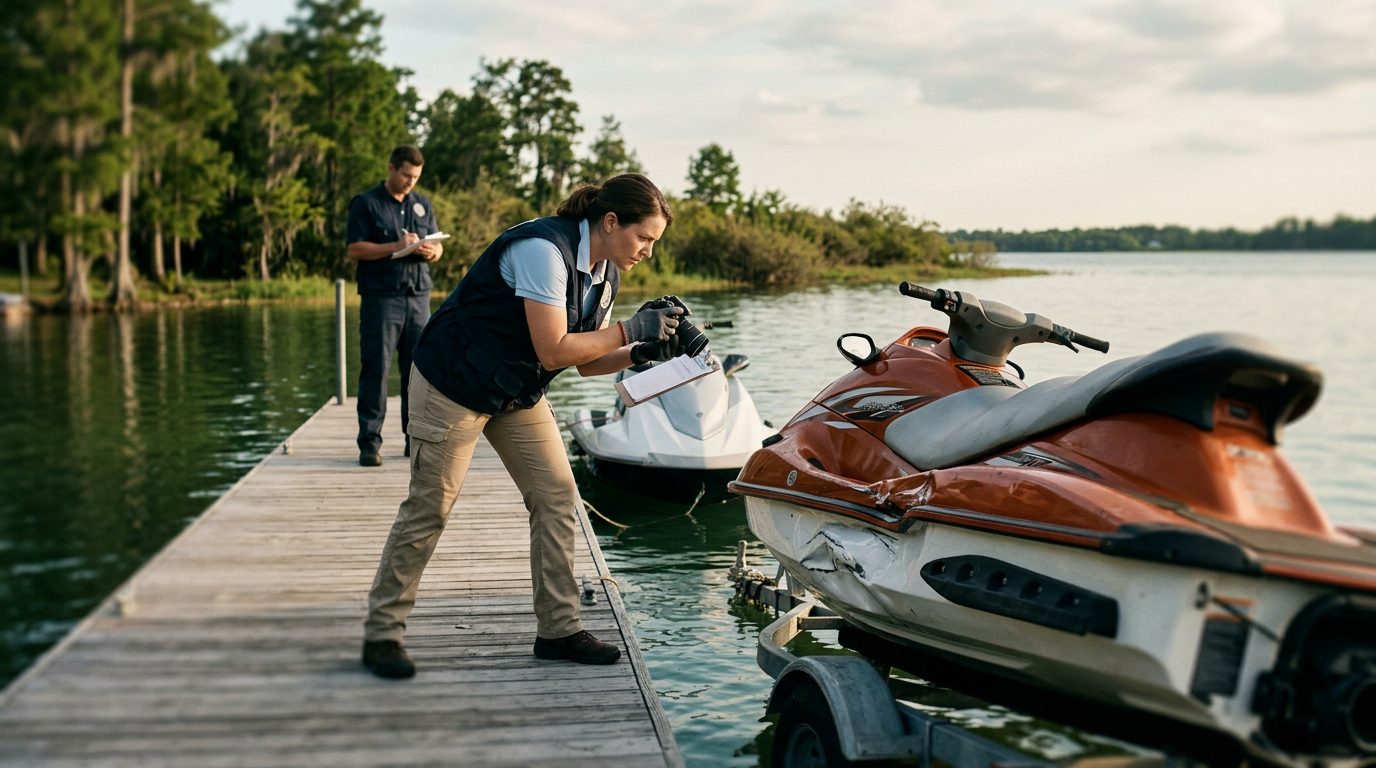
Jet Ski & Personal Watercraft Accidents
Catastrophic Jet Ski Accident Injuries: Know Your Rights in Florida
Serious jet ski collisions, drowning, and watercraft accidents cause life-altering injuries. If you or a family member was hurt, you may have a claim. CHG Personal Injury Lawyers focuses exclusively on catastrophic injury cases nationwide.
By CHG Lawyers · Published September 24, 2026
Catastrophic Jet Ski Accident Injuries: Florida Legal Guide
Jet ski and personal watercraft accidents cause severe, permanent injuries that fundamentally alter lives. Unlike cars, jet skis lack airbags, crumple zones, or protective structure. High-speed impact with water, vessels, or fixed objects causes catastrophic harm: spinal cord damage, brain injury, amputation, severe burns, and death.
This guide explains the injury types, Florida’s legal landscape, and what injured people and families need to know—grounded in verifiable data and statute citations so you can understand your rights.
Not sure what your next step is?
Talk it through with our team — the first consultation is free, confidential, and carries no obligation.
What Are the Most Common Catastrophic Injuries from Jet Ski Accidents?
Jet ski accidents cause injuries resulting in permanent disability and lifelong medical care. These differ drastically from minor injuries like broken bones or soft-tissue damage.
Traumatic brain injury (TBI) occurs when the head strikes water, another jet ski, or an object at speed. Impact causes bleeding, swelling, and brain tissue damage. Survivors often face cognitive impairment, memory loss, personality changes, and loss of consciousness. The National Institute of Neurological Disorders and Stroke (NINDS) notes that TBI can cause permanent neurological changes requiring lifelong care.
Spinal cord injuries result from impact to the spine, causing partial or complete paralysis. Paraplegia (lower-body paralysis) and quadriplegia (all-four-limb paralysis) are permanent conditions. They require lifelong medical support, assistive devices, and home modifications. The Christopher & Dana Reeve Foundation reports that spinal cord injuries affect over 17,000 Americans annually; catastrophic watercraft accidents are a significant contributor.
Severe burn injuries occur when fuel ignites after collision or contact with hot engine components. Burns require emergency care, skin grafts, and reconstructive surgery. Long-term treatment addresses infection risk and scarring. The Mayo Clinic notes that severe burns (third- and fourth-degree) require months or years of treatment and carry lifelong scarring and functional impairment.
Amputation and limb loss result from propeller injuries. A jet ski propeller rotating at high speed can sever limbs or cause crushing injuries requiring amputation. Survivors face phantom pain, psychological trauma, prosthetic fitting, and lifelong rehabilitation.
Catastrophic back and neck injuries include compression fractures, disc herniation with permanent nerve damage, and spinal function loss. These injuries cause chronic pain, mobility loss, and ongoing medical intervention.
How Dangerous Is Jet Skiing? Understanding the Statistics
Jet ski accidents are a significant cause of recreational boating injury and death. Research published in The Conversation found that approximately 70% of jet ski injuries involve collisions with another vessel or object. Speed, operator inexperience, and lack of protective barriers make jet skis inherently risky.
The same research noted that over 90% of jet ski accidents result from operator error—reckless speed, failure to maintain control, or operation under the influence. Rental operators have significantly higher accident rates than private operators, suggesting inadequate training and equipment unfamiliarity increase risk.
The U.S. Coast Guard (USCG) tracks recreational boating fatalities and injuries. While the USCG does not isolate jet ski data separately, personal watercraft accidents represent a material portion of boating injuries nationwide. Fatigue, alcohol use, poor visibility, and lack of life jackets compound the danger. Children and young adults face disproportionate risk from catastrophic jet ski accident injuries.
Jet Ski Accident Causes: When Negligence or Wrongdoing Is Involved
Not all jet ski accidents are unavoidable. Many result from negligence or wrongdoing by the operator, rental company, manufacturer, or third party.
Operator negligence includes reckless speed, failure to maintain control, operation under the influence, and failure to wear safety equipment.
Rental company negligence occurs when companies fail to inspect equipment, provide adequate safety briefing, rent to intoxicated or unqualified operators, or fail to maintain jet skis properly. A rental company renting a defective or poorly maintained jet ski may be held liable for resulting injuries.
Manufacturer defects in steering systems, throttle controls, fuel systems, or other critical components can cause accidents. A defective jet ski may make the manufacturer responsible, not the operator.
Third-party negligence happens when another vessel operator’s recklessness causes collision. That operator may be liable for injuries.
Inadequate maintenance can cause mechanical failure. Poor upkeep of rental or commercial jet skis increases accident risk.
Unsafe water conditions may create liability if property owners or operators fail to warn of hazards like rocks, shallow water, debris, or strong currents.
Fatal Jet Ski Accidents: What Families Need to Know
Jet ski accidents can result in death—the most catastrophic outcome. Families of fatally injured jet skiers have legal rights and options. They deserve the same careful, dignified legal representation as families facing non-fatal catastrophic injury.
A wrongful-death claim allows the family to seek compensation from the person or entity responsible for death. Families can recover damages for loss of companionship, financial support the deceased would have provided, funeral expenses, and pre-death pain and suffering.
In catastrophic-injury cases, wrongful-death claims often arise from operator negligence, rental company equipment failure, or manufacturer defects. The legal process mirrors non-fatal injuries: investigation, evidence gathering, insurance negotiation, and litigation if necessary.
Time limits are critical. Florida Statute §95.11 sets different deadlines for wrongful-death claims than personal injury claims. For wrongful-death claims, the deadline is generally 2 years from the date of death, but exceptions exist. Families should seek legal guidance immediately after a fatal jet ski accident to protect rights and meet deadlines.
Jet Ski Accident Liability in Florida: Who Is Responsible?
Determining liability in a jet ski accident is essential to identifying compensation sources.
The operator may be liable if their negligence or recklessness caused the accident. This includes speeding, operating under the influence, or failure to maintain control.
Rental companies can be held liable for negligence in maintenance, safety instruction, or operator screening. If a rental company rents a defective jet ski or rents to an intoxicated person, the company may be liable for resulting injuries.
Manufacturers may be liable if a defect in the jet ski caused the accident. Defective steering, throttle, fuel systems, or other critical components can make the manufacturer responsible.
Third-party operators may be liable if their negligence caused collision.
Property owners may be liable if unsafe water conditions or failure to warn of hazards contributed to the accident.
Florida’s comparative negligence rule allows an injured person to recover damages even if partially at fault. Under Florida Statute §768.81, an injured person can recover as long as they were not more than 50% responsible for the accident. If you were 30% at fault and the other party 70%, you can still recover 70% of your damages.
Jet Ski Rental Accidents and Waivers: Can You Still Recover?
Many jet ski rental companies require customers to sign liability waivers before renting. A waiver is not a blank check for the rental company.
Waivers are not absolute. They cannot shield a company from liability for gross negligence (extreme carelessness showing reckless disregard for safety) or willful misconduct (intentional wrongdoing). If a rental company knowingly rents a defective jet ski, rents to an intoxicated person, or fails to provide basic safety equipment or instruction, a waiver may not protect them.
Courts scrutinize waivers carefully. If the waiver is unclear, overly broad, or if the rental company’s conduct was egregious, a court may refuse to enforce it. An injured person should not assume a signed waiver bars recovery. Legal review is essential.
In catastrophic-injury cases, rental company negligence often overrides a waiver. Don’t give up on your claim based on a signature alone.
What to Do Immediately After a Jet Ski Accident
The hours and days after a catastrophic jet ski accident are critical for evidence preservation and legal protection.
Seek medical attention first. Even if injuries seem minor, catastrophic injuries may not be immediately apparent. Internal bleeding, spinal damage, and brain injury can develop over hours or days. Get a thorough medical evaluation and document all injuries.
Report the accident to the U.S. Coast Guard if required. Serious injuries or deaths must be reported under federal maritime law. The Coast Guard investigation creates an official record that becomes critical evidence.
Document the scene. Take photos of the jet ski, water, impact site, and debris. Write down names and contact information of all witnesses. Get names and insurance information of other operators involved.
Preserve evidence. Do not allow the jet ski to be repaired or scrapped. Preserve safety equipment, life jackets, and any defective parts. Evidence of mechanical failure or poor maintenance is critical to establishing liability.
Do not sign documents or make statements to insurance companies without legal advice. Insurance adjusters are trained to minimize payouts. Anything you say can be used against you. Consult an attorney before speaking to insurers.
Contact an attorney who focuses exclusively on catastrophic injury claims as soon as possible. Early investigation preserves evidence, identifies all liable parties, and protects your legal rights.
Have questions about what happened?
Ask our team directly. The first conversation is free, confidential, and there is no obligation to continue.
Jet Ski Accident Insurance and Compensation
Jet ski operators and rental companies typically carry liability insurance. Understanding insurance coverage is key to recovery.
Liability insurance covers medical expenses, lost wages, pain and suffering, and disability caused by the insured’s negligence. Insurance may cover hundreds of thousands of dollars in damages.
Underinsured or uninsured motorist coverage may apply if the at-fault operator has no insurance or insufficient coverage. Your own insurance policy may provide additional protection.
Catastrophic injuries often exceed policy limits. A jet ski accident causing permanent paralysis, brain damage, or amputation can require millions in lifetime care. Insurance policies often cap coverage at $100,000 to $500,000—far less than true catastrophic injury costs. Pursuing additional recovery sources (the operator’s personal assets, manufacturer liability, rental company assets) is often necessary.
Insurance companies are motivated to minimize payouts. They employ adjusters and lawyers to challenge claims and reduce settlements. You need equal representation.
The Legal Process for Jet Ski Accident Claims
Understanding the legal process helps you know what to expect and why early consultation matters.
Investigation begins immediately. An attorney gathers evidence, reviews police and Coast Guard reports, interviews witnesses, and obtains medical records. Identifying all liable parties—operator, rental company, manufacturer, and others—is essential to maximizing recovery.
Demand and negotiation follows. The attorney presents the claim to the at-fault party’s insurance company. Documentation includes injuries, medical costs, lost income, and other damages. Insurance companies often make initial low offers. Negotiation can increase settlements significantly.
Litigation becomes necessary if a fair settlement cannot be reached. The attorney files a lawsuit in court.
Discovery is the process of exchanging evidence and taking depositions (recorded questions and answers). Both sides present evidence. Expert witnesses may testify about medical injuries, accident causation, or liability.
Trial or settlement resolves the case. Either the case settles through negotiation, or a jury hears evidence and decides liability and damages.
Statute of limitations: Florida Statute §95.11 sets a 2-year deadline for filing a personal injury lawsuit in Florida. Wrongful-death claims have different deadlines. Missing the deadline bars recovery entirely. Early consultation ensures your claim is filed on time.
Catastrophic Jet Ski Injuries by Type: What You Need to Know
Each type of catastrophic jet ski injury carries unique medical, financial, and legal considerations.
Traumatic brain injury from jet ski accidents causes cognitive impairment, memory loss, personality changes, and loss of consciousness. Survivors often require lifelong neurological care, speech and physical therapy, and supervision. Compensation must account for lifetime care costs.
Spinal cord injury and paralysis result in paraplegia (lower-body paralysis) or quadriplegia (all-four-limb paralysis). Survivors lose independence and require 24-hour care. They face lifelong medical expenses. Compensation includes wheelchairs, accessible vehicles, home modifications, and personal attendants.
Amputation and limb loss from propeller injuries are devastating. Survivors face phantom pain, psychological trauma, and need for prosthetics and rehabilitation. Compensation includes prosthetic devices, ongoing fitting and replacement, and vocational rehabilitation.
Severe burn injuries require emergency care, skin grafts, and reconstructive surgery. Long-term complications include infection, scarring, and psychological trauma. Compensation covers all medical treatment and psychological counseling.
Catastrophic back and neck injuries cause chronic pain, nerve damage, and function loss. Compensation includes pain management, physical therapy, and surgical intervention if necessary.
Jet Ski Accidents in Florida: Regional Considerations
Florida’s extensive waterways, lakes, and coastal areas make jet skis popular in Miami, Orlando, Tampa, and Jacksonville. Jet ski accidents in Florida are governed by Florida law and federal maritime regulations.
If you were injured in a jet ski accident in Florida, Florida law applies. If you were injured outside Florida but are a Florida resident or the defendant is based in Florida, a Florida-based attorney can often handle your case. Out-of-state accidents may also fall under federal maritime law, which has its own rules and protections.
Compensation for Catastrophic Jet Ski Injuries
Catastrophic jet ski injuries require compensation covering immediate and lifelong costs.
Medical expenses include emergency care, hospitalization, surgery, rehabilitation, and ongoing treatment. Catastrophic injuries often require years of medical care.
Lost wages compensate for income lost during recovery and ongoing disability. If the injury prevents return to work, compensation includes lost earning capacity for life.
Pain and suffering compensates for physical pain, emotional distress, and loss of life enjoyment.
Permanent disability recognizes loss of function, independence, and quality of life. This is often the largest compensation component in catastrophic cases.
Assistive devices and home modifications include wheelchairs, accessible vehicles, ramps, bathroom modifications, and specialized equipment. These costs are substantial and ongoing.
Future care costs account for lifetime medical and personal care expenses. Actuarial experts calculate these costs based on life expectancy, inflation, and medical needs.
Wrongful death compensation to the family includes loss of companionship, financial support, and funeral expenses.
Why Legal Representation Matters in Catastrophic Jet Ski Cases
Catastrophic jet ski injuries require focused legal knowledge and resources.
Catastrophic injuries demand focused legal knowledge. Understanding both injury medicine and maritime/boating law is essential. An attorney must know how to calculate lifetime care costs, identify all liable parties, and navigate insurance and litigation.
Insurance companies have teams of lawyers. Injured people need equal representation. Without an attorney, you’re negotiating alone against experienced adjusters trained to minimize payouts.
Early investigation is critical. Evidence deteriorates, witnesses’ memories fade, and mechanical failures can be hidden. An immediate investigation preserves evidence and identifies all liable parties.
Expert witnesses are often necessary. Medical specialists testify about injury severity and future care needs. Accident reconstructionists explain how the accident occurred. Engineers may testify about equipment defects. Actuarial experts calculate lifetime care costs.
Litigation experience is essential. If settlement negotiations fail, the case goes to trial. An attorney with trial experience knows how to present evidence, cross-examine witnesses, and persuade a jury.
Want to know where you stand?
Tell us what happened and our team will walk you through the options available to you, at no cost.
Frequently Asked Questions About Catastrophic Jet Ski Injuries
Q: Can I recover if I was partially at fault in the accident?
Yes. Under Florida’s comparative negligence law, you can recover as long as you were not more than 50% at fault (Fla. Stat. § 768.81(6)).
Q: How long do I have to file a claim?
Generally 2 years from the date of injury for personal injury claims (Fla. Stat. § 95.11(5)(a)). Wrongful-death claims have different deadlines. Don’t delay—consult an attorney immediately.
Q: What if the jet ski was rented?
Rental companies can be held liable for negligence in maintenance, safety instruction, or operator screening. Liability waivers do not shield them from gross negligence or willful misconduct.
Q: What if the other operator doesn’t have insurance?
Your own uninsured motorist coverage may apply. An attorney can explore all available recovery sources, including the operator’s personal assets.
Q: What is the difference between paraplegia and quadriplegia?
Paraplegia is paralysis of the lower body (legs and lower torso). Quadriplegia is paralysis of all four limbs and the torso. Both are permanent and require lifelong care.
Q: Can I recover if the jet ski had a mechanical defect?
Yes. The manufacturer may be liable if a defect caused the accident. This is a separate claim from operator negligence.
Next Steps: Getting Help
If you or a family member has suffered a catastrophic injury or death in a jet ski accident, time matters. Evidence deteriorates, witnesses’ memories fade, and legal deadlines approach. The sooner you act, the stronger your case.
A free, confidential case evaluation can help you understand your legal options. An attorney can review the facts, identify liable parties, and explain the compensation you may be entitled to.
Contact CHG Personal Injury Lawyers today for a free case evaluation.
Common Jet Ski Accident Injuries
Spinal Cord & Paralysis
High-speed collisions and impact with water can cause spinal cord damage, resulting in paraplegia or quadriplegia—permanent paralysis that changes every aspect of life.
Traumatic Brain Injury
Head trauma from jet ski crashes, falls, or being struck by another vessel can cause traumatic brain injury (TBI), affecting cognition, movement, and personality.
Drowning & Near-Drowning
Submersion injuries can cause brain damage, organ failure, and death. Survivors often face lifelong neurological impairment.
Severe Burns & Lacerations
Fuel-fed fires, propeller injuries, and sharp impact wounds cause severe burns and permanent scarring or amputation.
Time Matters
Jet ski accident claims are subject to strict legal deadlines. Evidence can disappear, witnesses' memories fade, and the longer you wait, the harder it becomes to build a strong case. Contact an attorney as soon as possible after a serious injury.
Why CHG Personal Injury Lawyers
Focused on Catastrophic Injury
We focus exclusively on severe, life-altering injuries—not minor claims. We understand the long-term medical, financial, and personal impact of catastrophic jet ski accidents.
Florida-Based, Nationwide Reach
Bilingual Legal Support
We provide English and Spanish-language legal guidance and educational resources to serve our community fully.
No Attorney’s Fees Unless There Is a Recovery
We work on contingency. You pay no legal fees unless we recover compensation for you. Our focus is on your recovery and fair compensation, not upfront costs.
What to Do After a Jet Ski Accident
Seek Medical Care Immediately
Even if injuries seem minor, get evaluated by a doctor. Some serious injuries—spinal, neurological, internal—are not immediately obvious. Medical records are crucial evidence.
Report the Accident
File a report with local law enforcement or the Florida Fish and Wildlife Conservation Commission (if on state waters). Get the report number and contact information for all witnesses.
Document Everything
Take photos of the scene, all vessels involved, your injuries, and any property damage. Write down what happened while it's fresh. Collect contact information from witnesses.
Contact a Personal Injury Attorney
Do not speak to insurance companies or sign documents without legal advice. An attorney protects your rights and ensures you pursue the full compensation you deserve.
Frequently Asked Questions
Can I recover if I was partially at fault?
Yes. Under Florida's comparative negligence law, you can recover damages even if you share some responsibility for the accident, as long as you were not more than 50% at fault (Fla. Stat. § 768.81(6)).
What if the other jet ski operator was uninsured?
You may still have a claim. Depending on your own insurance coverage and the circumstances, you may recover through uninsured motorist (UM) coverage or pursue the operator directly.
What damages can I claim?
Catastrophic jet ski injuries can justify claims for medical expenses (past and future), lost wages, loss of earning capacity, pain and suffering, permanent disability, and in wrongful-death cases, funeral costs and loss of companionship.
What if someone died in the jet ski accident?
Wrongful-death claims allow surviving family members to seek compensation for the loss. These claims have different legal rules and deadlines. Consult an attorney immediately.
Your Recovery Starts with a Conversation
Related practice areas
- Fatal Jet Ski Accident Wrongful Death Lawyer (Florida)
- Miami Jet Ski Accident Injury Lawyer for Catastrophic Cases
- Who Is Liable for a Jet Ski Accident in Florida?
- Statute of Limitations for Jet Ski Accident Injury Claims in Florida
- Jet Ski Accidents in Tampa
- Jet Ski Accidents in Jacksonville
- Common Causes of Serious Jet Ski Crashes on Florida Waters
- Does Maritime Law Apply to Your Jet Ski Accident Injury Claim?