

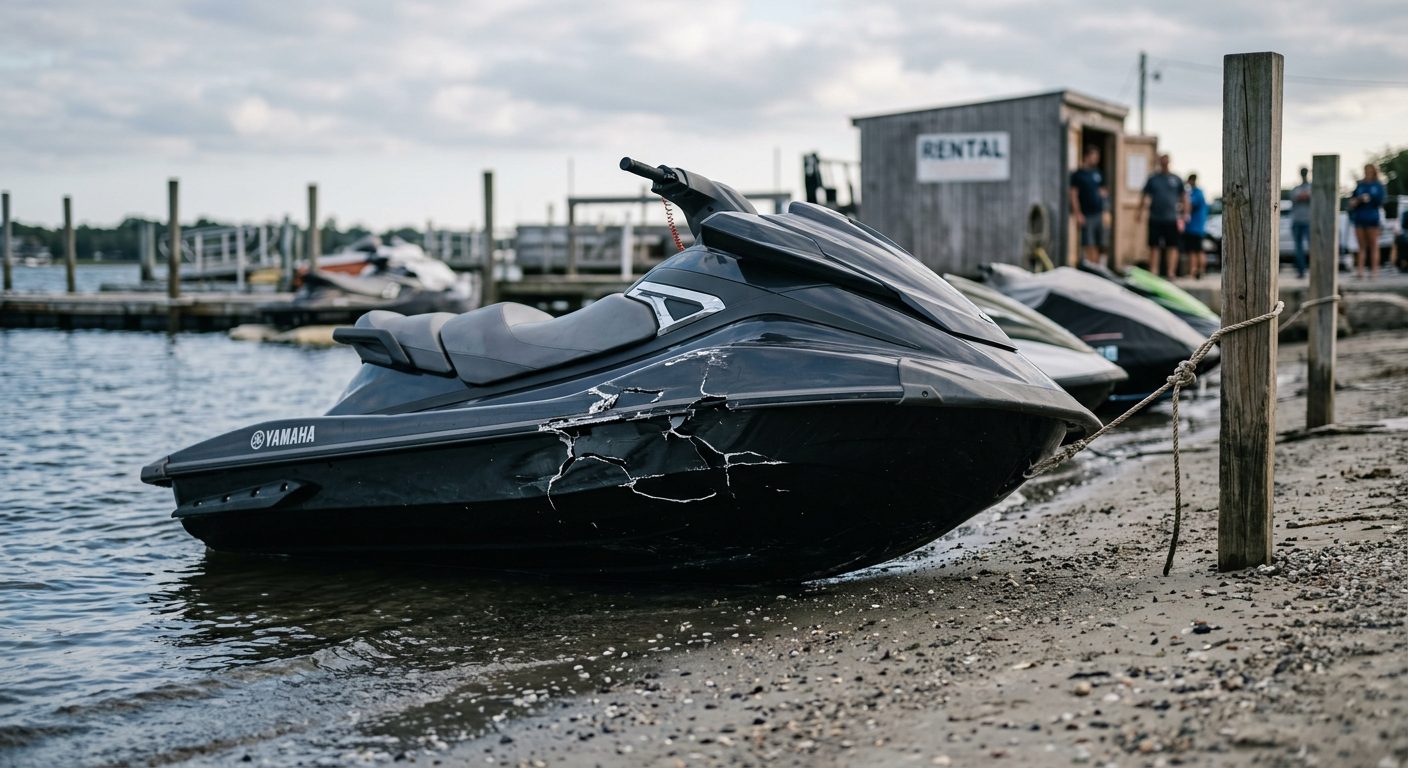
Jet Ski & Water Sports Accidents
Jet Ski Rental Accident Lawyer for Catastrophic Injuries
If you were injured in a jet ski accident caused by negligence, a defective rental, or unsafe conditions, you may have a claim—even if you signed a waiver. CHG Personal Injury Lawyers handles catastrophic water sports injuries nationwide.
By CHG Lawyers · Published September 20, 2026
Jet Ski Rental Accident Lawyer: When You Can Sue—Even With a Waiver
If you were seriously injured in a jet ski rental accident, you may have a legal claim against the rental company—even if you signed a waiver. This guide explains when rental companies are legally responsible, what waivers actually protect (and don’t), and how to move forward.
If you were injured in a jet ski accident caused by negligence, a defective rental, or unsafe conditions, you may have a claim—even if you signed a waiver. Talk it through with our team — the first consultation is free, confidential, and carries no obligation.
What This Service Covers: Jet Ski Rental Accident Claims
We represent people injured in catastrophic jet ski rental accidents—those that cause permanent, life-altering harm. This includes:
- Spinal cord injuries and paralysis (paraplegia and quadriplegia)
- Traumatic brain injuries
- Amputations or severe limb loss
- Severe burns
- Fatal outcomes (wrongful-death claims for family members)
Who this is for: Anyone injured during a jet ski rental. This includes accidents during active use, immediately after launch, or during a supervised rental tour. Rentals from commercial rental companies, marinas, resorts, tour operators, and other watercraft rental businesses are covered.
What we investigate: Our team examines rental company negligence, defective or poorly maintained equipment, inadequate safety briefings, operator negligence, failure to enforce safety rules, and violations of U.S. Coast Guard regulations and state boating laws. We also review the rental agreement and waiver to determine whether they shield the company from liability for the specific negligence that caused your injury.
When a Jet Ski Rental Company Can Be Held Liable
A rental company can be legally responsible for your injuries in several specific ways:
Defective or poorly maintained equipment. Rental jet skis with known mechanical problems, failed safety systems, or inadequate maintenance records are a common source of liability. If the rental company failed to service the jet ski properly, ignored warning signs of a defect, or skipped required inspections, they can be held liable for injuries that result. Examples include faulty throttle response, steering system failures, fuel system leaks, or engine problems documented in maintenance logs.
Failure to inspect or warn. Rental companies must perform pre-rental safety checks before each use. If they skip this step or fail to disclose known hazards—a faulty throttle, weak steering, or fuel system problems—they’re negligent. This is particularly serious when the defect is documented in prior maintenance records but not disclosed to the renter.
Inadequate safety training or briefing. Renting a jet ski to an inexperienced operator without proper instruction on handling, speed control, and water conditions is negligent. Many renters have never operated a jet ski. The rental company has a duty to ensure they understand the basics. A cursory verbal warning or a laminated card is not sufficient if the renter is clearly unfamiliar with watercraft operation.
Negligent operator selection. Renting to a visibly intoxicated, impaired, or obviously unqualified operator is reckless. If the rental company failed to screen the operator, enforce basic eligibility rules, or verify age and boating experience, they’re liable.
Violation of safety regulations. The U.S. Coast Guard and state boating laws set mandatory safety standards. Examples include failing to provide life jackets, launching in dangerous conditions, or allowing excessive speed in restricted zones.
Unsafe rental conditions. Launching from a hazardous location, renting during dangerous water conditions, or failing to enforce speed limits and restricted zones all constitute negligence.
Failure to enforce waivers properly. This is critical: waivers are not absolute shields.
What “Rental Waivers” Actually Mean—And Don’t: Plain Language Explanation
Many people assume that signing a liability waiver means they’ve given up all legal rights. That’s not true. Understanding the actual legal limits of a waiver is essential.
A clear waiver can release gross negligence, but not intentional torts. A waiver can protect a rental company from liability for ordinary negligence—simple mistakes or oversights.
Waivers must be clear and specific. Vague or poorly written waivers are often unenforceable. Under the case law reviewed, a waiver clause is not ineffective simply because it does not contain express language releasing the company from liability for its own negligence. If the waiver is written in tiny print, uses confusing legal language, or doesn’t clearly explain what you’re waiving, it may be invalid.
Signing under pressure or without understanding. If you were rushed to sign, pressured by staff, or didn’t understand what you were signing, the waiver may be invalid. We evaluate the circumstances under which the waiver was signed.
State law varies. Florida and other states have different standards for waiver enforceability. A waiver that might hold in one jurisdiction may not in another. We review your waiver under Florida law and the law of the state where the accident occurred.
Bottom line: A waiver does not mean you have no claim. It means we need to prove that the rental company’s conduct went beyond ordinary negligence—that they acted recklessly, ignored obvious hazards, or violated safety regulations.
If you were seriously injured in a jet ski rental accident, you may have a legal claim against the rental company—even if you signed a waiver. Talk it through with our team — the first consultation is free, confidential, and carries no obligation.
How Jet Ski Rental Accident Claims Work: Step-by-Step
Understanding the claims process helps you know what to expect and what to do right now.
Step 1 – Immediate safety and medical care. Seek emergency medical attention immediately if you haven’t already. Document all injuries and treatment. Take photos of the jet ski, the rental location, weather conditions, water conditions, and any visible defects or damage.
Step 2 – Report the accident. File a formal accident report with the rental company, the marina, or local authorities. Request a copy. Collect the names and contact information of all witnesses.
Step 3 – Preserve evidence. Do not allow the rental company to repair or dispose of the jet ski. Request that it be preserved for inspection and expert analysis. Photograph the rental agreement, waiver, safety briefing materials, and any other documents provided by the rental company.
Step 4 – Notify the rental company in writing. Send a written notice of injury and intent to pursue a claim. Do not accept any settlement offer or sign additional documents without legal review.
Step 5 – Investigation and liability analysis. Our team obtains maintenance records, inspection logs, prior accident reports, operator training records, and expert mechanical analysis. We hire marine engineers and accident reconstructionists to establish negligence.
Step 6 – Demand and negotiation. We prepare a detailed demand letter backed by evidence and expert opinions. Most claims settle during this phase without the need for litigation.
Step 7 – Litigation (if necessary). If the rental company or its insurer refuses a fair settlement, we file suit and pursue the claim through discovery, depositions, and trial.
Timeline expectations: Initial investigation typically takes 2–4 months. Settlement negotiations may take 6–12 months. Litigation can extend 1–3 years depending on complexity and court schedules.
What We Investigate in Rental Jet Ski Accident Cases
Our investigation is thorough and methodical. We examine:
- Equipment maintenance and inspection records: Service logs, repair history, pre-rental checklists, and compliance with manufacturer recommendations and Coast Guard guidelines.
- Prior accidents or complaints: History of similar incidents, customer complaints, or regulatory violations at the rental company.
- Operator screening and training: Whether the rental company verified operator experience, conducted a safety briefing, or checked for intoxication or impairment.
- Mechanical failure analysis: Expert inspection of the jet ski to identify defects, design flaws, or maintenance failures that contributed to the accident.
- Regulatory compliance: Whether the rental company followed U.S. Coast Guard rules, state boating laws, and industry safety standards.
- Witness statements and accident reconstruction: Interviews with other people present, analysis of water and weather conditions, and expert reconstruction of how the accident occurred.
- Rental agreement and waiver review: Legal analysis of what the waiver actually says and whether it can shield the company from liability for the specific negligence that caused your injury.
Why This Firm Focuses Exclusively on Catastrophic Injury Claims
Exclusive focus on catastrophic injury claims. We represent only people with serious, life-altering injuries—spinal cord injuries, paralysis, traumatic brain injuries, amputations, severe burns, and fatal outcomes. We don’t handle minor boating injuries or routine accidents.
We understand regional variations in boating law and liability standards.
Comprehensive investigation capability. We retain expert witnesses, including marine engineers, accident reconstructionists, and medical specialists, to build strong liability cases backed by solid evidence.
No upfront costs—contingency representation. We work on contingency: you pay nothing unless we recover compensation for you. This removes financial barriers and means we only take cases we believe in. Our fee structure aligns our success with yours.
Frequently Asked Questions About Jet Ski Rental Accident Claims
Can I really sue a jet ski rental company if I signed a waiver?
Yes. We review your waiver and the specific facts of your accident to determine whether the company’s conduct goes beyond what the waiver covers. Whether a waiver applies depends on the specific facts of the accident and how the waiver is written.
What if I was partly at fault for the accident?
Florida follows a comparative negligence rule under Fla. Stat. §768.81: even if you were partially at fault, you can still recover compensation if the rental company was also negligent and your fault is 50% or less. Your recovery is reduced by your percentage of fault. For example, if you were awarded $100,000 and found 20% at fault, you would recover $80,000. We investigate all facts to minimize any attribution of fault to you and maximize recovery from the rental company.
What if the rental company’s insurance company contacts me?
Do not speak to the insurance company or sign any documents without consulting an attorney first. Insurance adjusters are trained to minimize payouts and may use your statements against you later. We handle all communication with insurers on your behalf, protecting your rights and ensuring you don’t inadvertently harm your claim.
How long do I have to file a claim?
Under Fla. Stat. §95.11, Florida’s statute of limitations for personal injury claims is generally two years from the date of injury. However, evidence degrades and witnesses’ memories fade over time. The sooner you contact us, the stronger your claim will be. Don’t wait.
What if someone died in the jet ski rental accident?
Wrongful-death claims are among the most serious and complex cases we handle. Under Florida law, family members of the deceased may recover compensation for medical expenses, funeral costs, lost income, and the loss of companionship and guidance. We guide families through this process with compassion and experience, holding rental companies accountable for fatal negligence.

Not sure what your next step is?
Talk it through with our team — the first consultation is free, confidential, and carries no obligation.
What to Do Right Now
If you were injured in a jet ski rental accident:
- Seek immediate medical attention if you haven’t already. Document all injuries and treatment.
- Preserve evidence: take photos of the jet ski, the rental location, your injuries, and any visible damage or hazards.
- Gather witness information: collect names and contact details of anyone who saw the accident.
- Request a copy of the accident report from the rental company or local authorities.
- Do not sign any additional documents or accept any settlement offer without legal review.
- Do not contact the insurance company or speak to adjusters without an attorney present.
Waivers Don't Always Protect Rental Companies
A signed waiver does not shield a jet ski rental company from liability for gross negligence, recklessness, defective equipment, or failure to follow safety regulations. Under Florida law, agreements that attempt to waive liability for gross negligence are against public policy and unenforceable. We review your waiver and the facts of your accident to determine your rights.
Common Causes of Jet Ski Rental Accidents
Defective or Poorly Maintained Equipment
Rental companies must maintain jet skis in safe working order. Faulty brakes, steering failures, engine problems, or worn safety equipment can cause serious collisions and injuries. Rental companies that fail to inspect or repair equipment before renting it out may be liable.
Inadequate Safety Training or Warnings
Renters deserve clear instruction on how to operate a jet ski safely, including how to handle throttle, steering, and emergency procedures. Failure to provide adequate training or warn of known hazards can make the rental company responsible for resulting injuries.
Negligent Operator Screening
Rental companies have a duty to screen renters for basic competence and sobriety. Renting to someone visibly intoxicated, without verifying boating experience, or ignoring obvious warning signs can lead to preventable accidents.
Unsafe Rental Conditions or Overcrowding
Renting too many jet skis in a confined area, failing to enforce speed limits, or allowing operation in dangerous water conditions increases collision and drowning risk. Rental operators must maintain safe practices and supervise the rental area.
Why CHG Personal Injury Lawyers
Focused on Catastrophic Injury Claims
We focus exclusively on serious and catastrophic injuries—spinal cord damage, paralysis, traumatic brain injury, amputations, severe burns, and drowning. We understand the lifelong impact and fight for fair compensation.
We Handle Waiver Disputes
Signed a waiver? We review it carefully. Many waivers are unenforceable under Florida law, especially when gross negligence or recklessness is involved. Don't assume you have no claim.
Nationwide Representation
Based in Florida, we represent injured clients across the country. Whether your jet ski accident happened in Florida, another state, or international waters, we can help.
Empathetic, Plain-Language Guidance
We explain your rights and options in clear terms, not legal jargon. We listen to your story and help you understand what comes next.
What to Do After a Jet Ski Accident
Seek Medical Attention Immediately
Your health comes first. Even if you feel okay, get checked by a doctor. Water-related injuries can have delayed symptoms, and a medical record is crucial for your claim.
Report the Accident to the Rental Company
Notify the rental operator or company in writing as soon as possible. Document the date, time, location, and the names of any witnesses. Keep copies of all correspondence.
Gather Evidence
Take photos of the jet ski, any visible damage, the rental area, and your injuries. Get contact information from witnesses. Preserve any safety equipment, instruction materials, or waivers you signed.
Contact a Lawyer Before Talking to Insurance
Do not give a recorded statement or sign anything without legal advice. Insurance companies often try to minimize payouts. An attorney protects your rights and ensures you're not pressured into a low settlement.