

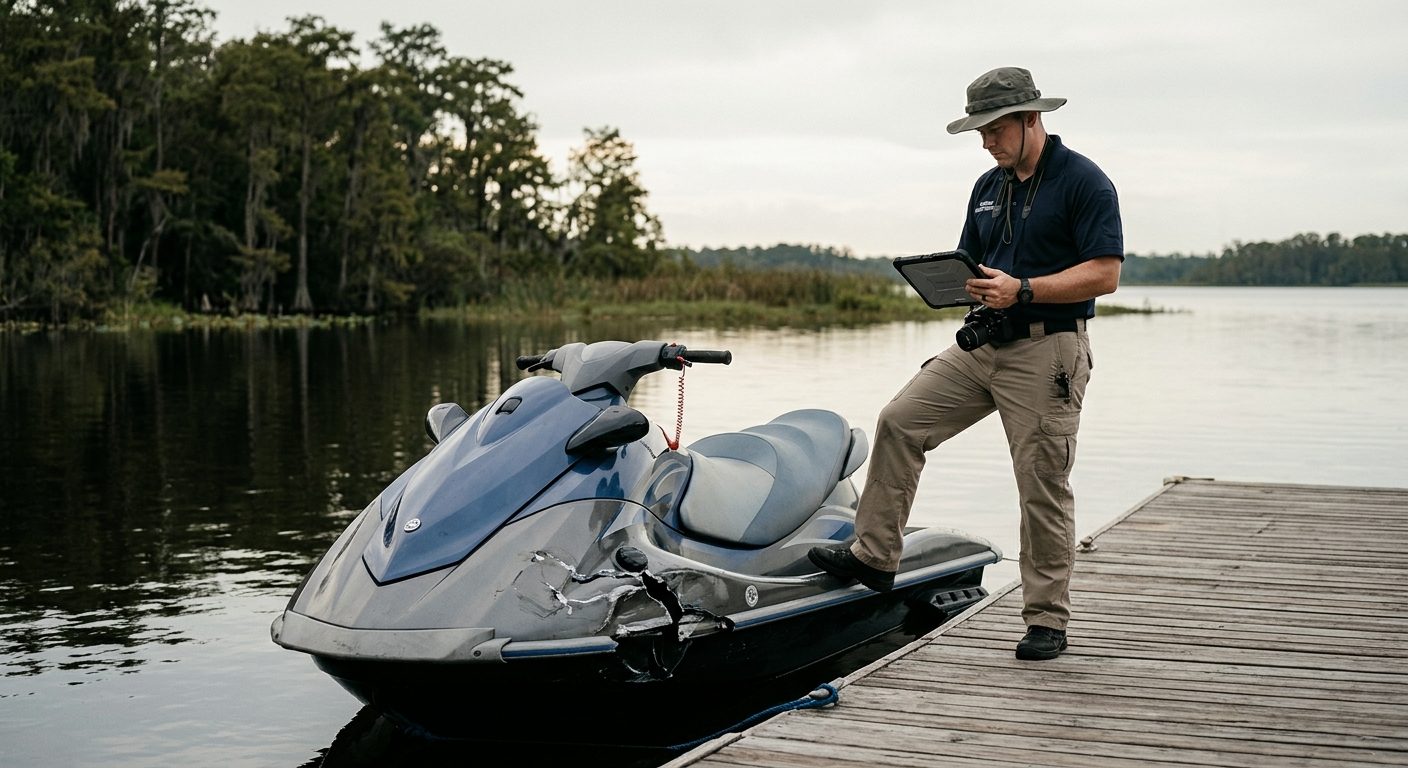
Jet Ski Accidents | Florida
Jet Ski Accident Statute of Limitations in Florida
Understand your deadline to file a claim after a catastrophic watercraft injury.
By CHG Lawyers · Published August 27, 2026
Jet Ski Accident Statute of Limitations in Florida: 2-Year Deadline
You have 2 years from the date of a jet ski accident to file a lawsuit in Florida. This deadline is not always absolute. Legal exceptions, such as tolling, can pause it, and federal maritime law may set a different period. If it passes without an exception applying, you may lose the right to sue. If someone died in the accident, the same 2-year deadline applies to wrongful death claims brought by the family.
This page explains how Florida’s jet ski accident statute of limitations works, why the deadline matters, and what you need to do now if you or a family member suffered a catastrophic injury.
Not sure what your next step is?
Talk it through with our team — the first consultation is free, confidential, and carries no obligation.
Understanding Florida’s Jet Ski Accident Statute of Limitations
The statute of limitations is a legal deadline. It sets the maximum time you have to file a lawsuit after an accident. In Florida, Fla. Stat. §95.11 sets a 2-year deadline for actions founded on negligence, which can include many jet ski accident claims, unless federal maritime law applies instead.
Miss this deadline and your lawsuit may be barred. No exceptions exist for how strong your claim is or how serious your injury. A lawsuit filed after the deadline expires may be dismissed unless a legal exception, such as the tolling rules for minors or incapacitated persons, applies.
For catastrophic injuries—spinal cord injuries, paralysis (paraplegia and quadriplegia), traumatic brain injury, amputation, severe burns, and drowning—this deadline is critical. These life-altering injuries require extensive medical documentation, expert analysis, and careful investigation. Waiting too long weakens your case and risks losing your right to recover damages entirely.
How Long Do You Have to File a Jet Ski Accident Lawsuit?
You have 2 years from the accident date to file a lawsuit. The clock starts on the day the jet ski accident occurred, not when you discover your full injuries.
The statute of limitations is the same whether you were the operator, a passenger, or a bystander struck by a jet ski.
What if the Injured Person Is a Minor or Legally Incapacitated?
Florida law provides limited exceptions for minors and people declared legally incapacitated. These exceptions are complex and vary by individual circumstances.
For a minor: Under Fla. Stat. §95.051, the deadline may be paused (tolled) during any period when a minor has no parent, guardian, or guardian ad litem, or when one has an interest adverse to the minor. However, this exception has limits. Florida law caps the total time a minor has to sue, even with this extension.
These exceptions require careful legal analysis. If a minor or incapacitated person was injured, do not assume unlimited time. Contact an attorney immediately to understand the actual deadline.
Can You Sue for a Jet Ski Injury Years Later?
Generally, no. Once 2 years have passed, you cannot file a lawsuit. The statute of limitations is a hard deadline.
Rare exceptions exist. For example, if the defendant fraudulently concealed their wrongdoing, the deadline may be extended. But these exceptions are narrow and require specific proof.
Beyond the legal deadline, waiting years also weakens your claim in practical ways:
- Evidence disappears. Photos fade, video files are deleted, and physical evidence from the accident scene is lost.
- Witnesses’ memories fade. People forget details. Some move away or become unreachable.
- Insurance policies expire. Coverage limits or entire policies may no longer be available.
- Medical records become incomplete. Early treatment records are harder to locate after years pass.
If you are still within the deadline, do not delay. Contact an attorney as soon as possible.
Why You Should Not Wait Until the Last Minute
Filing a lawsuit takes time. Waiting until the deadline is near creates serious risks.
Evidence preservation takes time. Gathering photos of the accident scene, the jet ski, your injuries, and property damage requires immediate action. Witness statements must be collected while memories are fresh. Medical records must be obtained and reviewed.
Investigation and legal preparation take time. Your attorney needs to investigate the accident, identify all responsible parties, review insurance policies, obtain expert opinions, and prepare legal documents.
Insurance companies require prompt notice. Most policies require prompt claim notice. Waiting years may give the insurance company grounds to deny your claim.
Catastrophic injuries require detailed documentation. Spinal cord injuries, paralysis, traumatic brain injury, amputation, and severe burns involve complex medical issues. Your attorney will work with medical specialists to document the full extent of your injuries, treatments received, and permanent life impact. This process takes months.
Administrative delays happen. Courts are busy. Medical providers are slow to respond. Unexpected complications arise. If you file near the deadline and an administrative delay occurs, you may miss it entirely.
Early action protects your rights and gives your attorney time to build a strong case.
Have questions about what happened?
Ask our team directly. The first conversation is free, confidential, and there is no obligation to continue.
What About Settlements and Insurance Claims?
The 2-year statute of limitations applies to lawsuits, not to insurance claims or settlement negotiations.
You can file an insurance claim at any time. However, the insurance company may deny it if too much time has passed or if you failed to provide prompt notice as required by the policy.
Settlement discussions can happen before or after a lawsuit is filed. Many cases settle without trial. However, the statute of limitations still governs your right to sue if settlement negotiations fail.
Here’s the key: If you are negotiating with an insurance company and they refuse to settle, you must have time remaining to file a lawsuit. If you wait too long and the deadline passes, you lose all leverage. The insurance company knows you can no longer sue.
Do not let settlement negotiations cause you to miss the filing deadline. If settlement is not reached, your attorney must file a lawsuit before the 2-year window closes.
How Long After an Accident Can You File a Lawsuit?
You can file a lawsuit immediately after the accident. There is no minimum waiting period.
Many people wait to file because they are still receiving medical treatment, undergoing rehabilitation, or negotiating with insurance. This is understandable. You may not know the full extent of your injuries or future care costs.
However, filing early protects your rights. An attorney can file a lawsuit on your behalf while you continue to recover and while settlement negotiations proceed. Filing a lawsuit does not prevent settlement. In fact, it often speeds up settlement discussions because the other side knows you are serious and have preserved your legal rights.
Jet Ski Accidents and Comparative Fault in Florida
Florida follows a “comparative fault” rule. You can recover damages even if you were partially at fault—as long as you were not more than 50% responsible.
Fla. Stat. §768.81 sets this rule, sometimes called the “51% rule.” You must be 50% or less at fault to pursue a claim.
Example: You were injured in a jet ski collision. Investigation shows you were 30% at fault and the other operator was 70% at fault. You can still recover 70% of your damages. Your recovery is reduced by your percentage of fault, but you are not barred from suing.
The statute of limitations applies regardless of comparative fault. You still have 2 years to file a lawsuit, even if you bear some responsibility for the accident.
What if Someone Died in the Jet Ski Accident?
Wrongful death claims have the same 2-year statute of limitations as personal injury claims. The deadline runs from the date of death.
A wrongful death claim is brought by the decedent’s personal representative, who recovers damages for the benefit of the decedent’s survivors and estate (Fla. Stat. §768.20). The claim seeks to recover damages for the loss, including funeral expenses, lost income, and loss of companionship and support.
Catastrophic jet ski accidents—including drowning and near-drowning that results in death—are tragic outcomes. The 2-year deadline applies equally to these cases.
If a relative died in a jet ski accident, do not delay. Contact an attorney immediately to discuss your options and ensure the deadline is not missed.
Key Takeaways
- Florida gives you 2 years from the accident date to file a jet ski accident lawsuit. This deadline is firm and applies to most personal injury claims.
- The clock starts on the accident date, not when you discover your injuries. Waiting does not extend the deadline.
- Missing the deadline means losing your right to sue entirely. No exceptions exist for how strong your claim is or how serious your injury.
- Limited exceptions exist for minors and incapacitated individuals. These are complex and require immediate legal guidance.
- Do not wait until the last minute. Early action preserves evidence, protects your rights, and gives your attorney time to build a strong case.
- Comparative fault does not bar recovery. You can recover damages even if you were partially at fault, as long as you were 50% or less responsible.
- Wrongful death claims have the same 2-year deadline. Relatives have the right to pursue a claim for a fatal jet ski accident.
Want to know where you stand?
Tell us what happened and our team will walk you through the options available to you, at no cost.
Frequently Asked Questions
How long after a jet ski accident can you file a lawsuit in Florida?
You can file immediately after the accident; there is no minimum waiting period. However, you must file within 2 years of the accident date, or you lose the right to sue.
What triggers the statute of limitations clock?
The clock starts on the accident date, not when you discover your injuries or receive a diagnosis. This is true even if your injuries worsen over time.
Can you extend the statute of limitations?
Rare exceptions exist—for example, if the defendant fraudulently concealed their wrongdoing—but these are narrow and require specific proof. Do not assume an extension will be available.
What happens if you file after the deadline?
The court will dismiss your case immediately. You will have no right to recover damages, and you cannot appeal the dismissal based on how strong your claim is.
Does the statute of limitations apply to insurance claims?
The statute of limitations applies to lawsuits, not to insurance claims. However, your insurance policy may have its own time limits for filing a claim. The statute of limitations still governs your right to sue if the insurance company denies your claim.
What if I was partially at fault for the jet ski accident?
You can still recover damages if you were 50% or less at fault. Your recovery will be reduced by your percentage of fault, but you are not barred from suing.
Next Steps: What to Do Now
If you or a relative suffered a catastrophic injury in a jet ski accident—spinal cord damage, paralysis, traumatic brain injury, amputation, severe burns, or drowning—time is critical.
Preserve evidence immediately: – Take photos and video of the accident scene, the jet ski, and your injuries. – Collect contact information from witnesses. – Obtain a copy of any police or incident report. – Save all medical records, bills, and communications with the other party or their insurance company.
Do not sign anything or make a recorded statement to an insurance company without legal advice. Insurance adjusters are trained to minimize claims. Anything you say can be used against you.
Reach out to discuss your situation. People injured in catastrophic jet ski accidents often have questions about deadlines, their rights, and next steps. Our team can review your case, explain your options, and help you understand whether you have a claim—at no cost. The conversation is confidential, and there’s no obligation. If you have questions about the statute of limitations, the strength of your claim, or what happens next, get in touch.
Schema (BreadcrumbList):
Time Matters
Florida law sets a deadline for filing a lawsuit after a jet ski accident. Missing that deadline can mean losing your right to pursue a claim. If you or a family member has suffered a catastrophic injury, contact an attorney as soon as possible to protect your rights.
Key Points About Jet Ski Accident Deadlines
The Filing Window
Florida law generally allows you to file a lawsuit within two years from the date of the accident. This is the standard deadline for personal-injury claims arising from watercraft collisions and injuries.
When the Clock Starts
The deadline typically begins on the date the accident occurred, not when you later discover the full extent of your injuries. This is an important distinction that affects your timeline.
Exceptions May Apply
Certain circumstances—such as claims involving government entities, minors, or other specific legal situations—may alter the deadline. An attorney can review your case to determine which rules apply to your situation.
Act Quickly
Even if you have time remaining, gathering evidence, medical records, and witness statements becomes harder as time passes. Early consultation protects both your deadline and the strength of your claim.
Why You Need Legal Guidance
Deadline Protection
An attorney ensures your claim is filed before the window closes, preserving your right to seek compensation.
Proper Documentation
We gather accident reports, medical records, and evidence while details and witnesses are still fresh.
Understanding Your Rights
Watercraft accidents involve unique legal rules. We explain how they apply to your specific injury and circumstances.
Clear Answers
We translate complex statute-of-limitations rules into plain language so you understand your options and next steps.