

Maritime & Water Accidents
Jet Ski Accidents and Maritime Injuries: Your Rights After a Catastrophic Accident
When a jet ski collision or water accident causes permanent injury, maritime law offers a different path to recovery. Learn what you need to know.
By CHG Lawyers · Published August 27, 2026
Maritime Law and Jet Ski Accidents: What You Need to Know
If you were injured in a jet ski accident on Florida’s waters—the Atlantic Ocean, Gulf of Mexico, Intracoastal Waterway, or a navigable bay or river—your claim is likely governed by maritime law (also called admiralty law), not ordinary state negligence law. This distinction matters enormously. It changes your legal rights, the damages you can recover, the time limits to file a claim, and the procedures you must follow. Understanding which legal system applies is the first step toward knowing whether you have a claim and what to expect.
If you were struck by a jet ski while swimming, wading, or in another vessel, the jet ski operator may be liable for your injuries under maritime law. Talk it through with our team — the first consultation is free, confidential, and carries no obligation.
What Happened on the Water Matters: Why Maritime Law May Apply to Your Jet Ski Accident
Maritime law applies to jet ski accidents on navigable waters—a legal term that includes oceans, bays, sounds, rivers, and lakes used for commerce or transportation. In Florida, navigable waters include the Atlantic Ocean, the Gulf of Mexico, the Intracoastal Waterway, and many major rivers and bays.
Maritime law is a federal system of rules developed over centuries. It addresses accidents and injuries on water, where unique risks and jurisdictional questions differ from land-based accidents.
The location of the accident—not where you rented the jet ski or where the operator lives—determines which legal system governs your claim. If your accident happened in a swimming pool, a small private pond, or a canal that is not navigable, ordinary Florida negligence law would apply instead. But if it happened on navigable waters, maritime law controls.
Understanding which legal framework applies is crucial. It affects your rights to recover damages, the types of compensation available, the deadline to file a lawsuit, and how liability is determined when multiple parties share fault.
When Does Maritime Law Apply to a Jet Ski Accident?
Maritime law applies when the accident occurs on navigable waters—a specific legal category. This includes oceans, bays, sounds, rivers, and lakes capable of being used for commerce or transportation. In Florida, this encompasses the Atlantic Ocean, the Gulf of Mexico, the Intracoastal Waterway, major rivers like the St. Johns and Caloosahatchee, and many lakes and bays throughout the state.
The key question is not whether the water is large or famous, but whether it is navigable in the legal sense. Courts look at whether the waterway is used, or is capable of being used, for interstate or foreign commerce. Most Florida coastal waters and major inland waterways meet this test.
If your jet ski accident happened in a private pool, a small residential pond, or a narrow canal with no commercial use, maritime law likely does not apply. State negligence law would govern instead. The distinction can affect which court hears your case, which law applies, and what damages you can recover.
Federal maritime law is based on the Jones Act, the Death on the High Seas Act, and general admiralty principles developed over centuries. These federal rules apply nationwide, regardless of state law.
How Is Maritime Law Different from Ordinary Negligence Law?
Maritime law recognizes the same basic principle as state negligence law: a person who causes injury through careless or reckless conduct must compensate the injured person. But maritime law applies different standards, remedies, and procedures.
Duty of care. Under maritime law, a jet ski operator must operate the vessel safely. They must maintain a proper lookout, follow U.S. Coast Guard Navigation Rules, operate at safe speeds, and avoid collisions with other vessels and people in the water. This duty is similar to the duty a driver owes on a highway, but it is defined by maritime law and Coast Guard regulations rather than state traffic laws.
Damages and recovery. Maritime law allows recovery for pain and suffering, lost wages, medical expenses, and permanent disability. The calculation and limits differ from state law. In a catastrophic injury case, maritime law permits recovery for lifetime medical care, rehabilitation, assistive devices, home modifications, lost earning capacity, and the full scope of pain and suffering caused by the injury.
Comparative fault (Fla. Stat. § 768.81(6)). Maritime law does not recognize comparative fault (shared fault) in the same way state law does. Under maritime law, an injured person can recover damages even if they were partly at fault. However, their recovery is reduced by their percentage of fault. The rules for apportioning liability between multiple parties differ from ordinary negligence law.
Wrongful death. In a fatal jet ski accident, maritime law—specifically the Death on the High Seas Act—may apply if the death occurred on the high seas or in navigable waters beyond state territorial limits. The family of the deceased can bring a wrongful-death claim. They can recover for lost earnings, loss of companionship and support, and funeral and burial expenses.
Statute of limitations. Maritime claims generally have a three-year deadline to file suit, measured from the date of the accident. This is longer than some state-law negligence claims but shorter than others. The three-year limit is critical: if you do not file suit within three years, your claim is barred and you lose the right to recover.
What Happens If You Get Hit by a Jet Ski? Your Legal Rights
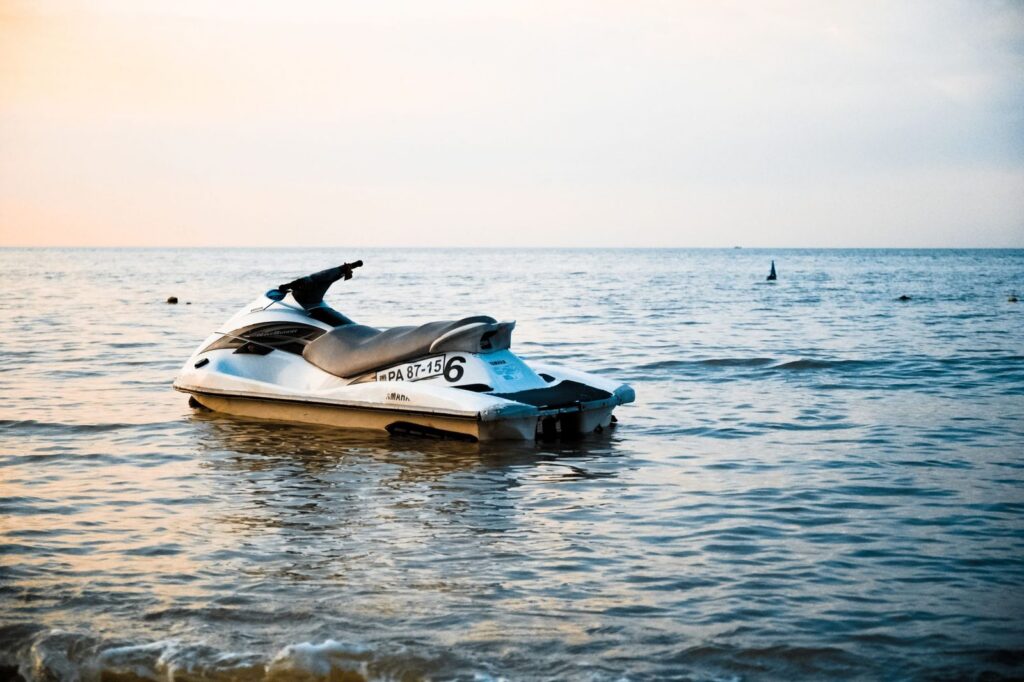
If you were struck by a jet ski while swimming, wading, or in another vessel, the jet ski operator may be liable for your injuries under maritime law. The operator’s liability depends on whether they breached a duty of care. Examples include operating at excessive speed, failing to maintain a proper lookout, operating under the influence, or operating a defective or poorly maintained jet ski.
You may have a claim even if you were also partly at fault. Maritime law allows recovery in comparative-fault cases, though your damages may be reduced by your percentage of fault. For example, if you were struck while swimming in a marked jet ski lane and the operator was speeding, you might recover full damages. But if you were swimming in the operator’s path and the operator was traveling at a reasonable speed, your recovery might be reduced.
Rental company liability. If the jet ski was rented, the rental company may also be liable if they:
- Failed to maintain the jet ski in safe operating condition
- Failed to warn of known hazards or defects
- Rented to someone they knew was unfit to operate it (for example, someone who was intoxicated or had no boating experience)
- Failed to provide proper instruction or safety equipment
Manufacturer liability. If the jet ski was defective—faulty brakes, steering failure, engine malfunction, or design defect—the manufacturer or seller may be liable under product-liability law. A product-liability claim can apply alongside a maritime negligence claim, expanding the sources of recovery.
Who Is Responsible for Avoiding a Collision Between Jet Skis or Vessels?
Under maritime law and the U.S. Coast Guard’s Navigation Rules, both operators have a duty to keep a proper lookout and to take action to avoid collision. The rules assign right-of-way based on the relative position and direction of travel of the two vessels.
Generally, a vessel on the right (starboard) has the right of way over a vessel on the left (port). The operator with the right of way must maintain course and speed. The operator without the right of way must yield and take evasive action.
If both operators failed to avoid a collision, both may share liability. Maritime law allows the injured party to recover even if the other operator was not solely at fault. However, the injured party’s damages may be reduced by their own percentage of fault.
Factors that increase an operator’s liability for a collision include:
- Excessive speed
- Failure to maintain a proper lookout
- Operating at night without proper lighting
- Operating under the influence of alcohol or drugs
- Reckless or aggressive maneuvering
- Ignoring Navigation Rules or Coast Guard regulations
If you were partly at fault for a jet ski accident, you may still recover damages under maritime law. Talk it through with our team — the first consultation is free, confidential, and carries no obligation.
Catastrophic Jet Ski Injuries and Maritime Claims
Jet ski accidents can cause severe, life-altering injuries. These include:
- Spinal cord injuries and paralysis (paraplegia or quadriplegia), often from impact trauma or drowning
- Traumatic brain injuries (TBI), ranging from concussion to permanent cognitive and physical impairment
- Amputations and limb loss from propeller strikes or crushing injuries
- Severe burns from fuel fires or engine contact
- Catastrophic back and neck injuries causing chronic pain and permanent disability
Maritime law allows recovery for the full scope of damages caused by these catastrophic injuries. This includes:
- All past and future medical expenses, including hospitalization, surgery, rehabilitation, and therapy
- Assistive devices and equipment (wheelchairs, braces, mobility aids)
- Home modifications (ramps, accessible bathrooms, specialized beds)
- Lost wages and lost earning capacity (often the largest component in a catastrophic case)
- Pain and suffering
- Permanent disability and reduced quality of life
In a fatal jet ski accident, the family of the deceased may bring a wrongful-death claim under maritime law. The claim is brought on behalf of the deceased’s estate and the surviving dependents. Damages in a wrongful-death maritime case include the deceased’s lost earnings, the loss of companionship and support to surviving family members, and funeral and burial expenses. The time limit to file a wrongful-death claim is typically three years from the date of death.
Common Challenges in Jet Ski Accident Maritime Claims
Determining navigable waters. Determining whether the accident occurred on navigable waters can be complex. If there is doubt, both maritime law and state law may apply. The choice of law can significantly affect the outcome. An attorney experienced in maritime claims can help clarify which law applies to your specific location.
Identifying liable parties. Jet ski operators are often uninsured or underinsured. Identifying all potentially liable parties is essential to maximizing recovery. These may include the operator, the rental company, the manufacturer, and the property owner if the accident occurred near a marina or resort.
Proving negligence. Proving negligence requires evidence of the operator’s actions at the time of the accident. Eyewitness testimony, video footage, photographs, and expert reconstruction may be necessary. In the catastrophic-injury cases our attorneys handle, detailed evidence collection and expert analysis are often critical to establishing liability and quantifying damages.
Evidence preservation. Jet ski accidents often occur in remote locations or at night, making evidence collection difficult. Prompt investigation is critical. The jet ski itself, photographs, video, and witness statements must be preserved before they are lost or destroyed.
Insurance disputes. Insurance disputes are common. The operator’s or rental company’s insurer may deny coverage or dispute liability, requiring negotiation or litigation to resolve.
What Legal Steps Should You Take After a Jet Ski Accident?
Seek immediate medical attention. Get medical care for any injury, no matter how minor it seems. Some catastrophic injuries—spinal cord damage, internal bleeding, brain injury—may not be immediately apparent. A medical evaluation creates a record of your injuries and begins the documentation necessary for your claim.
Report the accident. If the accident occurred on navigable waters, report it to the U.S. Coast Guard. The Coast Guard maintains records and may investigate. Also report the accident to your own insurance company and to the jet ski rental company (if applicable).
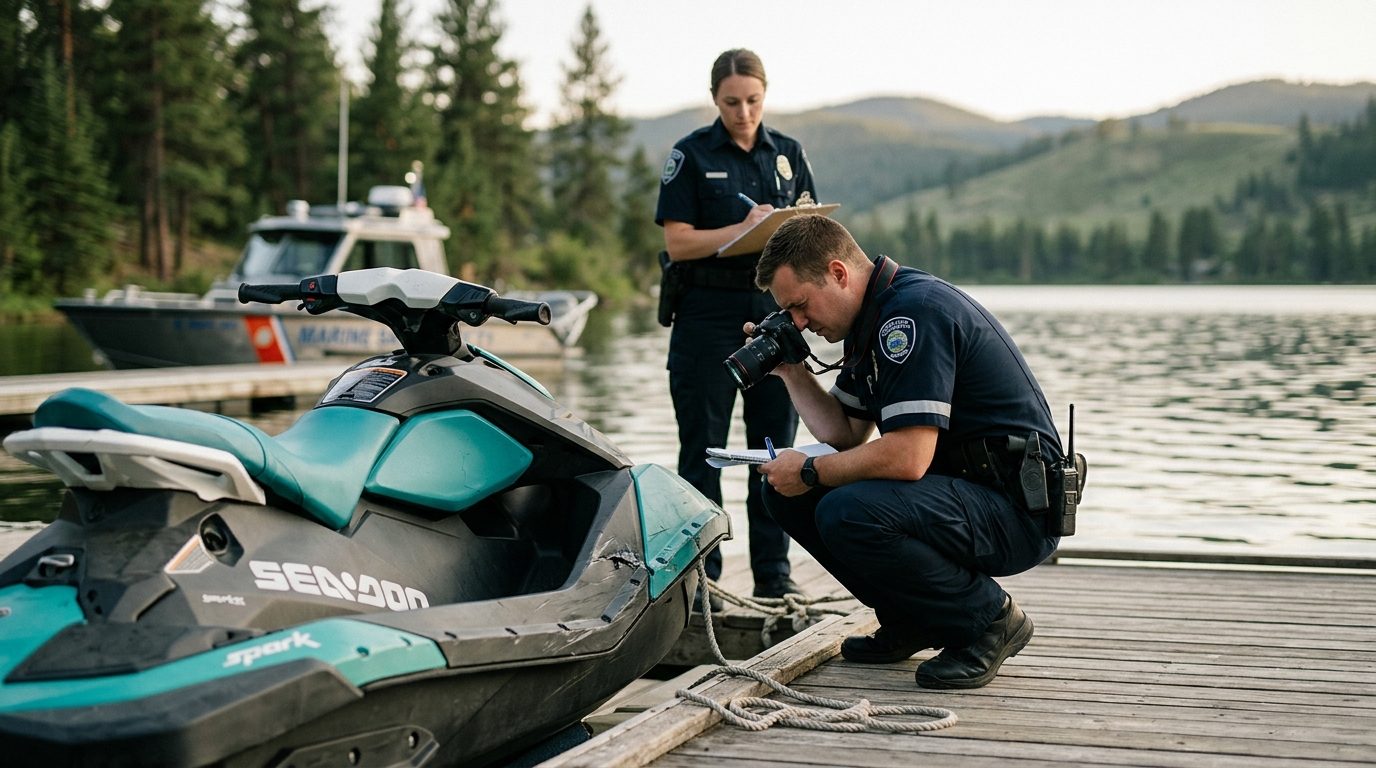
Document the scene. Take photographs of the jet skis, the water conditions, any debris, and the surrounding area. Note the date, time, weather, and water conditions. Photograph any visible injuries.
Collect contact information. Get the names, phone numbers, and addresses of witnesses, the other operator, and any bystanders. Ask them what they saw.
Preserve evidence. Do not allow the jet ski to be repaired or scrapped. Do not discard clothing or equipment. Do not delete photographs or videos. Preserve everything that might be relevant to your claim.
Do not settle quickly. Do not sign any settlement or release without legal advice. Insurance companies often offer quick settlements that do not fully compensate for catastrophic injuries. A settlement offer made days or weeks after the accident, before your injuries are fully diagnosed or your medical prognosis is clear, is likely to be inadequate.
How to Recover Damages for Your Jet Ski Accident Injury
A maritime claim for a jet ski accident injury can be resolved through negotiation with the at-fault operator’s insurance company, or through litigation if a settlement cannot be reached.
Damages in a maritime jet ski accident case include:
- Medical expenses (past and future)
- Rehabilitation and therapy
- Assistive devices and home modifications
- Lost wages and lost earning capacity
- Pain and suffering
- Permanent disability
In a catastrophic injury case, damages can be substantial. The injured person may require lifetime care and support. For example, a person with a spinal cord injury resulting in paralysis may require decades of medical care, home health aides, assistive equipment, and accessibility modifications. These costs can total millions of dollars over a lifetime.
An attorney experienced in maritime law can help you:
- Identify all liable parties and sources of recovery
- Gather evidence and preserve the record
- Calculate damages based on your specific injuries and prognosis
- Negotiate with insurance companies
- Litigate your claim if necessary
The three-year statute of limitations under maritime law means you must file suit within three years of the accident. Do not delay in seeking legal advice.
Not sure what your next step is?
Talk it through with our team — the first consultation is free, confidential, and carries no obligation.
Next Steps: Understanding Your Maritime Claim
If you or a family member was injured in a jet ski accident on Florida waters, maritime law likely governs your claim. The legal framework that applies to your case—maritime law versus state law—affects your rights, the damages you can recover, and the time limits to act.
An attorney who understands maritime law can explain how it applies to your specific accident and what you can expect in the claims process. Many people injured in jet ski accidents are unsure whether they have a claim or what maritime law means. That uncertainty is normal. It is exactly why legal guidance early in the process matters.
If you were struck by a jet ski or injured in a collision on Florida waters, maritime law likely governs your claim. You may have legal options you’re not yet aware of. Reach out to discuss what happened and what comes next. People in your situation reach out regularly, and you don’t have to face this alone.
Frequently Asked Questions
What is the statute of limitations for a jet ski accident claim in Florida?
Under maritime law, you generally have three years from the date of the accident to file suit. This deadline is strict; if you do not file within three years, your claim is barred.
Can I recover damages if I was partly at fault for the jet ski accident?
Yes. Maritime law allows recovery even if you were partly at fault, though your damages are reduced by your percentage of fault.
Who can be held liable for a jet ski accident?
The jet ski operator, the rental company, the manufacturer, and the property owner (if applicable) may all be liable, depending on the facts of the accident.
What damages can I recover in a jet ski accident case?
You can recover medical expenses, lost wages, lost earning capacity, pain and suffering, assistive devices, home modifications, and permanent disability. You can recover the full scope of damages caused by your injury.
Does maritime law apply to all jet ski accidents in Florida?
No. Maritime law applies only to accidents on navigable waters. If your accident occurred in a private pool or small pond, state negligence law would apply instead.
What should I do immediately after a jet ski accident?
Seek medical attention, report the accident to the Coast Guard and your insurance company, document the scene with photographs, collect witness information, and preserve all evidence. Do not sign any settlement without legal advice.
Can a jet ski rental company be held liable?
Yes. A rental company can be liable if it failed to maintain the jet ski, failed to warn of hazards, or rented to someone unfit to operate it.
Related Resources:
- Jet Ski Accidents
- Maritime Claims
- Spinal Cord Injury & Paralysis
- Traumatic Brain Injury (TBI)
- Amputation & Limb Loss
- Severe Burn Injuries
- Wrongful Death Claims
Time Matters in Maritime Claims
Maritime law sets a three-year window from the date of your accident to file a claim. This deadline is important and should not be overlooked. If you've been injured in a jet ski accident or other water-related incident, contact an attorney as soon as possible to protect your rights.
What Makes Maritime Claims Different
Federal Maritime Law Applies
Jet ski accidents and other water-based injuries fall under federal maritime law, not standard state personal injury rules. This means different rules about liability, damages, and how your claim is handled.
Comparative Fault Rules
Maritime law allows recovery even if you bear some responsibility for the accident. Your damages may be reduced by your percentage of fault, but you can still pursue a claim.
Broader Damage Categories
Maritime claims can include medical expenses, lost wages, pain and suffering, and in catastrophic cases, permanent disability or wrongful death damages for your family.
Vessel Owner & Operator Liability
The owner or operator of a jet ski or boat may be held liable for injuries caused by negligence, equipment failure, or unsafe operation—even if they weren't directly involved in the collision.
Why You Need Legal Guidance for a Maritime Injury
Complex Legal Rules
Maritime law involves federal statutes, admiralty principles, and rules that differ significantly from land-based injury law. An attorney who focuses exclusively on catastrophic maritime claims can navigate these complexities.
Insurance & Liability Issues
Jet ski accidents often involve multiple insurance policies, vessel owners, and operators. Understanding who is liable and which policies apply requires careful investigation.
Maximizing Your Claim
Maritime law allows for damages that may not be available in other injury claims. An attorney can identify all available recovery sources and pursue compensation on your behalf.
Meeting Deadlines
The three-year filing window is firm. Early action ensures evidence is preserved, witnesses are interviewed, and your claim is filed before time runs out.
Types of Maritime Injuries We Handle
Jet Ski Collisions
High-speed collisions between jet skis, or between a jet ski and a boat, can cause spinal cord injuries, traumatic brain injuries, amputations, and severe burns.
Drowning & Near-Drowning
Catastrophic brain injury can result from submersion. Survivors may face permanent cognitive and physical impairment; families may pursue wrongful-death claims.
Boat Accidents
Negligent operation, equipment failure, or unsafe conditions on a vessel can cause life-altering injuries to passengers and other water users.
Watercraft Equipment Failure
Defective jet skis, boats, or safety equipment may be the cause of your injury. Manufacturers and sellers can be held liable for unsafe products.
Comparative Fault in Maritime Cases
If you were partly at fault for a jet ski accident, you may still recover damages under maritime law. Your recovery will be reduced by your percentage of responsibility, but you are not barred from filing a claim. This is an important protection that differs from some state injury laws.