
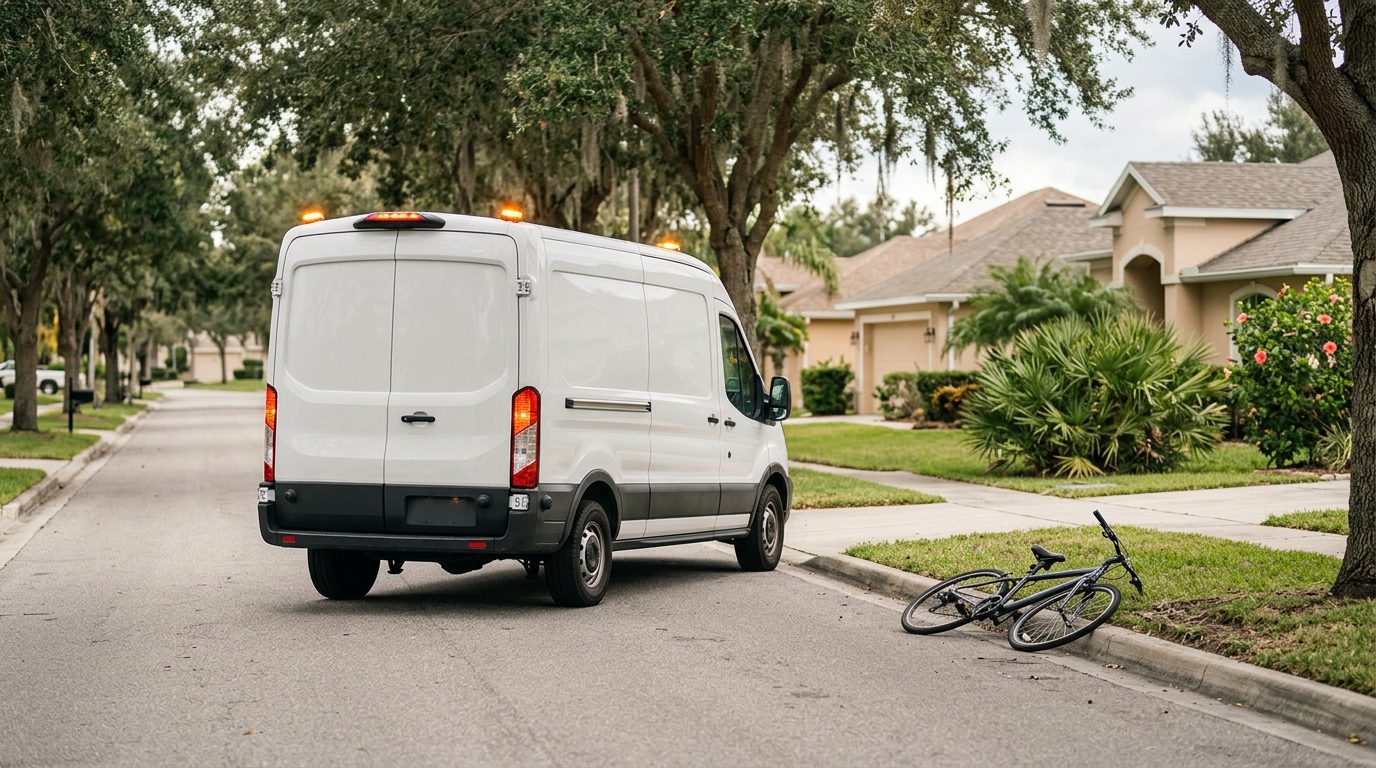
Bicycle Accidents | Serving Florida
Hurt on a Bike in Florida? You Don't Have to Sort Out What Comes Next Alone
Whether a driver, a road hazard, or a rough day on the pavement caused the crash, our team can help you understand your options and make sense of the steps ahead.
By CHG Lawyers · Published November 12, 2026
A bicycle accident can turn an ordinary ride into weeks of pain, doctor visits, and lost work. If you were hit or knocked off your bike in Florida, you may have many questions at once.
Here is the short answer. After a bicycle accident in Florida, take three first steps:
- Get medical care.
- Make sure the crash is reported.
- Write down what happened.
You may have a claim against the at-fault driver. Other insurance coverage may also apply.
What Happens After Bicycle Accidents in Florida
The first steps are medical care, a crash report, and a clear record of the scene. Start with your health.
Some injuries do not show symptoms right away. Internal bleeding and a concussion are examples. Symptoms can appear days later. An early medical record links those symptoms to the crash. Follow your doctors’ care and keep every appointment.
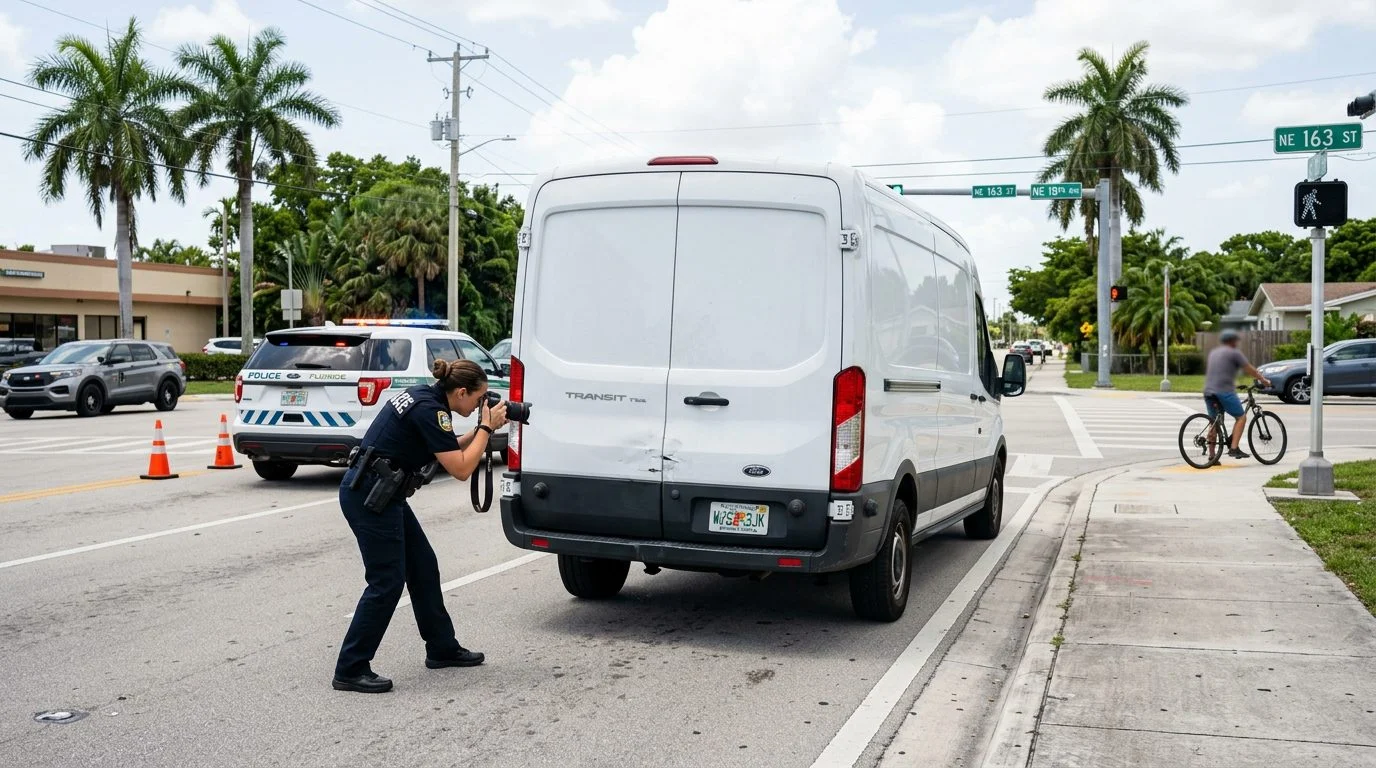
Next, make sure the crash is documented. Florida law requires a Florida Traffic Crash Report, Long Form, in certain cases. Florida law requires a Florida Traffic Crash Report, Long Form, in certain cases. This includes a motor vehicle crash that results in death, personal injury, or complaints of pain or discomfort, a crash involving a violation of s. 316.061(1) or s. 316.193, a crash that leaves a vehicle inoperable enough to need a wrecker to remove it from the scene, and a crash involving a commercial motor vehicle.
The report must be submitted within 10 days after an officer finishes an investigation. This applies to a crash that results in death, personal injury, or complaints of pain or discomfort. § 316.066
The report lists the parties, vehicles, and insurance companies. It is often the first official record of what happened.
If you can, document the scene. Take photos of your bike, the vehicles, the road, and any damage. Write down the time, the location, and the weather. Get names and phone numbers from witnesses. Keep your helmet and damaged gear. If you cannot do this yourself, a family member can help.
Not sure what your next step is?
Talk it through with our team — the first consultation is free, confidential, and carries no obligation.
Common Causes of Bicycle Accidents
Many bicycle accidents involve a driver who:
- failed to see the cyclist,
- failed to yield, or
- did not leave enough room.
These crashes often happen in ordinary places, not on dangerous back roads.
Intersections, driveways, and turns are common trouble spots. A driver turning across a bike lane may not notice a rider going straight. Drivers who pass too closely can clip a handlebar or push a rider toward the curb. Distraction from phones and other screens makes these mistakes more likely.
Road conditions matter too. Potholes, debris, and poorly marked lanes can cause a cyclist to lose control. Worn brakes, a failed part, or alcohol impairment can also play a role. Each factor is examined in the context of the whole crash.
Florida’s standard jury instruction on legal cause
This is why the details of how the crash happened matter so much.
Dooring and Hit-and-Run Crashes
“Dooring” happens when a parked car’s door opens into a cyclist’s path. A hit-and-run happens when the driver leaves the scene. Both can leave a cyclist badly hurt and unsure where to turn.
In a dooring crash, the person who opened the door may be responsible. In some cases, the vehicle’s owner may also face liability, which means legal responsibility. Florida has applied this idea since 1920.
The owner can be held responsible even if the owner did not drive. (Aurbach v. Gallina)
Florida law requires a driver in a crash that causes injury or death to stop at the scene and stay there.
Leaving the scene does not end the search for a driver. Witnesses, video, and parts left at the scene can help identify the vehicle.
If the at-fault driver cannot be found or has no insurance, your own uninsured motorist coverage may matter. § 627.727 This statute addresses the limits of uninsured and underinsured motorist coverage. Fla. Stat. § 627.727 reads: “Unless an insured, or lessee having the privilege of rejecting uninsured motorist coverage, requests such coverage or requests higher uninsured motorist limits in writing, the coverage or such higher uninsured motorist limits need not be provided in or supplemental to any other policy which renews, extends, changes, supersedes, or replaces an existing policy with the same bodily injury liability limits when an insured or lessee had rejected the coverage.” Check your policy and keep a copy.
Injuries Cyclists Commonly Suffer
Cyclists often suffer broken bones, head injuries, road rash, and internal injuries. Some riders suffer spinal cord damage that changes their lives. Symptoms can take time to show.
Fractures are common. Wrists, collarbones, hips, and legs often break when a rider hits the pavement. Facial and dental injuries can require surgery and months of follow-up care.
Head injuries deserve close attention. A concussion or a more serious traumatic brain injury can change memory, mood, and thinking. Early symptoms may seem mild. A medical check matters.
The spine needs special care. The spinal cord sits inside a column of bone. Three layers of tissue protect it. Cerebrospinal fluid cushions it against shock. Cerebrospinal fluid is the clear fluid that surrounds the brain and spinal cord. NINDS
When the cord is damaged, movement and feeling can change. Learn more about spinal cord injuries.
Catastrophic and Fatal Bicycle Accidents
A bicycle crash can cause permanent injuries. When a crash causes a death, Florida law allows the family to bring a wrongful death claim.
Some crashes cause paralysis, limb loss, or lasting brain injury. Families may face years of medical care, equipment, home changes, and lost income. Read more about paralysis, paraplegia, and quadriplegia and amputation injuries.
When a cyclist dies, Florida law gives the family a path forward. A wrongful death claim is brought by the personal representative. This is the person appointed to manage the deceased person’s estate, meaning the property and affairs left behind. That person recovers damages, which are money awarded for losses. The damages go to the survivors and the estate. § 768.20
Florida’s wrongful death act says the personal representative brings the action. The personal representative recovers for the benefit of the decedent’s survivors and estate. § 768.19 Recovery is allowed when the injured person would have been entitled to sue had death not occurred. § 768.19
§ 768.19 does not address a surviving spouse’s losses; it makes the wrongdoer liable for damages as specified in the wrongful death act, and the spouse’s losses are handled in that wrongful death case. Ripple v. CBS Corp.
Families should keep the crash report, medical bills, photos, and the bike if it is safe to keep. Speaking with a lawyer early can help protect these options. Learn more about wrongful death claims.
Who May Be Responsible for a Bicycle Crash
The at-fault driver is the first party to consider. That driver’s liability insurance may pay for the cyclist’s losses, within the policy limits.
Other parties may share responsibility, depending on the facts. Commercial and delivery vehicles are one example. Read about truck accidents, Amazon truck accidents, and FedEx truck accidents.
Rideshare crashes follow their own rules. A transportation network company driver must carry proof of coverage. After an accident, the driver must share coverage information with the parties involved.
On request, the driver must disclose two things:
- whether he or she was logged on to the digital network, and
- Upon request by a party directly involved in the accident or the party’s designated representative, automobile insurers, or investigating police officers, the driver must also disclose whether he or she was engaged in a prearranged ride at the time of the accident.
This applies when the request comes from:
- a party directly involved in the accident, or that party’s designated representative,
- automobile insurers, or
- investigating police officers.
§ 627.748 Read more about rideshare accidents.
Government entities are different. There are also dollar caps. § 768.28
If an unsafe construction zone contributed to the crash, the company running the work may share responsibility. Under § 768.28, the paragraph on firms that monitor and inspect transportation projects does not apply to a firm engaged by the Department of Transportation for the design or construction of a state roadway, bridge, or other transportation facility construction project.
Not sure what your next step is?
Talk it through with our team — the first consultation is free, confidential, and carries no obligation.
How Florida Fault Rules Affect Your Claim
Florida uses a modified comparative fault rule. “Comparative fault” means fault can be shared between the driver and the cyclist. (Fla. Stat. § 768.81(6))
Here is how the law works in a negligence action, which is a lawsuit based on carelessness. Under Florida law, a cyclist found more than 50 percent at fault may not recover any damages, and a smaller share of fault lowers the amount recovered. (Fla. Stat. § 768.81(6))
Under Florida’s comparative fault rules, the evidence about each party’s actions matters (Fla. Stat. § 768.81(6)).
Florida also divides fault among responsible parties. In a negligence case, the court enters judgment against each party. The judgment is based on that party’s percentage of fault. The court does not hold each party responsible for the full amount. § 768.81
Helmet use, lighting, and following traffic laws are facts a court or insurer may examine. They are part of the picture, not the whole story. Insurers often look at them first. Write down what you remember early.
Insurance Coverage for Cyclists in Florida
Florida’s no-fault law sets up personal injury protection, often called PIP. PIP is a type of no-fault coverage. The Florida Motor Vehicle No-Fault Law governs this system. § 627.730
§ 627.736 Whether PIP applies to a cyclist depends on the policy and the facts.
The at-fault driver’s bodily injury liability coverage may pay for the injuries that driver caused. That coverage has limits. Serious injuries can exceed those limits.
Uninsured and underinsured motorist coverage may matter too. § 627.727 If the at-fault driver’s insurance is not enough, a settlement may require notice. Under Fla. Stat. § 627.727(6)(a), if an injured person or, in a death case, the personal representative agrees to settle a claim with a liability insurer and its insured, and the settlement would not fully satisfy the claim for personal injuries or wrongful death so as to create an underinsured motorist claim, then written notice of the proposed settlement must be submitted by certified or registered mail to all underinsured motorist insurers that provide coverage. Each such insurer then has 30 days after receipt to consider authorizing the settlement or retaining its subrogation rights.
Be careful with insurers. An adjuster is the insurance company’s claims representative. The adjuster works for the insurance company, not for you. A recorded statement or a quick settlement offer can affect your claim. Talk with a lawyer before you sign anything or give a statement.
Florida Deadlines for Bicycle Accident Claims
Florida generally allows two years to file a negligence lawsuit. § 95.11 Missing that deadline can end your options.
Other claims can follow different rules and timelines. Wrongful death claims and claims against government entities are examples. Do not assume you have more time than the law gives you.
Contact a lawyer promptly. That protects both the deadline and the evidence.
Bicycle Accident Statistics in Florida and the United States
Public crash data helps show patterns in traffic deaths and injuries. The National Highway Traffic Safety Administration runs the Fatality Analysis Reporting System (FARS). FARS tracks fatal traffic crashes.
Crash data is updated over time, so the year matters. Always check where a figure comes from and when it was reported.
Florida crash reports also record the time, the vehicles, the parties, and their insurers. § 316.066 That detail is useful for a single case.
Statistics describe patterns across many crashes. They do not decide any one claim. The facts of your crash, your medical records, and the evidence do that work.
Frequently Asked Questions About Bicycle Accidents
What daily problems do cyclists face on Florida roads?
Cyclists often share lanes with cars. They face distracted drivers, potholes, and debris. These everyday hazards are why the crash details matter.
What are the most common causes of cyclist deaths?
Federal crash data tracks fatal crashes by circumstance. The causes covered above, including turns, overtaking, and distraction, come up often in crash reports.
Can I still recover if I was partly at fault for a bicycle accident?
This rule does not apply to an action for personal injury or wrongful death arising out of medical negligence under chapter 766. ch. 2023-15, Laws of Fla. Each case turns on its own facts, so talk with a lawyer about yours.
Should I speak with the other driver’s insurance adjuster?
Be careful. An adjuster works for the insurer. A recorded statement can affect your claim. Talk with a lawyer before you give a statement or accept an offer.
Not sure what your next step is?
Talk it through with our team — the first consultation is free, confidential, and carries no obligation.
Florida Bicycle Accident Guides and Local Pages
Our Florida guides cover injury types, responsible parties, and the claim steps that matter after a bicycle crash. Our firm is based in Florida and serves clients throughout the state.
Crashes happen across the state, from Miami and Hialeah to Orlando, Tampa, and Jacksonville. The same basic steps apply. Local roads and traffic patterns can still shape the facts of each case.
Related guides cover traumatic brain injuries, spinal cord injuries, wrongful death, and rideshare accidents. We publish educational content in English and Spanish.
Talk With Our Florida Bicycle Accident Lawyers
Igor Hernandez, one of the firm’s lawyers, is responsible for this page. CHG Personal Injury Lawyers is based in Florida.
The first consultation is free, confidential, and comes with no obligation to continue. CHG charges no attorney’s fees and no case costs unless there is a recovery.
Are you deciding whether to deal with the driver’s insurer after a bike crash? You do not have to work out the next step alone. The same is true if your family is weighing a wrongful death claim. Contact CHG Personal Injury Lawyers to talk through what happened and what your options may be.
Why Florida Cyclists Bring Their Cases to CHG
Florida-Based Firm
CHG Personal Injury Lawyers serves people throughout Florida, from Miami and Fort Lauderdale to Orlando, Tampa, and Jacksonville.
Licensed Attorneys
Our attorneys are admitted to The Florida Bar and handle bicycle crash claims under Florida law.
No Fees Unless There Is a Recovery
The firm charges no attorney's fees and no case costs unless there is a recovery.
Free, Confidential Consultation
Your first consultation is free, confidential, and comes with no obligation to continue.
Plain-Language Guidance
We explain each step in clear terms, in English or Spanish, so you and your family can make informed decisions.
Before You Talk to an Insurance Company
Insurance adjusters may call soon after a crash and ask for a recorded statement. Speaking with a lawyer first can help you understand what to say and what to hold back. Always follow your doctors' care plan.
Steps to Take After a Bicycle Crash
Get Medical Care
See a doctor as soon as you can, even if your injuries seem minor. Some injuries, such as head trauma, may not show symptoms right away.
Document the Scene
If you are able, photograph the location, your bicycle, visible injuries, traffic signs, and road conditions. Write down names and contact details for any witnesses.
Keep Your Records
Save medical bills, repair estimates, work-absence notes, and any messages about the crash. Keep your bicycle and damaged gear if you can.
Speak With a Lawyer
A free, confidential consultation can help you understand your situation and the next steps, and our team can answer your questions in English or Spanish.