

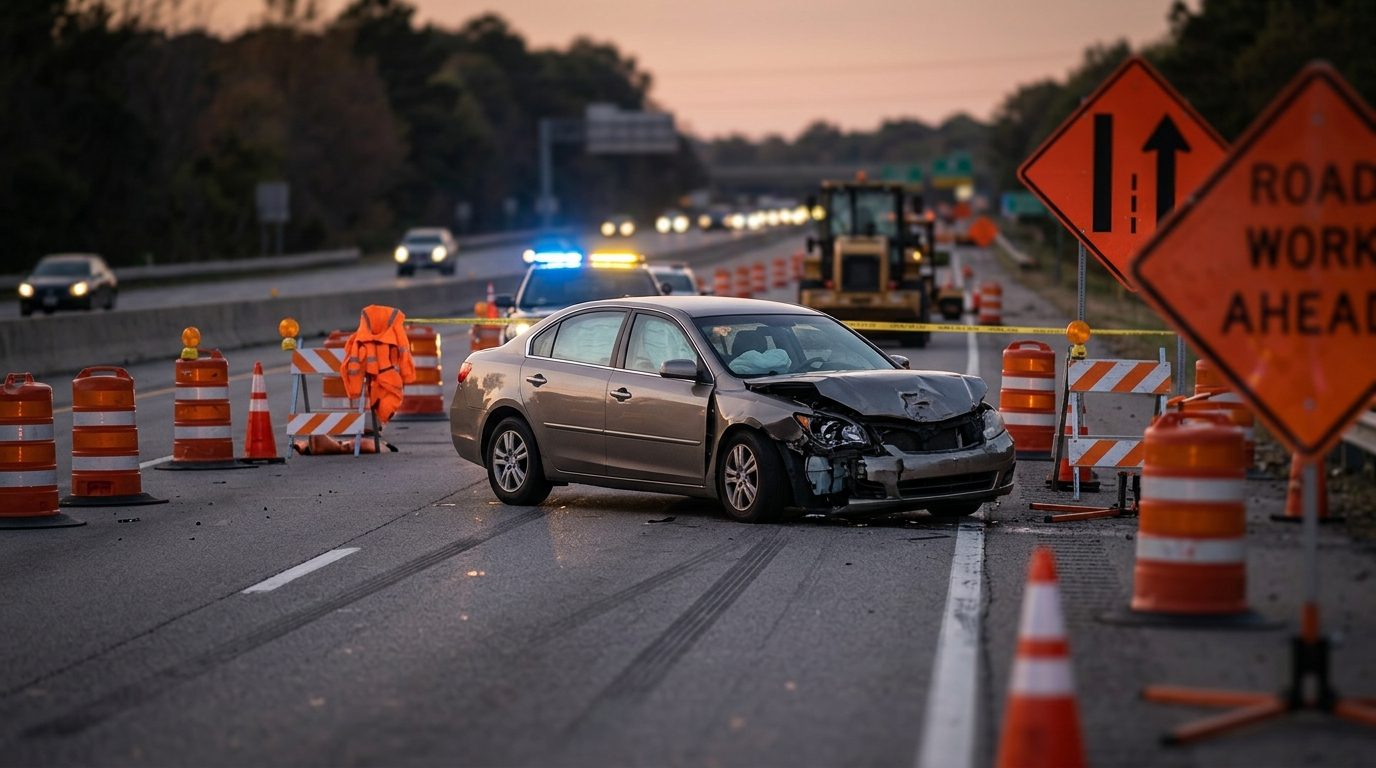
Construction Zone Accidents
Catastrophic Injuries from Construction Zone Accidents: Your Legal Path Forward
When negligence on a work site causes spinal cord injury, traumatic brain injury, amputation, or permanent disability, you deserve answers. CHG Personal Injury Lawyers is a Florida firm that handles catastrophic injury claims for people across Florida.
By CHG Lawyers · Published August 31, 2026
Catastrophic Construction Zone Accidents: Your Rights After a Serious Work Zone Crash
A construction zone accident that causes permanent paralysis, amputation, traumatic brain injury, or death is catastrophic. You may have a legal claim against the driver, contractor, traffic-control company, or property owner whose negligence caused it.
Construction zones are dangerous. Lanes shift without warning. Heavy equipment moves through the area. Visibility drops. Workers stand on the roadway. When someone fails to maintain safe conditions or warn drivers of danger, the result can be life-altering injury or death.
This guide explains what causes catastrophic construction zone injuries, who may be liable, what damages you can recover, and the critical 2-year deadline you face in Florida.
Not sure what your next step is?
Talk it through with our team — the first consultation is free, confidential, and carries no obligation.
What Causes Catastrophic Injuries in Construction Zone Accidents?
Catastrophic construction zone injuries usually stem from one or more safety failures:
- Inadequate or missing warning signs
- Broken or absent barriers
- Negligent equipment operation
- Unsafe work-zone design
- Failure to follow traffic-control rules
When a driver enters a construction zone at highway speed and hits an unexpected hazard—a stopped vehicle, heavy equipment, a sudden lane shift, or a worker—the result can be catastrophic. The driver may collide with equipment, roll the vehicle, or strike a worker.
If the work zone lacked proper warning signs, reflectors, or barriers, or if traffic-control personnel failed to alert drivers, the contractor, traffic-control company, or work-zone manager may share responsibility.
Common scenarios include:
- Inadequate signage or barriers: Work zones that fail to provide sufficient advance warning (typically 500 to 1,000 feet before the hazard, depending on speed) or physical barriers to separate traffic from the work area.
- Negligent equipment operation: Heavy machinery (excavators, cranes, dump trucks) operated unsafely or positioned in the travel lane without proper warning or spotters.
- Lane shift without warning: Sudden, unmarked changes in traffic flow that catch drivers off guard, especially at night or in poor visibility.
- Poor visibility: Dust, debris, or inadequate lighting that obscures hazards or workers.
- Failure to deploy traffic control: Missing or inattentive flaggers, or traffic-control devices that malfunction or are not maintained.
The result—spinal cord injury causing paralysis, amputation, traumatic brain injury, or fatal crash—transforms the injured person’s life and the family’s future permanently.
Who Is Liable in a Construction Zone Accident?
Liability in a construction zone accident may extend far beyond the at-fault driver. Florida law recognizes that multiple parties can share responsibility for negligence.
The at-fault driver bears primary liability if they were speeding, distracted, or failed to heed warning signs. However, the driver’s liability does not erase the responsibility of others.
Contractors and construction companies are liable if they failed to:
- Post adequate warning signs at safe distances before the work zone (as required by the Manual on Uniform Traffic Control Devices, or MUTCD).
- Install proper barriers, cones, or reflectors to separate traffic from hazards.
- Maintain safe work-zone design and layout per industry standards.
- Ensure equipment is operated safely and positioned away from traffic.
- Deploy trained traffic-control personnel and maintain their attentiveness.
Traffic-control companies hired to manage work-zone safety are liable if they failed to follow MUTCD standards, deploy flaggers, or maintain traffic-control devices.
The property owner or entity that hired the contractor may be liable if they failed to oversee work-zone safety or enforce safety protocols.
Under Florida Statute §768.81 (comparative fault), you can recover damages even if you bore some responsibility for the accident—as long as you were 50% or less at fault. If the construction zone was poorly marked and you were speeding, a jury might find you 30% at fault and the contractor 70% at fault. You would recover 70% of your damages.
Catastrophic Injuries in Construction Zone Crashes
Construction zone accidents frequently result in the most severe injuries: spinal cord damage, traumatic brain injury, amputation, and death.
Spinal cord injury and paralysis: A collision with heavy equipment or a high-speed impact can sever or severely damage the spinal cord. This causes permanent paralysis—paraplegia (loss of function in the legs) or quadriplegia (loss of function in all four limbs). According to the National Spinal Cord Injury Statistical Center, approximately 18,482 new spinal cord injuries occur each year in the United States, with vehicle-related causes accounting for 37.1% of cases. A person with quadriplegia loses independence, mobility, and often employment. They require lifelong attendant care, mechanical ventilation, and specialized equipment. Lifetime medical costs for quadriplegia can be very high.
Traumatic brain injury (TBI): Impact with the windshield, dashboard, or equipment can cause severe brain trauma. This can result in permanent cognitive impairment, memory loss, personality changes, executive dysfunction, and loss of earning capacity. Many TBI survivors cannot return to their former occupation.
Amputation and limb loss: Crushing injuries from equipment or entanglement can result in loss of a limb. Amputation is permanent. It requires prosthetic devices, ongoing medical care, phantom pain management, and adaptation to a new way of life. Return to work is often limited or impossible.
Wrongful death: A catastrophic construction zone crash can be fatal. The family of a person killed in a work-zone accident may file a wrongful-death claim. This recovers damages on behalf of the deceased’s estate and surviving family members.
Damages You Can Recover
In a catastrophic construction zone injury case, damages (money awarded by a court or settlement) can include:
- Medical expenses: Emergency care, surgery, hospitalization, rehabilitation, and ongoing medical treatment. In spinal cord injury cases, lifetime medical costs can exceed $1 million to $5 million depending on severity.
- Lost wages: Income lost due to hospitalization, recovery, and permanent disability.
- Loss of earning capacity: Reduction in future earning potential due to permanent injury or inability to work. This is often the largest component in cases involving young, working-age victims.
- Long-term care costs: Nursing, attendant care, home modification, wheelchair accessibility, and medical equipment.
- Pain and suffering: Compensation for physical pain, emotional distress, and loss of quality of life.
- Wrongful-death damages: In fatal crashes, the family may recover for loss of companionship, support, and the deceased’s pain and suffering before death.
In catastrophic-injury cases, damages in construction zone accidents frequently reach hundreds of thousands or millions of dollars. This reflects the permanent nature of the injury and its lifelong impact.
Have questions about what happened?
Ask our team directly. The first conversation is free, confidential, and there is no obligation to continue.
The 2-Year Deadline: Florida’s Statute of Limitations
You have two years from the date of injury to file a personal-injury claim in Florida. This deadline is set by Florida Statute §95.11. If you miss this deadline, you lose your right to recover damages, even if you have a strong case.
The clock starts on the date of the accident. If you were injured on January 15, 2024, your deadline is January 15, 2026. Do not wait. Gathering evidence becomes harder as time passes. Witnesses move. Memories fade. Work-zone records are discarded. Seek medical care immediately and contact an attorney as soon as possible to preserve your claim.
What Evidence Proves Negligence in a Construction Zone Accident?
To hold the contractor, traffic-control company, or property owner liable, you must prove negligence: that they owed you a duty of care, breached that duty, and caused your injury as a result.
Evidence that supports a negligence claim includes:
- Photos or video of the work zone, showing missing or inadequate signage, barriers, or reflectors—or the absence of them.
- Witness statements from other drivers, workers, or bystanders who saw the hazard, the accident, or unsafe conditions.
- Traffic-control records: Logs showing whether flaggers were deployed, traffic-control devices were maintained, or safety protocols were followed.
- Work-zone permits and safety plans: Documents filed with the city or county showing the contractor’s planned safety measures and compliance with MUTCD standards.
- OSHA or traffic-safety inspection reports: Records of prior violations or safety deficiencies at the work zone.
- Accident reconstruction: Expert analysis of the crash scene, vehicle damage, and physics to determine how the accident occurred and whether the work-zone hazard was the cause.
- Medical records: Documentation of your injuries and their permanent nature.
- Prior complaints or incidents: Records of other accidents or near-misses at the same work zone.
An experienced attorney will investigate the accident scene, obtain work-zone records from the contractor and local authorities, and retain experts to build a strong case.
Frequently Asked Questions
What should I do immediately after a construction zone accident?
Call 911 if anyone is injured. Report the accident to police and request a copy of the accident report. Take photos and video of the work zone, vehicles, hazards, signage, barriers, and lighting conditions. Get contact information from witnesses. Seek medical attention immediately, even if you don’t feel injured. Some catastrophic injuries develop over hours or days. Do not admit fault or discuss the accident with the at-fault driver’s insurance company without an attorney present.
Can I recover damages if I was partially at fault?
Yes. Under Florida’s comparative fault law, you can recover damages as long as you were 50% or less at fault (Fla. Stat. § 768.81(6)). If you were speeding but the work zone lacked warning signs, a jury might find both parties negligent and award you a portion of your damages.
How long does a construction zone accident case take?
Simple cases may settle within months. Catastrophic injury cases involving permanent paralysis, amputation, or death often take 1–3 years or longer. They require extensive medical evidence, expert testimony, and negotiation. Your attorney will keep you informed of progress.
What if the contractor is insured?
Most contractors carry liability insurance. Your claim is typically filed against the contractor’s insurance policy. The insurance company will defend the contractor and negotiate a settlement. If settlement fails, the case proceeds to trial.
Is there a cap on damages in Florida?
Florida does not cap damages in personal-injury cases. You can recover the full amount of economic damages (medical expenses, lost wages) and non-economic damages (pain and suffering) that a jury awards.
Take Action Now
If you or a loved one suffered permanent paralysis, amputation, brain injury, or lost someone in a construction zone crash, you may have a claim against the driver, contractor, or property owner. Time is running out. The 2-year statute of limitations is a hard deadline.
Contact us to discuss what happened and learn whether you have a case. People in your situation can reach out, and we’re here to help.
Want to know where you stand?
Tell us what happened and our team will walk you through the options available to you, at no cost.
Why Construction Zone Accidents Demand Immediate Legal Action
Multiple Liable Parties
General contractors, subcontractors, equipment operators, site supervisors, and property owners may all bear responsibility. Identifying every party strengthens your claim.
Complex Evidence Requirements
OSHA records, safety violation logs, equipment maintenance reports, work permits, and site inspection photos are critical. These documents disappear or are altered without swift action.
Time-Sensitive Investigation
Witness memories fade, work sites are cleaned up, and evidence is lost. Early legal intervention preserves what matters most to your claim.
Catastrophic Injury Complexity
Spinal cord injuries, brain trauma, and amputations require specialized medical testimony, long-term care projections, and vocational experts to value your claim fully.
Do Not Delay—Act Now
Construction site injuries often involve workers' compensation claims, third-party liability claims, or both. The rules governing deadlines and evidence preservation are strict. Waiting weeks or months can forfeit your right to recover.
What Happens After a Construction Zone Accident
Immediate Steps at the Scene
Call 911 if anyone is injured. Request a police report and obtain a copy. Photograph the work zone, equipment, hazards, signage, barriers, and lighting. Collect witness names and contact information. Seek medical attention immediately—some catastrophic injuries develop over hours or days. Do not admit fault or sign anything beyond basic incident reports.
Medical Documentation & Records
Preserve all medical records, imaging (MRI, CT scans), surgical reports, and therapy notes. Document every treatment, medication, and specialist visit. Request records from emergency rooms, hospitals, rehabilitation facilities, and ongoing care providers. These records form the foundation of your injury claim.
Investigation & Evidence Gathering
Your attorney will obtain OSHA reports, safety violation citations, equipment maintenance logs, work permits, site plans, and contractor licensing records. Witness statements are secured early. Video surveillance from nearby properties is requested. Expert engineers and safety consultants may reconstruct what happened.
Liability & Damages Analysis
Your legal team identifies all responsible parties—contractors, equipment manufacturers, property owners, and others. Damages are calculated: medical expenses, lost wages, loss of earning capacity, pain and suffering, and the cost of long-term care and adaptive equipment for permanent disabilities.