
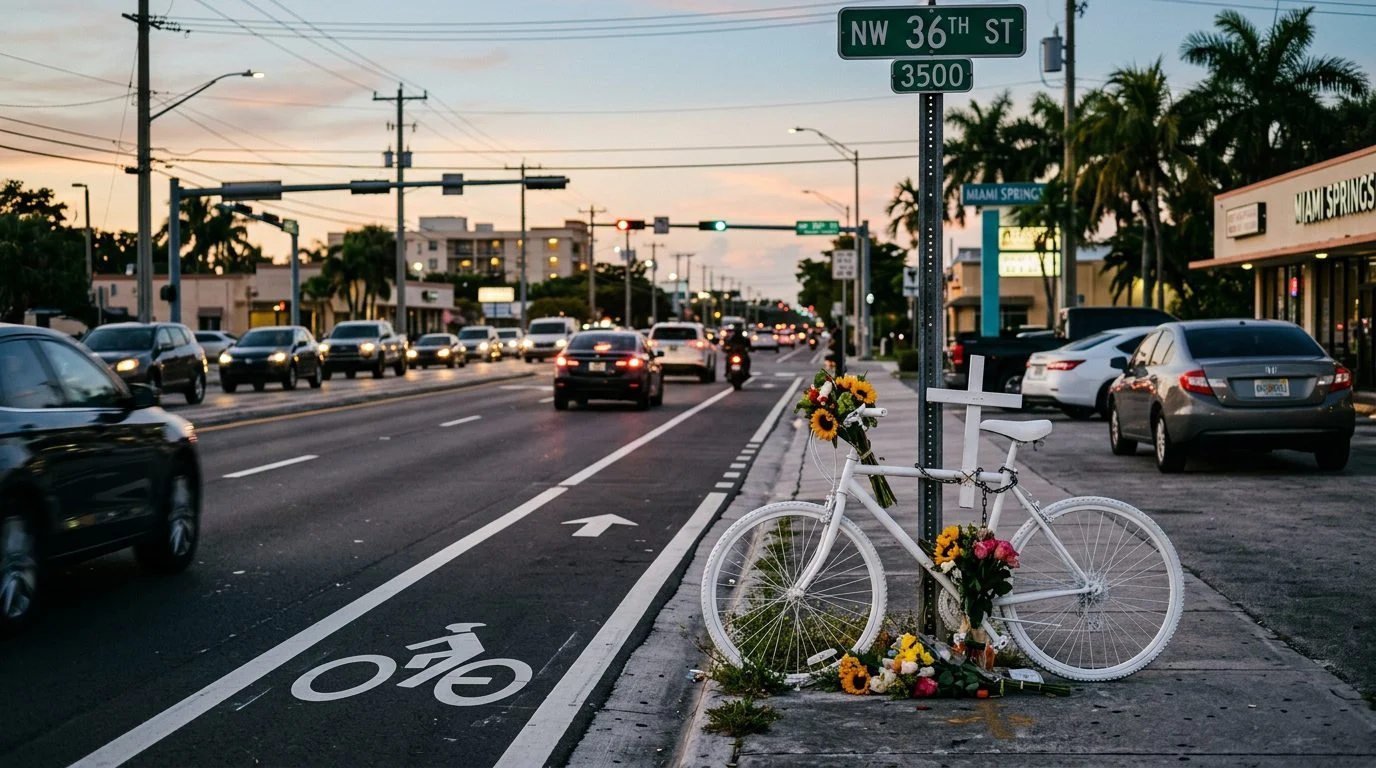
Bicycle Accidents | Miami Springs, Florida
Hurt on a Bike in Miami Springs? You Don't Have to Sort It Out Alone
Cyclists are often hit first and blamed later. Here is how to protect your health, your evidence, and your options after a crash.
Why Families Call CHG Personal Injury Lawyers
Florida
Florida-based firm serving clients throughout the state
Licensed
Attorneys admitted to The Florida Bar
Free
Confidential first consultation, with no obligation to continue
$0
No fees or case costs unless there is a recovery
By CHG Lawyers · Published November 21, 2026
Bicycle Accidents in Miami Springs: Your Rights After a Crash
A driver turned in front of you. Now you’re on the pavement after a bicycle accident in Miami Springs, shaken and hurting. You probably have two questions: what should you do, and who pays?
Here’s the short answer. If a driver’s carelessness caused your crash, you may have a claim for your injuries. Florida generally gives two years to file one.
Bicycle accidents in Miami Springs follow Florida’s general crash rules. They also follow some rules written just for riders. Knowing both can help you protect your health and your rights.
Not sure what your next step is?
Talk it through with our team — the first consultation is free, confidential, and carries no obligation.
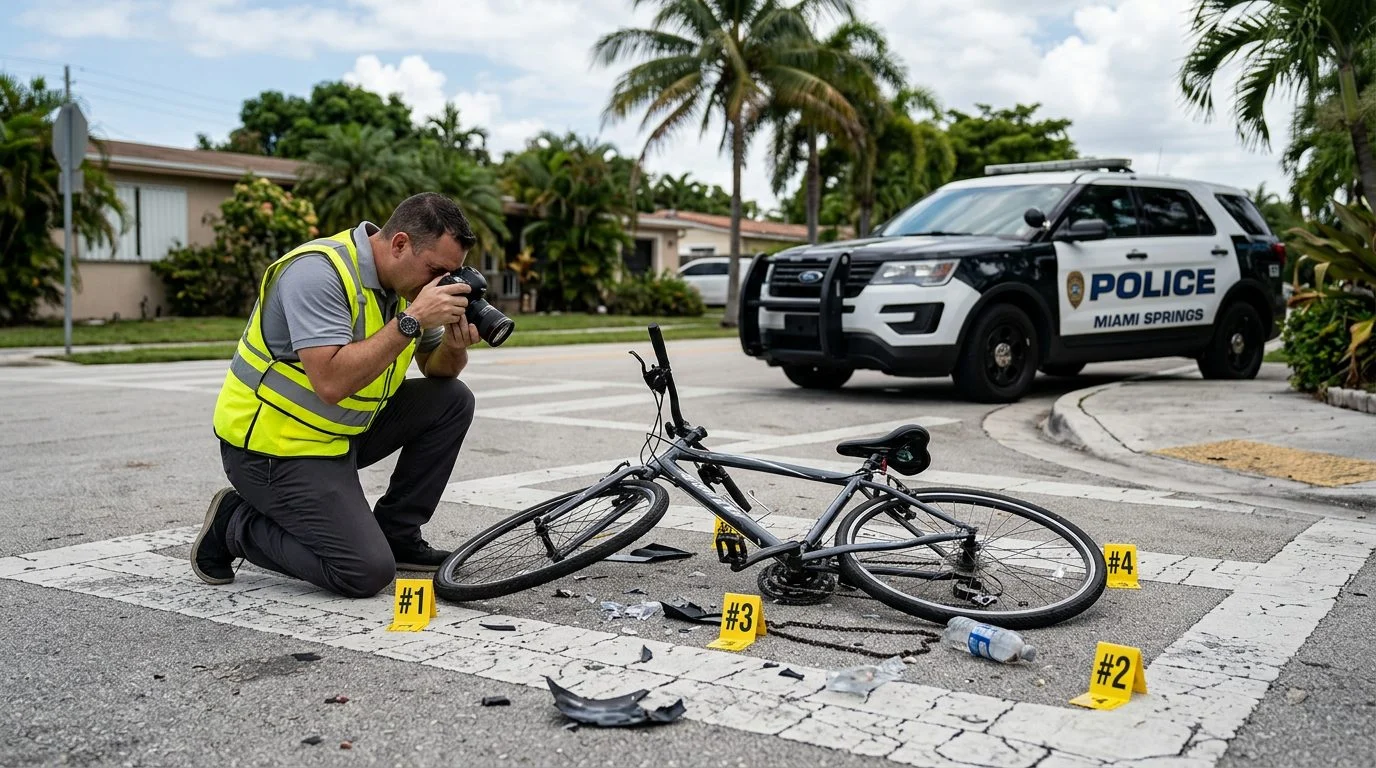
What to Do in the First Hours After a Bicycle Crash in Miami Springs
Get medical care first. Then protect the evidence. These steps matter most in the hours after a crash.
Get checked by a doctor the same day. Do this even if you feel mostly sore. Pain and stiffness can grow after a crash. Follow the care your doctors recommend, and keep every appointment. This guide is general information, not medical advice.
Call the police and ask for the report number. Florida requires a long-form crash report to be submitted within 10 days after the investigation is completed. This applies to crashes that resulted in death, personal injury, or any indication of complaints of pain or discomfort. Each party to a crash must give the officer proof of insurance, which must be documented in the crash report, under Fla. Stat. § 316.066(1)(d).
Take photos and collect details.
- Photograph the street, the intersection, your bike, your helmet, the vehicles, and any visible injuries.
- Write down the names and phone numbers of witnesses.
- Keep your bike, helmet, and torn clothing. Do not throw them out. They show how the crash happened.
- Save receipts for medical visits, prescriptions, and rides to appointments.
Why Bicycle Crashes Happen on Miami Springs Roads
Many bicycle crashes happen when a driver does not see the rider. Others happen when a driver does not yield to them. Common patterns include:
- A driver turning across a rider’s path
- A driver who fails to check for bikes at an intersection
- Distracted or impaired driving
- Vehicles passing too close
Riders in Miami Springs share streets in Miami-Dade County with cars, trucks, and buses. Mixed traffic leaves little room for error, for riders and drivers alike. Knowing these patterns helps you describe what happened clearly to police, doctors, and your lawyer.
The National Highway Traffic Safety Administration tracks national crash deaths through its Fatality Analysis Reporting System, known as FARS. These national figures show how serious these crashes can be. Behind every number is a family that has to rebuild. A crash that does not end in death can still change a rider’s work, health, and daily life.
Florida Traffic Rules That Apply to Cyclists and Drivers
Florida treats a bicyclist as a driver. A rider has the same rights and duties as other vehicle drivers. The rider also follows bike-specific rules. Under Florida’s bicycle regulations, this applies except where the chapter says otherwise.
Bike lane rule. When a rider travels slower than normal traffic, the rider generally must use the bike lane. If there is no bike lane, the rider stays as close as practicable to the right-hand curb or edge. Fla. Stat. § 316.2065 reads: “(5)(a) A person operating a bicycle upon a roadway at less than the normal speed of traffic at the time and place and under the conditions then existing must ride in the bicycle lane or, if there is no bicycle lane on the roadway, as close as practicable to the right-hand curb or edge of the roadway except under any of the following situations: 1.”
Exceptions. The law lists exceptions. A rider may leave the right edge to overtake and pass another bicycle or vehicle going the same direction, prepare for a left turn, or avoid a condition or potential conflict that makes it unsafe to stay at the edge. Hazards include a parked car or a road surface problem.
Helmets and citations. Some bicycle violations can lead to a citation. For example, a rider or passenger under 16 must wear a properly fitted helmet. An officer may issue a citation and assess a fine for a pedestrian violation for this offense, under Fla. Stat. § 316.2065(3)(d)–(e).
Drivers have their own duty. Florida’s careless driving statute requires drivers to act in a careful and prudent manner. Drivers must not endanger the life, limb, or property of any person.
Who May Be Responsible After a Bicycle Accident in Miami Springs
The driver whose carelessness caused the crash is the most direct source of a claim. Other parties can be involved, depending on the facts. If a delivery truck or work vehicle hit you, the vehicle’s owner or employer may be part of the picture.
Government agencies. If a road hazard caused the crash, a government agency may be involved. Florida law limits claims against government bodies, and these claims have their own notice rules. Sovereign immunity means the government is protected from many lawsuits. Because these rules move quickly, act early and talk with a lawyer about the timing.
Liability coverage pays for harm the insured driver causes to others.
Adjusters and recorded statements. Insurance adjusters may ask for a recorded statement early. Talking to an insurer alone after a crash can feel like playing the Miami Hurricanes on their home field. You can speak with a lawyer before you give a statement.
Medicare. If you have Medicare, its conditional payments may need to be repaid from a settlement, according to CMS.
Florida Deadlines and How Fault Is Divided
The two-year deadline. Florida generally gives two years to file a negligence claim. Under Florida’s limitations statute, an action based on negligence falls within the two-year category.
Comparative fault. Florida also divides fault. Each party pays based on their own percentage of fault. This follows Florida’s comparative fault statute. In a negligence action to which this section applies, a person found more than 50 percent at fault for their own harm may not recover any damages; this does not apply to an action for personal injury or wrongful death arising out of medical negligence pursuant to chapter 766.
Government claims move faster. Claims against government agencies have their own notice rules. They need faster action. Deadlines apply to every claim. Don’t wait to find out where you stand. Contact a lawyer promptly so the timing is clear.
Not sure what your next step is?
Talk it through with our team — the first consultation is free, confidential, and carries no obligation.
Frequently Asked Questions About Bicycle Accidents in Miami Springs
Do I need a police report after a bicycle accident?
A police report helps document what happened. Ask the officer for the report number. You can use it to request a copy later.
Can I still make a claim if I was partly at fault?
Yes, possibly. Florida reduces your recovery by your share of fault. If you were more than 50 percent at fault in a negligence action to which this section applies, the law bars recovery of damages; this does not apply to an action for personal injury or wrongful death arising out of medical negligence pursuant to chapter 766.
What if the driver left the scene?
Tell police right away. Review your own auto policy for uninsured motorist coverage.
Can I recover lost wages and medical bills?
Lost income and medical costs may be part of an injury claim. A consultation can review your bills, time off work, and paperwork with you.
Talk With Our Team About Your Miami Springs Bicycle Crash
CHG Personal Injury Lawyers is a Florida-based personal injury firm. We serve people across Florida, including Miami Springs and Miami-Dade County. Igor Hernandez is the responsible attorney for this page. Our lawyers are licensed attorneys admitted to The Florida Bar. Our team also includes assistants and office staff.
The firm handles bicycle accidents along with car, truck, and other injury cases. CHG charges no attorney’s fees and no case costs unless there is a recovery. The initial consultation is free, confidential, and without obligation to continue.
If a driver hurt you on a Miami Springs street, you may have a claim. Our team can review it with you before you talk to an adjuster or sign anything. Contact us for a free case evaluation.
What to Do After a Bicycle Crash
Get medical care first
Even if you feel shaken rather than badly hurt, see a doctor. Some injuries, including head trauma, can take time to show up. Follow your doctors' care.
Document the scene
Photograph the roadway, your bike, your injuries, and any vehicle involved. Write down witness names and contact information while you still remember the details.
Get the police report
Ask the responding officer for the report number. A police report helps document what happened and can be requested later.
Talk to a lawyer before speaking with insurers
Insurance adjusters may ask for recorded statements soon after a crash. Our team can answer your questions and handle communication with insurers for you.
A Quick Warning
Do not guess about fault, and do not sign anything from an insurance company until you have talked with a lawyer. Early statements can be used later in ways that are hard to undo.
How Our Firm Can Help
Personal injury cases of every kind
Our practice focuses on personal injury, from bicycle and car accidents to catastrophic and life-changing injuries.
Investigation and evidence
We help gather police reports, medical records, photos, and witness information to build a clear account of what happened.
Clear communication
Our team keeps you informed about each step and answers your questions in plain language.
Support for you and your family
We understand that recovery affects work, home, and daily life, and we focus on what you need next.