
Bicycle Accidents | Serving Florida Families
When a Cyclist Dies, Your Family Deserves Answers
Losing someone on a bicycle raises hard questions about how the crash happened and what your family can do next. Here is a plain-language guide from CHG Personal Injury Lawyers.
By CHG Lawyers · Published November 25, 2026
If someone you love was killed while riding a bike, you may be asking why it happened. You may also ride yourself and want to understand the risk. The most common causes of cyclist deaths involve a driver’s mistake, such as failing to yield, looking away from the road, driving impaired, or opening a car door into a rider’s path.
This guide explains each cause in plain language. It also offers general information about what each pattern may mean for a person’s situation.
Why the Causes of Cyclist Deaths Matter to Florida Families
Collisions with faster-moving motor vehicles are a major cause of cyclist deaths, according to the Governors Highway Safety Association. The association reports that 1,103 bicyclists were killed on U.S. roadways in 2024. That is the most recent national count used in this guide.
Those figures come from federal crash records. The National Highway Traffic Safety Administration keeps the Fatality Analysis Reporting System (FARS), a national database of fatal crashes. Patterns in that kind of data help families see what repeats and help riders plan safer trips.
Behind every number is a person and a family. Florida law sets out who may bring a claim and what the family may recover. The sections below connect each cause to the rules that may apply.
Not sure what your next step is?
Talk it through with our team — the first consultation is free, confidential, and carries no obligation.
Driver Failure to Yield and Right-of-Way Mistakes
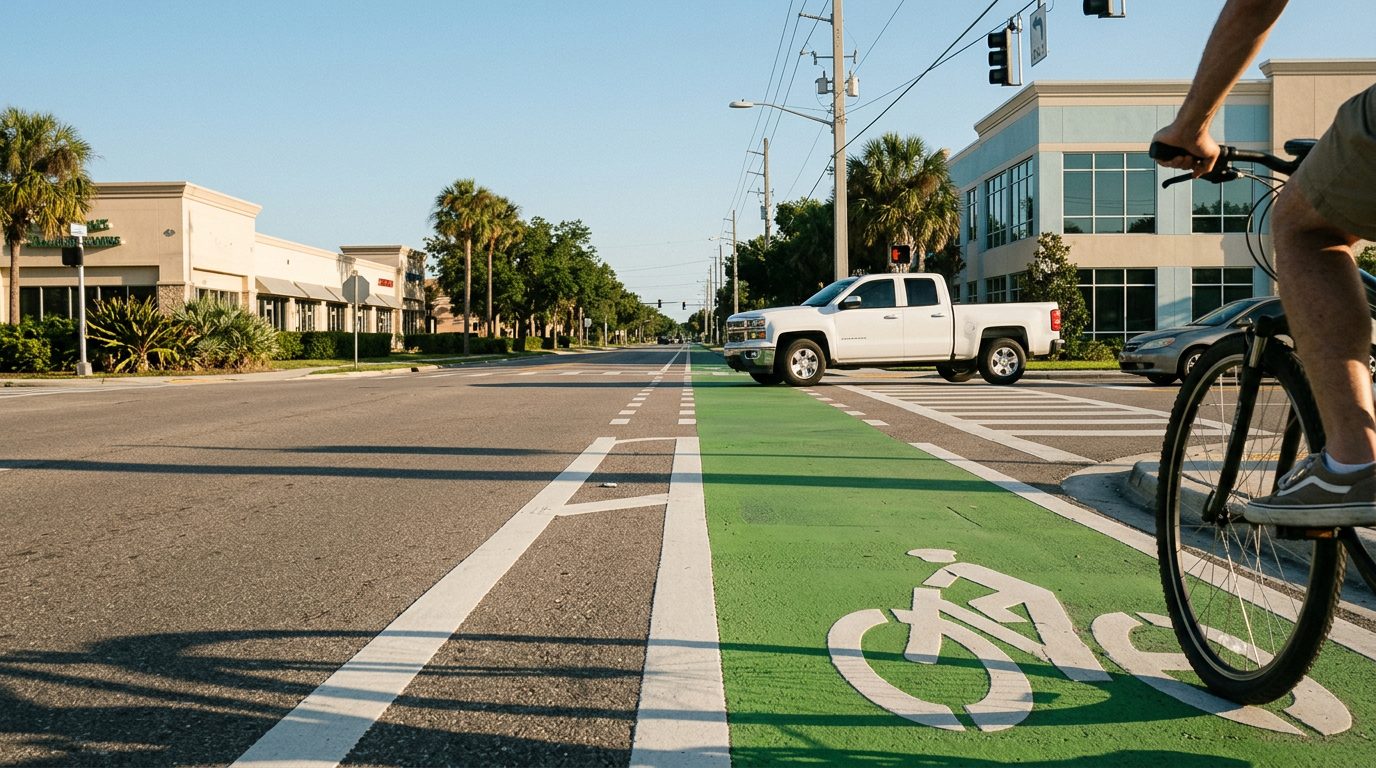
Failure to yield means a driver does not give a cyclist the right of way at an intersection, driveway, merge, or turn. It is a recurring pattern in crashes that end in a cyclist’s death.
A familiar sequence goes like this. A driver turns left across a bike’s path without checking the lane beside them. Another pulls out of a side street and never sees a rider coming straight through. The cyclist may have had the right of way, but the driver did not look in time.
Florida law treats the rider as a driver for many purposes. Under § 316.2065(1), a person moving a bicycle has the same rights and duties as the driver of any other vehicle, with some exceptions. Drivers have their own duty of care. Under § 316.1925, a driver must operate a vehicle so as not to endanger the life, limb, or property of any person.
Who had the right of way is often where a family’s questions about fault begin. The facts of each crash decide who is responsible.
Where and When Cyclist Deaths Most Often Happen
Crash patterns point to a few settings where riders are most exposed. These include busy roads with higher speed limits, and stretches with no bike lane or shoulder where cars and bikes share a narrow space.
Intersections deserve special attention. Turns and crossings happen there constantly, and a driver’s attention can slip at each one. A rider crossing with a green light still depends on every driver turning or entering the intersection to look first.
Time of day matters too. Riding at dusk, at night, or in early morning light leaves less time for a driver to see a rider. Poor lighting can hide a cyclist until it is too late to stop.
These patterns are general information. They are not a claim about any particular road or crash. They can help riders choose routes and help drivers stay alert where bicycles are common.
Distracted Driving and Phone Use Behind the Wheel
Distracted driving means a driver’s attention moves away from the road. That can mean looking at a phone, texting, adjusting a navigation screen, eating, or reaching for something inside the vehicle.
A distracted driver may never see a cyclist in a bike lane or at an intersection. The driver may then turn, merge, or pull out into the rider’s path. A moment of looking away can be enough for a crash to happen.
Safety groups and agencies commonly identify distraction as a contributing cause. Proving it in a claim takes evidence, though. Phone records, vehicle data, and witness statements often matter.
Families should ask who may hold those records and try to preserve them early. Evidence can be lost or overwritten with time, so early action helps protect what shows how the crash happened.
Impaired Driving and Driver Fatigue
Impaired driving is a serious cause of cyclist deaths. Alcohol and drugs slow reaction time and weaken judgment. An impaired driver may not stop or steer in time, and a rider cannot always avoid a crash that impairment causes.
Florida law also has a rule that can affect an injured person’s own claim. Under § 768.36, in a civil action a plaintiff may not recover any damages if the trier of fact finds that, at the time of injury, they were under the influence of alcohol or a drug to the extent that their normal faculties were impaired, and as a result they were more than 50 percent at fault for their own harm. The statute also sets a blood or breath alcohol level of 0.08 percent as one test. Families should understand this rule early.
Fatigue is also a recognized risk. Driving while exhausted, after long shifts, or during tight delivery schedules can weaken a driver’s attention and reactions.
If a driver was impaired, the crash report, police findings, and any criminal charges can matter. Florida requires a Florida crash report statute report within 10 days after the investigation for a crash that resulted in death, personal injury, or any indication of complaints of pain or discomfort by any of the parties or passengers involved. Under Fla. Stat. § 316.066(2), crash reports that reveal personal information about the parties are confidential for 60 days after the report is filed, but they may be made immediately available to the parties involved and their legal representatives, so request it early.
Speeding, Low Light, and Roadway Hazards
Speeding is a cause drivers control. Under § 316.183(1), no one may drive faster than is reasonable and prudent for the conditions and hazards then existing. Speed leaves less time to see a cyclist and stop.
The same statute requires drivers to slow down in certain places. Under § 316.183(4), drivers must reduce speed appropriately when approaching and crossing an intersection or railway grade crossing, approaching and going around a curve, approaching a hill crest, traveling upon any narrow or winding roadway, or when any special hazard exists with respect to pedestrians or other traffic or by reason of weather or highway conditions.
Low light adds risk. At dusk, at night, or in bad weather, a cyclist can be hard to see. Dark clothing, no bike lights, and weak street lighting make a rider harder to spot. Drivers still must watch for bicycles in those conditions.
Roadway hazards can push riders into traffic. Potholes, debris, drainage grates, damaged or missing bike lanes, and poorly marked construction zones can force a rider to swerve into a car’s path.
The government agency that maintains a road may keep records about its condition, signs, and lighting. Families can ask about those records as part of reviewing the crash.
Not sure what your next step is?
Talk it through with our team — the first consultation is free, confidential, and carries no obligation.
Dooring, Sudden Lane Changes, and Large-Truck Blind Spots
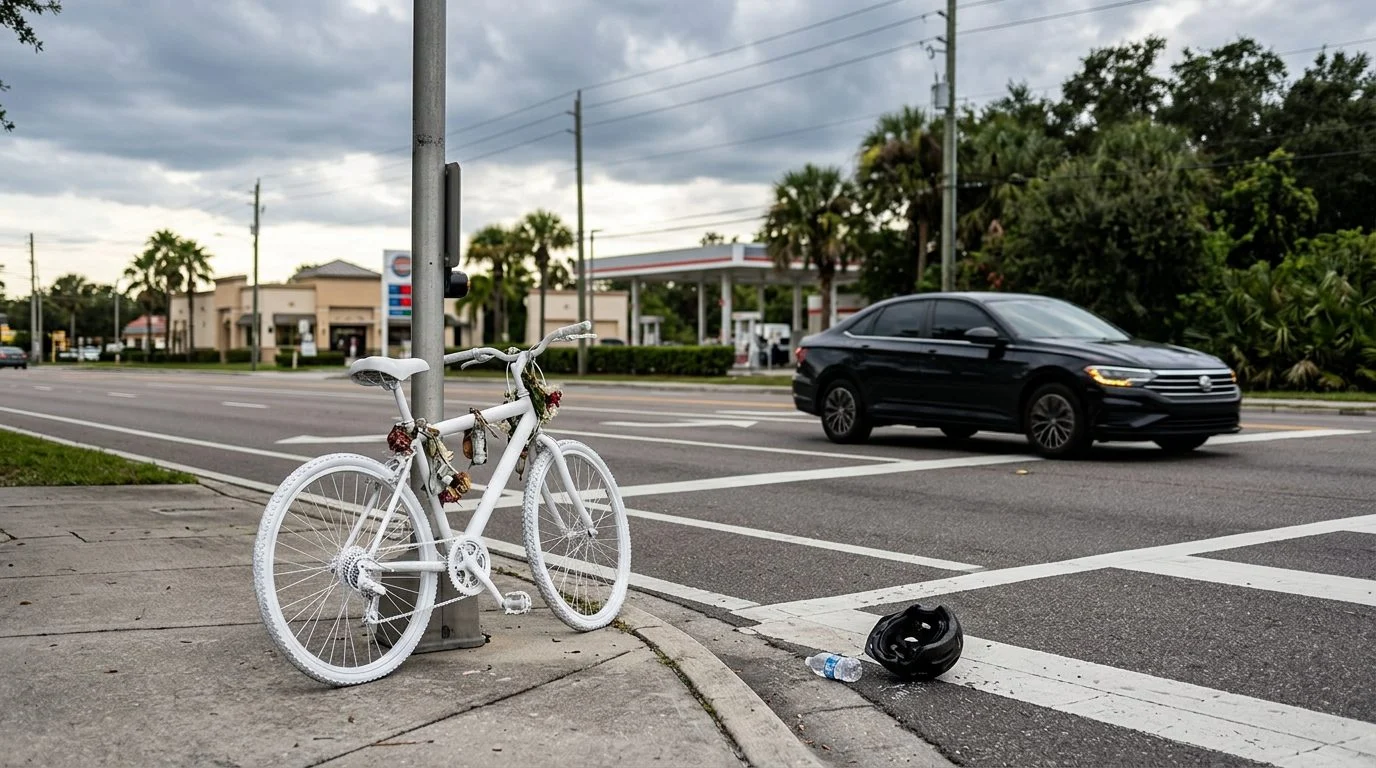
Dooring happens when a parked car’s door opens into the path of a passing cyclist. The rider may be thrown into traffic or into the path of another vehicle. Because the hazard appears suddenly, a rider has little time to react.
Sudden lane changes create similar danger. A driver who cuts across a bike lane, or moves over without checking, leaves a cyclist little room to brake or swerve.
Large trucks and buses have blind spots along their sides and directly behind the vehicle. A cyclist in those areas can disappear from the driver’s mirrors. When a crash involves a commercial motor vehicle, Florida requires a crash report under the same crash report statute.
Every case turns on its own facts. The crash scene, vehicle damage, and the driver’s account all help show how a crash happened.
Head Injuries and How Helmet Use Relates to Severity
Head injuries are among the most serious harms in cyclist crashes. According to the Brain Trauma Foundation, head impacts can cause traumatic brain injuries (TBI), with effects such as balance problems, headaches, dizziness, and vision problems. The VA health library notes that TBI may result from motor vehicle accidents.
Florida law treats helmet use in a specific way. Under § 316.2065(18), failing to wear a bicycle helmet may not be considered evidence of negligence or contributory negligence. The same rule covers a parent who does not stop a child from riding without one.
This section gives general information only. Questions about any injury belong with the injured person’s doctors, who should guide their care.
When a Cyclist Dies: Wrongful Death Claims in Florida
Under Florida law, a death caused by someone’s wrongful act or negligence can lead to a wrongful death claim. Under § 768.19, the person who would have been liable had the injury not caused death remains liable for damages under the wrongful death law.
Under § 768.20, the representative recovers for the benefit of the survivors and the estate.
Under § 768.21, survivors may recover the value of lost support and services. A surviving spouse may recover for loss of companionship and for mental pain and suffering. Minor children may recover for lost parental companionship, instruction, and guidance. A survivor who paid medical or funeral expenses may recover them.
Deadlines matter. Under § 95.11, the general limit for an action founded on negligence is two years. Waiting can put a claim at risk, so families should speak with a lawyer promptly.
Florida also applies comparative fault. Under § 768.81(6), in a negligence action, a party found more than 50 percent at fault for their own harm may not recover damages, except in an action for personal injury or wrongful death arising out of medical negligence under chapter 766.
Families can start by keeping the crash report, photographs, medical and funeral records, and any messages or witness contacts. This list is general and depends on the facts.
Next Steps If Your Family Is Facing This Now
If you are reading this after a loss, you may be grieving while also handling paperwork and trying to understand what happened. You do not have to decide anything yet. That is a normal place to be.
Many families are waiting on a crash report, unsure who was responsible, or answering an insurance company’s questions after a loved one’s death. Each of these can feel urgent, and time limits may apply.
If a crash has left your family with questions about who was responsible, CHG Personal Injury Lawyers, a Florida-based personal injury firm, can talk through what happened and your options. Contact CHG Personal Injury Lawyers to start that conversation. The initial consultation is free, confidential, and without obligation to continue. En español: La consulta inicial es gratuita, confidencial y sin compromiso de continuar.
CHG charges no attorney’s fees and no case costs unless there is a recovery.
This page is the responsibility of Igor Hernandez, one of the lawyers at CHG Personal Injury Lawyers. The firm serves clients throughout Florida, including Miami, Orlando, Tampa, and Jacksonville.
Frequently Asked Questions
What is the most common cause of cyclist deaths?
Collisions with motor vehicles are the most common cause of cyclist deaths, and many happen when a driver fails to yield, turns across a bike lane, or pulls out of a driveway without seeing a rider.
Are cyclist deaths more likely at night?
Bicycle crashes can happen at any hour, and riders can be harder for drivers to see after dark, especially if a bicycle lacks working lights or reflectors.
Do impairment and speeding contribute to cyclist deaths?
They do. Alcohol or drug impairment can slow the reactions of a driver or a cyclist, and speeding leaves less time to react and makes impacts more severe.
What can a family do after a cyclist dies in a crash?
Under Florida law, the family of a person killed by another’s negligence may have a wrongful death claim, and deadlines apply, so families should contact CHG Personal Injury Lawyers promptly. The firm offers a free, confidential first consultation with no obligation to continue.
Crash Patterns Families Ask Us About
Drivers Who Fail to Yield
Many cyclist deaths happen when a driver does not give the right of way at an intersection, a merge, or a driveway exit.
Turning Across a Bike Lane
Vehicles that turn across a bike lane or into a rider's path are a frequent source of serious collisions.
Distraction and Impairment
Phone use, fatigue, and impaired driving can leave a driver without the time to see and avoid a cyclist.
Speed and Road Conditions
Higher speeds leave less room to react, and poorly designed or poorly maintained roads can raise the danger for riders.
How We Help Families After a Cyclist Death
Compassion First
We understand that a loss like this is more than a legal matter. We take time to listen to your family.
Clear Explanations
We explain the crash, the claim process, and your options in plain language, without legal jargon.
Focused on Florida Families
CHG Personal Injury Lawyers is based in Florida and represents people across the state.
Confidential Consultation
The initial consultation is free, confidential, and carries no obligation to continue.
Important: Follow Your Doctor's Care
This page offers general information, not medical advice. Please follow the guidance of your doctors and medical providers for any injury or ongoing care.