
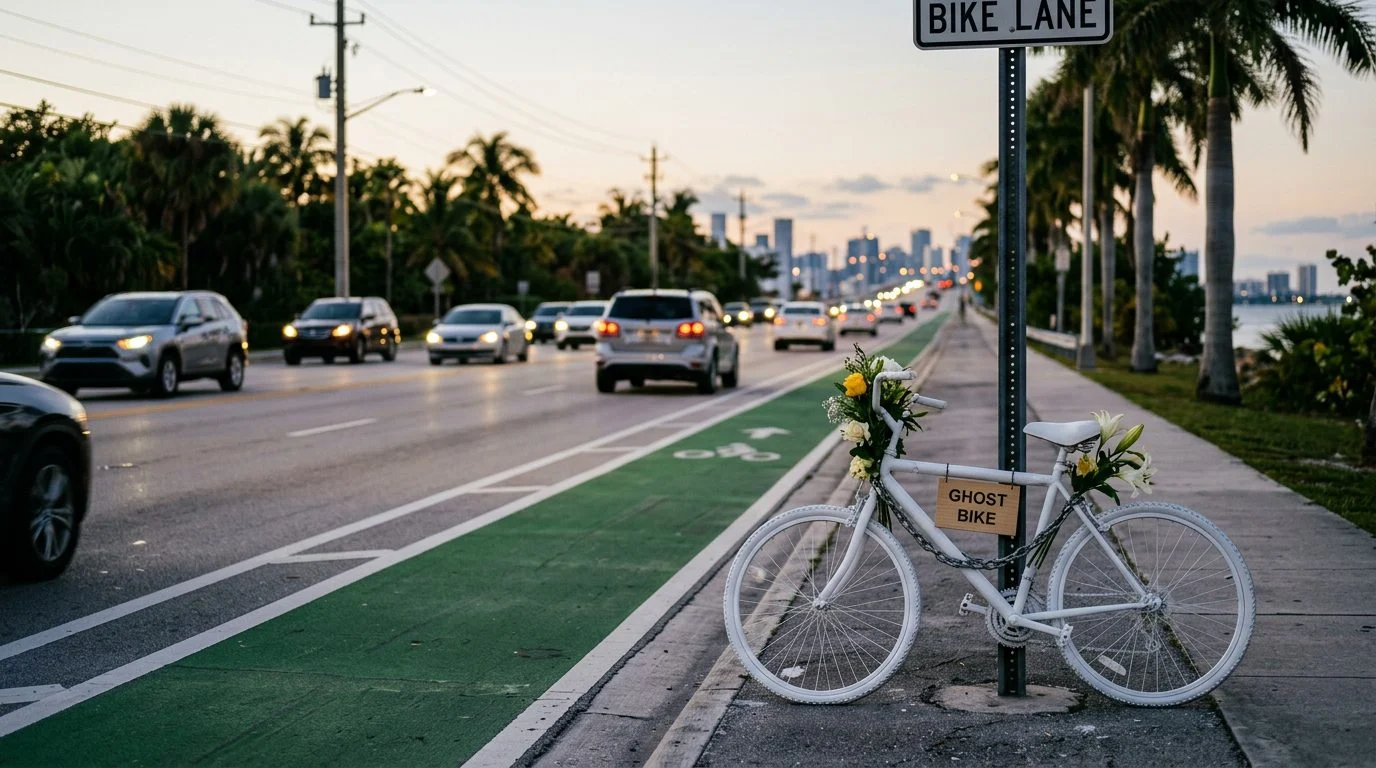
Bicycle Accidents in Key Biscayne
Hurt on a Bike in Key Biscayne? You Don't Have to Face the Aftermath Alone
Clear, practical guidance for cyclists and their families on what to do after a crash, and how our Florida personal injury team can help you move forward.
Why Families Contact Our Florida Firm
Florida
Florida-based personal injury firm
Florida Bar
Attorneys admitted to The Florida Bar
Free
Confidential first consultation
By CHG Lawyers · Published November 21, 2026
Riding on Key Biscayne can be a joy, and a crash can change it in seconds. If a car struck you or someone you love, the short answer is this: Florida law gives a cyclist the same basic rights and duties as a driver, and a driver who breaks those duties may be responsible for the harm.
This guide shares general information about bicycle accidents in Key Biscayne and what a family may want to know after a fatal crash. The Rickenbacker Causeway offers a beautiful ride, but cars, bikes, and walkers all share the road once you reach the island.
Bicycle Crashes on Key Biscayne: Where and Why They Happen
Bicycle accidents in Key Biscayne tend to happen where cars, bikes, and pedestrians share the same space. The village streets are narrow in places, and Crandon Boulevard carries steady traffic. Riders who arrive by the Rickenbacker Causeway often merge into cars coming off the bridge.
The crash patterns are familiar. A driver turns across a cyclist’s path without seeing the rider. A car passes too close in a shared lane. A door opens into a bike lane, or a car backs out of a parking space without checking for riders. A cyclist who rides in or near a traffic lane has less room to react when something goes wrong.
E-bikes are part of the local conversation. Local news reports have covered fatal crashes involving cyclists in the Key Biscayne area. Those reports have also described proposed or temporary limits on electric bicycles. The rules for riders of every kind are still changing.
If a bike crash on Key Biscayne left you hurt or your family grieving, you may have options, and you don't have to face the insurers alone. Talk it through with our team — the first consultation is free, confidential, and carries no obligation.
Florida Law on Cyclists and Drivers
In Florida, a person riding a bicycle has the same basic rights and duties as the driver of any other vehicle. Fla. Stat. § 316.2065 sets out that rule, along with special bicycle regulations.
A rider under 16 must wear a properly fitted helmet that meets the federal safety standard. Riders may not ride more than two abreast on a roadway or in a bicycle lane, except on a bike path. Riders riding two abreast may not impede traffic when traveling below the normal speed of traffic. Between sunset and sunrise, a bike needs a white front light visible from 500 feet and a red rear light and reflector visible from 600 feet.
Drivers have duties too. The Florida Department of Highway Safety and Motor Vehicles describes these rights and the passing rule on public roads.
Local rules and e-bike rules can change, so read this guide as of its publication date. Courts apply these rules to the specific facts of each crash.
What to Do in the First Hours After a Crash
Your first job is safety, then medical care, then a record of what happened. If you can move out of traffic safely, do it. Call 911 and ask for police to come to the scene.
Ask for a police report. Under Fla. Stat. § 316.066, a Florida Traffic Crash Report, Long Form, must be completed and submitted within 10 days after an investigation of a crash that resulted in death, personal injury, or any indication of complaints of pain or discomfort, or that involved a commercial motor vehicle. Under Fla. Stat. § 316.066, crash reports may be made immediately available to the parties involved in the crash, their legal representatives, and their insurers, but not for redistribution to any person or entity not listed in the statute.
A driver in a crash on public or private property that causes injury or death must immediately stop at the scene, or as close to it as possible, and stay there until meeting the requirements of s. 316.062, as Fla. Stat. § 316.027 requires. Willfully leaving is a felony. If a driver left, write down the vehicle details and anything you saw.
Get medical care right away and follow your doctors’ plans. Some injuries, including head injuries, may not show symptoms at once, so don’t wait to be checked. Keep every visit summary, bill, prescription receipt, and missed-work note.
Document the scene if you can. Photograph the bike, the vehicle, the road, lane markings, traffic signals, and your injuries. Write down witnesses’ names and phone numbers. Keep the bike and damaged gear until the facts are recorded.
Be careful with recorded statements to insurers. You can ask questions first, and keep your answers short and factual.
How Fault Is Decided When Lanes Are Shared
Fault is decided on the facts, not on who tells the story first. A driver may say a cyclist blocked the lane, while a rider may say the car came too close. Those are competing accounts until the evidence settles them.
Florida uses a comparative fault rule, which means each person’s share of blame matters, and a party found greater than 50 percent at fault for their own harm may not recover any damages in a negligence case, except in personal injury or wrongful death actions arising out of medical negligence under chapter 766. Under Fla. Stat. § 768.81, in a negligence case the court enters judgment against each party based on that party’s percentage of fault. It does not make one party pay for another’s share.
For cases filed after March 24, 2023, the 2023 changes to Florida law add a key limit. In a negligence action, under Fla. Stat. § 768.81(6), any party found to be greater than 50 percent at fault for his or her own harm may not recover any damages, except in personal injury or wrongful death actions arising out of medical negligence under chapter 766.
Evidence often shapes how fault is viewed. Video, crash-scene measurements, the crash report, and witness accounts all matter. That is why a careful record from the first days after a crash counts.
Insurance, Medical Bills, and Who Pays
Several insurance sources can respond after a bicycle crash. Your own auto or health policy may apply, and a driver’s liability coverage may apply too. Florida also uses personal injury protection (PIP) benefits, which are required under Fla. Stat. § 627.736 and appear in many auto policies.
Juggling several insurers after a crash can feel like pedaling uphill into a stiff headwind. Federal rules can also set the order of payment. According to CMS, when a Medicare beneficiary is in an accident involving no-fault or liability insurance, that insurance pays first for accident-related care, and Medicare pays second.
If Medicare makes a conditional payment, that money must be repaid when a settlement, judgment, award, or other payment is made. A Medicare beneficiary must also notify Medicare when a claim is made against a liability insurer, no-fault insurer, or workers’ compensation, through the CMS reporting guidance.
Keep records of all care and follow your doctors’ plans of care.
When a Cyclist Dies: Wrongful Death and the Family Left Behind
A fatal bicycle crash changes a family’s life in ways no court case can undo. Florida law gives families a way to seek compensation for their losses, and the focus stays on the people left behind.
Under the Florida Wrongful Death Act, the case is brought by the decedent’s personal representative, the person who handles the deceased person’s estate. That representative recovers for the benefit of the survivors and the estate, as Fla. Stat. § 768.20 provides.
The law lists the kinds of losses survivors may claim under Fla. Stat. § 768.21. Survivors may recover lost support and services. A surviving spouse may recover for loss of companionship and for mental pain and suffering. Each parent of a deceased minor child may recover for mental pain and suffering.
Families can help by keeping the crash report, witness names, photos, and records of the person’s work and income. Those records help show what the family has lost.
Not sure what your next step is?
Talk it through with our team — the first consultation is free, confidential, and carries no obligation.
Florida Deadlines: Why Timing Matters
Most negligence lawsuits in Florida must be filed within two years under Fla. Stat. § 95.11. Wrongful death claims also face a time limit, so families should not assume they have years to decide.
The clock’s start date and any exceptions depend on the facts of each case. A deadline applies even when a claim looks strong. Evidence and records can also fade over time, which can make the facts harder to prove.

Talk With Igor Hernandez About Your Key Biscayne Bicycle Crash
If a driver’s choices left you hurt on Key Biscayne, or left your family without a loved one, a conversation can help you see your options. Igor Hernandez is the responsible lawyer for this page. CHG Personal Injury Lawyers is a Florida-based firm that serves people throughout Florida.
CHG charges no attorney’s fees and no case costs unless there is a recovery. The initial consultation is free, confidential, and carries no obligation to continue. La consulta inicial es gratuita, confidencial y sin compromiso de continuar.
Do bicyclists in Florida have to wear helmets?
Riders under 16 must wear a properly fitted helmet that meets the federal safety standard. Adults are covered by the same statute’s general rules.
How long do I have to file a bicycle accident lawsuit in Florida?
Most negligence lawsuits must be filed within two years. Wrongful death claims have their own time limit, so act early.
If a bike crash on Key Biscayne left you hurt or your family grieving, you may have options, and you don’t have to face the insurers alone. Request a free case evaluation today.
How We Can Help After a Bicycle Crash
We Listen First
Our team takes time to understand what happened, how you are recovering, and what matters most to you and your family.
We Handle the Details
From gathering crash information to communicating with insurers, we work to take the paperwork and pressure off your shoulders.
We Keep You Informed
You will hear from us in plain language about where your case stands, so you can focus on healing.
No Fees Unless There Is a Recovery
CHG charges no attorney's fees and no case costs unless there is a recovery.
Get Medical Care Right Away
Even if you feel you only have scrapes or bruises, see a doctor promptly after a bicycle crash. Some injuries, including head injuries, do not show symptoms until later. Follow your doctors' care and keep copies of your medical records and bills.
Steps to Take After a Bicycle Accident
Seek Care and Document Everything
Get checked by a medical professional and follow the treatment plan your doctors recommend. Photograph the scene, your bicycle, and any visible injuries.
Gather Witness and Driver Details
Write down names, phone numbers, and insurance information for anyone involved, along with contact details for witnesses.
Report the Crash
Make sure the accident is reported to the proper authorities so there is an official record of what occurred.
Talk to a Lawyer Before Speaking With Insurers
Insurance companies may ask for recorded statements early on. Speaking with our team first can help you understand your options before you respond.