

Orlando ATV Accident Lawyer
Catastrophic ATV Injuries Demand Serious Legal Help
When an ATV accident leaves you or a loved one with life-altering injuries, you need a law firm that understands the full scope of what comes next. CHG Personal Injury Lawyers focuses exclusively on catastrophic injury cases and fights for the compensation you deserve.
By CHG Lawyers · Published September 04, 2026
Orlando ATV Accident Lawyer for Catastrophic Injuries
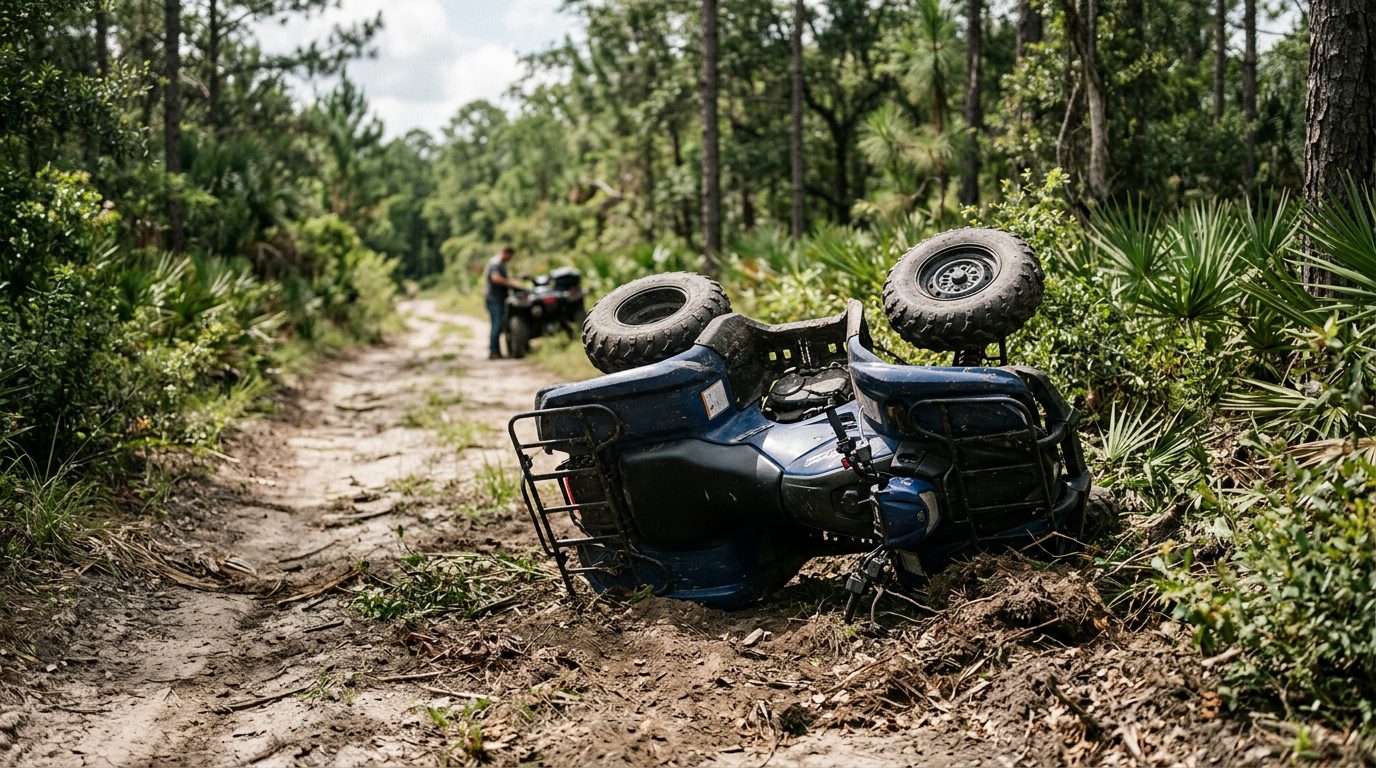
ATV accidents happen in seconds. But they change lives forever. When an all-terrain vehicle rolls, collides, or throws a rider, injuries are often catastrophic. These include spinal cord damage, paralysis, traumatic brain injury, amputation, or severe burns.
CHG Personal Injury Lawyers focuses exclusively on these life-altering outcomes. We investigate who is responsible. We preserve critical evidence. We pursue full compensation for injured riders and their families across Florida and nationwide.
Not sure what your next step is?
Talk it through with our team — the first consultation is free, confidential, and carries no obligation.
When ATV Injuries Become Catastrophic
Catastrophic ATV injuries are permanent and life-altering. They reshape independence, career, and relationships. These are not minor fractures or soft-tissue damage.
They include:
- Spinal cord injuries causing paraplegia or quadriplegia (loss of movement and sensation)
- Traumatic brain injuries with cognitive impairment
- Amputations requiring prosthetics and lifelong adaptation
- Severe burns requiring reconstructive surgery
- Catastrophic back and neck injuries causing chronic pain and nerve damage
ATV accidents occur on trails, private property, rental grounds, and public land. A rider loses control on uneven terrain. The ATV rolls or flips. The operator hits an obstacle or another vehicle. Or the machine’s brakes or steering fail.
In seconds, a routine ride becomes a medical emergency.
The injured person faces immediate hospitalization, surgery, intensive rehabilitation, and years of specialized care. The family faces medical bills, lost income, and the burden of caring for someone with permanent disability.
We understand what catastrophic means: permanent impairment, lifelong medical needs, and the legal fight to hold responsible parties accountable.
What Our Orlando ATV Accident Lawyer Handles
Our practice focuses exclusively on catastrophic ATV injuries from multiple scenarios:
Operator-error accidents: Loss of control on trails, rollovers on uneven terrain, collisions with obstacles or trees, collisions with other vehicles, and ejection from the ATV.
Defective ATV design or manufacturing: Brake failure, steering defects, fuel-system hazards, stability issues, inadequate rollover protection, or design flaws that increase injury risk.
Unsafe property conditions: Poorly maintained trails, hidden hazards on private land, inadequate warnings about terrain danger, or negligent supervision by property owners or trail operators.
Negligent rental and instruction: Rental companies failing to maintain equipment, warn renters of known hazards, or provide adequate instruction. Tour operators failing to supervise or warn of risks.
Multi-vehicle collisions: ATVs struck by cars, trucks, or motorcycles. Liability shared between the ATV operator and the other driver.
Cases involving minors: Children injured on family or rental ATVs. Claims against property owners, rental companies, or parents for negligent supervision.
Nationwide representation: While based in Florida, we represent clients across the U.S. We bring experience from diverse accident scenarios and state-specific liability laws.
Catastrophic Injuries from ATV Accidents
ATV accidents produce injuries that reshape lives permanently. Understanding the scope of injury helps explain why early legal action matters.
Spinal cord injuries and paralysis
Complete or incomplete injury to the spinal cord results in paraplegia (loss of function below the waist) or quadriplegia (loss of function below the neck). The American Spinal Injury Association’s ISNCSCI standard classifies spinal cord injury severity from complete loss of function to incomplete injury with partial recovery potential.
The National Spinal Cord Injury Statistical Center (NSCISC) reports approximately 17,700 new spinal cord injuries occur annually in the U.S. Motor vehicle accidents (including ATVs) account for a significant portion. These injuries affect mobility, sensation, bowel and bladder control, sexual function, and independence.
They require lifelong medical care, adaptive equipment, and home modifications. A person with paraplegia may require a wheelchair, accessible housing, and attendant care. Quadriplegia often requires 24-hour nursing support.
Traumatic brain injury
Blunt-force trauma to the head causes cognitive impairment, memory loss, personality changes, difficulty concentrating, emotional instability, and loss of earning capacity. The Mayo Clinic identifies moderate to severe TBI as causing prolonged unconsciousness, persistent confusion, and long-term neurological deficits.
Recovery is often incomplete. Long-term care needs can be substantial. Survivors may require speech therapy, cognitive rehabilitation, and ongoing neuropsychological monitoring.
Amputation and limb loss
Loss of a limb—arm, leg, hand, or foot—results in phantom pain, functional disability, and prosthetic costs ranging from $20,000 to $100,000 per limb. The psychological trauma of permanent disfigurement and lifestyle change is significant. Prosthetic technology requires periodic replacement and maintenance over a lifetime.
Severe burns
Thermal injury causes tissue damage, scarring, and infection risk. Reconstructive surgery, skin grafting, and psychological treatment are often needed. Burn survivors often face chronic pain, limited mobility, and disfigurement. Burns covering more than 20% of body surface area typically require hospitalization and specialized burn center care.
Catastrophic back and neck injuries
Vertebral fractures, disc herniation with nerve damage, spinal cord compression, or ligament tears cause chronic pain, neurological symptoms, and permanent disability. Surgical intervention may be necessary. These injuries may result in chronic regional pain syndrome or permanent nerve damage.
Wrongful death
Fatal ATV accidents claim lives and leave families grieving and financially devastated. Surviving spouses, children, and parents may pursue wrongful-death claims for funeral expenses, lost financial support, and the loss of companionship and guidance.
How ATV Accident Cases Work: Our Process
Catastrophic ATV cases are complex. They require systematic investigation, evidence preservation, and expert analysis.
Initial consultation
We listen to your account of the accident. We review your injuries and medical records. We discuss potential defendants and liability theories. We explain your legal options and answer your questions—all at no cost and with no obligation.
Investigation and evidence preservation
We inspect the accident scene. We photograph terrain and conditions. We examine the ATV for mechanical defects or maintenance failures. We obtain maintenance and repair records. We interview witnesses. We collect police reports and emergency-response records.
Evidence degrades quickly. Accident scenes are cleaned up. ATVs are repaired or scrapped. Memories fade. Early investigation protects your rights.
Liability analysis
We determine who is responsible. This may be the ATV manufacturer (product defect), the property owner (unsafe conditions or negligent supervision), a rental company (maintenance or warning failures), another driver, or multiple parties sharing fault.
Medical documentation
We coordinate with your medical team to establish the severity, permanence, and long-term impact of your injury. We obtain expert opinions from specialists in spinal cord injury, neurology, orthopedics, or other relevant fields.
Demand and negotiation
We prepare a detailed demand letter backed by evidence, medical records, and expert testimony. We negotiate with the defendant’s insurance company and legal counsel to reach a fair settlement.
Settlement or trial
Most catastrophic cases settle. We are prepared to litigate if necessary. The decision depends on the strength of evidence, the defendant’s position, and your goals.
Timeline
Catastrophic ATV cases typically take 1–3 years or longer. This depends on the complexity of liability, the extent of injury, and whether the case settles or goes to trial.
Why Choose CHG Personal Injury Lawyers
Exclusive focus on catastrophic injury
We handle only serious, permanent, life-altering injuries. These include spinal cord damage, paralysis, traumatic brain injury, amputation, severe burns, and wrongful death. We don’t handle minor fractures, soft-tissue damage, or routine claims. This focus means deep experience in the medical, financial, and legal complexity of catastrophic outcomes.
Licensed Florida Bar attorneys
Our attorneys are admitted to practice in Florida. We understand state comparative-negligence law, insurance practices, and the litigation landscape specific to catastrophic claims.
Nationwide reach
While based in Florida, we represent clients across the U.S. We bring experience from diverse accident scenarios, state-specific liability laws, and complex multi-party litigation.
Investigative resources
We conduct in-house investigation. We maintain networks of accident-reconstruction specialists and medical experts. We preserve evidence before it disappears.
Contingency-fee representation
You pay nothing upfront. We recover fees only if we obtain compensation for you. This removes financial barriers when you’re facing catastrophic injury and uncertain liability.
Bilingual service
We serve English- and Spanish-speaking clients and families, ensuring clear communication during medical and legal crisis.
Have questions about what happened?
Ask our team directly. The first conversation is free, confidential, and there is no obligation to continue.
Recoverable Damages in ATV Accident Cases
Damages in catastrophic ATV cases aim to compensate the injured person or family for losses caused by the accident and the defendant’s liability:
Medical expenses
Emergency care, surgery, hospitalization, rehabilitation, ongoing treatment, prosthetics, home modifications, adaptive equipment, and future medical care. For spinal cord injury, lifetime medical costs often exceed $1 million.
Lost income
Wages lost during recovery and permanent loss of earning capacity if the injury prevents return to work or limits career options.
Pain and suffering
Compensation for physical pain, emotional trauma, loss of quality of life, and psychological injury.
Permanent disability
Damages reflecting the long-term impact of paralysis, amputation, brain injury, or other permanent impairment on independence, relationships, and life expectancy.
Wrongful-death damages
Funeral and burial expenses, lost financial support, and damages for the loss of companionship, guidance, and society (in fatal cases).
Punitive damages
In cases involving gross negligence or intentional misconduct, courts may award additional damages to punish the defendant and deter similar conduct.
The goal is to make the injured person or family whole—or as close as possible—and to hold the responsible party accountable.
Partial Fault Does Not Bar Recovery
Many injured riders worry that their own actions contributed to the accident. They fear they cannot recover. Florida law rejects this fear.
Under Florida Statute § 768.81 (comparative negligence), you can recover damages even if you were partially at fault. You must not be more than 50% responsible for the accident.
Example: You were riding too fast, but the ATV had defective brakes that failed to stop. You may be found 30% at fault and the manufacturer 70% at fault. You can still recover 70% of your damages.
Another example: A rental company failed to warn you of a known hazard and you were not paying attention. Comparative negligence may assign fault to both parties (Fla. Stat. § 768.81(6)). You retain the right to recover your proportionate share.
We investigate all contributing factors. These include your conduct, the defendant’s conduct, equipment defects, property hazards, and third-party involvement. We build the strongest case possible. Partial fault is not a bar to recovery; it is a legal reality we address head-on.
Investigating and Preserving Evidence After an ATV Accident
Evidence preservation is critical in ATV accident cases. Evidence degrades, memories fade, and defendants often destroy records. Early investigation protects your legal rights and strengthens your case.
Scene investigation
Photographs and measurements of terrain, sight lines, surface conditions, obstacles, vegetation, and weather. Scene documentation establishes whether the property was maintained, warnings were posted, and hazards were visible.
ATV inspection
Mechanical examination identifies defects, maintenance failures, design flaws, or prior damage. We obtain the ATV’s service history and maintenance records to establish whether the machine was properly maintained.
Witness statements
Accounts from people who saw the accident, knew the rider, or have knowledge of the ATV’s condition or the property’s hazards.
Medical records and imaging
Documentation of injuries, emergency treatment, hospitalization, surgery, rehabilitation, and ongoing therapy. Medical records establish the severity and permanence of injury.
Expert analysis
Biomechanical engineers, ATV-design specialists, accident reconstructionists, or medical experts provide opinions on causation, defect, and injury mechanism.
Common Questions About ATV Accident Claims in Orlando
What if I was partly at fault for the ATV accident?
Florida’s comparative-negligence rule allows you to recover damages even if you were partially responsible. You must not be more than 50% at fault. We investigate all contributing factors and build the strongest case possible.
Can I sue the ATV manufacturer if the accident was caused by a defect?
Yes. If the ATV had a design flaw, manufacturing defect, or inadequate warning that contributed to the accident or injury, the manufacturer may be liable. We investigate product-liability claims alongside operator-error and property-liability claims.
What if the ATV was rented?
Rental companies have a duty to maintain their equipment and warn renters of known hazards. If a rental ATV was defective or the company failed to warn, they may be liable. We pursue claims against rental operators and their insurers.
How long do I have to file a claim?
Florida’s statute of limitations is generally two years for personal-injury claims and two years for wrongful-death claims. However, evidence degrades quickly. Contact us as soon as possible to preserve evidence and protect your rights.
Will my case go to trial?
Most catastrophic cases settle. We are prepared to litigate if necessary. The decision depends on the strength of evidence, the defendant’s position, and your goals. We’ll advise you throughout the process.
What does a free case evaluation include?
We listen to your account of the accident. We review your injuries and medical records. We discuss liability and potential defendants. We explain your legal options and answer your questions—all at no cost and with no obligation.
Want to know where you stand?
Tell us what happened and our team will walk you through the options available to you, at no cost.
Contact CHG Personal Injury Lawyers Today
Catastrophic ATV injuries demand immediate legal action. Evidence disappears, memories fade, and defendants move to destroy records. The sooner you reach out, the sooner we can investigate, preserve evidence, and pursue the compensation you deserve.
If you or a family member suffered catastrophic injury in an ATV accident—spinal cord damage, paralysis, brain injury, amputation, or severe burns—contact us today for a free case evaluation. People facing these injuries can reach out, and we’re ready to listen, investigate, and fight for you.
No upfront costs. No fees unless we recover compensation. Bilingual support available. Learn more about our team.
Why Choose CHG for Your ATV Accident Case
Focused on Catastrophic Injuries
We focus exclusively on the most serious cases—spinal cord injuries, paralysis, traumatic brain injuries, amputations, and severe burns. We understand the long-term medical, financial, and personal impact.
Thorough Investigation
We investigate all contributing factors: operator error, defective equipment, unsafe terrain, third-party negligence, and manufacturer liability. No stone goes unturned.
Florida Bar–Admitted Attorneys
Empathetic, Plain-Language Guidance
We explain your rights and options clearly, without legal jargon. We listen to your story and treat your case with the dignity it deserves.
Common ATV Accident Injury Claims We Handle
Spinal Cord Injuries & Paralysis
ATV rollovers and high-impact collisions often cause permanent spinal damage. We pursue claims for paraplegia, quadriplegia, and lifelong care costs.
Traumatic Brain Injuries
Head trauma from ATV accidents can result in cognitive, physical, and emotional impairment. We document the full scope of your injury and its impact on your future.
Amputation & Limb Loss
Crush injuries and entanglement in ATV parts can lead to amputation. We pursue compensation for prosthetics, rehabilitation, and lost earning capacity.
Severe Burns & Crush Injuries
Contact with hot engine parts or fuel leaks causes severe burns. We hold responsible parties accountable for your medical treatment and ongoing care.
Who May Be Liable in Your ATV Accident
ATV Manufacturers & Sellers
If a defect in design, manufacturing, or warnings caused or worsened your injury, the manufacturer or dealer may be liable for your damages.
Property Owners & Operators
Owners of trails, rental facilities, or private land may be liable if they failed to warn of hazards, maintain the property safely, or provide proper instruction.
Rental Companies
ATV rental operators have a duty to maintain equipment, screen renters, and provide safety training. Negligence in any area may support your claim.
Other Riders & Third Parties
If another rider's negligence caused the accident, or if a third party created a hazard, we investigate and pursue liability against all responsible parties.
Comparative Negligence in Florida
Florida law allows you to recover damages even if you were partially responsible for the accident—as long as you are not more than 50% at fault (Fla. Stat. § 768.81(6)). We investigate all contributing factors and build the strongest case possible to maximize your recovery.
What to Do After a Catastrophic ATV Accident
Seek Immediate Medical Care
Your health is the priority. Get emergency treatment and follow up with specialists. Keep detailed medical records—they are critical to your case.
Document the Scene & Incident
If possible, photograph the accident scene, the ATV, terrain, weather, and any hazards. Gather witness names and contact information.
Preserve Evidence
Do not repair or discard the ATV. Preserve the equipment, maintenance records, rental agreements, and any product warnings or manuals.
Contact a Catastrophic Injury Lawyer
Early legal guidance protects your rights. We handle all communication with insurers and defendants, allowing you to focus on recovery.