

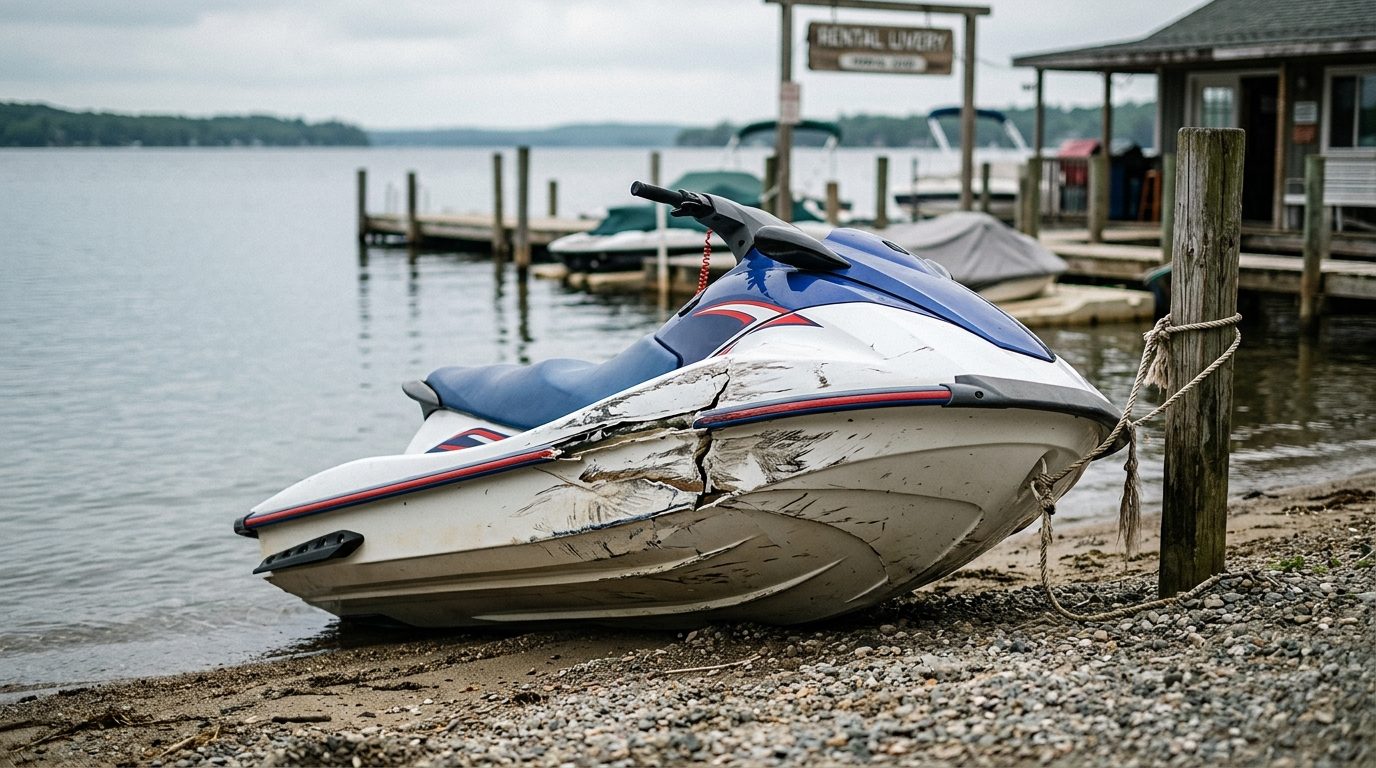
Jet Ski & Personal Watercraft Injuries
Jet Ski Accident Compensation: Lifelong Care & Damages
Catastrophic watercraft injuries demand serious legal representation. We help victims and families recover the full cost of permanent disability, lost income, and lifetime care.
By CHG Lawyers · Published August 29, 2026
Jet Ski Accident Compensation: What You Can Recover
Jet ski accident compensation is money you recover from the at-fault party or their insurance. It covers your financial losses from the accident. Compensation is not automatic—you must prove who was at fault and show what you lost. Money can come from the other operator’s liability insurance, the rental company’s insurance, your own underinsured motorist coverage, or a lawsuit. The goal is to restore you financially to where you would have been if the accident never happened. But no amount of money can undo a catastrophic, life-altering injury.
If you suffered a serious injury—spinal cord damage, traumatic brain injury, amputation, or severe burns—recovery costs far more than emergency room bills. This page explains what damages you can recover, how lifelong care is valued, and why understanding your full compensation rights matters.
If you're facing medical decisions, insurance calls, and uncertainty about your financial future right now—people in your exact position reach out regularly. Talk it through with our team — the first consultation is free, confidential, and carries no obligation.
What Damages Can Be Included in a Jet Ski Accident Claim?
Jet ski accident damages fall into two categories: economic damages and non-economic damages.
Economic damages are money you actually spent or lost: – Emergency care, hospitalization, surgery, and rehabilitation – Ongoing medical treatment, therapy, and prescription medications – Future medical care and lifelong management if your injury is permanent – Adaptive equipment, prosthetics, wheelchairs, and home modifications – Lost wages during recovery and lost earning capacity for your entire working life – Transportation, home care, and attendant services
Non-economic damages are pain, suffering, and reduced quality of life: – Physical pain and emotional trauma – Loss of enjoyment of life – Disfigurement or permanent scarring – Loss of companionship (for family members)
In catastrophic cases, economic damages are often much larger. A spinal cord injury requiring lifelong care can cost $1 million to $5 million or more over a lifetime. Insurance companies and courts use life care plans—expert estimates of all medical and personal care you will need for the rest of your life—to calculate fair compensation.
Why Lifelong Care Costs Matter in Catastrophic Jet Ski Injuries
Catastrophic jet ski injuries—spinal cord damage, traumatic brain injury, amputation, severe burns—often require permanent medical care and supervision. You may need:
- Ongoing physical and occupational therapy
- Home health aides or attendant care
- Specialized equipment and adaptive technology
- Accessible housing modifications
- Prescription medications and pain management
- Periodic hospitalizations and emergency care
- Vocational rehabilitation and job retraining
A life care plan accounts for all these needs over decades. It projects costs based on your age, injury severity, advances in medical treatment, and inflation. Without proper valuation of lifelong care, a settlement may leave you and your family without money for necessary treatment years after the accident.
Many clients initially accept inadequate settlements because they do not understand the true lifetime cost of their care. Once the money runs out, they face years without access to necessary treatment. Proper compensation planning prevents that outcome.
What Happens if You Get Hit by a Jet Ski?
Immediate injuries can range from minor cuts to catastrophic trauma: spinal cord injury, brain injury, drowning, amputation, or severe burns. Your right to compensation depends on who was at fault.
Possible defendants include: – The other jet ski operator (if they were reckless or negligent) – The rental company (if they rented an unsafe or poorly maintained jet ski, or rented to an incompetent or intoxicated operator) – The boat owner (if the accident involved a collision with a boat) – A property owner (if the accident occurred on their property and they failed to provide reasonable safety measures or security)
You may have claims against multiple parties. The other operator’s personal liability insurance, the rental company’s insurance, and your own underinsured motorist coverage are all potential sources of recovery.
Documenting the accident is critical: – Report the accident to law enforcement and obtain a police report – Photograph the accident scene, the jet skis, and your injuries – Collect witness contact information – Obtain the other operator’s insurance details – Seek immediate medical attention and keep all medical records
Policy Limits and Why They Fail Catastrophic Cases
Most jet ski operators carry liability insurance with policy limits of $25,000 to $100,000 per person. These limits sound substantial until you face a catastrophic injury.
A spinal cord injury resulting in paraplegia or quadriplegia can cost $1.3 million to $4.6 million over a lifetime, according to the Christopher & Dana Reeve Foundation. A traumatic brain injury may exceed $3 million. An amputation requiring prosthetics and lifelong care can cost $500,000 to $2 million or more.
When the at-fault party’s insurance is insufficient, you may pursue additional recovery through: – Your own underinsured motorist (UIM) coverage – The rental company’s insurance (if applicable) – A personal lawsuit against the operator – The defendant’s personal assets
Understanding all available insurance sources is essential to maximizing your compensation.
How to File a Jet Ski Accident Claim
Step 1: Report and document the accident – Call law enforcement and obtain a police report – Take photos of the accident scene, jet skis, and injuries – Collect witness names and contact information
Step 2: Seek medical attention and keep records – Obtain immediate emergency care – Follow up with specialists (neurologists, orthopedic surgeons, physiatrists) – Keep all medical records, bills, and prescription receipts
Step 3: Notify insurance companies – Report the accident to the at-fault operator’s insurer – Report it to your own insurer – Do not accept an early settlement offer without understanding your full damages
Step 4: Gather evidence of fault and damages – Obtain the police report – Collect witness statements – Preserve medical records and expert opinions – Document lost wages and income
Step 5: Consult an attorney before signing anything – Do not give a recorded statement to an insurance adjuster without legal advice – Do not sign a settlement agreement without understanding the full scope of your injuries and long-term care needs – An attorney can evaluate your claim and advise whether litigation is necessary
Not sure what your next step is?
Talk it through with our team — the first consultation is free, confidential, and carries no obligation.
Is It Worth Suing for a Jet Ski Accident?
If your injury is catastrophic and permanent, the answer is often yes. Here’s why:
Insurance companies frequently offer settlements far below the true lifetime cost of care. They profit by paying less than what you actually need. A lawsuit may be necessary to recover full damages, especially if:
- The at-fault party’s insurance is insufficient
- Liability is disputed or unclear
- The defendant’s negligence was severe
- Your injury will require decades of medical care
The decision depends on several factors: – The severity and permanence of your injury – The strength of evidence proving fault – The defendant’s assets and insurance coverage – Florida’s two-year statute of limitations for personal injury lawsuits
An attorney who focuses exclusively on catastrophic injury cases can evaluate your specific situation and advise whether litigation is in your best interest.
Statute of Limitations: Your Deadline for Filing
In Florida, you have two years from the date of the accident to file a personal injury lawsuit. If the accident resulted in death, the family has two years to file a wrongful death claim.
Insurance claims do not have the same deadline, but delays in reporting can complicate your case. Evidence degrades, witnesses’ memories fade, and the sooner you act, the stronger your claim.
Do not wait. If you were injured in a jet ski accident, begin documenting your damages and consulting with an attorney immediately.
Wrongful Death: Compensation When a Family Member Is Killed
If a family member was killed in a jet ski accident, surviving spouses, children, and parents may file a wrongful death claim under Florida Statute §768.19.
Wrongful death damages include: – Funeral and burial costs – Lost financial support the deceased would have provided – Loss of companionship and emotional support – Pain and suffering of the survivors
The calculation depends on the deceased’s age, earning potential, and the family’s financial dependence on them.
How Comparative Negligence Affects Your Claim
Florida follows a modified comparative-negligence rule. Under Florida Statute §768.81, if you are found to be more than 50% at fault for the accident, you recover nothing. If you are 50% or less at fault, you recover your share of damages reduced by your percentage of fault.
For example: If you are found 20% at fault and your damages are $1 million, you recover $800,000.
Insurance companies and defendants often argue that an injured person bears some responsibility for the accident to reduce their payout. An experienced attorney will defend against these arguments and ensure your fault is not overstated.
Have questions about what happened?
Ask our team directly. The first conversation is free, confidential, and there is no obligation to continue.
Frequently Asked Questions
How much is a typical settlement for a jet ski accident?
There is no “typical” settlement. Compensation depends on the severity of your injury, your age and earning potential, the strength of evidence of fault, and the defendant’s insurance. Catastrophic injuries often result in settlements or judgments ranging from $500,000 to several million dollars.
Can you sue a jet ski rental company for injuries?
Yes. Rental companies can be held liable if they rented an unsafe jet ski, failed to maintain it properly, or rented to an incompetent or intoxicated operator. Many rental companies carry liability insurance.
What if the accident was partially my fault?
Florida’s comparative-negligence rule allows you to recover even if you bear some fault—as long as you are not more than 50% responsible (Fla. Stat. § 768.81(6)). Your recovery is reduced by your percentage of fault.
How long does a jet ski accident claim take?
Simple claims may settle in months. Catastrophic cases often take one to three years or longer, especially if litigation is necessary. Rushing to settle early often results in inadequate compensation.
What evidence do I need to prove fault?
Police reports, witness statements, photographs of the accident scene, medical records, expert opinions, and the other operator’s prior violations all strengthen your case.
Next Steps: Understanding Your Compensation Options
If you or a family member suffered a catastrophic injury in a jet ski accident, the financial and emotional burden is real. Medical bills, lost income, and the cost of lifelong care can devastate a family’s finances.
Compensation exists to help you recover—but only if you understand what you are entitled to and pursue it aggressively. Many people injured in jet ski accidents do not realize the full scope of damages available to them, or they accept inadequate settlements under pressure from insurance adjusters.
An attorney who focuses exclusively on catastrophic injury cases can help you navigate insurance claims, calculate lifelong care costs using life care plans, and pursue maximum recovery. If you’re facing medical decisions, insurance calls, and uncertainty about your financial future right now—people in your exact position reach out regularly. We can help you understand your options and what your claim may be worth.
Why Jet Ski Accident Claims Are Complex
Multiple Liable Parties
Responsibility may fall on the jet ski operator, the rental company, the manufacturer, or the property owner—or a combination. Identifying all parties and their insurance is critical to maximizing your recovery.
Insurance & Regulatory Layers
Watercraft liability claims involve specialized maritime law, state boating regulations, and insurance policies that differ from auto or homeowner coverage. Navigating these layers requires focused legal knowledge.
Lifetime Costs of Catastrophic Injury
Spinal cord injuries, paralysis, traumatic brain injuries, and amputations from jet ski collisions create decades of medical care, rehabilitation, assistive equipment, and lost earning power. Compensation must account for your full lifetime needs.
Evidence & Reconstruction
Watercraft accidents often lack eyewitnesses and clear physical evidence. Expert reconstruction, operator records, and maintenance history are essential to proving fault and negligence.
What Jet Ski Accident Compensation Covers
Medical & Rehabilitation Costs
Emergency care, surgery, hospitalization, ongoing medical treatment, physical therapy, occupational therapy, and specialized rehabilitation facilities—both immediate and lifelong.
Assistive Equipment & Home Modifications
Wheelchairs, mobility devices, ventilators, accessible vehicles, home accessibility renovations, and adaptive technology needed to maintain independence and dignity.
Lost Income & Earning Capacity
Wages lost during recovery and the permanent reduction in your ability to work and earn, calculated across your working lifetime based on your age and career trajectory.
Pain, Suffering & Loss of Life Quality
Compensation for the physical pain, emotional trauma, loss of enjoyment of life, and the permanent changes to your relationships and independence caused by your injury.
Act Quickly—Evidence Fades
Jet ski accident scenes are often on water, making evidence collection urgent. Operator records, maintenance logs, witness statements, and scene documentation must be preserved immediately. Delays allow evidence to disappear and memories to fade.
Common Jet Ski Accident Scenarios
Collision Between Watercraft
High-speed collisions between jet skis cause severe spinal cord injuries, paralysis, traumatic brain injuries, and internal organ damage. Operator negligence, excessive speed, and failure to maintain a proper lookout are common causes.
Rental Company Negligence
Rental companies may fail to maintain equipment, provide adequate safety briefings, or verify operator competence. Mechanical failure or operator inexperience can result in catastrophic injury.
Operator Impairment or Recklessness
Alcohol use, drug impairment, or reckless operation at excessive speeds puts all passengers and nearby watercraft users at risk of life-altering injury.
Passenger Ejection & Drowning
Sudden maneuvers, collisions, or mechanical failure can eject passengers into the water. Drowning, near-drowning with permanent brain damage, and spinal injuries can result.