

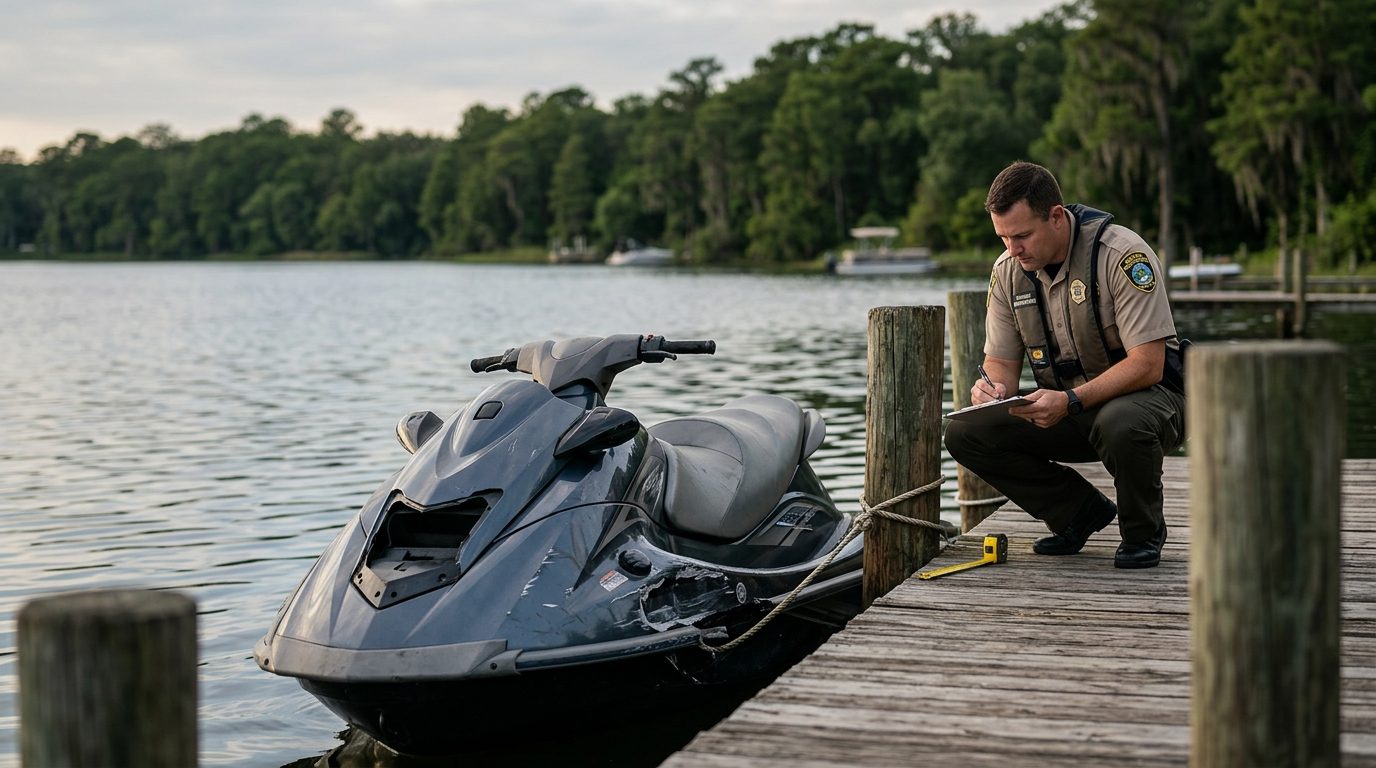
Jet Ski & Watercraft Accidents
Jet Ski Accident Injury Lawyer in Florida
If you suffered catastrophic injuries in a jet ski collision, rental accident, or watercraft incident, CHG Personal Injury Lawyers can help you understand your rights and pursue fair compensation.
By CHG Lawyers · Published September 23, 2026
Jet Ski Accident Injury Lawyer in Florida: Catastrophic Injuries & Legal Claims
Jet skis are high-powered watercraft. They can exceed 60 mph with minimal rider protection. At these speeds, collisions and ejections cause severe blunt-force trauma—not minor injuries that heal.
You may recover from the operator, rental company, manufacturer, or other responsible parties.
This guide explains how jet ski accidents happen, who is liable under Florida law, what compensation you can recover, and what to do now.
Not sure what your next step is?
Talk it through with our team — the first consultation is free, confidential, and carries no obligation.
Catastrophic Jet Ski Injuries: Permanent Disability and Wrongful Death
Catastrophic jet ski injuries cause permanent impairment. They are far more serious than soft-tissue injuries or simple fractures.
Spinal cord injuries and paralysis occur when high-impact collisions or ejection damage the spine. Riders ejected at high speed or struck by another jet ski suffer paraplegia (lower-body paralysis) or quadriplegia (all-limb paralysis).
The Christopher & Dana Reeve Foundation reports that spinal cord injuries result in permanent loss of function below the injury site. They require lifelong medical care, assistive devices, and home modifications.
Traumatic brain injury (TBI) results from head strikes against the jet ski, water surface, or other objects. The Mayo Clinic describes TBI as causing cognitive impairment, memory loss, personality changes, and motor-control loss. Effects may not appear immediately but can worsen over time and persist for years.
Amputation and limb loss happen when a rider contacts the jet ski’s propeller or is crushed between vessels. Propeller injuries are catastrophic and often irreversible. They require lifelong prosthetic care and rehabilitation.
Severe burn injuries occur from fuel ignition, engine contact, or exhaust exposure. Large burns require extensive grafting, reconstruction, and long-term rehabilitation—often spanning months or years.
Internal injuries from jet thrust impact cause blunt-force trauma to organs, internal bleeding, and organ failure. These injuries may not be immediately visible but are life-threatening.
Drowning and near-drowning with permanent neurological damage result from submersion, aspiration, or loss of consciousness in water.
Wrongful death is the most catastrophic outcome. When a jet ski accident is fatal, the family grieves and faces funeral costs, lost income, and permanent loss. Florida law recognizes the family’s right to pursue a wrongful death claim for these losses.
How Jet Ski Accidents Happen: Liability and Negligence
Jet ski accidents result from operator error, equipment failure, rental company negligence, or a combination. Understanding liability identifies who must compensate you.
Operator negligence includes excessive speed, reckless maneuvers, impaired operation (alcohol or drugs), and loss of control. An operator who causes a collision or strikes another person is liable for injuries.
Collisions with another vessel, fixed object (dock, buoy, rock), or person in water create high-impact trauma. The other operator or vessel owner may be liable.
Rental company negligence occurs when a company fails to inspect equipment, provides inadequate safety briefing, rents to unqualified or intoxicated operators, or rents a defective machine. Under Florida common law, rental companies have a legal duty to maintain equipment safely and warn renters of known hazards. Failure creates liability.
Defective jet ski design or manufacturing defects increase injury risk. Examples include:
- Faulty throttle controls that stick or fail to respond.
- Inadequate stability or hull design causing tipping.
- Defective fuel systems prone to leaking or ignition.
- Propeller guards that fail to prevent rider or swimmer contact.
- Inadequate warning labels.
The manufacturer may be liable even if the operator was negligent.
Failure to warn of known hazards or risks results in liability if the warning would have prevented injury.
Negligent security or premises liability applies if the accident occurs at a resort, marina, or rental facility with inadequate supervision, safety measures, or lifeguard presence.
Maritime law principles apply to jet ski accidents on navigable waters. These principles provide additional legal remedies and different liability standards than ordinary personal injury law.
Florida’s Comparative Negligence Rule: The 51% Threshold
Florida follows comparative negligence. Under Fla. Stat. § 768.81, you can recover damages even if partially at fault. You must not be more than 50% responsible.
Here’s how it works: if you were 40% at fault but a rental company was 60% at fault for renting a defective machine, you recover 60% of damages. If you are 51% or more at fault, you cannot recover anything.
This rule is critical in jet ski cases. Even if you were operating the jet ski, a rental company, another operator, a manufacturer, or a third party may bear significant liability. An experienced attorney investigates all parties and evidence to establish liability and minimize your comparative fault.
Liability Waivers: Not an Absolute Shield
Jet ski rental companies often require liability waivers before renting. However, waivers are not absolute shields in Florida.
A waiver cannot protect a rental company from gross negligence (reckless disregard for safety), willful misconduct, or safety statute violations. If a rental company knowingly rented a defective jet ski, rented to a visibly intoxicated person, or failed to provide basic safety equipment, the waiver is likely unenforceable under Florida law.
An attorney can challenge waiver enforceability and pursue claims against the rental company, operator, manufacturer, or other liable parties.
Jet Ski Rental Company Liability in Florida
Rental companies have clear legal duties to renters and the public:
- Inspect and maintain equipment in safe condition.
- Warn renters of known hazards and risks.
- Refuse to rent to intoxicated operators, inexperienced renters, or known reckless operators.
- Provide adequate safety equipment (life jackets, emergency contact information).
Failure to meet these duties—such as renting a jet ski with faulty brakes, defective throttle, or damaged hull—creates liability. Rental companies may also be liable if they rent to an obviously impaired operator or fail to screen for reckless behavior.
Short-term rental platforms (Airbnb, VRBO) that facilitate jet ski rentals may also face liability for injuries caused by defective or inadequately maintained equipment.
Product Liability: Defective Jet Ski Design and Manufacturing
Manufacturers can be held liable for design or manufacturing defects that increase injury risk. Common defects include:
- Faulty throttle controls that stick or fail to respond.
- Inadequate stability or hull design causing tipping.
- Defective fuel systems prone to leaking or ignition.
- Propeller guards that fail to prevent rider or swimmer contact.
- Inadequate warning labels or operator manuals.
A product liability claim requires expert analysis of design, manufacturing process, and comparable models. Defect claims can coexist with operator negligence or rental company liability. Multiple parties may be responsible for your injury.
Maritime Law and Jet Ski Accidents
Jet ski accidents on navigable waters fall under maritime law. This differs significantly from ordinary personal injury law. Maritime law may provide:
- Additional remedies and causes of action.
- Different statute of limitations and liability standards.
- Claims under the Jones Act (if employment is involved).
- General maritime law principles that protect injured parties.
An attorney experienced in maritime law identifies all available claims and maximizes your recovery.
Have questions about what happened?
Ask our team directly. The first conversation is free, confidential, and there is no obligation to continue.
Wrongful Death Claims: Honoring Your Family’s Loss and Rights
If a jet ski accident results in death, the family may bring a wrongful death claim against responsible parties. This claim recognizes the family’s legal right to compensation for their loss.
Wrongful death damages may include:
- Funeral and medical expenses.
- Lost income and employee benefits the deceased would have earned.
- Loss of companionship, guidance, and emotional support.
- Pain and suffering experienced before death.
In Florida, Fla. Stat. § 95.11 allows certain family members (spouse, children, parents) to bring a wrongful death claim. The claim must be filed within two years of the date of death. An attorney helps the family understand their rights and pursue full compensation for their loss.
Compensation for Catastrophic Jet Ski Injuries
Damages in a jet ski accident case may include:
- Medical expenses (past and future): emergency care, surgery, hospitalization, rehabilitation, therapy, medications, and ongoing treatment.
- Assistive devices and home modifications: wheelchairs, ramps, accessible bathrooms, specialized beds, and equipment needed for daily living.
- Lost wages and lost earning capacity: income lost during recovery and permanent reduction in earning ability.
- Pain and suffering: compensation for physical pain, emotional distress, and loss of life enjoyment.
- Loss of consortium: compensation to a spouse for lost companionship and intimate relationship.
- Punitive damages: in cases of gross negligence or willful misconduct, courts may award additional damages to punish the defendant and deter similar conduct.
Insurance coverage—the operator’s, rental company’s, or vessel owner’s policy—often provides the primary recovery source.
How Personal Injury Attorneys Charge: Contingency Fees Explained
Most personal injury attorneys, including those handling jet ski accident cases, work on a contingency fee basis. Here’s what this means for you:
- You pay no upfront legal fees. There is no cost to hire the attorney or begin your case.
- The attorney is paid only if you recover money through settlement or judgment.
- The attorney’s fee is typically a percentage of your recovery, often 25–40%, depending on the firm and case complexity.
- The attorney covers all costs (investigation, expert witnesses, filing fees) and is reimbursed from your recovery.
Some firms charge a lower percentage if the case settles early or a higher percentage if it goes to trial. This arrangement removes the financial barrier to pursuing your claim. You do not risk money out of pocket. Always discuss fee arrangements clearly with your attorney before hiring.
If You Were Struck by a Jet Ski While Swimming
If you’re struck by a jet ski while swimming or in water:
- Seek immediate medical attention, even if you feel unharmed. Jet ski injuries can have delayed symptoms.
- Report the incident to the U.S. Coast Guard (if on navigable waters) and local law enforcement.
- Gather information from witnesses, the other operator, and any rental company involved.
- Document the scene with photos of the jet ski, accident location, your injuries, and property damage.
- Do not sign any liability waiver or settlement without legal advice.
- Contact an attorney as soon as possible. Florida has a statute of limitations for filing claims.
Steps to Take After a Jet Ski Accident
Prioritize medical care. Document all injuries and treatment. Obtain copies of medical records and bills.
Preserve evidence. Take photos of the jet ski, accident scene, your injuries, and property damage. Keep all physical evidence (torn clothing, damaged equipment).
Obtain official reports. Request a copy of the accident report from the U.S. Coast Guard or local law enforcement.
Keep detailed records. Document all expenses: medical bills, transportation, lost wages, rehabilitation, assistive devices, and home modifications.
Avoid social media and informal discussions. Do not post about the accident on social media or discuss details with the other party’s insurance company without legal counsel.
Consult an attorney immediately. Contact a firm that focuses exclusively on catastrophic injury cases. The sooner you act, the sooner evidence can be preserved and your claim evaluated.
Statute of Limitations for Jet Ski Accident Claims in Florida
In Florida, Fla. Stat. § 95.11 sets the statute of limitations for personal injury claims at two years from the date of injury. For wrongful death claims, the limit is two years from the date of death.
Maritime claims may have different deadlines depending on the specific legal theory. Missing the deadline bars your right to sue. Do not delay in contacting an attorney.
Want to know where you stand?
Tell us what happened and our team will walk you through the options available to you, at no cost.
Why You Need an Attorney Who Focuses Exclusively on Catastrophic Injuries
Catastrophic jet ski injuries require deep knowledge of maritime law, product liability, comparative negligence, insurance coverage, and long-term injury management. A firm that focuses exclusively on catastrophic injuries understands the permanent medical, financial, and personal impact of paralysis, brain injury, amputation, and wrongful death.
Experienced attorneys can:
- Identify all liable parties: the operator, rental company, manufacturer, and third parties.
- Challenge liability waivers and insurance defenses.
- Work with medical experts to document injury severity and permanence.
- Consult with life-care planners and economists to calculate future medical costs and lost earning capacity.
- Build a compelling case and negotiate or litigate for maximum recovery.
Our firm handles catastrophic jet ski accident injury cases nationwide and throughout Florida: Miami, Orlando, Tampa, Jacksonville, and beyond.
Frequently Asked Questions
Can I recover compensation if I was partially at fault for the jet ski accident?
Yes. Under Florida’s comparative negligence rule, you can recover damages even if partially at fault, as long as you are not more than 50% responsible. If you are 51% or more at fault, recovery is barred.
Are liability waivers enforceable in Florida jet ski rental agreements?
No, not absolutely. Waivers cannot shield a rental company from gross negligence, willful misconduct, or safety statute violations. An attorney can challenge waiver enforceability.
What should I do immediately after a jet ski accident?
Seek medical care, report the incident to the Coast Guard or police, gather witness information, document the scene, preserve evidence, and contact an attorney. Do not sign any waiver or settlement without legal advice.
How long do I have to file a jet ski accident lawsuit in Florida?
Two years from the date of injury for personal injury claims; two years from the date of death for wrongful death claims. Do not delay.
Can I sue a jet ski rental company for a defective machine?
Yes. Rental companies have a duty to inspect, maintain, and warn of hazards. Failure to do so—such as renting a defective jet ski—creates liability.
How much does it cost to hire a personal injury attorney?
Most personal injury attorneys work on contingency: you pay nothing upfront, and the attorney is paid only if you recover. The fee is typically 25–40% of your recovery.
If you or a family member suffered a catastrophic injury in a jet ski accident—paralysis, brain damage, amputation, severe burns, or wrongful death—you likely have legal claims against the operator, rental company, or manufacturer. Contact us for a free case evaluation and let our team help you understand your options and pursue the compensation you deserve.
Why Choose CHG for Your Jet Ski Injury Claim
Focused on Catastrophic Injury
We focus exclusively on serious and life-altering injuries—spinal cord damage, paralysis, traumatic brain injury, amputations, and severe burns—many arising from water accidents and negligence.
Understanding Watercraft Liability
Jet ski accidents involve unique legal issues: operator negligence, rental company responsibility, manufacturer defects, and maritime law. We know how to investigate and build these claims.
Florida-Based, National Reach
We represent clients throughout Florida and across the United States. Whether your accident happened in Miami, the Gulf Coast, or beyond, we can help.
Compassionate, Plain-Language Guidance
Catastrophic injury changes everything. We explain your options clearly, answer your questions, and stand with you through the process.
Common Jet Ski Accident Scenarios We Handle
Rental Company Negligence
Poorly maintained equipment, inadequate safety briefings, or failure to screen operators can lead to serious collisions and injuries. Rental companies have a duty to provide safe watercraft.
Operator Negligence & Collisions
Reckless driving, speeding, alcohol impairment, or failure to yield can cause high-impact collisions. Injuries from jet ski crashes often involve spinal cord damage, head trauma, or drowning risk.
Defective Equipment
Faulty steering, brake failure, engine malfunction, or design defects can cause loss of control. Manufacturers and sellers may be liable for injuries caused by unsafe watercraft.
Drowning & Water-Related Injuries
Jet ski accidents can result in submersion, near-drowning, and hypoxic brain injury. We handle claims for families who have lost loved ones and survivors with permanent neurological damage.
Important: Liability Waivers Are Not Always Enforceable
Many jet ski rental agreements include liability waivers, but Florida law does not permit waivers of liability for gross negligence, recklessness, or intentional misconduct. If the rental company or operator acted with gross negligence, a waiver may not bar your claim. Do not assume a signed waiver ends your case.
What to Do After a Jet Ski Accident
Seek Medical Attention Immediately
Even if injuries seem minor, get evaluated by a doctor. Water-related injuries can cause delayed complications, and medical records are essential to your claim.
Report the Incident
File a report with local law enforcement or the Florida Fish and Wildlife Conservation Commission (FWC). Document the accident scene, weather, water conditions, and other watercraft involved.
Gather Evidence
Collect contact information from witnesses, take photos of the accident scene and any injuries, and preserve the damaged jet ski. Request maintenance records from rental companies.
Contact a Lawyer Before Speaking to Insurance
Insurance adjusters may pressure you to settle quickly or make statements that hurt your claim. Let us handle communications so you focus on recovery.
Frequently Asked Questions
Can I recover compensation if I was partially at fault?
Yes. Under Florida's comparative negligence rule, you can recover damages even if partially at fault, as long as you are not more than 50% responsible. If you are 51% or more at fault, recovery is barred.
What damages can I claim?
Catastrophic jet ski injuries may entitle you to compensation for medical expenses, rehabilitation, lost wages, loss of earning capacity, pain and suffering, permanent disability, and in fatal cases, wrongful death damages for surviving family members.
Who can be held liable?
Liability may fall on the jet ski operator, the rental company, the manufacturer, or the property owner if the accident occurred on their premises. We investigate all responsible parties.
How long do I have to file a claim?
Time limits apply to personal injury and wrongful death claims. Contact us promptly—the sooner we begin, the sooner we can protect your rights and preserve evidence.
No Attorney’s Fee Unless There Is a Recovery
Related practice areas
- Common Catastrophic Injuries From Jet Ski Accidents
- Drowning and Near-Drowning After Jet Ski Accidents
- Compensation Available in Catastrophic Jet Ski Injury Cases
- Common Catastrophic Injuries From Jet Ski Accidents
- Jet Ski Drowning and Near-Drowning Injuries: Anoxic Brain Injury and Family Rights
- How to Prove a Jet Ski Accident Claim: Evidence, Witnesses, and Boating Rules
- Does a Jet Ski Rental Waiver Prevent You From Suing After a Serious Injury?
- Are Jet Ski Accidents Maritime Claims? Florida Boating vs. Admiralty Law