

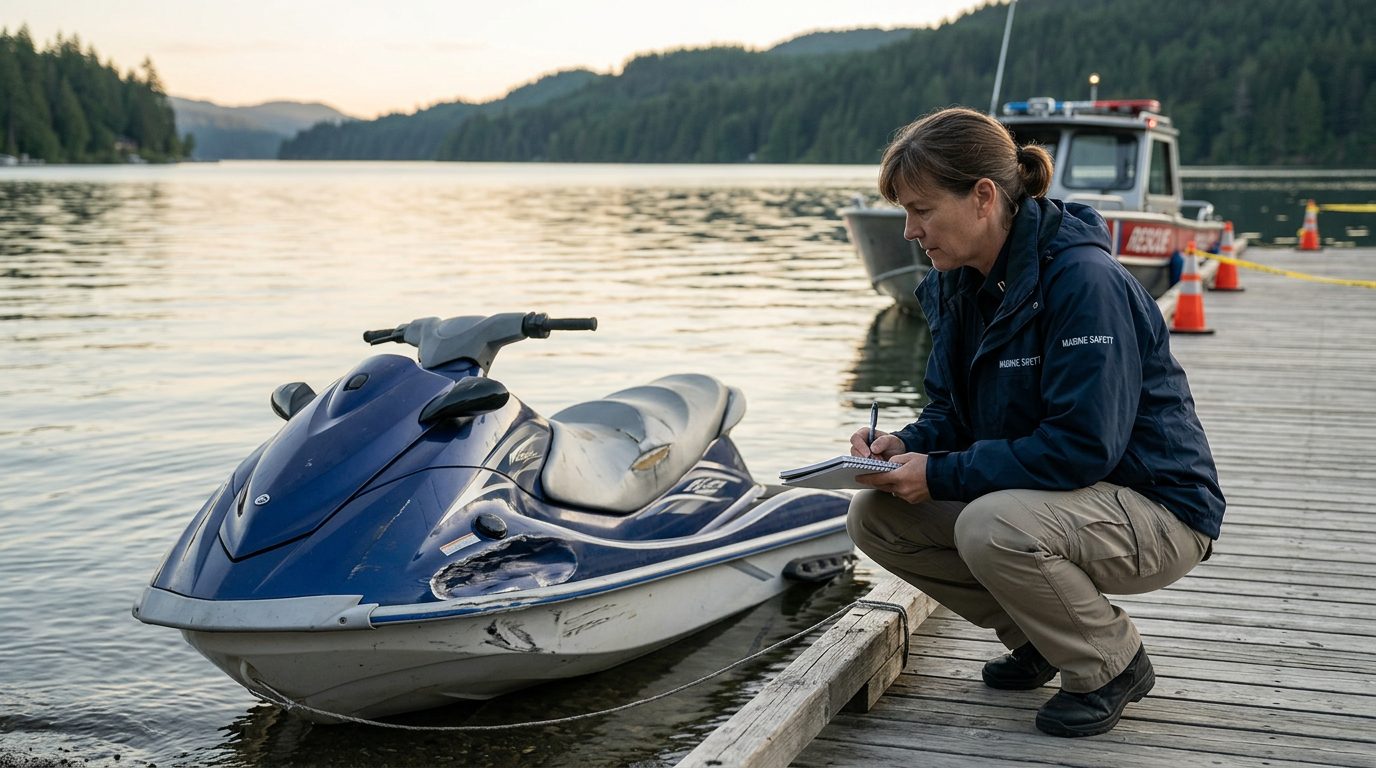
Jet Ski & Water Sports Accidents
Jet Ski Accident Drowning Claim: Negligence
If someone drowned or was killed in a jet ski accident caused by negligence—faulty equipment, lack of safety instruction, or a rental company's failure to enforce rules—you may have a claim. We help families pursue accountability.
By CHG Lawyers · Published September 26, 2026
Jet Ski Accident Drowning Claims in Florida: Negligence, Liability & Compensation
After a jet ski accident drowning, families face unimaginable loss. Survivors of near-drowning often live with permanent brain damage and lifelong disability. If someone else’s negligence caused that tragedy, you may have a legal claim against the operator, rental company, or property owner.
This page explains the difference between fatal drowning and survivable near-drowning, identifies who bears liability, and walks you through the legal path forward under current Florida law.
If you believe negligence played a role in your loved one's drowning or near-drowning, reach out. Talk it through with our team — the first consultation is free, confidential, and carries no obligation.
Drowning vs. Near-Drowning: Why Both Are Catastrophic
Drowning is fatal. Water enters the lungs and prevents oxygen from reaching the brain and heart. Loss of consciousness happens within minutes; death follows quickly. The CDC reports that drowning is the leading cause of unintentional injury death for children ages 1–4 and the second leading cause for children ages 5–14. Adults are not immune: unintentional drowning deaths among adults ages 15–24 rank second only to suicide.
Near-drowning is survivable—but often catastrophic. A near-drowning victim is pulled from the water and resuscitated. However, the brain has already suffered oxygen deprivation (hypoxia—lack of oxygen). Even minutes without oxygen cause permanent neurological damage. Survivors often wake to permanent impairment: loss of speech, movement, memory, or awareness. Some remain in a persistent vegetative state, requiring round-the-clock care for decades.
In jet ski accidents, both outcomes are possible. A fatal drowning claim is brought by the family as a wrongful-death action. A near-drowning claim is brought by the survivor or, if they are incapacitated, by a family member on their behalf.
How Jet Ski Accidents Lead to Drowning and Near-Drowning
Jet ski drowning rarely results from a single cause. Multiple risk factors combine to create a deadly scenario:
High-speed collision or ejection. Impact throws the operator or passenger into the water, often unconscious or severely injured. An unconscious person cannot swim, signal for help, or stay afloat.
Operator inexperience. Rental companies place inexperienced renters on powerful machines with minimal instruction. Loss of control, inability to recover after a fall, or failure to navigate safely leaves the operator vulnerable in deep water.
Alcohol impairment. Alcohol reduces judgment, balance, and emergency response ability. It is a leading factor in jet ski drowning deaths and is frequently present in fatal accidents.
Missing or inadequate life jackets. An injured, unconscious, or panicked person cannot stay afloat without flotation. Rental companies that fail to require, provide, or enforce life jacket use dramatically increase drowning risk.
Inadequate supervision and rental company negligence. Failure to enforce safety rules, provide proper instruction, maintain equipment, or conduct safety briefings creates conditions for tragedy.
Entanglement or propeller trauma. Clothing or body parts caught in the jet ski or propeller can trap a person underwater or cause severe injury.
Near-Drowning and Hypoxic Brain Injury: Permanent Disability
The brain begins to suffer permanent damage within 4–6 minutes of oxygen loss. A near-drowning survivor who is resuscitated may face permanent neurological impairment.
Hypoxic brain injury—permanent damage from oxygen deprivation—can result in:
- Cognitive impairment: difficulty thinking, learning, processing information, or communicating
- Loss of motor function: paralysis, loss of coordination, or dependence on wheelchairs and assistive devices
- Seizure disorder: requiring lifelong medication and monitoring
- Coma or persistent vegetative state: minimal or no awareness or response
- Behavioral and emotional changes: aggression, mood swings, or loss of personality
Recovery is often incomplete and unpredictable. A near-drowning survivor may spend decades in rehabilitation facilities or require round-the-clock home care. Families often pursue claims to secure compensation that reflects the lifetime burden of medical care, therapy, assistive devices, and personal support. For more detail, see catastrophic brain injury from drowning and recovery.
Jet Ski Accident Fatality Rates and Risk Factors
The U.S. Coast Guard tracks recreational boating fatalities. In recent years, jet ski accidents have accounted for hundreds of deaths annually. Drowning is the leading cause of death; trauma from collision or ejection is the second. Risk factors include operator inexperience, alcohol use, failure to wear a life jacket, and excessive speed. Fatality rates are significantly higher in rental situations, where operators receive minimal instruction and safety oversight.
Florida, with year-round water recreation and a high volume of jet ski rentals, experiences a substantial share of these fatalities. Families who lose a loved one in a jet ski accident drowning often discover that the rental company or operator acted negligently—and that negligence may be actionable. For families facing this loss, wrongful-death lawsuits may provide a path to accountability and compensation.
When You May Have a Jet Ski Drowning or Near-Drowning Claim
If someone else’s negligence caused or contributed to the drowning or near-drowning, the injured person or their family may have a legal claim. Negligence means that someone owed a duty of care, failed to meet that duty, and caused harm as a result.
Who can be liable?
- A jet ski rental company that failed to enforce safety rules, provide proper instruction, maintain equipment, or require life jackets
- An operator who acted recklessly—speeding, operating under the influence of alcohol, ignoring safety warnings, or failing to supervise passengers
- A property owner or business that failed to provide reasonable supervision or safety measures on their water
- A manufacturer or seller of defective equipment (e.g., a jet ski with a known propeller defect or failed engine cutoff switch)
What must be proven?
You must show that the defendant owed a duty of care. A rental company has a duty to rent safe equipment and provide adequate instruction. You must show they breached that duty. And you must show they caused harm—the drowning or near-drowning.
Wrongful-death claims are brought by the family of someone who died. Near-drowning claims are brought by the survivor or, if incapacitated, by a family member on their behalf.
If you have questions about a jet ski accident drowning or near-drowning, contact our office for a free, confidential consultation. Talk it through with our team — the first consultation is free, confidential, and carries no obligation.
Liability Waivers: What They Cannot Do
Jet ski rental companies often ask renters to sign liability waivers before renting. Many families mistakenly believe these waivers prevent them from pursuing a claim. This is not true.
Specifically, Florida Statute §768.81 and Florida case law establish that a waiver cannot protect a rental company from claims based on:
- Failure to provide proper instruction or safety briefing
- Failure to enforce safety rules (such as requiring life jackets)
- Failure to maintain the jet ski in safe working condition
- Failure to warn of known hazards or defects
- Reckless or intentional misconduct
If the company’s conduct was negligent or reckless, you may pursue a claim despite a signed waiver.
Florida’s Statute of Limitations: The 2-Year Deadline
Time is critical. Under Florida Statute §95.11, a wrongful-death claim or personal-injury claim arising from a jet ski accident must be filed within two years of the date of death or injury. This deadline applies to all drowning and near-drowning claims. Injuries on navigable waters are often maritime claims with a three-year federal deadline (46 U.S.C. § 30106).
Missing this deadline bars the claim entirely. Limited exceptions rarely apply. If you are considering a claim, contact an attorney as soon as possible to preserve your rights. Waiting months or years to investigate or consult an attorney can result in the loss of your claim.
Comparative Negligence: Partial Fault Does Not Always Bar Recovery
You may worry that the victim bore some responsibility for the accident. Perhaps they were inexperienced, did not insist on wearing a life jacket, or ignored safety warnings. Does that prevent a claim?
Not necessarily. Florida applies modified comparative negligence under Florida Statute §768.81. A claimant who is more than 50% at fault recovers nothing. However, those 50% or less at fault may recover damages proportional to their degree of fault.
Example: If a victim was 20% at fault and the defendant was 80% at fault, the victim may recover 80% of their damages. If the victim was 50% at fault and the defendant was 50% at fault, the victim may recover 50% of their damages.
An attorney can help you understand how comparative negligence applies to your specific situation and whether partial fault will reduce or eliminate your recovery.
Compensation for Jet Ski Drowning and Near-Drowning Claims
Compensation depends on the facts of the case, the degree of negligence, and the extent of harm.
Wrongful-death claims seek compensation for:
- Funeral and burial costs
- Lost income the deceased would have earned over their lifetime
- Loss of companionship, guidance, and emotional support to the family
- Medical expenses incurred before death
Near-drowning claims seek compensation for:
- Medical expenses, hospitalization, and emergency care
- Ongoing rehabilitation, physical therapy, and occupational therapy
- Assistive devices (wheelchairs, communication devices, adaptive equipment)
- Home modifications (ramps, accessible bathrooms, medical equipment)
- Lost wages and diminished earning capacity
- Pain and suffering
- Lifelong care costs and personal assistance
Catastrophic brain injury from near-drowning often results in substantial damages because the impairment is permanent and care is lifelong. For more information, see catastrophic injury compensation.
Jet Ski Accidents and Overlapping Catastrophic Injuries
A single jet ski accident can trigger multiple, overlapping injury claims. A victim ejected at high speed may suffer:
- Spinal cord injury or paralysis from impact trauma, resulting in paraplegia or quadriplegia
- Traumatic brain injury from head impact or from hypoxia (oxygen deprivation) if the victim is submerged
- Amputation or severe limb loss from propeller trauma or crushing injury
- Severe burns if fuel ignites
- Wrongful death if the victim does not survive
Each of these injuries is catastrophic and permanent. A single accident may give rise to claims for multiple types of injury. An attorney who focuses exclusively on catastrophic injury can help you identify all potential claims and pursue full compensation.
Not sure what your next step is?
Talk it through with our team — the first consultation is free, confidential, and carries no obligation.
Frequently Asked Questions
Can I sue a jet ski rental company if someone drowned?
Yes, if the rental company’s negligence caused or contributed to the drowning. Negligence can include failure to provide proper instruction, enforce safety rules, maintain equipment, or require life jackets. A signed waiver does not prevent this claim.
What if the victim was partially at fault?
You may still recover if the victim was 50% or less at fault. Your recovery will be reduced by your percentage of fault.
How long do I have to file a claim?
Two years from the date of death or injury under Florida Statute §95.11. After that, the claim is barred.
What is hypoxic brain injury?
Hypoxic brain injury is permanent damage caused by oxygen deprivation to the brain. It can result in cognitive impairment, loss of motor function, seizures, coma, or persistent vegetative state.
Who can bring a wrongful-death claim?
In Florida, the wrongful-death claim is filed by the personal representative of the estate on behalf of the survivors, such as the spouse, children and parents (Fla. Stat. § 768.20).
Can a jet ski manufacturer be liable?
Yes, if the jet ski had a defect that caused or contributed to the accident. Defects can include a failed engine cutoff switch, propeller defect, or structural failure.
What Happens Next
If you have lost someone to a jet ski accident drowning, or if your loved one survived a near-drowning and now lives with permanent brain damage and disability, you are likely overwhelmed and uncertain about what comes next.
An initial consultation with an attorney who focuses exclusively on catastrophic injury and wrongful-death claims can help you understand your options without obligation. The attorney will review the facts, identify who may be liable, explain the two-year deadline, and discuss what a claim might look like in your situation. No pressure, no cost.
If you believe negligence played a role in your loved one’s drowning or near-drowning, reach out. Families in your situation contact us regularly to learn whether they have a claim and what recovery might mean for them.
Get a free case evaluation today.
This page provides general information about jet ski accident drowning and near-drowning claims under Florida law. It is not legal advice. Every case is unique, and only an attorney who has reviewed the facts can advise you on your specific situation. If you have questions about a jet ski accident drowning or near-drowning, contact our office for a free, confidential consultation.
A Signed Waiver Does Not Bar Your Claim
Many jet ski rental companies ask renters to sign waivers. If the rental company's actions directly caused the drowning, you may still have a valid claim.
Common Causes of Jet Ski Drowning Claims
Inadequate Safety Training
Rental companies must provide proper instruction on operation, safety rules, and emergency procedures. Failure to do so—or renting to someone clearly unfit to operate the craft—can constitute negligence.
Defective or Poorly Maintained Equipment
A jet ski with faulty steering, throttle, brakes, or flotation systems puts the operator and passengers at grave risk. Rental companies have a duty to inspect and maintain their fleet.
Failure to Require Life Jackets
A responsible rental company enforces life jacket use and provides properly fitting, Coast Guard-approved devices. Negligence in this area directly increases drowning risk.
Unsafe Operating Conditions
Renting in dangerous water conditions—strong currents, poor visibility, severe weather—without warning or refusal to rent can be negligent, especially to inexperienced operators.
How We Help You
Investigate the Accident Thoroughly
We examine maintenance records, rental agreements, operator logs, weather conditions, and witness statements to establish how negligence led to the drowning.
Identify All Liable Parties
Responsibility may rest with the rental company, the manufacturer, the operator, or multiple parties. We determine who must answer for the death or injury.
Handle All Communication and Negotiation
We deal with insurance companies, rental operators, and their lawyers so you can focus on your family. We pursue fair compensation for your loss.
Treat Your Loss With Dignity
We understand the devastation of losing a loved one. Our approach is compassionate, respectful, and focused on holding the responsible party accountable.
Frequently Asked Questions
Can I sue a jet ski rental company if someone drowned?
Yes, if the rental company's negligence caused or contributed to the drowning. Negligence can include failure to provide proper instruction, enforce safety rules, maintain equipment, or require life jackets. A signed waiver does not prevent this claim.
What if the victim was partially at fault?
You may still pursue a claim. Florida law allows recovery even if the victim bears some responsibility, as long as the rental company or other defendant was also negligent. The amount recovered may be reduced by the victim's degree of fault.
Who pays for a drowning claim?
The jet ski rental company's liability insurance typically covers damages. In some cases, the manufacturer, the operator, or other parties may also be responsible. We identify all sources of recovery.
What damages can we recover?
In a wrongful death claim, damages may include funeral and medical expenses, lost income the deceased would have earned, loss of companionship, and pain and suffering. An attorney can explain what applies to your family's situation.