

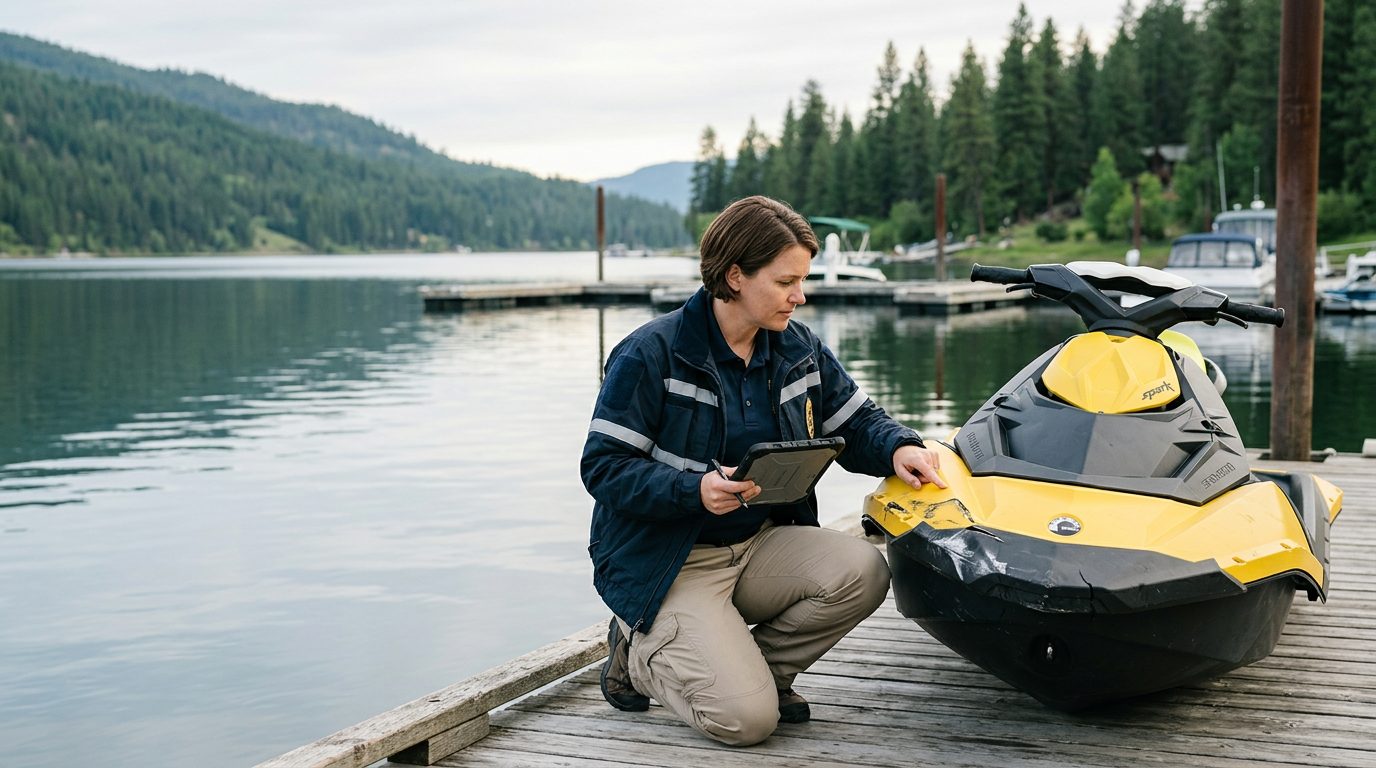
Jet Ski & Recreational Boating Accidents
Jet Ski Accidents on Navigable Waters: Understanding Maritime Claims
When a jet ski collision or injury occurs on ocean, bay, river, or lake, federal maritime law—not state law—may govern your claim. Learn how admiralty jurisdiction works and what it means for your recovery.
By CHG Lawyers · Published August 29, 2026
Jet Ski Accident Maritime Claims: Federal Admiralty Law, Liability & Recovery
You were on the water. In seconds, everything changed. A collision. A dangerous wake. A mechanical failure. Now you’re facing spinal cord injury, traumatic brain injury, severe cuts, or worse.
If you were injured in a jet ski accident on navigable water in Florida or anywhere else, your case almost certainly falls under federal maritime (admiralty) law—not just state boating rules. That distinction matters. It determines your legal rights, the money you can recover, and the deadline to file suit.
This guide explains how maritime law applies to jet ski accidents, who can be held liable, what compensation is available, and the immediate steps you must take to protect your claim.
Not sure what your next step is?
Talk it through with our team — the first consultation is free, confidential, and carries no obligation.
Why Federal Maritime Law Governs Jet Ski Injury Claims
Federal maritime law applies when a jet ski accident occurs on navigable water and causes injury.
Why this matters: Maritime law offers broader remedies than Florida state law alone. It recognizes damages for permanent disability, future medical care, lost earning capacity, and—in fatal cases—wrongful death.
The statute of limitations (deadline to sue) is also different. Federal maritime claims allow three years from the date of injury to file suit. Florida’s general negligence law allows two years. Because maritime law typically controls jet ski injury claims, the three-year federal deadline applies.
Florida Statutes Chapter 327 sets operational rules—licensing, equipment, speed limits, and some liability standards. But it does not replace maritime law for injury claims. Both frameworks may apply to the same accident, but maritime law takes priority for damages.
Maritime Negligence: The Legal Foundation of Jet Ski Accident Claims
Maritime negligence is the failure by a jet ski operator, boat owner, rental company, or other party to exercise reasonable care on the water, resulting in injury to another person.
To establish maritime negligence, you must prove three things:
-
The other party owed you a duty of care. Every operator and vessel owner on the water owes others a duty to operate safely and responsibly.
-
The other party breached that duty. They failed to exercise reasonable care—for example, by operating recklessly, ignoring safety rules, failing to maintain the watercraft, operating under the influence, or creating dangerous wakes.
-
That breach directly caused your injury. The other party’s negligence must be the direct cause of your harm.
The standard is what a prudent jet ski operator would do in the same circumstances. This is not strict liability—you must show the other party’s negligence directly caused the injury.
Comparative negligence applies: Under Florida Statute § 768.81, you can recover damages even if you were partially at fault, as long as you were not more than 50% responsible.
For example: If you were injured in a collision and you were 30% at fault for not seeing the other operator, you can still recover 70% of your damages from the other operator.
Common Jet Ski Accident Scenarios: Who Is Liable
In catastrophic-injury cases, jet ski accidents typically arise from these negligent scenarios:
- Collision with another jet ski or boat: The other operator was speeding, reckless, or failed to maintain a proper lookout.
- Dangerous wake: A boat or jet ski created a wake that capsized or threw you, causing spinal cord injury, head trauma, or other serious harm.
- Operator under the influence: The other operator was intoxicated and unable to operate safely.
- Failure to rescue: Another boater or operator saw you in distress and did not attempt to help or call for assistance.
- Defective watercraft: The jet ski had a mechanical failure—engine, steering, or fuel system—due to poor maintenance or a manufacturing defect.
- Jet ski rental negligence: A rental company failed to maintain the watercraft, provided inadequate safety instruction, or rented to an operator they knew was unqualified or intoxicated.
Multiple parties may be liable: the operator who caused the accident, the rental company, the jet ski manufacturer (if a defect contributed), and property owners or marinas if they failed to maintain safe conditions.
Jet Ski Rental Company Negligence
Rental companies have significant legal responsibilities under maritime law. They must:
- Maintain watercraft in safe working condition
- Provide adequate safety instruction to renters
- Verify that renters understand how to operate the jet ski safely
- Screen renters for qualifications and refuse to rent to someone they know is intoxicated or incompetent
When a rental company fails in these duties and someone is injured, the rental company is liable for maritime negligence.
Example: A rental company rents a jet ski with a faulty throttle without warning. The operator cannot control it and collides with you. The rental company is liable.
Another example: A rental company rents to someone who is visibly intoxicated. That operator injures you. The rental company bears responsibility.
These claims often involve multiple defendants: the renter, the rental company, and sometimes the manufacturer.
Damages and Compensation in Maritime Jet Ski Accident Claims
Maritime law allows recovery for:
- Medical expenses: All past and future medical treatment, surgery, hospitalization, rehabilitation, therapy, and assistive devices.
- Lost wages: Income you lost because of the injury and recovery time.
- Pain and suffering: Compensation for physical pain, emotional distress, and diminished quality of life.
- Permanent disability: Damages for lasting impairment and the permanent nature of the harm.
- Future medical care: Ongoing treatment, home modifications, and adaptive equipment needed for life after catastrophic injury.
- Loss of earning capacity: If the injury prevents you from working or limits your earning potential, you can recover the difference between what you would have earned and what you can now earn.
- Wrongful death: If a jet ski accident is fatal, family members can bring a maritime wrongful-death claim for loss of companionship, financial support, and funeral expenses.
- Punitive damages: In cases of gross negligence or recklessness, additional damages may be available to punish the wrongdoer and deter similar conduct.
Catastrophic injuries—spinal cord damage resulting in paralysis, traumatic brain injury, amputation, severe burns—result in substantial damages because they cause permanent impairment and require lifelong care.
Have questions about what happened?
Ask our team directly. The first conversation is free, confidential, and there is no obligation to continue.
Immediate Steps to Protect Your Maritime Claim
Report the accident immediately. Contact the U.S. Coast Guard or Florida Fish and Wildlife Conservation Commission if anyone was injured or property was damaged. Obtain a copy of the accident report; it is crucial evidence.
Document everything:
- Take photos of the water conditions, the jet skis or boats involved, any visible injuries, and the surrounding area.
- Get witness contact information—names, phone numbers, and addresses of anyone who saw the accident. Their statements are invaluable.
- Seek medical attention immediately, even if you feel fine. Spinal cord injury, internal bleeding, and traumatic brain injury do not always cause immediate pain or visible symptoms. Medical records create a documented timeline of your injuries.
- Preserve evidence: Do not repair, discard, or alter the jet ski or any equipment involved. The watercraft itself is evidence.
- Do not discuss the accident on social media or with the other party’s insurance company without legal advice. Anything you say can be used against you.
Time Limits: The Three-Year Federal Deadline
Federal maritime law allows three years from the date of injury to file a lawsuit. This is the statute of limitations for maritime negligence claims. The deadline is strict—if you miss it, you lose the right to sue, regardless of the strength of your claim.
The clock starts on the date of the accident, not the date you discovered the injury. Narrow exceptions exist for minors and people with legal incapacity, but they are limited and require immediate legal attention.
Do not wait. Evidence fades, witnesses move away or forget details, and memories blur. The sooner you act, the stronger your claim and the better your chances of recovery.
Wrongful Death: When a Jet Ski Accident Is Fatal
If a jet ski accident is fatal, the family members of the deceased can bring a maritime wrongful-death claim against the negligent party. This claim allows recovery for:
- Loss of companionship and society
- Financial support the deceased would have provided
- Funeral and burial expenses
- Mental anguish and emotional distress
Wrongful death is the most catastrophic outcome. The family left behind deserves answers about what happened, who is responsible, and what compensation is available to help them move forward.
FAQ: Jet Ski Accident Maritime Claims
What is a navigable water?
Navigable water is any body of water—ocean, bay, river, lake, or canal—that can be used for interstate or foreign commerce or is commonly used for recreational boating. Most jet ski accidents occur on navigable water, triggering maritime law.
Can I recover damages if I was partially at fault?
Yes. Under Florida Statute § 768.81, you can recover damages even if you were partially at fault, as long as you were not more than 50% responsible.
How long do I have to report a jet ski accident?
Report any accident involving injury or significant property damage as soon as possible. Contact the U.S. Coast Guard or Florida Fish and Wildlife Conservation Commission immediately.
What if the rental company did not provide safety instruction?
Failure to provide adequate safety instruction is negligence under maritime law. If you were injured because the rental company did not teach you how to operate the jet ski safely, the rental company is liable.
Can I sue a jet ski manufacturer?
Yes. If a manufacturing defect or design flaw caused or contributed to the accident and your injury, you can pursue a product liability claim against the manufacturer in addition to negligence claims against the operator or rental company.
If you or a family member suffered a catastrophic injury in a jet ski accident, contact us for a free case evaluation. We focus exclusively on catastrophic maritime injury claims and can help you understand how federal admiralty law applies to your accident, identify all liable parties, and pursue the compensation you deserve.
Jurisdiction Matters
Not every jet ski accident falls under maritime law. The location and type of water where your accident occurred determines which legal framework applies—and that choice affects your rights, the damages available, and how your claim proceeds. Understanding which system governs your case is the first step toward recovery.
Admiralty vs. State Law: Key Differences
Navigable Waters & Federal Jurisdiction
Jet ski accidents on navigable waters—oceans, bays, rivers, lakes, and canals used for commerce or recreation—fall under federal maritime law. This triggers admiralty jurisdiction, which has its own rules, damage caps, and procedural requirements distinct from Florida state law.
State Law Claims
Accidents on non-navigable waters (small ponds, private lakes without interstate use) typically remain under state law. These claims follow Florida's negligence rules and may offer different remedies and damage limits than maritime claims.
Liability & Comparative Fault
Both systems allow recovery even if you were partially at fault. Under Florida Statute § 768.81, your recovery is reduced by your percentage of fault—but you can still pursue damages. Maritime law has similar comparative-negligence principles.
Damages & Recovery
Maritime claims may include medical expenses, lost wages, pain and suffering, and permanent disability. State law claims follow similar categories. The framework that applies to your accident determines which damages are available and how they are calculated.
Want to know where you stand?
Tell us what happened and our team will walk you through the options available to you, at no cost.
Why Jurisdiction Matters to Your Claim
Different Rules, Different Outcomes
Maritime law and state law apply different standards of care, defenses, and damage formulas. Knowing which applies ensures your claim is built on the correct legal foundation.
Procedural Requirements
Admiralty claims have specific filing rules, notice requirements, and court procedures. State claims follow Florida civil procedure. Starting with the right framework avoids delays and procedural pitfalls.
Available Damages
Maritime law and state law may differ on what types of damages you can recover and how much. Understanding the applicable system helps clarify what your claim may be worth.
Statute of Limitations
Maritime claims and state claims have different time windows for filing. Identifying your jurisdiction early ensures you meet the correct deadline.
Common Questions About Jet Ski Accident Claims
What counts as a navigable water?
Navigable water is any body of water—ocean, bay, river, lake, or canal—that can be used for interstate or foreign commerce or is commonly used for recreational boating. Most jet ski accidents occur on navigable water, triggering maritime law.
Can I recover if I was partially at fault?
Yes. Under Florida Statute § 768.81, you can recover damages even if you were partially responsible for the accident. Your recovery is reduced by your percentage of fault, but you are not barred from pursuing a claim.
Who can be held liable?
Liability may fall on the other jet ski operator, a rental company, a boat manufacturer, a marina, or a property owner whose negligence contributed to your injury. Your attorney will investigate all potential defendants.
What damages can I recover?
Recoverable damages typically include medical expenses, lost income, pain and suffering, permanent disability, and in fatal cases, wrongful-death benefits for surviving family members. The applicable legal framework determines the full scope of available damages.
How CHG Personal Injury Lawyers Can Help
Jurisdiction & Legal Framework Analysis
We determine whether your accident falls under maritime law or state law, then build your claim on the correct legal foundation.
Thorough Investigation
We gather evidence, interview witnesses, obtain accident reports, and consult medical and technical experts to establish liability and quantify your damages.
Experienced Legal Guidance
Our attorneys focus exclusively on catastrophic injury claims, including jet ski and recreational boating accidents. We handle cases nationwide and understand the complexities of admiralty law.
Direct Communication
We keep you informed at every stage, explain your options in plain language, and answer your questions promptly. You work directly with experienced attorneys, not case managers.