

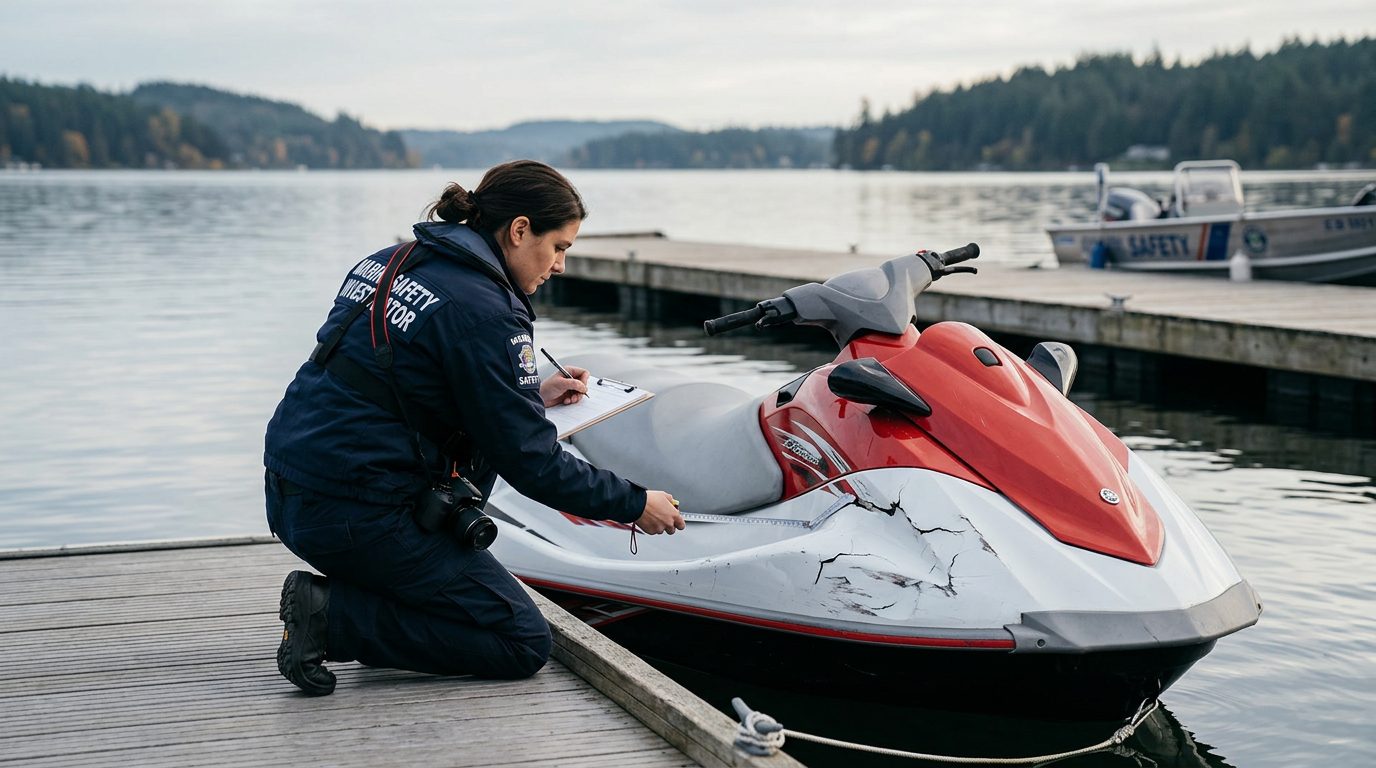
Catastrophic Jet Ski Injuries
Life-Altering Jet Ski Accidents: Spinal Cord Injuries, Brain Trauma & Amputation
Jet ski collisions and operator negligence cause permanent, catastrophic injuries. If you or a loved one suffered a life-changing injury on the water, you may have a legal claim.
By CHG Lawyers · Published August 29, 2026
Jet Ski Accident Injuries: Catastrophic Paralysis, Brain Damage, Amputation & Death
Jet skis travel at speeds over 60 mph on open water with no protection. There are no airbags, seat belts, crumple zones, or cabin to absorb impact. When the human body hits water, solid objects, or the jet ski itself, the force is like a serious motor-vehicle crash. The injuries are catastrophic and permanent: spinal cord damage causing paralysis, severe brain trauma, loss of limbs, life-threatening internal injuries, severe burns, and death.
This page explains the serious, life-altering injuries that occur in jet ski accidents—and what families and injured people need to know about legal remedies.
If you or a loved one suffered a life-changing injury on the water, you may have a legal claim. Talk it through with our team — the first consultation is free, confidential, and carries no obligation.
Spinal Cord Injuries and Paralysis From Jet Ski Accidents
High-speed collisions, flipping, or impact with docks, rocks, or other watercraft can fracture or severely damage the spine. When the spinal cord is damaged, the result is permanent paralysis.
Paraplegia is paralysis of the lower body and legs. It occurs when the injury is in the mid-back or lower spine. Quadriplegia is paralysis of all four limbs and the torso. It occurs when the injury is in the neck or upper back. The severity depends on the exact location and extent of the damage.
Spinal cord injuries are permanent. The American Spinal Injury Association (ASIA) classifies severity using the ASIA Impairment Scale. This scale measures motor and sensory function. Even “incomplete” injuries—where some nerve function remains—typically result in lifelong disability and loss of independence.
According to the Christopher & Dana Reeve Foundation, the average lifetime cost of care for a person with paraplegia is approximately $1.3 million. For quadriplegia it exceeds $4.7 million. These costs include emergency care, hospitalization, rehabilitation, adaptive equipment (wheelchairs, lifts, accessible vehicles), home modifications, attendant care, and ongoing medical management.
Survivors face chronic pain, loss of bladder and bowel control, respiratory complications, pressure ulcers, and the emotional weight of permanent disability. Families often become full-time caregivers.
Traumatic Brain Injuries From Jet Ski Accidents
Head trauma from collision, impact with the jet ski, or being struck by debris causes traumatic brain injury (TBI). Severe TBI can result in permanent cognitive impairment, memory loss, personality changes, difficulty with speech or reasoning, and complete loss of independence.
Some survivors require 24/7 supervision and care for the rest of their lives. Others struggle with invisible injuries: difficulty concentrating, mood swings, chronic headaches, impulsivity, emotional dysregulation, and the inability to return to work or school. Recovery from severe TBI is unpredictable and often incomplete. According to the Mayo Clinic, many survivors never fully return to their pre-injury level of functioning.
Amputation and Limb Loss From Jet Ski Accidents
Jet ski propellers rotate at high speed and can cause severe lacerations and complete amputation of arms, legs, hands, or feet. Blunt-force impact and crush injuries can also result in partial or complete limb loss. Amputation is permanent and irreversible.
Survivors require prosthetics, ongoing rehabilitation, and must adapt to an entirely new way of living. Walking, working, and caring for themselves becomes different. Many amputees experience phantom limb pain (pain that feels like it’s coming from the missing limb) and significant psychological trauma. Return to work and independence depends on which limb was lost and how much of it remains. Younger amputees face decades of prosthetic replacements, adjustments, and ongoing medical care.
Severe Burn Injuries From Jet Ski Accidents
Fuel leaks, fires, or explosions during or after a jet ski accident can cause severe burns. Deep burns (third- and fourth-degree) require skin grafts, multiple surgeries, and long-term wound care in a specialized burn unit. Survivors often face permanent scarring, contractures (restricted movement caused by scar tissue tightening), and psychological trauma.
Infection and complications can extend recovery for years. Some survivors never fully regain movement or appearance. The emotional impact of severe burns—visible scarring, loss of function, and changed appearance—can be as disabling as the physical injury itself.
Orifice Injuries From Jet Ski Accidents
High-pressure water jets or blunt impact in jet ski accidents can cause severe internal injuries to the rectum, vagina, or other body cavities. These injuries are often hidden and may not be immediately obvious, but they are life-threatening medical emergencies.
Hydrostatic anorectal or vaginal trauma occurs when high-pressure water or blunt force penetrates and damages internal organs. Internal bleeding, perforation (a hole in the organ wall), and infection require emergency surgery. Without immediate treatment, these injuries can result in death or permanent colostomy (a surgically created opening for bowel function), sexual dysfunction, chronic pain, or loss of bowel or bladder control.
These injuries are serious and deserve clinical, respectful discussion. The psychological trauma—often compounded by shame or difficulty discussing the injury—is profound and frequently goes unspoken. Survivors may require long-term mental health support in addition to surgical and medical care.
Not sure what your next step is?
Talk it through with our team — the first consultation is free, confidential, and carries no obligation.
What Causes Catastrophic Jet Ski Accident Injuries?
Jet ski accident injuries result from several causes:
- High-speed collisions between jet skis or with fixed objects like docks, rocks, pilings, or other watercraft
- Operator error, recklessness, or impairment (alcohol or drugs impair judgment, reaction time, and balance)
- Mechanical failure or defective equipment that fails during operation
- Lack of proper safety equipment (life jackets, helmets, or personal flotation devices)
- Unsafe water conditions or inadequate warnings about hazards, shallow water, or debris
- Negligent rental companies that fail to maintain equipment, provide safety instruction, or screen renters for impairment or experience level
Fatal Jet Ski Accidents and Wrongful Death
Jet ski accidents result in hundreds of deaths annually in the United States. According to the U.S. Coast Guard, personal watercraft (jet skis) are involved in a significant portion of recreational boating fatalities. Drowning is the leading cause of death in jet ski accidents, often following a collision or impact that incapacitates the operator or renders them unable to stay afloat.
Fatalities are often preventable through proper training, safety equipment, responsible operation, and adequate supervision. When a death results from someone else’s negligence, recklessness, or a defective product, the family has legal rights.
A wrongful-death claim can be brought on behalf of the deceased to recover damages for: – Funeral and burial expenses – Lost income and benefits the deceased would have earned – Loss of the person’s companionship, guidance, and support – Pain and suffering experienced by surviving family members
Wrongful-death claims acknowledge that the loss of a loved one is irreplaceable. Families deserve compensation for the financial and emotional devastation that follows.
What Happens If You Get Hit by a Jet Ski?
Being struck by a moving jet ski at speed causes severe blunt-force trauma. Impact injuries can fracture bones, rupture internal organs, cause spinal cord damage, or result in traumatic brain injury. The propeller can cause deep lacerations, severe bleeding, amputations, or fatal wounds.
Survivors often require emergency surgery and intensive care. Many do not survive the initial impact. Those who do may face permanent disability, chronic pain, and a lifetime of medical treatment and rehabilitation.
Legal Help for Jet Ski Accident Injuries
Families and injured people have legal rights when a jet ski accident is caused by negligence, recklessness, or a defective product. A claim may be brought against:
- The jet ski operator
- The jet ski owner
- A rental company that rented the jet ski
- The manufacturer, if the jet ski or its components were defective
- The property owner or marina operator, if the accident occurred on their property
Compensation can cover: – Emergency and ongoing medical bills – Hospitalization, surgery, and rehabilitation – Adaptive equipment and home modifications – Lost income and lost earning capacity – Disability and loss of independence – Pain and suffering – Funeral expenses in fatal cases
Maritime law and state personal injury law both apply to jet ski accidents. Under Florida Statutes § 768.81 (comparative fault), you may still recover even if you were partially at fault. You can recover as long as you were not more than 50% responsible for the accident.
Time matters. The statute of limitations in Florida for personal injury claims is generally two years from the date of the accident. For wrongful-death claims, the deadline is two years. Evidence can disappear, witnesses’ memories fade, and the sooner you act, the stronger your case.
Frequently Asked Questions
What is the most common catastrophic injury from a jet ski accident?
Spinal cord injuries and traumatic brain injuries are among the most common catastrophic outcomes. Amputations and severe burns follow. Orifice injuries, while less commonly discussed, are serious and life-threatening.
Can I sue for a jet ski accident injury?
Yes, if someone else’s negligence, recklessness, or a defective product caused the accident, you may have a legal claim. You can sue the operator, owner, rental company, manufacturer, or property owner.
How long do I have to file a jet ski accident claim in Florida?
You generally have two years from the date of the accident to file a personal injury claim (Fla. Stat. § 95.11(5)(a)). For a wrongful-death claim, you have two years.
What damages can I recover?
Damages can include medical bills, ongoing care costs, lost income, disability, pain and suffering, and in fatal cases, funeral expenses and loss of companionship.
What if I was partially at fault?
Under Florida’s comparative fault law, you may still recover as long as you were not more than 50% responsible for the accident (Fla. Stat. § 768.81(6)). The amount you recover is reduced by your percentage of fault.
Have questions about what happened?
Ask our team directly. The first conversation is free, confidential, and there is no obligation to continue.
Next Steps
If you or a family member has suffered a catastrophic injury in a jet ski accident, you’re likely facing overwhelming medical decisions, mounting bills, uncertainty about the future, and the emotional weight of permanent disability or loss. Many people in your situation have found it helpful to speak with an attorney who focuses exclusively on catastrophic injuries. This is not to make any decisions right away, but to understand what happened, what your legal rights are, and what options are available to you.
A free case evaluation can answer your questions about liability, compensation, and your legal rights. There is no cost, no obligation, and no pressure. People injured in jet ski accidents reach out regularly to discuss what comes next. You don’t have to face this alone.
Get a free case evaluation to learn more about your situation and your options.
Why Jet Ski Injuries Demand Serious Legal Representation
Catastrophic Injury Focus
We focus exclusively on the most severe, life-altering injuries—spinal cord damage, traumatic brain injury, amputations, and severe burns—not minor or routine claims.
Complex Liability & Insurance
Jet ski accidents involve multiple parties, rental companies, insurance carriers, and maritime law. We navigate these layers to identify all responsible parties.
Nationwide Representation
Empathetic, Plain-Language Guidance
We explain your options clearly, without legal jargon, and treat your injury and your family's future with the seriousness they deserve.
Common Catastrophic Jet Ski Injuries
Spinal Cord Injuries & Paralysis
High-speed collisions and impact trauma can sever or damage the spinal cord, resulting in paraplegia (lower-body paralysis) or quadriplegia (total or near-total paralysis). These injuries require lifelong medical care, mobility equipment, and home modification.
Traumatic Brain Injury (TBI)
Head strikes during collisions or submersion can cause severe brain damage, leading to cognitive impairment, memory loss, personality changes, and permanent disability. Recovery is often incomplete and requires intensive rehabilitation.
Amputation & Limb Loss
Propeller strikes, entanglement, and crush injuries from collisions can result in partial or complete loss of limbs. Amputation is permanent and demands prosthetics, ongoing medical care, and life redesign.
Severe Burn Injuries
Fuel leaks, explosions, and fires on jet skis cause deep-tissue burns requiring surgery, skin grafts, and long-term wound care. Scarring and contracture can limit mobility and function permanently.
Time Matters in Catastrophic Injury Claims
Evidence from the accident scene, witness statements, and the jet ski itself can disappear or be altered quickly. Medical records, expert analysis, and liability investigation all require prompt action. The sooner you contact us, the sooner we can preserve critical evidence and begin building your case.
What Causes Catastrophic Jet Ski Injuries
Operator Negligence & Recklessness
Speeding, operating under the influence, ignoring no-wake zones, and failing to maintain safe distance from other watercraft cause high-speed collisions and impact injuries.
Rental Company Negligence
Poorly maintained jet skis, defective safety equipment, failure to warn renters of hazards, and inadequate operator training contribute to preventable accidents.
Defective Equipment
Manufacturing defects in throttle systems, steering, fuel systems, or hull design can cause loss of control, fires, or structural failure leading to catastrophic injury.
Inadequate Supervision & Safety Measures
Marinas and rental facilities that fail to enforce safety rules, provide life jackets, or monitor water conditions increase the risk of collision and drowning.
What You May Recover in a Catastrophic Jet Ski Injury Claim
Medical & Rehabilitation Costs
Emergency care, surgery, hospitalization, ongoing medical treatment, physical therapy, occupational therapy, and specialized equipment (wheelchairs, prosthetics, home modifications).
Lost Income & Earning Capacity
Compensation for wages lost during recovery and the permanent loss of earning potential if the injury prevents you from returning to work.
Pain, Suffering & Loss of Life Enjoyment
Damages for the physical pain, emotional trauma, and permanent changes to your quality of life and independence.
Wrongful Death Claims
If a loved one died in a jet ski accident, surviving family members may pursue a wrongful-death claim for funeral costs, lost financial support, and the loss itself.