
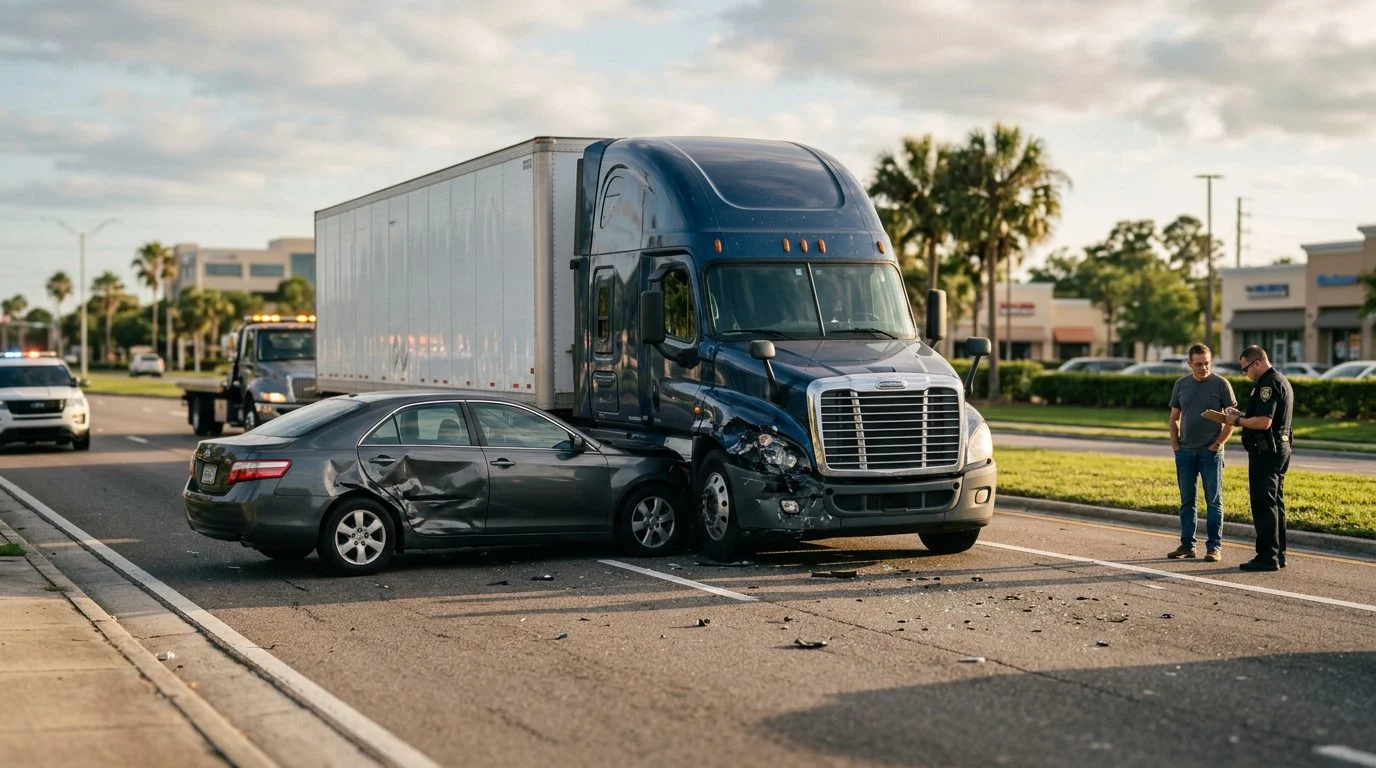
Florida Truck and Car Accident Claims
Truck Accident vs. Car Accident Claims in Florida: Why the Difference Matters
A crash involving a commercial truck can lead to a very different claim than a crash between two passenger vehicles. Here is how Florida families can begin to understand their options.
By CHG Lawyers · Published November 22, 2026
If you or someone you love was hurt in Florida, this guide was written by Igor Hernandez, a member of The Florida Bar at CHG Personal Injury Lawyers, to help you understand your options.
Are you asking how truck accident claims differ from car accident claims? Here is the short answer. Many Florida rules are the same. But a truck crash often involves more companies, more records, and more insurance. Whether this matters depends on the facts of each case. No result is promised.
It is not legal advice about your situation.
Why Truck and Car Crash Claims Are Often Discussed Differently
A crash with a commercial truck can involve more people, companies, and paperwork. A crash between two passenger cars usually involves fewer parties.
Trucks are larger and heavier. Their injuries may be more severe. That can widen the questions a claim must answer.
Several questions may matter:
- Who was driving?
- Who employed the driver?
- Who maintained the truck?
- What was the driver required to record?
Florida’s basic rules apply to both kinds of claims. That is why the same framework appears throughout this page.
Many families ask these questions while still dealing with medical care, missed work, and worry. You do not need legal terms yet. You only need to understand the basic differences. Then you can ask the right questions.
Every crash is different. The points below describe general patterns. They are not promises about how any claim will turn out.
If a truck or car crash has left someone you love hurt, we can talk through how Florida's rules may apply to their situation, and you do not have to face it alone. Talk it through with our team — the first consultation is free, confidential, and carries no obligation.

Who Can Be Responsible: Drivers, Carriers, and Others
In a car crash, a claim often centers on the at-fault driver. In a truck crash, more people and companies may share responsibility. That depends on the facts.
A truck crash may involve several parties:
- the driver
- the motor carrier (the trucking company)
- the truck’s owner
- a leasing company
- a company that loaded the cargo
- a shop that maintained the truck
An employer may answer for a driver’s work-related conduct. But that depends on the employment relationship and the facts. Florida law may also allow claims about how a company hired, trained, or supervised a driver.
In Florida, an injured person cannot sue or join the at-fault driver’s liability insurer until first obtaining a settlement or verdict against the insured (Fla. Stat. 627.4136). A person who is not an insured under a liability policy generally cannot bring a claim against the liability insurer. That is true until they first obtain a settlement or verdict against the insured. A verdict is a judge’s or jury’s final decision in a case.
An insurance claim is a separate step from a lawsuit.
For a broader look at commercial vehicle crashes, see our truck accident overview.
Insurance and Coverage: Why Commercial Trucks Can Involve Different Layers
A commercial truck may be covered by different insurance than a personal car. Coverage depends on three things. It depends on who owns the truck, who operates it, and what it carries.
Florida requires owners of registered motor vehicles to keep security in effect. “Security” here means the required insurance or financial protection. That security must provide the benefits described in Florida’s no-fault statutes.
Under Fla. Stat. § 627.737, owners and operators with required security are generally exempt from tort liability for bodily injury. Tort liability means legal responsibility for harm. This applies to the extent personal injury protection (PIP) benefits are payable, or would be payable but for any exclusion authorized by ss. 627.730-627.7405. PIP is no-fault coverage that pays certain medical and income benefits. The exemption does not apply where the statute’s pain-and-suffering provision allows a claim.
Federal law also addresses trucking financial responsibility. It directs the Secretary of Transportation to set minimum levels for motor carriers that transport property.
That figure is a regulatory minimum. It is not a measure of what any claim is worth. Which schedule applies depends on the carrier, the cargo, and the route.
More policies can mean more questions during an investigation. No insurance limit can predict how a claim will be resolved.
Evidence in a Truck Crash: Records, Equipment, and Logs
Truck crashes often involve records that a typical car crash does not. These may include driver files, electronic logs, maintenance history, inspection reports, and cargo papers. Whether these records exist and matter depends on the facts.
Federal rules require motor carriers to keep certain files. A driver qualification file, for example, must include items such as the driver’s employment application and motor vehicle records.
Duty status is the record of a driver’s work and rest periods.
Car crash claims also rely on police reports, photos, witness statements, and medical records. These matter in truck cases too.
Companies hold many of the truck records. That is why early written requests to preserve them may matter. Do not assume those records will still exist later.
Complex truck cases sometimes use technical witnesses. Accident reconstruction professionals study how a crash happened. Whether they are needed depends on the case.
Florida Motor-Vehicle Claims: The Permanency Threshold and Pain and Suffering
In Florida, pain and suffering damages in a motor-vehicle case generally require meeting a permanency threshold. A permanency threshold is a minimum level of lasting injury set by law.
Under Fla. Stat. § 627.737, in an action of tort brought against the owner, registrant, operator, or occupant of a motor vehicle with respect to which security has been provided as required by Florida’s no-fault statutes, or against any person or organization legally responsible for her or his acts or omissions, a plaintiff (the person bringing the claim) may recover for pain, suffering, mental anguish, and inconvenience only if the injury consists in whole or in part of:
- significant and permanent loss of an important bodily function;
- permanent injury within a reasonable degree of medical probability, other than scarring or disfigurement;
- significant and permanent scarring or disfigurement; or
- death.
Whether an injury meets this threshold depends on the medical facts and the statute’s conditions. Doctors make medical findings. Outcomes vary from person to person.
Comparative fault means each party’s share of blame (Fla. Stat. § 768.81(6)).
Under Fla. Stat. § 768.81, a party found more than 50 percent at fault for their own harm may not recover any damages. This applies in a negligence action to which the section applies.
That rule does not reach medical negligence actions under chapter 766.
Liability Theories: Negligence, Negligent Entrustment, and Negligent Maintenance
Most car crash claims ask whether a driver used reasonable care. Truck claims may add other theories, depending on the facts. A legal theory is a legal reason a claim may be brought.
It is not assumed.
Truck cases may also look at:
- Negligent hiring, training, or supervision: Did the company check, train, and manage its driver?
- Negligent entrustment: Was a vehicle given to someone who should not have driven it?
- Negligent maintenance: Was the truck kept in safe working condition?
Whether any of these applies depends on the records and testimony in each case.
Federal law also affects claims against brokers. Brokers are the companies that arrange shipments.
Preemption means federal law may override state law on the same issue. This discussion covers only preemption, a legal question about which law applies. Its scope does not include the merits of any case, meaning the facts and the outcome.
Not sure what your next step is?
Talk it through with our team — the first consultation is free, confidential, and carries no obligation.
Timing and Deadlines: Why Florida Rules Need to Be Checked Early
Florida sets deadlines for filing civil lawsuits by statute. A statute is a law passed by the legislature.
The deadline that applies depends on three things. It depends on the type of claim, the parties involved, and any exceptions.
This statute sets limitations periods for several kinds of civil actions. A limitations period is the time limit for filing a lawsuit. Under Fla. Stat. § 95.11(5)(a), an action founded on negligence must be commenced within two years.
No single deadline applies to every claim. Claims against a government entity may follow different notice rules. Claims brought by family members after a death may follow their own rules. Both depend on the facts.
Because the rules depend on the facts, reviewing a situation early gives you the most room to understand your options. Because this deadline is short, a claim not filed within it can be barred, so contact our firm promptly.
How the Two Claim Types Compare: A Plain-Language Summary
The biggest differences involve three things. They involve who may be responsible, what insurance applies, and what evidence exists. The table below shows general patterns. Each row depends on the facts of a case.
| Topic | Car crash | Truck crash |
|---|---|---|
| Who may be responsible | Often the at-fault driver, depending on the facts | Driver, motor carrier, owner, leasing company, cargo loader, or maintenance provider, depending on the facts |
| Insurance | Personal auto policies and PIP, depending on coverage | Personal and commercial coverage may both be involved, depending on the facts |
| Evidence | Police reports, photos, witnesses, medical records | Also duty-status logs, driver files, maintenance and inspection records |
| Federal rules | Federal trucking rules may not apply | Federal financial responsibility rules may apply to certain carriers |
| Pain and suffering | Permanency threshold under § 627.737(2) generally applies | Same threshold generally applies |
| Comparative fault | § 768.81 may limit recovery | Same rule may apply |
| Timing | Statutory deadlines depend on claim type | Same, plus possible notice rules for government entities |
If you were not at fault, you may still have PIP benefits available. This depends on your coverage and the facts.
This page does not estimate what any claim may be worth. No lawyer can predict the result of a case.
For a broader view, see our car accident overview.
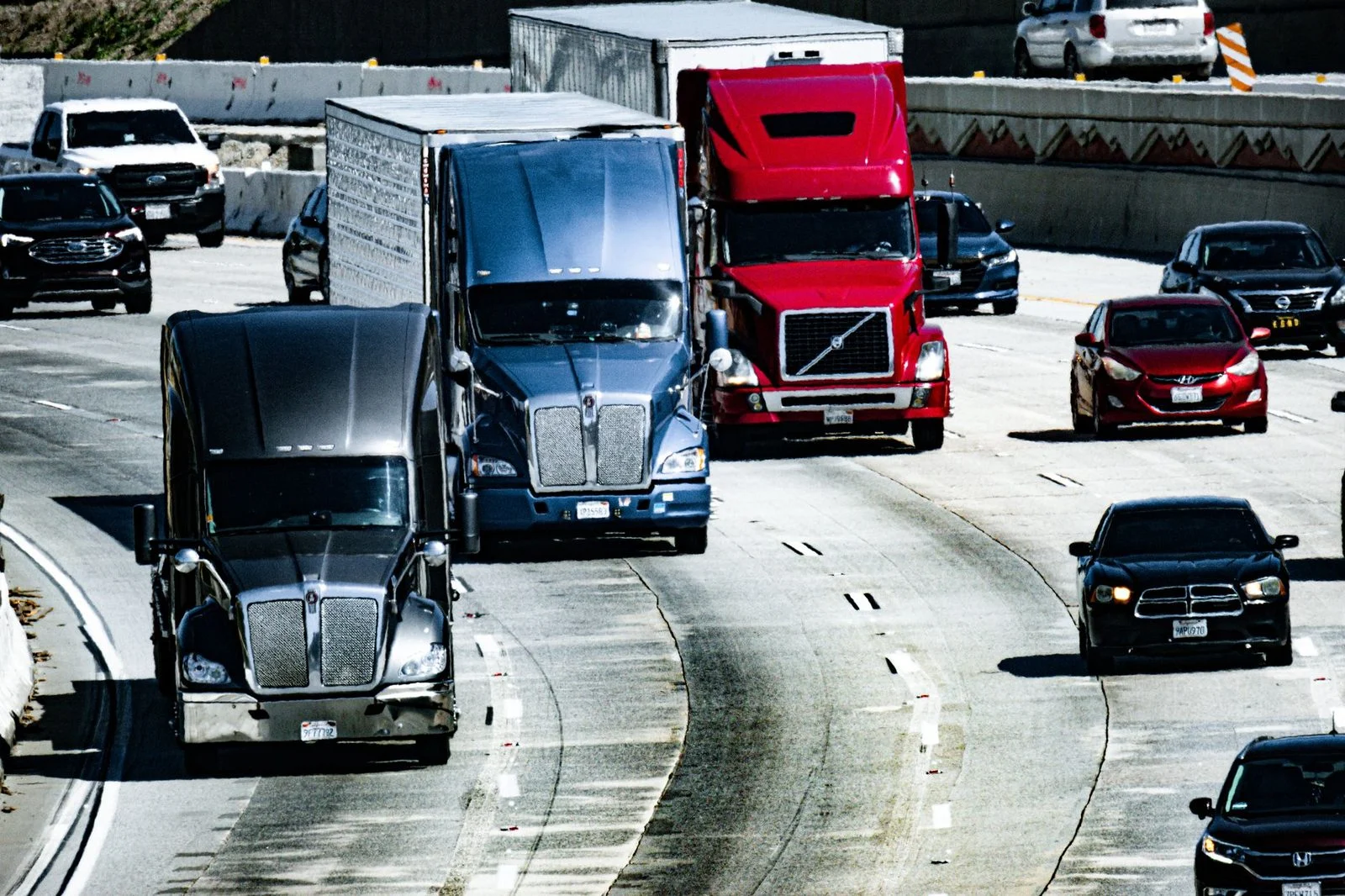
If a Truck or Car Crash Has Changed Your Family’s Life: Your Next Step
A family member may be in the hospital or recovering at home. At the same time, you may be comparing a truck crash to a car crash. You may also be deciding whether to speak with a lawyer.
Learning how the rules work is a reasonable first step. You can take it even before you decide anything.
Common Questions
Do truck crash claims always involve more than one party?
Not always. A truck crash may involve more parties, depending on the facts.
Can I sue the at-fault driver’s insurance company directly in Florida?
Generally not.
Does the permanency threshold apply to truck crashes?
Under Florida’s motor-vehicle statute, pain and suffering generally requires meeting the threshold.
How long do I have to file?
Deadlines are set by statute. They depend on the claim type, the parties, and exceptions. Review your situation promptly.
If a truck or car crash has left someone you love hurt, reach out. You can request a free, confidential initial consultation, with no obligation to continue, through our contact page.
We can talk through how these Florida rules may apply to their situation. CHG charges no attorney’s fees and no case costs unless there is a recovery. This page does not say how any case may be resolved.
Why Florida Families Contact CHG Personal Injury Lawyers
Florida-Based Firm
CHG Personal Injury Lawyers represents people injured across Florida, from Miami and Fort Lauderdale to Orlando, Tampa and Jacksonville.
Licensed Attorneys
Our attorneys are licensed and admitted to practice law in Florida, and we handle each claim with care for the facts and the people behind them.
Compassionate, Plain-Language Guidance
We explain the process clearly, so you know what to expect at each step while you focus on your recovery and your family.
Free, Confidential Consultation
The initial consultation is free, confidential and comes with no obligation to continue. We charge no attorney's fees and no case costs unless there is a recovery.
Act Promptly After a Truck Crash
Insurance companies, including those for trucking companies, may contact you quickly after a crash. Deadlines apply to every injury claim in Florida, and evidence such as trucking logs and vehicle data can be lost over time. Speak with a lawyer before you give any recorded statement or sign any document.
Key Differences Florida Families Should Understand
Who May Be Involved
A car accident often involves two drivers. A truck crash may involve the driver, the trucking company, the vehicle owner, or others, depending on the facts.
Evidence That Matters
Truck claims often involve electronic logs, maintenance records, cargo documents and driver qualification files. Car claims usually focus on police reports, photos and witness accounts.
Injury Severity
Both types of crash can cause serious harm, including spinal cord injuries, traumatic brain injuries and wrongful death. The size of the vehicle often affects the force of impact and the medical care needed.
Next Steps
Seek medical care and follow your doctors' guidance. Then contact our team, who can review your crash, your injuries and the parties involved.