

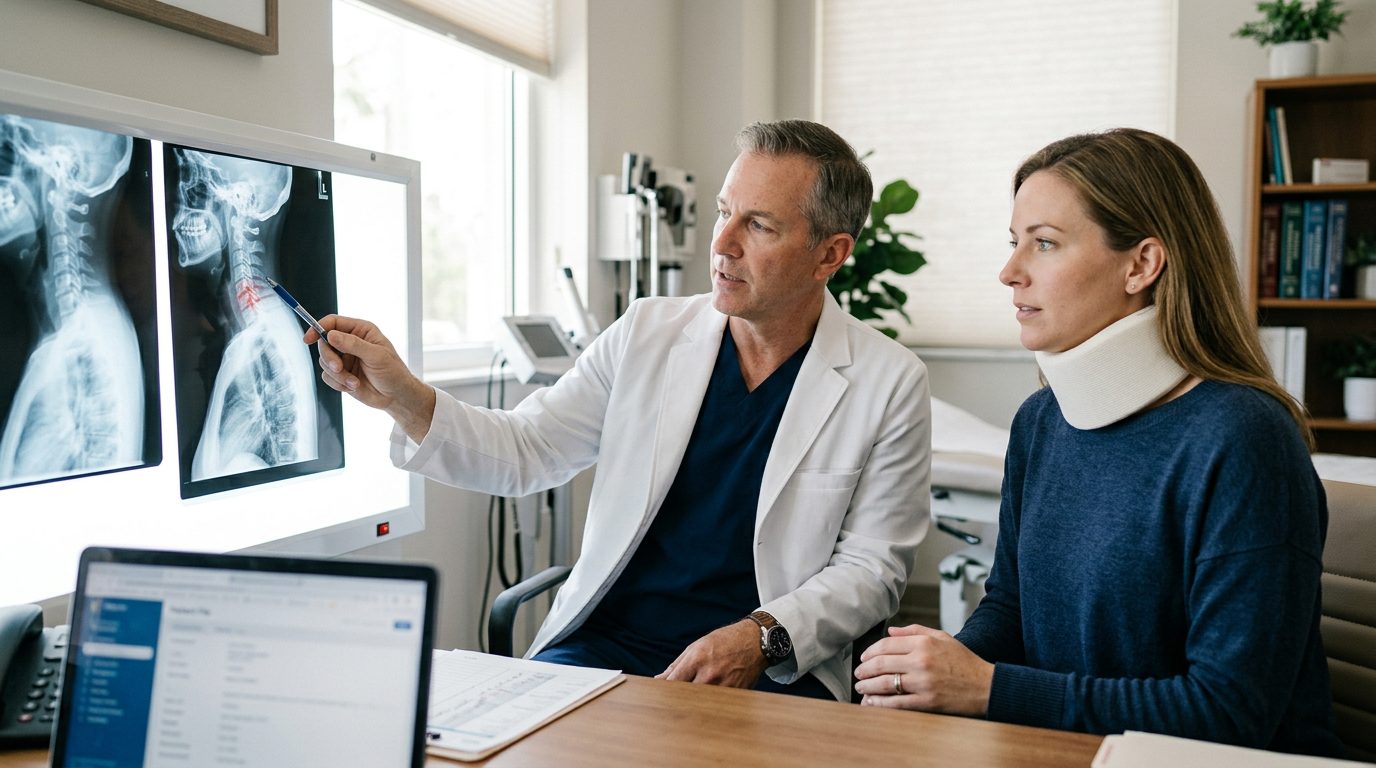
Florida Car Accident Injuries
Paralysis After a Car Accident: Your First Steps in Florida
A crash can change your body, your work, and your family in an instant. Here is what to focus on first, and how CHG Personal Injury Lawyers can help you understand your options.
By CHG Lawyers · Published October 14, 2026
Paralysis after a car accident means a person has lost movement, feeling, or both. The loss can affect part of the body. It can also affect all of it. It often follows damage to the spinal cord or brain during a crash.
MedlinePlus explains that a spinal cord injury can cause paralysis. It can cause loss of function and sensation below the injury.
If your family is facing this now, the first weeks can feel overwhelming. Medical decisions, bills, work, and questions about the crash can all arrive at once.
This guide covers first steps in the order many families face them. It also covers Florida rules that may matter later. It is general information, not legal advice for your situation.
What Paralysis After a Car Accident Can Mean for Your Family
Paralysis means the nerves can no longer carry the signals that move a body part. They also cannot send feeling back.
Doctors often describe paralysis by where it happens:
- Paraplegia usually refers to the lower body.
- Quadriplegia usually refers to all four limbs.
These words are plain descriptions. They are not predictions.
NINDS notes that an injury to the upper part of the spinal cord can cause paralysis in most of the body. It can affect all limbs. This condition is described as tetraplegia or quadriplegia.
Where the injury sits matters. But no two people are alike.
Paralysis may be temporary or permanent. Only the treating doctors can explain what applies to a specific patient. Outcomes vary. They depend on the injury, the person’s health, and their ongoing care.
You can learn more in our spinal cord injury overview.
If someone you love is living with paralysis after a crash, you don't have to work through the next steps alone. Our team can talk with you in a confidential initial consultation. Talk it through with our team — the first consultation is free, confidential, and carries no obligation.
Medical Care Comes First: What Families Can Do Right Away
The first priority is following the medical team’s advice. Keep every appointment.
Do not skip or delay emergency or follow-up care. This applies even if cost, transportation, or work worries come up. Ask the team to explain each step in plain words.
Choose one family member as the main contact. This person can speak with doctors, nurses, and therapists. They can then pass updates to the injured person and other relatives. One clear contact helps prevent missed messages.
Ask for copies of records, test results, imaging reports, and discharge instructions. Keep them in one paper folder or a secure digital file. Organized records may be central to any later claim, depending on the facts.
Start a simple daily log. Note symptoms, medications, therapy sessions, appointments, and questions for the next visit. Written notes help the family recall details. They also show changes over time.
Feelings of Guilt, Shock, and Stress in the First Weeks
Guilt, shock, and stress are normal reactions after a serious crash. These feelings do not mean anyone did something wrong. Many families feel guilty about things they could not control.
The injured person may feel shaky, dizzy, or faint. They may not be able to think clearly. Family members may feel the same way. These feelings can make it hard to remember details or make decisions.
Signs of shock, new weakness, confusion, or trouble breathing need prompt medical evaluation. A sudden change in condition needs the same care. Do not wait to see whether these signs pass.
Family members can take small steps to help themselves:
- Take short breaks.
- Eat and drink regularly.
- Sleep when you can.
Accept practical help from friends, relatives, or clergy. A doctor or counselor can also offer emotional support. Asking for that help is a reasonable step.
Protecting Evidence, Records, and Information From the Start
Keep information that may help explain what happened. Evidence can be relevant to a later claim. What matters depends on the facts of each case.
Write down or save these items:
- The police crash report number
- The other driver’s name, insurance details, and license plate
- Witness names and phone numbers
- The date, time, and location
- Photos of the scene and vehicle damage
Ask before any vehicle is repaired, sold, or scrapped. The vehicles may be needed to show what happened.
Save texts, emails, and voicemails about the crash. Be careful about posting online. Posts about the accident, the injury, or daily activities may be seen by insurers or others.
Some roadside cameras, nearby businesses, or phone records may hold useful information. How long any of it is kept varies. Ask early about requests. Do not assume the material will still be there later.
Talking With Insurance Companies and Recorded Statements
The other driver’s insurance company represents its own policyholder. It does not work for the injured person. This is true even when its representative sounds helpful.
You may be asked for a recorded statement. Before answering detailed questions about injuries, medical history, or fault, consider talking with an attorney first.
Florida law provides a way to get insurance information. Under Fla. Stat. § 627.4137, an insurer must provide a sworn statement within 30 days of a claimant’s written request. The statement covers:
- The insurer’s name
- Each insured
- The liability limits
- Any coverage defense
- A copy of the policy
The statement must be amended when new facts call for it.
Do not sign releases, broad medical authorizations, or settlement papers until you understand them. Your own policy may have notice rules after a crash. Read it, or ask your agent.
Florida Rules That May Shape a Paralysis Claim
Several Florida rules may affect a car accident claim. Florida motor-vehicle claims may involve rules such as no-fault benefits, a permanent injury threshold, and comparative fault, and how those rules apply depends on the facts of each case (Fla. Stat. § 768.81(6)). Each rule has limits. None applies the same way to every case.
Florida’s personal injury protection (PIP) system is described in Fla. Stat. § 627.736. PIP may provide initial medical and income benefits to qualifying people. Coverage and limits depend on the policy and the facts. Check your own policy and any others that may apply.
In Florida motor-vehicle claims, pain, suffering, mental anguish (emotional distress), and inconvenience may be recoverable only in certain cases, and results depend on the facts of each case. These include:
- An injury that consists in whole or in part of significant and permanent loss of an important bodily function
- A permanent injury within a reasonable degree of medical probability
Whether an injury meets these categories depends on medical proof. Keep the treating doctors’ records.
Under Fla. Stat. § 768.81, a person found more than 50 percent at fault for their own harm generally may not recover any damages in a negligence action filed after March 24, 2023, to which the section applies. Exceptions exist, such as medical negligence actions governed by chapter 766, and each case depends on its own facts. Medical negligence actions are treated differently under that section. Fault is often disputed, so the crash facts matter.
Filing deadlines are set by statute. See Fla. Stat. § 95.11. The deadline depends on the type of claim, when it arose, and any exceptions that apply. Do not assume one deadline fits every case. Talk with a lawyer promptly so the dates can be checked.
Not sure what your next step is?
Talk it through with our team — the first consultation is free, confidential, and carries no obligation.
Planning for Long-Term Care, Equipment, and Work
Long-term needs often include therapy, home changes, and mobility equipment. They also include ongoing medical care and help with daily tasks. Planning early helps families track what is needed and when.
Keep receipts and written estimates. Save records for:
- Equipment
- Home modifications
- Transportation to appointments
- Caregiving supplies
These records may be relevant to a claim, depending on the facts.
Work limits may be shown through employer letters, pay records, and doctor notes. When possible, ask the physician to describe any work restrictions in writing.
If the person was working when the crash happened, confirm which system applies before taking other steps.
Questions to Bring to a Personal Injury Consultation
Write your questions down before you meet with a lawyer. Bring the crash report number, insurance information, and any records you already have. Useful questions include:
- How might Florida’s PIP rules apply to our situation?
- How might the permanent injury threshold apply to the medical records we have?
- Which deadlines could apply, and when did the claim arise?
- Who may bring a claim after this crash, and why?
- Which records should we gather first?
A lawyer can review the crash report, medical records, and insurance policies. An attorney may also explain what information is needed before a matter can be evaluated.
No particular result can be promised. Answers depend on the facts.
Talk With CHG Personal Injury Lawyers About Your Family’s Next Steps
If your family is living with paralysis after a car accident, you can talk with CHG Personal Injury Lawyers about your options. You may be at a hospital or rehabilitation bedside now. You may be weighing decisions about a loved one’s care. You do not need to be ready to hire anyone to ask questions.
Igor Hernandez is the attorney responsible for this page. He is admitted in Florida as a member of The Florida Bar.
CHG charges no attorney’s fees and no case costs unless there is a recovery.
Common Questions
Is paralysis after a car accident always permanent?
No. Paralysis may be temporary or permanent. Only the treating doctors can explain what applies to a specific patient.
Do I have to give a recorded statement to the other driver’s insurer?
You may be asked. Consider talking with an attorney before answering detailed questions about injuries or fault.
How long do I have to file a claim in Florida?
Filing deadlines depend on the type of claim and the facts. Fla. Stat. § 95.11 sets out the general framework. Confirm the dates for your situation promptly.
If you want to talk through what this means for your family, contact CHG Personal Injury Lawyers for a confidential initial consultation with no obligation to continue.
Where to Focus in the First Days
Get medical care right away
Your health comes first. Follow your doctors' instructions, attend every appointment, and ask them to explain your diagnosis and treatment plan in writing.
Keep every record
Save emergency room and hospital paperwork, bills, prescriptions, therapy notes, and photos of your injuries, the vehicles, and the scene.
Write down witness details
Names and phone numbers of witnesses, the other driver's information, and the police report number can be important later.
Be careful about what you say
Before giving detailed statements about injuries or fault, including to an insurance adjuster, you may want to talk with an attorney first.
Important: Not Every Paralysis Case Is the Same
Whether paralysis after a crash is temporary or permanent depends on the injury and on each patient's medical care. Only the treating doctors can explain what applies to you. Florida's no-fault insurance system and its permanency requirements for certain injury claims may affect what is available in a car accident case, and comparative fault may limit recovery. Each case depends on its own facts, and no result can be guaranteed.
How the Firm Can Help
Listen to your situation
We take time to hear what happened, what your medical care involves, and what questions are on your mind for you and your family.
Explain your options
We explain in plain language how Florida law may apply to your accident, including the steps that may matter in a claim involving serious injury.
Investigate the facts
We work to gather police reports, medical records, and other evidence that document how the crash happened and how it has affected your life.
Keep you informed
You decide what happens next. CHG charges no attorney's fees and no case costs unless there is a recovery.