

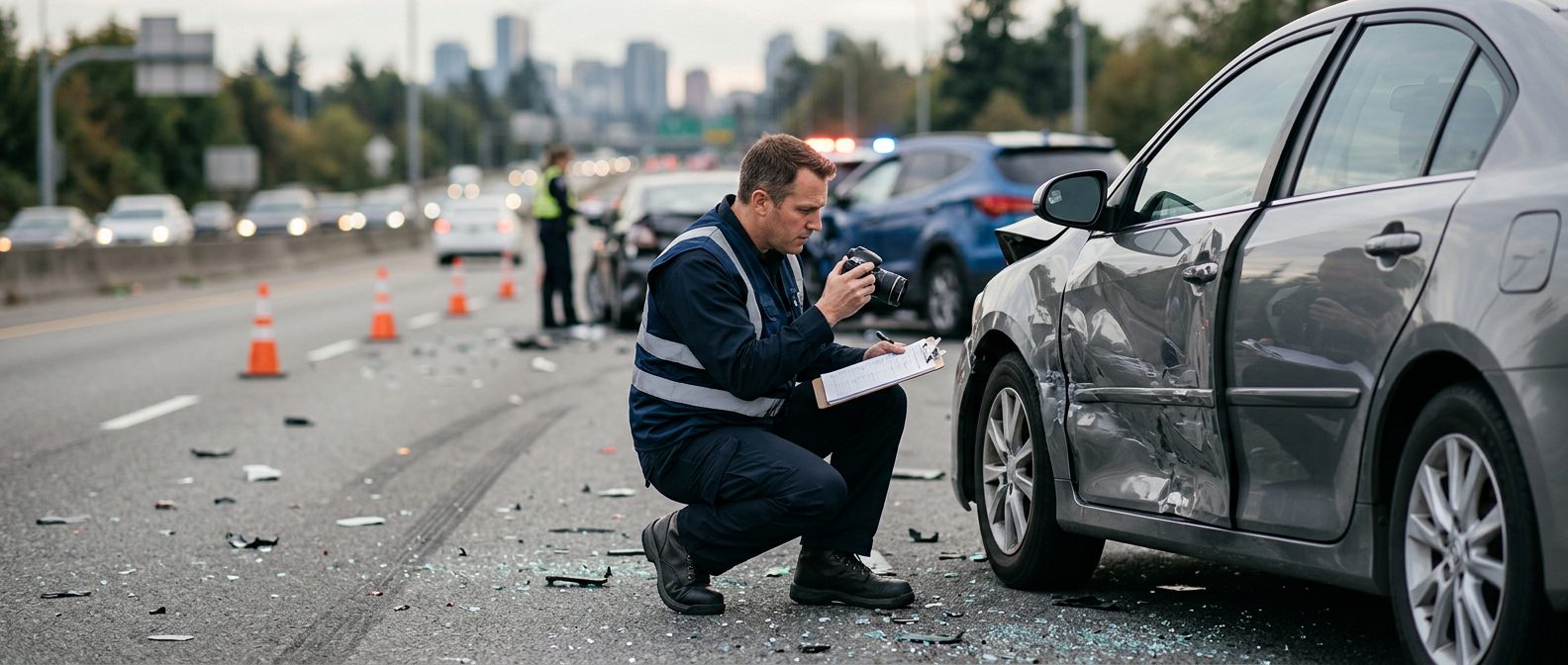
Car Accident PTSD Claims
What Car Accident PTSD Claims Are Worth
Psychological injury is real injury. Learn how payouts are calculated and what you may recover.
By CHG Lawyers · Published September 30, 2026
PTSD Car Accident Settlement: What Is the Average Payout in Florida?
Post-traumatic stress disorder (PTSD) after a car accident can be a real injury, but under Florida law, damages for mental anguish against an insured driver are recoverable only if the injury meets the permanency threshold of section 627.737(2), Florida Statutes. It’s separate from physical injuries. Some accident victims don’t realize how the permanency requirement affects a psychological injury claim. Others accept settlements that drastically undervalue their suffering.
This guide explains what psychological injury claims cover, how PTSD settlements are calculated, what evidence matters, and why these claims often take longer than physical injury cases.
If you decide to work with us, we'll handle communication with the insurance company, gather expert evaluations, and negotiate on your behalf. Talk it through with our team — the first consultation is free, confidential, and carries no obligation.
What Is PTSD After a Car Accident?
PTSD after a car accident is a diagnosed mental health condition triggered by crash trauma. Symptoms include intrusive memories, nightmares, hypervigilance (constant alertness and startle response), avoidance of driving, and panic attacks triggered by traffic or vehicles.
Normal post-accident stress fades within weeks. PTSD persists for months or years. It causes significant functional impairment. You can’t drive, can’t work, can’t sleep, or can’t maintain relationships.
Psychological injury is not “just emotional.” It’s a medical condition with measurable neurological changes. Under Florida law, a plaintiff must suffer a physical impact before recovering for emotional distress caused by another’s negligence.
Who Can File a Psychological Injury Claim
Pre-existing mental health conditions do not disqualify your claim. If the accident worsened your condition or triggered new PTSD symptoms, that worsening may be part of your claim, but mental anguish damages against an insured driver are recoverable only if the permanency threshold of section 627.737(2), Florida Statutes, is met.
What Psychological Injury Claims Cover
Psychological injury claims include two damage categories:
Economic damages (concrete, measurable costs): – Therapy and counseling sessions – Psychiatric medication and evaluations – Lost wages due to inability to work – Functional capacity evaluations
Non-economic damages (subjective but legally recognized): – Pain and suffering – Loss of enjoyment of life – Emotional distress – Loss of consortium (impact on relationships)
Non-economic damages are typically larger in PTSD claims. They reflect the real cost of living with trauma—not just therapy bills, but years of struggling to function.
Average Payout for a Car Accident PTSD Claim
Settlement amounts vary widely based on accident severity, liability, and medical evidence.
Illustrative ranges for PTSD claims:
- Minor PTSD (short-term therapy, manageable symptoms): $5,000–$25,000 added to your base claim
- Moderate PTSD (ongoing treatment for 1–3 years, significant functional impairment): $25,000–$100,000
These are illustrative ranges only, not a promise of any particular result. Your actual settlement depends on accident severity, liability clarity, medical evidence, symptom duration, insurance policy limits, and whether you share fault.
Insurance policy limits often cap total recovery. If the at-fault driver’s liability coverage is $50,000 and your damages are $200,000, you recover only $50,000 (unless additional assets exist).
Key Factors That Determine PTSD Settlement Value
Accident severity: High-impact collisions, rollovers, multi-vehicle crashes, or accidents involving death strengthen PTSD claims. Low-speed fender-benders rarely produce diagnosable PTSD.
Liability clarity: If the other driver is clearly at fault, insurers offer higher settlements. Disputed liability or your own partial fault reduces value. Under Fla. Stat. §768.81, Florida’s comparative negligence rule, your recovery is reduced by your percentage of fault. If you’re 20% at fault and damages are $100,000, you recover $80,000.
Medical evidence: Documented diagnosis from a licensed therapist or psychiatrist is essential. Ongoing therapy notes, psychiatric medication records, and functional assessments prove your condition is real. Self-reported symptoms without professional evaluation are typically insufficient.
Duration and impact: PTSD lasting months or years, preventing return to work or normal activities, is valued higher than short-term distress. If you’re still in therapy two years after the accident and can’t drive, that’s powerful evidence (Fla. Stat. § 95.11(5)(a)).
Pre-accident mental health: Prior trauma or mental illness can complicate claims but does not disqualify them. An insurer may argue your PTSD stems from pre-existing anxiety, not the accident. Expert evaluation is critical.
Not sure what your next step is?
Talk it through with our team — the first consultation is free, confidential, and carries no obligation.
How to Build a Strong Psychological Injury Claim
Seek professional diagnosis immediately. See a therapist, psychologist, or psychiatrist as soon as possible after the accident. Document the connection between the crash and your symptoms. Early treatment strengthens your claim and helps you recover.
Keep detailed records: Therapy dates, costs, medication lists, and therapist observations. Request copies of all treatment notes from your provider.
Document functional impairment: Journal entries about difficulty driving, working, sleeping, or socializing. Emails to your employer about time off. Medical leave documentation. Statements from family or friends about changes in your behavior.
Obtain expert evaluation: A mental health professional can write a report linking your PTSD to the accident, describing your symptoms, and estimating future treatment needs. This expert opinion is invaluable in settlement negotiations.
Gather corroborating evidence: Statements from family, friends, or employers about how the accident changed you. Photos of accident scene and vehicle damage. Official police report.
How Settlement Negotiations Work
Initial demand: Your attorney calculates total damages and sends a demand letter to the insurance company.
Insurer’s response: The insurance company reviews evidence, may request additional medical records, and makes a counteroffer.
Back-and-forth negotiation: Your attorney and the insurer exchange offers. PTSD claims often take longer because non-economic damages are subjective.
Settlement or litigation: If you reach agreement, you settle. If not, your attorney may file a lawsuit.
Timeline: PTSD claims typically take 6–18 months to settle. Simple claims settle in 3–6 months. Complex claims take 12–24+ months.
Common Questions About PTSD and Car Accident Settlements
Can I claim PTSD without physical injury?
Yes. Psychological injury is a separate, compensable harm. Many accident victims experience PTSD without broken bones or visible injuries.
Will the insurance company deny my PTSD claim?
Not automatically, but they may challenge it if evidence is weak. Professional diagnosis and ongoing treatment are critical.
How much of my settlement goes to my attorney?
Most personal injury attorneys work on contingency (typically 33–40% of the settlement). You pay nothing upfront; the attorney’s fee comes from your recovery.
Can I settle while still in therapy?
Yes, but your attorney will typically wait until your condition stabilizes or your doctor provides a prognosis so damages can be accurately calculated.
What if I had anxiety before the accident?
Pre-existing mental health conditions do not disqualify you. If the accident worsened your condition or triggered new symptoms, that worsening may be part of your claim, but mental anguish damages against an insured driver are recoverable only if the permanency threshold of section 627.737(2), Florida Statutes, is met.
Is $50,000 a good settlement for a car accident with PTSD?
It depends on the facts. For minor PTSD with short-term treatment, the value of the claim may be modest. Your attorney will evaluate the specifics.
Why PTSD Claims Are Often Undervalued
Insurance companies frequently underestimate non-economic damages. They prefer to pay concrete costs (medical bills, lost wages) and minimize “soft” damages like emotional distress. Many accident victims don’t seek mental health treatment, making it harder to prove PTSD later. Shame or discomfort discussing mental health can lead people to accept low offers.
Without professional diagnosis, therapy records, and functional impact documentation, insurers can argue PTSD is temporary or unrelated to the accident. To protect your claim: seek professional mental health care immediately, keep detailed records, work with an attorney experienced in psychological injury claims, and obtain expert evaluation before settling.
Understanding Your Full Recovery Options
When you have a psychological injury claim, understanding the settlement process helps you negotiate fairly. Learn more about types of damages in car accident cases to see how economic and non-economic damages apply to your situation.
If you’re unsure whether you share fault for the accident, Florida’s comparative negligence rule matters. Under Fla. Stat. §768.81, your own partial fault affects your recovery. Learn more about working with a personal injury attorney in Florida to understand how professional representation protects your rights.
Have questions about what happened?
Ask our team directly. The first conversation is free, confidential, and there is no obligation to continue.
Why We Handle PTSD and Psychological Injury Claims
We focus exclusively on personal injury claims, including psychological harm from accidents. We understand how to value and prove non-economic damages. We maintain relationships with psychologists and psychiatrists who can evaluate your condition, document the accident’s impact, and testify if your case goes to trial.
We build strong evidence and are prepared to litigate if necessary. We are a Florida-based firm serving people throughout Florida, including Miami, Orlando, Tampa, and Jacksonville. We work on contingency: you pay nothing unless we recover compensation for you.
Next Steps: Get Your Claim Evaluated
If you’re struggling with trauma, nightmares, or anxiety that’s changed how you live since a car accident, the next step is straightforward:
Step 1: Seek professional mental health care if you haven’t already. A diagnosis from a licensed therapist or psychiatrist is the foundation of your claim.
Step 2: Document everything—treatment dates, costs, symptoms, and how the accident affected your daily life and work.
Step 3: Contact us for a free case evaluation. We’ll review your accident, your PTSD symptoms, and the evidence you have. We’ll explain what your claim may be worth.
Step 4: If you decide to work with us, we’ll handle communication with the insurance company, gather expert evaluations, and negotiate on your behalf.
Step 5: We’ll keep you informed throughout
PTSD is a Compensable Injury
You don't need broken bones or visible wounds to have a valid claim. Post-traumatic stress disorder caused by a car accident is a recognized psychological injury, and insurance companies are required to consider it in settlement negotiations.
Factors That Affect Your PTSD Payout
Medical Documentation
A formal diagnosis from a licensed mental health professional—therapist, psychologist, or psychiatrist—is essential. Treatment records, therapy notes, and ongoing care demonstrate the severity and duration of your condition.
Accident Severity & Circumstances
The nature of the crash, whether others were injured or killed, and how close you came to serious harm all influence what insurers will offer. More traumatic events typically result in higher valuations.
Impact on Your Life
Lost wages, inability to work, damaged relationships, and reduced quality of life are all quantifiable harms. The broader the disruption to your daily functioning, the stronger your claim.
Treatment Duration & Cost
Ongoing therapy, medication, and counseling costs add to your damages. Long-term treatment shows the injury is serious and persistent, not temporary distress.
Why PTSD Claims Matter
Psychological Injury Is Real
PTSD after a car accident is a documented medical condition. It's not weakness or overreaction—it's a treatable injury that deserves compensation.
Evidence Builds Your Case
Diagnosis, treatment records, therapy notes, and medical bills create a clear record. Insurance companies take documented PTSD seriously when the evidence is solid.
Recovery Costs Real Money
Therapy, medication, and lost income add up. Your payout should cover the full cost of healing, not just what the insurer wants to offer.
We Handle the Negotiation
Insurance adjusters are trained to minimize PTSD claims. We present your evidence, counter lowball offers, and fight for fair compensation on your behalf.
Common Questions About PTSD Payouts
Can I claim PTSD without physical injury?
Yes. Psychological injury is a separate, compensable harm. Many accident victims experience PTSD without broken bones or visible injuries. What matters is a professional diagnosis and documented treatment.
Will the insurance company deny my PTSD claim?
Not automatically, but they may challenge it if evidence is weak. Professional diagnosis and ongoing treatment are critical. A strong medical record makes denial much harder.
How is a PTSD payout calculated?
Payouts typically account for medical expenses, lost wages, and pain and suffering. There's no fixed formula—it depends on the severity of your diagnosis, the cost of treatment, and how the accident has disrupted your life.
What if I didn't see a therapist right after the crash?
Delayed treatment doesn't automatically disqualify your claim, but it can weaken it. Insurance companies may argue the PTSD isn't connected to the accident. Seek professional help as soon as you recognize symptoms.
Don't Accept a Lowball Offer
Insurance companies often undervalue PTSD claims because psychological injuries are harder to see than broken bones. They may offer a fraction of what your case is worth. Before you settle, talk to a lawyer who handles psychological injury claims from car accidents.