

Family Guide · Truck Accidents · Florida & Nationwide
When a Truck Crash Changes Your Family's Life Forever
If a loved one suffered paralysis, a brain injury, limb loss, or another permanent injury in a truck accident, you don't have to face what comes next alone. This guide explains your options in plain language.
Standing With Catastrophically Injured Families
Licensed
Attorneys admitted to the Florida Bar
Nationwide
We take catastrophic-injury cases across the U.S.
Bilingual
Guidance in English and Spanish
24/7
Reach us anytime for a free evaluation
By CHG Lawyers · Published August 01, 2026
What to Do When a Truck Accident Leaves a Loved One With a Permanent Injury: A Family Guide
If a truck crash has left someone you love with a permanent injury, focus first on their medical care, then protect the family’s future by documenting everything and getting legal guidance before speaking with any insurance company. This family guide to a truck accident permanent injury walks you through what to do next, one step at a time.
You don’t need legal vocabulary to use this page. You just need a place to start.

Not sure what your next step is?
Talk it through with our team — the first consultation is free, confidential, and carries no obligation.
If You’re Reading This in a Hospital Waiting Room
Take a breath. Right now, you’re likely scared, exhausted, and unsure what happens next.
That’s normal. A serious truck crash turns a family’s life upside down in seconds.
This page breaks the situation into steps you can actually manage. We wrote it for families dealing with catastrophic, life-altering injuries — not minor bumps and bruises.
Nothing here is legal advice about your specific situation. Every case is different. A licensed attorney can review the facts and explain your options.
First: Focus on Your Loved One’s Medical Care
Your first job is simple: support the medical team and let them stabilize your loved one. Everything else can wait a little while.
Trauma care moves fast. You’ll hear a lot of information at once. Here’s how to keep up without losing your footing.
- Keep a simple log on your phone or a notebook. Write down doctors’ names, diagnoses, medications, and next steps.
- Ask direct questions. What is the injury? What’s the expected recovery? Will long-term care be needed?
- Save every piece of paper. Keep admission forms, discharge summaries, imaging reports, and referrals.
Don’t worry about legal paperwork yet. Focus on being present and gathering the facts as you hear them.
What Counts as a “Permanent” or Catastrophic Truck-Crash Injury
A permanent injury is one that doctors expect to cause lasting impairment that won’t fully heal. In truck crashes, these injuries are often catastrophic, meaning they change a person’s life forever.
Common examples we see in serious truck-crash cases include:
- Spinal cord injuries and paralysis. A spinal cord injury can cause loss of movement and feeling below the injury site. Paraplegia affects the lower body. Quadriplegia (also called tetraplegia) affects the arms, hands, trunk, and legs, according to the Mayo Clinic.
- Traumatic brain injury (TBI). A blow to the head can affect memory, speech, mood, and daily function.
- Amputation or limb loss. Some crashes cause a limb loss at the scene or during surgery.
- Severe burns. Fires and chemical exposure can leave lasting damage.
- Catastrophic back and neck injuries. These go far beyond routine strains.
Doctors use a standard system — the ASIA Impairment Scale — to describe how complete a spinal cord injury is. That classification helps predict what recovery may look like.
The most catastrophic outcome is a death. If your loved one did not survive, that loss is fully covered here too. Families can bring a wrongful-death claim. We treat that with dignity, never as a statistic.
One important point: a doctor decides whether an injury is permanent — not an insurance company. If an adjuster tells you an injury “isn’t that serious,” trust the medical team instead.
For a full overview of these injuries, see our pillar page on catastrophic truck accident injuries.
Have questions about what happened?
Ask our team directly. The first conversation is free, confidential, and there is no obligation to continue.
Why Truck Crashes Cause More Severe Injuries
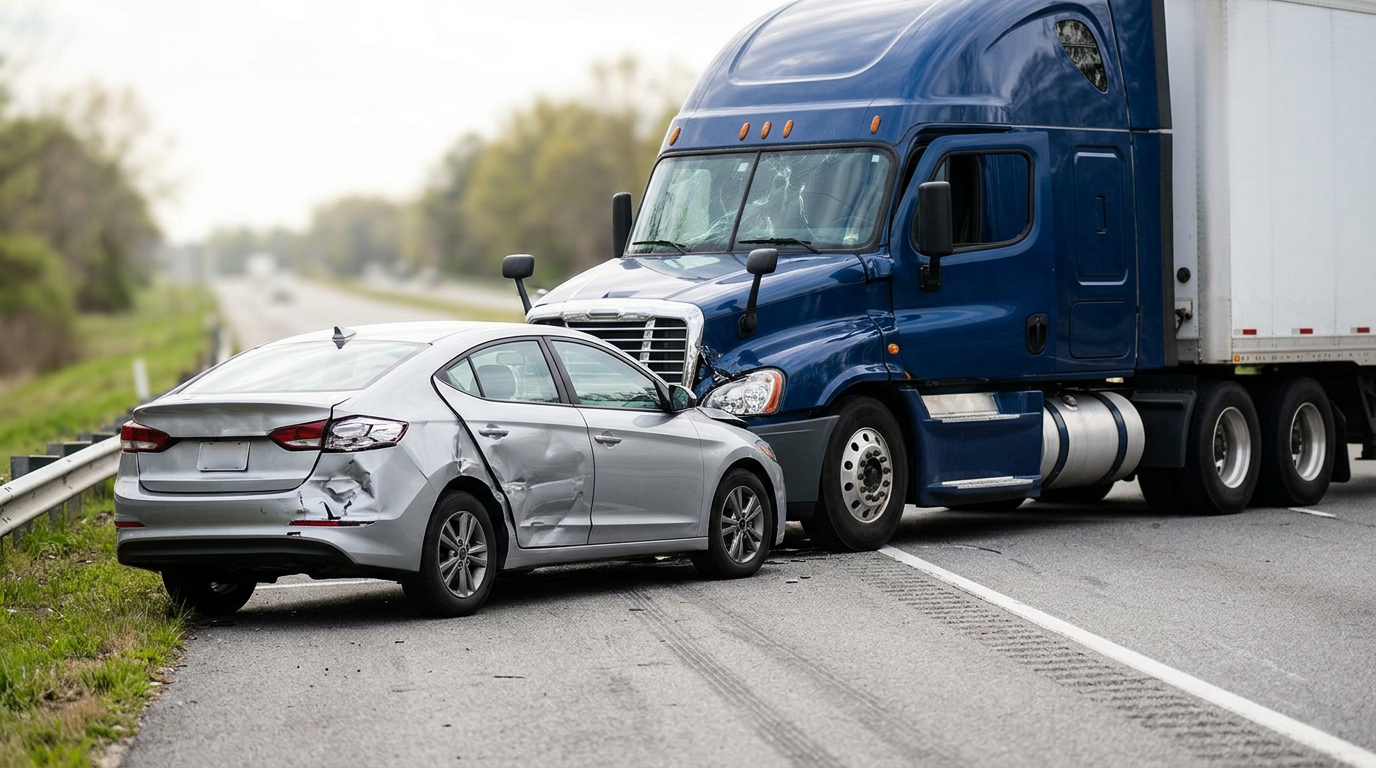
Truck crashes cause worse injuries mainly because of physics: a loaded commercial truck can weigh 20 to 30 times more than a passenger car. That weight turns a crash into a far more violent event.
A few crash types tend to cause the deepest harm:
- Underride, when a smaller vehicle slides beneath the truck.
- Rollover, when the truck tips over onto other vehicles.
- High-speed impact, where the force has nowhere to go but into the people inside.
You don’t need graphic detail to understand the point. The size and force involved explain why these injuries are so severe.
If you’re wondering how the crash happened, our page on what to do after a serious truck accident covers the early steps.
And please hear this clearly: the severity of these injuries is rarely about the driver you love. It’s about the enormous forces in a truck crash. This is not your fault, and it may not be theirs.
Steps the Family Can Take in the First Days and Weeks
The most useful thing you can do early is preserve evidence and stay calm with insurance companies. Small actions now can protect your family later.
Here’s a practical checklist:
- Photograph what you can. Take photos of the vehicles, the scene, and any visible damage if it’s safe to return.
- Write down the police report number. You’ll need it to request the full report.
- Don’t give a recorded statement. If an insurance company calls, politely decline until you’ve gotten guidance. Adjusters may use early statements against your claim.
- Be careful with early settlement offers. A permanent injury creates costs for decades. Early offers rarely cover them.
- Pick one point of contact. Choose a single family member to handle calls and paperwork. This reduces chaos and mistakes.
- Track every expense and missed workday. Include lost income for the caregiver, not just the injured person.
These steps sound small. Together, they build a clear record of what your family is going through.
Understanding the Long-Term Costs Families Face
The true cost of a permanent injury goes far beyond the first hospital bill. Families often face expenses for years, sometimes for life.
Those costs can include:
- Rehabilitation and therapy over months or years.
- Home modifications, like ramps, wider doors, and accessible bathrooms.
- Assistive equipment, such as wheelchairs and specialized beds.
- Ongoing personal care, including nurses or home aides.
There’s also lost income. The injured person may not return to work. And a family member who becomes a full-time caregiver may lose their own paycheck too.
We won’t pretend this is only about money. The emotional and relationship strain is real. Naming it honestly is part of getting help.
This is why a full life care plan matters before anyone accepts a settlement. A life care plan is a professional estimate of the lifetime cost of care. Without one, it’s easy to settle for far less than the injury will actually cost your family.
To learn more about specific injuries, see our pages on spinal cord injuries, traumatic brain injuries, and amputation injuries.
Who May Be Responsible After a Commercial Truck Crash
More than one party may be responsible after a commercial truck crash — not just the driver. That’s a key difference between a truck case and an ordinary car accident.
Depending on the facts, responsible parties can include:
- The truck driver.
- The trucking company that employed the driver.
- A company that loaded or maintained the truck.
- Others connected to the vehicle or cargo.
Commercial trucks also usually carry several layers of insurance. A regular car crash may involve one small policy. A truck crash may involve much larger coverage designed for serious harm.
Why does this matter to your family? Identifying every responsible party helps make sure lifelong costs can actually be covered. Missing a party can leave real bills unpaid.
Time limits apply, and they’re strict. In Florida, the deadline to file most injury claims is generally two years for claims arising on or after March 24, 2023, under Fla. Stat. §95.11. Florida also follows a modified comparative-negligence (shared fault) rule under Fla. Stat. §768.81. Under that rule, a person found more than 50% at fault generally cannot recover damages.
Deadlines can vary in other states, and this firm takes cases nationwide. Don’t wait to find out how the deadline applies to your situation.
Want to know where you stand?
Tell us what happened and our team will walk you through the options available to you, at no cost.
When to Talk to a Catastrophic Injury Attorney
The best time to talk to a catastrophic injury attorney is early — ideally before you speak with any insurance company. A lawyer can handle insurers, gather evidence, and coordinate a life care plan so your family can focus on recovery.
In the catastrophic-injury cases our attorneys handle, families are often overwhelmed by phone calls, forms, and pressure to settle fast. Having someone manage that lets you stay at the bedside.
A few things to know:
- A free case evaluation costs nothing. You can ask questions without a commitment.
- Most personal-injury firms work on contingency. That means you generally pay no attorney fee upfront, and the fee comes from any recovery. Ask any lawyer to explain their fee agreement in writing.
CHG Personal Injury Lawyers are licensed attorneys admitted to The Florida Bar. The firm offers bilingual help in English and Spanish and takes cases nationwide.
We can’t promise a specific outcome, and no honest lawyer should. Every case is different. What we can do is explain your options clearly.
If you’re ready, contact us for a free case evaluation. There’s no pressure — just answers.

Frequently Asked Questions
What is considered a permanent injury after a truck accident?
A permanent injury is one a doctor expects to cause lasting impairment that won’t fully heal, such as paralysis, brain injury, or limb loss. Only a physician, not an insurer, decides if an injury is permanent.
What are the most common catastrophic injuries in truck crashes?
The most common are spinal cord injuries and paralysis, traumatic brain injuries, amputations, severe burns, and catastrophic back and neck injuries. Motor vehicle crashes are a leading cause of spinal cord injuries, per the Mayo Clinic.
How long do families have to file a truck accident claim in Florida?
In Florida, the deadline is generally two years for injury claims arising on or after March 24, 2023, under Fla. Stat. §95.11. Deadlines vary by state, so ask a lawyer about your situation quickly.
Do we have to pay anything upfront to talk to a lawyer?
No. A case evaluation is free, and most personal-injury firms work on contingency, meaning you generally pay no attorney fee unless there’s a recovery.
Can our family still bring a claim if our loved one did not survive the crash?
Yes. When a loved one dies in a truck crash, surviving family members may be able to bring a wrongful-death claim. A licensed attorney can explain who may file and what deadlines apply.
Common Permanent Injuries in Truck Crashes
Spinal Cord Injuries & Paralysis
Damage to the spinal cord can cause paraplegia or quadriplegia, permanently affecting movement, sensation, and independence. These injuries often require lifelong care.
Traumatic Brain Injury (TBI)
A severe blow during a crash can leave lasting changes to memory, mood, speech, and the ability to work. TBI effects may continue long after the hospital.
Amputation & Limb Loss
The force of a collision with a large truck can cause traumatic amputation or injuries so severe that surgical amputation becomes necessary.
Severe Burns & Catastrophic Back/Neck Injuries
Fuel fires and violent impacts can cause disfiguring burns and permanent spinal, back, or neck damage that reshape daily life.
Only a Doctor Decides If an Injury Is Permanent — Not an Insurer
Insurance companies may downplay how serious or lasting an injury is. A permanent injury is one a physician expects to cause lasting impairment that won't fully heal. Get the medical picture from your treating doctors before accepting any statement from an insurer about your loved one's future.
How We Help Families After a Catastrophic Truck Crash
We Lead With Your Family
Whether a loved one is fighting to recover or you've lost someone, we center everything on the people left to carry on.
We Preserve the Evidence
Truck logs, black-box data, and maintenance records can disappear fast. We move to protect what your case may need.
We Handle the Companies
Trucking firms and their insurers have teams working from day one. We stand between them and your family.
We Explain Every Step
No legal jargon. We tell you what's happening, what your choices are, and what to expect — in English or Spanish.
First Steps for Families Right Now
Focus on Medical Care
Follow the treating doctors' guidance and keep every record. The medical picture is the foundation of a catastrophic-injury claim.
Keep What You Have
Save photos, the crash report, medical bills, and the names of anyone involved. Don't discard anything — even damaged property can matter.
Be Careful What You Say
You are not required to give a recorded statement to the trucking company's insurer. Speak with an attorney first.
Ask Questions Early
Deadlines to file a claim vary by state. Reaching out early gives you time to understand your options before evidence fades.