

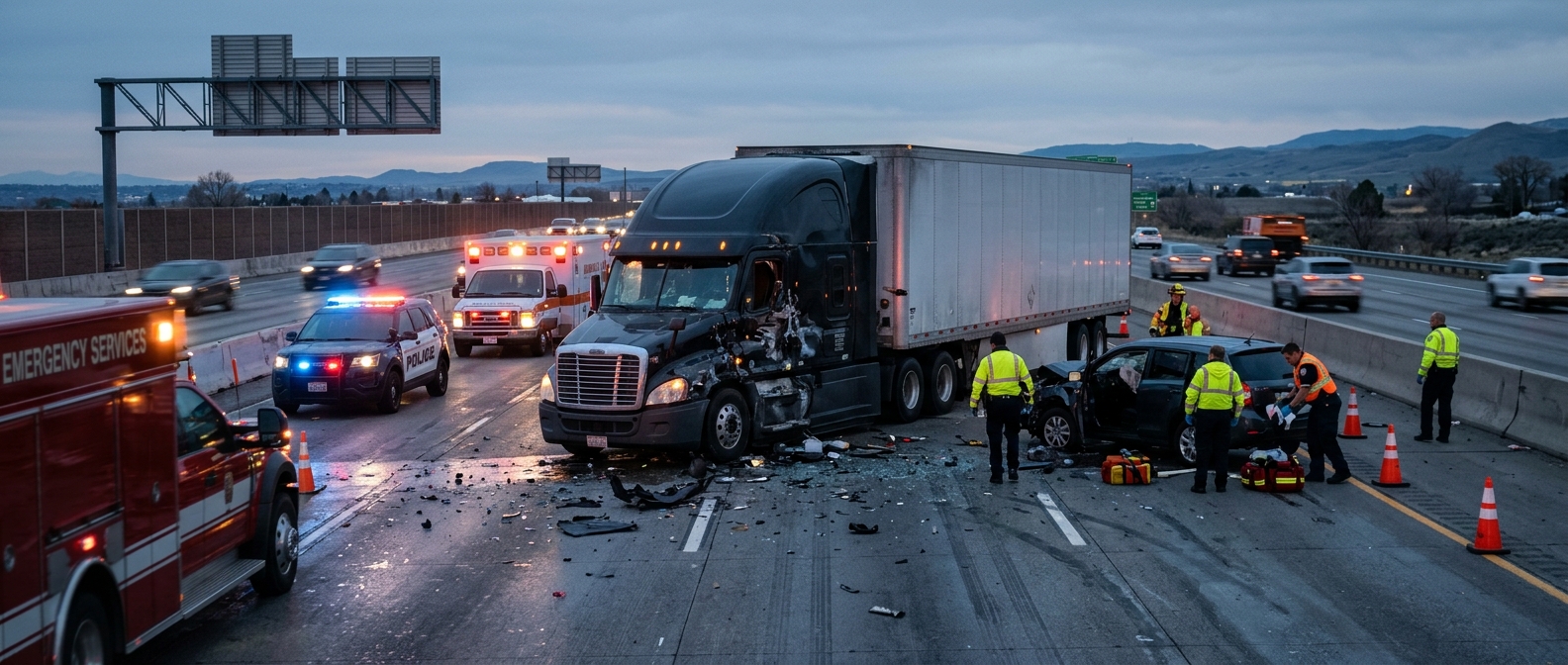
Truck Accidents · Florida & Nationwide
Hit by a Truck? The First Days Matter Most
When a commercial truck crash leaves you or someone you love with a spinal cord injury, brain injury, or other life-altering harm, the steps you take now can protect both your health and your right to recover.
Guidance You Can Rely On
Licensed
Florida Bar–admitted attorneys
Nationwide
Serious injury cases across the U.S.
Bilingual
English & Spanish support
Free
Confidential case evaluations
By CHG Lawyers · Published July 25, 2026
What to Do After a Serious Truck Accident: First Steps for Families
After a serious truck accident, do three things. Focus first on your loved one’s medical care. Make sure police write a crash report. And act fast to preserve evidence—because trucking companies often send investigators to the scene within hours. In a catastrophic crash, the injured person is usually in the hospital. They can’t gather evidence. That job falls to the family. This guide walks you through what matters, one step at a time.

If you're wondering what to do after a serious truck accident, you don't have to figure it out alone. Talk it through with our team — the first consultation is free, confidential, and carries no obligation.
If You’re Reading This in a Hospital Waiting Room
You may be sitting in a hospital right now, waiting for news. Your loved one may have a spinal cord injury, a traumatic brain injury, an amputation, severe burns, or paralysis. You feel overwhelmed. That’s normal.
You don’t need to become a legal expert today. You can take this one step at a time. This page explains what matters in the first hours, days, and weeks after a serious semi-truck crash.
Serious truck cases are very different from ordinary car accidents. The injuries are worse. The evidence disappears faster. And the trucking company usually starts protecting itself right away. Knowing this now helps you protect your family later.
First: Focus on Your Loved One’s Medical Care
Getting your loved one stable and correctly diagnosed comes before everything else. Catastrophic injuries often need special care. That means trauma teams, neurosurgeons, spinal units, and burn centers.
Let the doctors do their work. Ask questions when you can. Write down the names of hospitals, doctors, and diagnoses. Keep any paperwork they give you.
Complete, timely medical records matter for two reasons. First, they guide your loved one’s treatment. Second, they show the true extent of the injury if you later file a claim.
The severity of a spinal cord injury isn’t always clear at first. Some effects can develop over time, according to the Mayo Clinic. That’s why a prompt, complete exam is so important.
Sometimes the injured person can’t make decisions. Then someone may need to act for them. This could be a spouse, a parent, a healthcare surrogate, or a court-appointed guardian. If you’re unsure who has that authority, an attorney can help.
What to Do at the Scene (If Someone Was There)
At the scene, call 911. Make sure police respond and write a report. And gather details about the truck if it’s safe to do so. If you were there, or a family member was, these steps help.
- Call 911. Make sure police come and create an official crash report.
- Don’t move a seriously injured person unless there’s immediate danger, like fire. Wait for paramedics.
- Take photos and video of the vehicles, the truck, the road, skid marks, and any injuries.
- Get the truck details: the driver’s name, the trucking company’s name, the USDOT number painted on the truck, the license plate, and insurance information.
- Collect witness names and phone numbers. Witnesses forget or become hard to find later.
Many families were not at the scene. If that’s you, don’t panic. Much of this can still be pieced together later. Skilled attorneys can get the police report, request camera footage, find witnesses, and save the truck’s data. You have not lost your case by being at the hospital instead of the roadside.
Why a Truck Crash Is Different From a Car Accident
A truck crash involves federal safety rules, more than one possible defendant, and special evidence. A car accident simply doesn’t have these. That’s what makes truck cases complex.
Commercial trucks must follow rules set by the Federal Motor Carrier Safety Administration (FMCSA). These rules cover driver rest, maintenance, and record-keeping.
More than one party may share the blame. Possible responsible parties include:
- The truck driver
- The trucking company that employed the driver
- A maintenance contractor
- The company that loaded the cargo
- The truck or parts maker
Trucks also carry evidence you won’t find in a car. This includes the electronic control module (the truck’s “black box”), the driver’s hours-of-service logs (records of how long they drove), maintenance records, and dash-camera footage. This evidence can be overwritten, lost, or destroyed within days if no one acts to save it. To learn how these crashes happen, see our guide on the causes of catastrophic truck crashes.
The Trucking Company Moves Fast—Here’s Why That Matters
Many trucking companies and their insurers send fast-response investigators to the scene within hours. Their job is to protect the company—not your family.
These teams photograph the scene, interview the driver, and gather evidence while it’s fresh. They may reach out to your family early. Sometimes they use a friendly voice and a quick offer. Remember who they work for.
This is why speed matters on your side too. In the catastrophic truck cases our attorneys handle, one of the first steps is often sending a preservation of evidence letter. Lawyers sometimes call this a spoliation letter. In plain terms, it’s a formal notice. It tells the trucking company to keep the black-box data, driver logs, and maintenance records—and not to delete or destroy them.
The sooner that letter goes out, the better the chance key evidence still exists. That’s a big reason families benefit from legal guidance early.
Not sure what your next step is?
Talk it through with our team — the first consultation is free, confidential, and carries no obligation.
What NOT to Do After a Serious Truck Accident
After a serious truck accident, don’t skip medical follow-ups. Don’t give recorded statements to the trucking company’s insurer. And don’t accept a fast settlement before you know the full extent of the injury.
Here’s what to avoid:
- Don’t skip or delay follow-up medical care. Gaps in treatment hurt both recovery and any claim.
- Don’t give a recorded statement to the trucking company’s insurer before getting advice.
- Don’t accept a quick settlement before doctors understand the full, long-term cost of a catastrophic injury.
- Don’t post about the crash or injuries on social media. Insurers read these posts.
- Don’t sign anything from an insurer you don’t fully understand.
A fast offer may look generous when you’re scared and facing bills. But catastrophic injuries can cost far more over a lifetime than an early check reflects.
What Not to Say to the Insurance Company
Don’t guess about fault. Don’t say your loved one is “fine.” And don’t give a recorded statement without advice. Early words can be used against your family later.
Adjusters sound helpful, but they’re gathering information. Don’t guess about who caused the crash. You may not know all the facts yet. Don’t say “she’s okay” or “he’s fine” about injuries that are still developing.
This matters most with catastrophic injuries. A traumatic brain injury or a spinal cord injury can get worse or show itself over the following days and weeks, as the Mayo Clinic notes. What looks minor today may prove permanent tomorrow.
You can politely say no to a recorded statement. You can point the insurer to your attorney. That’s your right. To understand how truck insurance works in serious-injury cases, read our guide on truck accident insurance and serious injuries.
Documenting Injuries, Bills, and Losses
Start a simple folder—paper or digital. Use it to track everything about the crash and the injury. Good records protect your family’s future claim.
Keep these items together:
- Medical records and bills from every provider and facility.
- Receipts for out-of-pocket costs, like travel to specialists, medical equipment, and home changes.
- Lost income records for the injured person and for family members who miss work to give care.
- A daily journal noting your loved one’s condition, pain, mood, and recovery milestones.
A short daily note may feel small. But over months, it becomes a powerful, honest record of how the injury changed daily life.
How Long Does Recovery Take After a Catastrophic Truck Injury?
There’s often no simple “healing time” for a catastrophic injury. Injuries like spinal cord damage, paralysis, and severe brain trauma often cause permanent impairment—not a full recovery.
Spinal cord injuries can cause lasting loss of movement and feeling. They can also affect breathing, bladder, and bowel control, according to the Mayo Clinic. Doctors grade the severity using the ASIA Impairment Scale. Paralysis is not rare, either. The Christopher & Dana Reeve Foundation reports that nearly 1 in 50 people in the U.S. lives with some form of paralysis.
Recovery may mean months of rehab, special equipment, home changes, and sometimes lifelong care. National data on these injuries is tracked by the National Spinal Cord Injury Statistical Center.
This is exactly why you shouldn’t settle before doctors understand the full future cost. Once you accept a settlement, you usually can’t ask for more later—even if new needs appear.
Have questions about what happened?
Ask our team directly. The first conversation is free, confidential, and there is no obligation to continue.
When a Truck Crash Is Fatal
Some families reading this are facing a loss, not a recovery. We’re deeply sorry. Nothing here can ease that pain.
When a truck crash takes a life, surviving family members may have a wrongful death claim against the responsible parties. A claim can’t undo the loss. But it can hold wrongdoers accountable and help provide for the family. For compassionate, plain-language guidance, see our page on fatal truck accidents and wrongful death in Florida.
When to Talk to a Truck Accident Attorney
Key evidence disappears quickly. So many families benefit from talking to an attorney early—often within days of the crash. Waiting can mean losing black-box data and driver logs for good.
A consultation is a conversation, not a commitment. A lawyer can explain your options, answer questions, and act fast to preserve evidence.
Florida law also sets a deadline to file. For most negligence claims, the time limit is generally two years for injuries on or after March 24, 2023, under Fla. Stat. §95.11. Florida also uses a shared-fault rule. A person found more than 50% at fault generally can’t recover damages, under Fla. Stat. §768.81.
CHG Personal Injury Lawyers handles catastrophic truck cases in Florida—including Miami, Orlando, Tampa, and Jacksonville—and nationwide. We serve families in both English and Spanish. Our case evaluations are free, and there’s no obligation.
If you’re wondering what to do after a serious truck accident, you don’t have to figure it out alone. Request a free case evaluation and let us answer your questions. For a broader overview, visit our main guide on catastrophic truck accident injuries.

Frequently Asked Questions
What should you do after getting hit by a semi truck?
Get emergency medical care first. Make sure police create a crash report. Gather the truck’s company name and USDOT number if it’s safe. Then act quickly to preserve evidence.
What should you not do after a truck accident?
Don’t skip medical care. Don’t give recorded statements to the trucking company’s insurer. And don’t accept a fast settlement before doctors know the full extent of the injury.
How long does it take to heal from a serious truck accident injury?
There’s often no fixed healing time. Catastrophic injuries like spinal cord damage, paralysis, and brain trauma often cause permanent impairment and may need lifelong care.
What should you not say to the insurance company after a truck accident?
Don’t guess about who caused the crash. Don’t say your loved one is “fine,” since serious injuries can worsen over time. You can decline a recorded statement.
Can family members act on behalf of an injured loved one?
Yes. A spouse, parent, healthcare surrogate, or court-appointed guardian may act for someone who can’t decide for themselves. An attorney can help clarify who has legal authority.
What to Do After a Serious Truck Crash
1. Get Emergency Medical Care
Your health comes first. Catastrophic injuries — spinal cord damage, traumatic brain injury, amputations, severe burns — can worsen fast and aren't always obvious at the scene. See a doctor immediately and follow through with treatment.
2. Make Sure Police Respond
Ask that officers create an official crash report. It documents what happened, who was involved, and preserves key facts about the truck and driver while the details are fresh.
3. Identify the Truck & Company
If it's safe, note the trucking company's name and the USDOT number on the cab or trailer. This helps identify who may be responsible for the crash and the harm it caused.
4. Act Quickly to Preserve Evidence
Trucking companies move fast to gather their own evidence. Electronic logs, black-box data, and maintenance records can disappear. Getting legal help early can help protect this proof.
Don't Give a Recorded Statement to the Trucking Company's Insurer
Adjusters may contact you quickly, sometimes before you understand the full extent of a catastrophic injury. You are not required to give a recorded statement, and doing so can be used to minimize your claim. Speak with an attorney before you sign or say anything.
Why Serious Truck Cases Are Different
Life-Altering Injuries
The size and weight of a semi can cause paralysis, brain injury, limb loss, and severe burns — injuries that change a family's life permanently and require lifelong care.
Multiple Responsible Parties
A driver, trucking company, maintenance provider, or others may share responsibility. Sorting this out takes a careful, informed investigation.
Complex Rules & Records
Federal trucking regulations, driver logs, and electronic data all play a role. Understanding them is essential to building a strong claim.
Time-Sensitive Evidence
Critical proof can be lost within days. Moving quickly helps preserve what matters before it's gone.