
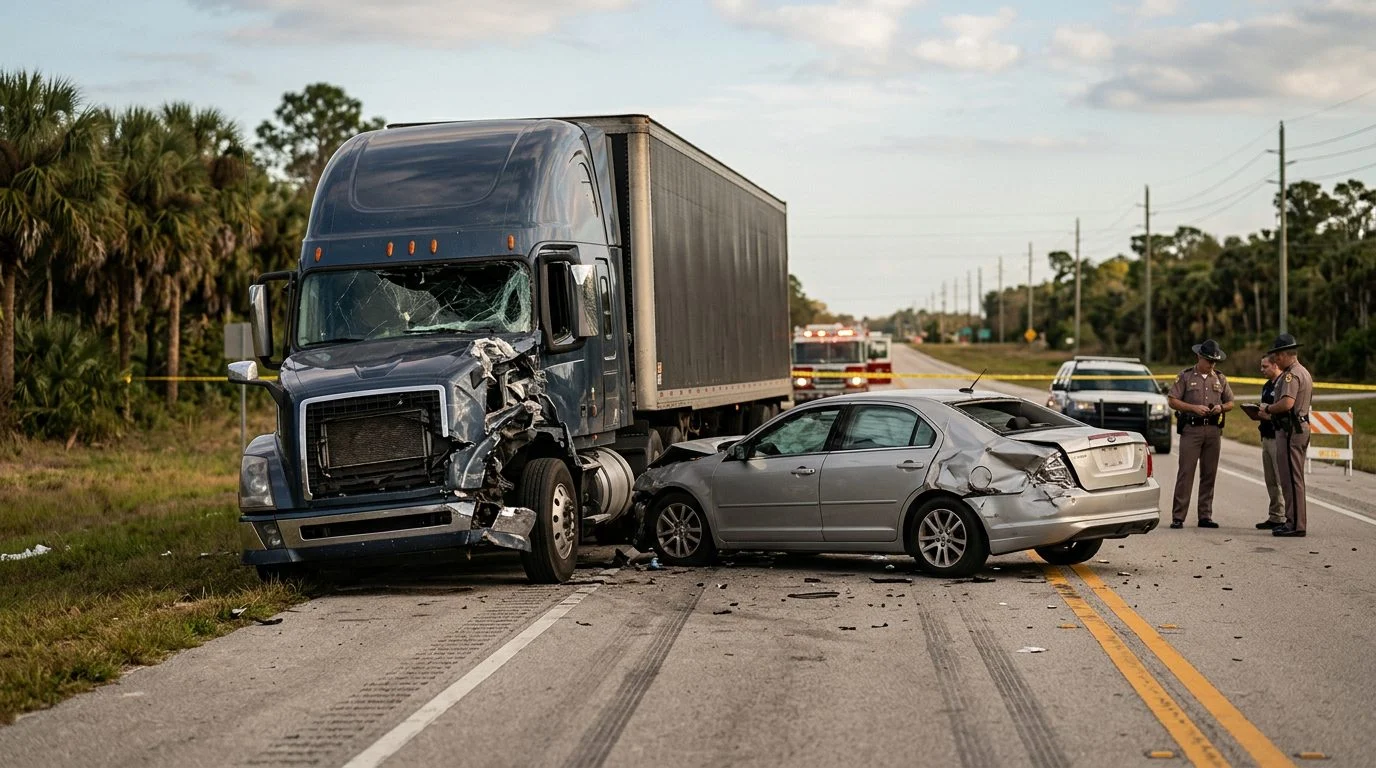
Florida Truck Accident Claims
After a Truck Crash, Key Evidence Can Disappear. Act Early.
CHG Personal Injury Lawyers helps injured Floridians and their families ask trucking companies to preserve the records that can show what happened. Your first consultation is free, confidential, and comes with no obligation to continue.
A Florida Personal Injury Firm
Florida
Serving injured people throughout Florida
Free
Confidential first consultation with no obligation
Licensed
Attorneys admitted to The Florida Bar
By CHG Lawyers · Published November 2, 2026
After a truck crash in Florida, the most important proof often sits with the trucking company. It is not with you. That proof can be overwritten, changed, or repaired within days.
A Florida truck accident evidence preservation attorney works to make sure the right records are kept before they are lost.
This page explains:
- Which evidence is most at risk
- The time rules that matter
- How CHG Personal Injury Lawyers, a Florida personal injury firm, approaches the work
Igor Hernandez is the responsible lawyer for this page.
What Evidence Preservation Means After a Florida Truck Crash
Evidence preservation means keeping the records and physical items that show how a crash happened. It also means stopping them from being lost, deleted, changed, or repaired.
Truck crashes involve more record-holders than most car crashes. The trucking company, the driver, the cargo owner, a freight broker, and maintenance vendors may each hold different proof.
A car crash often involves two drivers and their insurers. A truck crash can involve many more sources.
The truck itself may move to a yard or repair shop within days. This can happen before the injured person speaks with a lawyer.
This page is for:
- Injured drivers and passengers
- Pedestrians
- Families of someone killed or catastrophically hurt in a Florida truck crash
Not sure what your next step is?
Talk it through with our team — the first consultation is free, confidential, and carries no obligation.
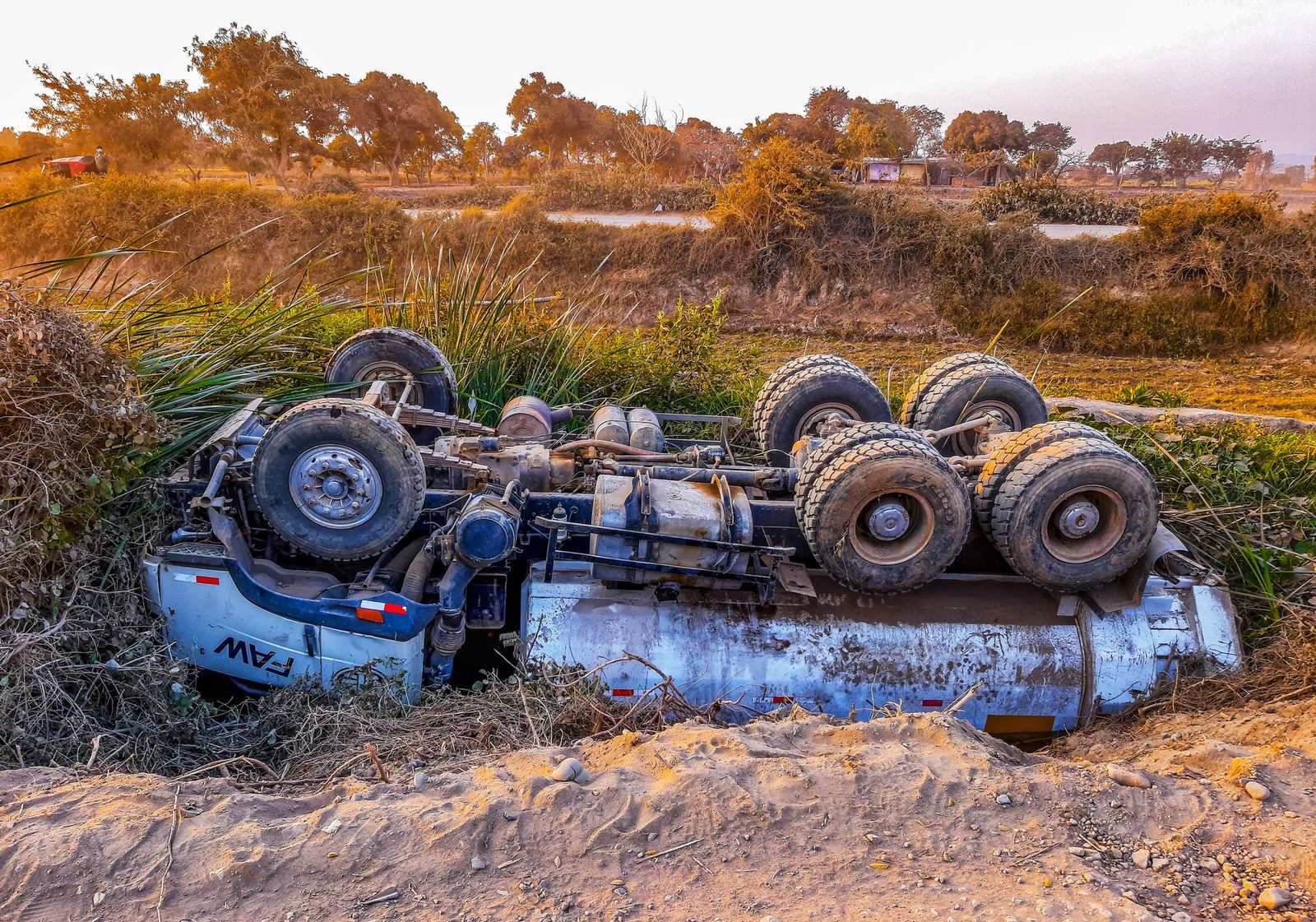
The Evidence That Disappears Fastest
The most time-sensitive proof includes driver logs, the truck’s onboard data, and video. Each item shows a different part of the story.
- Electronic logging device (ELD) and driver logs. These show hours driven and the driver’s duty status. Duty status means whether the driver was driving, on duty but not driving, off duty, or resting in a sleeper berth, which is recorded separately from off duty.
- Engine control module or event data recorder, often called the “black box.” It can store speed, braking, and throttle data near the time of impact.
- Dashcam footage. Many carriers record video and then write over it on a cycle.
- Maintenance and inspection records. These cover brakes, tires, lights, and steering.
- Post-crash testing records and the driver’s qualification file. These show the driver’s training and history.
- Dispatch messages, bills of lading, and load records. A bill of lading is the shipping document that lists the cargo. For flatbed loads, securement records matter most. Securement records show how the cargo was tied down.
- Scene evidence. Skid marks, debris, photos, witness contact details, and nearby business or traffic camera footage all count.
Electronic records can be saved in many formats. Federal rules allow many technologies to save them. The technology must accurately keep the record. It must also let the record be reproduced later. See accurately keeps the record and lets it be reproduced later.
The Timeline: Why the First Days Matter
The first days matter. Federal rules set short periods for some records. These periods are minimums.
- Driver logs. Under federal driver log rules, drivers must submit each record of duty status within 13 days. They must also keep copies of the prior 7 days.
- Inspection reports. The motor carrier, intermodal equipment provider, or other entity responsible for an inspection must keep the inspection report for fourteen months from the date of the inspection report, where the vehicle is housed or maintained.
- The rule sets limits.
- An alcohol test not given within 2 hours must be documented.
- Attempts stop after 8 hours.
- Controlled-substances testing stops after 32 hours.
- See post-accident testing rules.
A written preservation letter asks the company and its insurer to keep specific items. These include the truck and its data module. Sending this letter early makes the request clear.
Some steps can protect your claim right away:
- Avoid recorded statements or signed forms from the trucking company until you speak with a lawyer.
- Photograph the scene and your injuries if you are able.
- Keep the police report number and every medical record.
Florida Deadlines and What Happens When Evidence Is Lost
Florida sets time limits for filing lawsuits. These are in its limitations statute, Fla. Stat. § 95.11. Deadlines apply. An early call protects the time you have.
Florida also uses comparative fault, which means shared fault. Under Fla. Stat. § 768.81, in a negligence action, a party found more than 50 percent at fault for their own harm may not recover damages; this does not apply to actions for medical negligence under chapter 766. Damages are split by each party’s percentage of fault. They are not shared without limit.
It can affect a case.
How any case is decided depends on the facts of that crash and the proof that remains.
Flatbed, Fatal, and Catastrophic Crashes: Added Layers of Evidence
These crashes add more records to preserve. Each one needs its own request.
- Flatbed crashes. Look for cargo securement records, load weight, strap and chain logs, and loading crew documents.
- Fatal crashes. A Florida Traffic Crash Report must be submitted within 10 days after the investigation is completed. Under Fla. Stat. § 316.066(1)(b), crash reports held by an agency may be made immediately available to the parties involved in the crash, their legal representatives, and their insurers.
- Wrongful death. Under Fla. Stat. § 768.19, when a death is caused by a wrongful act or negligence, the responsible party can be liable for damages under the wrongful death act. This is the state law under which a person who would have been liable for an injury stays liable for damages when that injury causes death, with the damages set out in the act.
- Catastrophic injuries. Spinal cord, brain, and limb injuries need medical records tied to the crash timeline.
- Multiple defendants. Shippers, freight brokers, contracted carriers, and delivery companies may each hold different records. This includes companies running Amazon and FedEx contracted trucks.
For families of someone who died, records requests and the crash report come first. Protecting the vehicle and personal belongings can wait until a family is ready.
How CHG Personal Injury Lawyers Handles Evidence and Fees
CHG Personal Injury Lawyers starts with a free, confidential consultation. From there, the firm moves to preserve records. It works with every party that holds them.
- Free, confidential consultation. There is no obligation to continue.
- Preservation letters. Letters go to the trucking company, its insurer, and other potentially responsible parties.
- Records requests. The firm asks for logs, black box data, maintenance files, dashcam footage, and crash reports.
- Technical review. When the data needs analysis, the firm may bring in outside reconstruction engineers.
- Organized timeline. Medical records, the crash timeline, and your losses are gathered in one place.
CHG charges no attorney’s fees and no case costs unless there is a recovery.
Not sure what your next step is?
Talk it through with our team — the first consultation is free, confidential, and carries no obligation.
Why CHG Personal Injury Lawyers for a Florida Truck Crash Claim
CHG Personal Injury Lawyers is a Florida-based personal injury firm. It serves clients throughout Florida, including Miami, Orlando, Tampa, and Jacksonville.
- Licensed attorneys. The firm’s attorneys are admitted to The Florida Bar.
- Responsible lawyer. Igor Hernandez is responsible for this page.
- Case types. The firm focuses on truck accidents, catastrophic injury claims, and wrongful death. It handles personal injury matters of every severity.
- Checklist focus. Because the firm focuses on these case types, its first-week steps center on the records listed above.
- Referrals. Some matters may be referred to, or handled together with, another law firm. The firm says so before any engagement.
Common Questions About Preserving Truck Crash Evidence
Most questions come down to two things. Who holds the proof? How fast can it disappear?
Do I need a lawyer to ask for the truck’s logs and black box data?
A lawyer can send a written preservation request. That request names the specific items the company must keep.
What if the trucking company’s insurer already called me?
You do not have to give a recorded statement. Avoid signing releases until you have spoken with a lawyer.
What if I was partly at fault?
Under Florida’s comparative fault statute, Fla. Stat. § 768.81, a person found more than 50 percent at fault for their own harm may not recover any damages in a negligence action to which the statute applies, except for a personal injury or wrongful death action arising out of medical negligence under chapter 766. Under the statute, a share of more than 50 percent bars recovery. The facts decide how fault is assigned.
What does the free consultation involve?
It is confidential and has no obligation to continue. You can talk about the crash, the truck, and your injuries.
If the truck is still at a yard, or the logs have not been requested, time matters. You can reach CHG Personal Injury Lawyers through its contact page for a free, confidential consultation. The records can be requested while they still exist.
Evidence That Can Show What Happened on the Road
Driver logs and electronic records
Hours-of-service logs and electronic logging data can show whether a driver was on the road longer than allowed.
Event data recorder (black box) data
Speed, braking, and throttle information from the truck may be stored for a limited time before it is overwritten.
Maintenance and inspection files
Repair orders, inspection reports, and parts records can reveal how the truck was kept up before the crash.
Driver qualification and training files
Hiring, training, and disciplinary records help show how the trucking company supervised its drivers.
Dashcam and onboard camera footage
Video from the cab or nearby businesses can be recorded over quickly if no one asks for it to be saved.
Do Not Sign Anything Until You Talk With a Lawyer
The trucking company's insurer may contact you soon after a crash. Routine business at the trucking company can overwrite or discard records if no one has asked that they be kept.
How a Preservation Request Helps
A written request is sent
Your lawyer can send a written preservation request to the trucking company, and often to its insurer, asking that relevant records be kept.
Specific items are named
The request lists the logs, data, photos, files, and footage connected to your crash so nothing important is left to interpretation.
The records are followed up on
Preservation is only useful if it is tracked. Our team follows up to confirm that the records are being kept.
Your health comes first
While evidence is gathered, follow your doctors' care. Our team handles the paperwork so you can focus on recovery and your family.