

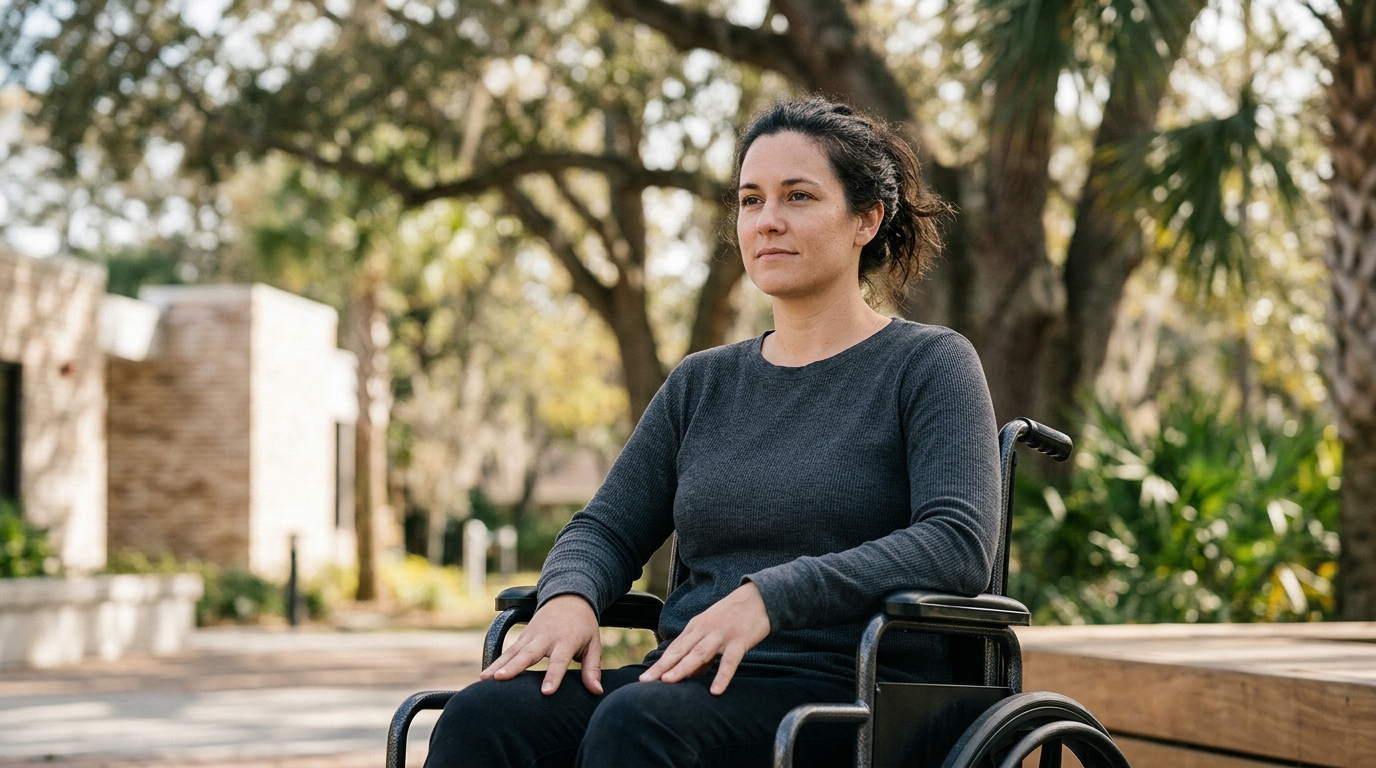
Florida Truck Accident & Serious Fall Injury Claims
A Serious Truck Crash or Fall Can Change Your Family's Life. You Don't Have to Face It Alone.
CHG Personal Injury Lawyers helps people across Florida who have suffered catastrophic injuries in commercial truck crashes and serious falls. Our practice focuses exclusively on catastrophic injury claims. We charge no attorney's fees and no case costs unless there is a recovery.
Why Florida Families Contact CHG
Florida
Florida-based personal injury firm
Licensed
Attorneys admitted to The Florida Bar
$0
Fees or case costs unless there is a recovery
By CHG Lawyers · Published October 12, 2026
Truck Crashes and Serious Falls in Florida: What Families Need to Know
Picture a family whose loved one was driving home on a Florida highway. A loaded commercial truck drifts into the lane. In seconds, the family’s routine changes. Now there are hospital waiting rooms, rehabilitation schedules, and hard questions. No one was ready to ask them.
This scenario is illustrative. It reflects what many Florida families face after a catastrophic crash.
Serious falls can cause the same kind of harm. A fall down poorly lit stairs or a slip on a wet floor can cause a spinal cord injury, a traumatic brain injury (TBI), or death.
If you or someone you love was seriously hurt in a truck crash or a fall, you may have legal rights. This guide explains:
- Those rights, in plain language
- The evidence that often matters
- The deadlines that apply under Florida law
- The steps to take now

Not sure what your next step is?
Talk it through with our team — the first consultation is free, confidential, and carries no obligation.
Why These Injuries Are Different
Most people think of a crash or a fall as a bad day that heals. Catastrophic injuries are different. They can include:
Spinal cord injury and paralysis. Damage to the spinal cord can cause paraplegia. This is paralysis of the lower body. It can also cause quadriplegia, which is paralysis of all four limbs. For some people, the change is permanent.
Traumatic brain injury. A TBI can happen even without losing consciousness (passing out). Memory loss can follow. So can cognitive changes (changes in thinking), personality changes, and permanent disability.
Amputation, severe burns, and crush injuries. Truck crashes and some falls can cause limb loss. They can also cause deep burns that need long treatment. Some injuries change how a person lives and works.
Wrongful death. When a crash or fall causes a death, the family left behind may bring a claim. A claim is a legal case. Grief and practical questions often arrive together. Families do not have to sort them out alone.
Falls on Someone Else’s Property
When a fall happens on property you do not own, the property owner’s responsibility is often the central question. Lawyers call this premises liability. Our attorneys can review whether the owner did enough to keep the property safe.
A fall claim usually turns on facts such as:
- Was the danger known, or easy to find? A store manager saw a spill and did not clean it up. An apartment complex ignored repeated complaints about a broken stair. A parking lot had a pothole that was never repaired, and the lighting was poor. Each of these can raise this question. Prior complaints, inspection logs, and maintenance records can be important.
- Was the danger hidden or unexpected? A clearly marked wet floor is different from a hidden one. Examples to look at include a missing warning sign, a broken stair hidden by poor lighting, and debris placed where customers normally walk.
- Did the danger cause the fall and the injury? Our attorneys can look closely at how the danger, the fall, and your injuries are connected. Medical records are essential to show that link.
- What losses did you suffer? Losses may include medical bills, lost wages, ongoing care, pain and suffering, or permanent disability.
When Someone Attacks You on Someone Else’s Property
Many people never imagine that a property owner could be responsible for an attack. Consider a tenant attacked in a dark apartment parking garage. The gate had been broken for months. Or consider a hotel guest hurt in a room whose lock had been reported as faulty.
If you were attacked on property with broken locks, poor lighting, or no guards, our attorneys can review what happened and talk with you about your options. We look at whether those security problems played a part in the attack. Security measures people often expect to see include:
- Working locks and gates
- Adequate lighting
- Cameras
- Guards
Lawyers call this type of claim a negligent security claim. Whether a particular case has merit depends on the facts. Those facts include what the owner knew about the risk and what it did in response.
Florida’s Comparative Fault Rule
Florida’s comparative fault statute, Fla. Stat. § 768.81, lets fault be divided among the people who contributed to an accident. In other words, the fault of everyone involved can be considered.
Because fault can be divided, clear evidence matters. Evidence of how a danger was created, left unrepaired, or allowed to continue can make a difference.
Florida’s Minimum Insurance Limits and Commercial Vehicles
Many families assume that the amount of insurance on a vehicle decides what a claim is worth. The law is more nuanced. This difference matters after a truck crash.
Florida’s financial responsibility statute sets minimum amounts. These amounts show proof of ability to pay for liability. For a private vehicle, the statute sets separate minimums for:
- Bodily injury to or death of one person in any one crash
- Bodily injury to or death of two or more persons in any one crash
- Property damage
These are minimums that an owner must carry. They are not a measure of what a catastrophic injury is worth.
The same statute treats commercial motor vehicles differently. It sets separate amounts for them and refers to other sections for those figures. Federal rules also set higher minimums for many trucking operations.
For example, for-hire carriers transporting nonhazardous property in interstate or foreign commerce must meet a $750,000 minimum. This applies to vehicles with a gross vehicle weight rating of 10,001 pounds or more. Federal rule § 387.9 prescribes minimum levels of financial responsibility for public liability, including $750,000 for for-hire carriers transporting nonhazardous property in interstate or foreign commerce with a gross vehicle weight rating of 10,001 or more pounds.
A commercial carrier’s trucks and business operations may carry different exposure than a private car owner’s. Which companies and insurers are involved depends on the facts. A lawyer can review them.
Federal Trucking Rules and the Evidence They Create
Federal trucking rules create records. Those records can show what happened before, during, and after a crash. Families do not need to know every regulation. They should, however, understand the kinds of evidence that matter.
Driving hours and logs. Under federal rule § 395.3, a driver may not drive without first taking 10 consecutive hours off duty. A driver may not drive after 14 consecutive hours following that off-duty period. Under § 395.3, a driver may not drive after a period of 14 consecutive hours after coming on-duty following 10 consecutive hours off-duty, and may drive a total of 11 hours during that period.
Driving is not permitted if more than 8 hours of driving time have passed without at least a consecutive 30-minute interruption. The rule also sets limits of 60 hours on duty in 7 consecutive days, or 70 hours in 8 consecutive days. Our attorneys can review which rules applied to the driver in your crash.
Electronic logs, dispatch records, and fuel receipts can help show whether these limits were followed.
Post-accident testing. Under federal rule § 382.303, as soon as practicable following certain occurrences involving a commercial motor vehicle operating on a public road in commerce, each employer shall test for alcohol for each of its surviving drivers, including when the accident involved the loss of human life. These include crashes involving the loss of human life. They also include crashes involving certain injuries or disabling damage.
The rule sets time limits:
- An alcohol test should be given within two hours of the accident. If it is not, the employer must keep a record of the reasons.
- If the test is not given within eight hours, the employer must stop trying to give it. The employer must also keep the same record.
- A controlled substance test has a 32-hour limit.
Testing records and the employer’s notes on why a test was delayed can be important evidence.
Rear impact guards. Under federal rule § 393.86, each trailer and semitrailer with a gross vehicle weight rating of 4,536 kg (10,000 pounds) or more, and manufactured on or after January 26, 1998, must be equipped with a rear impact guard. This covers trailers and semitrailers with a gross vehicle weight rating of 10,000 pounds or more. They must have been manufactured on or after January 26, 1998, and the guard must meet federal standards. When a car slides under the back of a trailer, equipment records and inspection history can matter.
Maintenance and inspection records. Brake, tire, and lighting records can help. So can inspection reports and repair orders. Together, they can show whether a truck was maintained as required.
Speed. Florida law requires drivers to travel at a speed that is reasonable and prudent for the conditions. It also bans driving faster than the posted maximum speed limit in a work zone. This matters in construction zone crashes. The posted limit and the actual conditions can both be central to the claim.
Who hired the carrier. Liability can involve more than the driver. In Montgomery v. Caribe Transport II, LLC (2026), the U.S. Supreme Court held that a state-law claim may proceed. The claim alleged that a broker negligently hired an unsafe motor carrier. The Court held that this claim falls within the safety exception of federal law and is not preempted. The case shows that the choice of a carrier can be part of a claim. A lawyer can determine whether this applies to a particular crash.
Medical Bills and How They Are Proven
Medical costs are a central part of most catastrophic claims. Florida law sets rules for how past medical expenses are proven.
For example, evidence of past medical treatment that has been paid is limited to the amount actually paid. This is true no matter where the payment came from.
Treatment received under a letter of protection is also covered by statute. A letter of protection is an agreement. A provider agrees to be paid from a future judgment or settlement.
Keep every bill, explanation of benefits, and letter you receive.
Have questions about what happened?
Ask our team directly. The first conversation is free, confidential, and there is no obligation to continue.
Florida’s Personal Injury Protection (PIP) Benefits
If you were hurt in a motor vehicle crash, Florida’s personal injury protection rules may provide initial benefits. These benefits may come from your own insurer or an applicable owner’s insurer.
This applies when you receive initial services within 14 days after the accident. Getting care promptly matters for more than your health.
Florida’s Filing Deadlines: Act Now
Deadlines matter. Florida law limits how long you have to file a lawsuit.
The clock generally starts when the cause of action accrues. That is when the last element of the claim occurs.
Do not wait for the deadline to get close.
Evidence disappears quickly:
- Witness memories fade. Their accounts can become less reliable over time.
- Video is overwritten. Security footage is often recorded over. Once it is gone, it is gone.
- Trucks are repaired and returned to service. Damaged equipment, electronic logs, and dashcam footage may be changed or lost. This can happen if no one asks for them early.
- Scenes change. A hazard may be repaired or cleaned up. Photos taken right away cannot be replaced.
- Investigation takes time. Maintenance records, incident reports, prior complaints, and driver files can take months to gather.
Immediate Steps to Protect Your Claim
Get medical care right away. Go to an emergency room or urgent care, even if you feel fine. Spinal cord injuries, internal bleeding, and brain injuries may not show symptoms for hours or days.
Report the incident. For a fall, tell the manager or owner. Ask for a copy of any incident report. For a truck crash, call the police and get the crash report number.
Document the scene. Take photos and video from several angles. Capture the hazard or the crash, and the surrounding area. Include warning signs or their absence, lighting, and weather. Also photograph your injuries. Note the truck’s company name, DOT number, and trailer number if you can see them.
Gather witness information. Get names, phone numbers, and email addresses from anyone who saw what happened.
Keep every record. This includes:
- Medical records and imaging
- Bills
- Pay stubs showing lost wages
- Prescriptions
- Rehabilitation notes
- All communication with insurers
Write your own account of what happened while your memory is fresh.
Do not sign anything or give a recorded statement without a lawyer. An insurance company will likely contact you quickly. Anything you say can be used in the claim. Let a lawyer handle those conversations.
What Damages May Be Recoverable
Losses that injured people and families often talk with us about include:
- Medical expenses, including emergency care, surgery, hospital stays, rehabilitation, medication, equipment, and future care.
- Lost wages, including reduced earning ability if the injury is permanent.
- Physical pain, emotional distress, and a reduced quality of life are often among the most lasting effects of a serious injury.
- Some injuries leave lasting effects, such as paralysis, loss of mobility, chronic pain, scarring, or cognitive decline, that can permanently change daily life.
Every case is different. The severity of the injury matters. So do medical costs, income, age, earning capacity, and the strength of the evidence. No lawyer can predict the result of a particular case.
How a Lawyer Helps
A lawyer can handle the investigation, negotiation, and legal work. This lets you focus on recovery.
- Investigation: Visiting the scene, gathering video and photos, interviewing witnesses, and requesting maintenance, inspection, and incident records.
- Medical evidence: Obtaining records and working with treating doctors to document injuries and long-term needs.
- Insurance negotiation: Handling all communication with insurers.
- Claim valuation: Evaluating the claim based on injuries, medical costs, lost income, disability, and evidence of responsibility.
- Court representation: If settlement talks do not resolve the claim, taking the case to court.
Fees: No Recovery, No Fee
CHG Personal Injury Lawyers charges no attorney’s fees and no case costs unless there is a recovery. You do not pay anything up front.
About CHG Personal Injury Lawyers
CHG Personal Injury Lawyers is a Florida-based personal injury firm. It focuses on catastrophic injury. This includes spinal cord injuries, paralysis, traumatic brain injuries, amputations, severe burns, truck accidents, and negligent security cases.
We serve clients in Miami, Orlando, Tampa and Jacksonville. Our attorneys are licensed to practice in Florida.
Want to know where you stand?
Tell us what happened and our team will walk you through the options available to you, at no cost.
Frequently Asked Questions
Can I sue a trucking company after a crash in Florida?
A claim may be possible against the driver, the carrier, or others who contributed to the crash. Which parties are involved depends on the facts. A lawyer can review them.
What is the deadline for a fall or crash claim in Florida?
Florida sets time limits for filing lawsuits under Fla. Stat. § 95.11. Missing a deadline can end your right to sue. Talk with a lawyer as soon as possible.
Is a property owner responsible if I was hurt on their property?
It depends on the facts. These include what the owner knew about the danger, what it did to fix or warn about it, and whether the danger was obvious.
What if I was partly at fault?
Florida’s comparative fault statute, Fla. Stat. § 768.81, lets fault be divided among the people who contributed to an accident. Talk with a lawyer about how this may apply to your situation.
How long does a case take?
Simple cases with clear responsibility can be resolved in a few months. Complex cases can take 1 to 3 years or more. Insurance companies typically want to see that medical treatment has been completed before they settle.
How much does it cost to hire CHG Personal Injury Lawyers?
CHG Personal Injury Lawyers charges no attorney’s fees and no case costs unless there is a recovery.
Take the Next Step
If you or someone you love was seriously injured in a truck crash, a fall, or an attack on someone else’s property, Florida’s deadlines are running. Evidence can also disappear. The sooner you act, the better positioned your case can be.
Contact CHG Personal Injury Lawyers for a free case evaluation. We will review what happened, explain your options, and tell you honestly whether your claim is worth pursuing. You do not have to handle this alone.
Contact us today to speak with a lawyer about your injury.
Common Questions After a Truck Crash or Serious Fall
Who Else May Be Involved?
Truck crashes often involve more than one driver. The trucking company, the cargo loader, the vehicle maintenance provider, or another party may have played a role. A careful review of the facts helps identify everyone who may share responsibility.
Serious Falls Are Not Always Minor
A fall on a wet floor, a broken staircase, or an unsafe walkway can cause spinal cord injuries, head trauma, fractures, and permanent limb damage. Injuries like these often need long-term medical care and support.
Keep Track of What Happened
Photos of the scene, names of witnesses, medical records, and notes about your symptoms can be valuable. Save every bill and every document from the insurance company.
Get Guidance on Your Next Steps
Every case is different. A conversation with our Florida attorneys can help you understand your situation, the options available to you, and what to do next, at no cost to you.
How CHG Can Help
Focus on Catastrophic Injuries
We focus exclusively on catastrophic injury claims, including spinal cord injuries, paralysis, traumatic brain injuries, amputations, severe burns, and wrongful death, along with truck crashes and serious falls.
A Free Case Evaluation
Contact us to talk through what happened. There is no cost to request an evaluation.
No Fees Unless There Is a Recovery
CHG charges no attorney's fees and no case costs unless there is a recovery.
Serving Families Throughout Florida
We represent people and families across Florida, from Miami and Fort Lauderdale to Orlando, Tampa, and Jacksonville.
Important: Be Careful With Insurance Calls
Insurance adjusters and trucking company representatives may contact you soon after a crash or fall. Before you give a recorded statement or sign any document, consider speaking with a lawyer first.