


Truck Accidents · Catastrophic Injury
How Truck Accident Settlements Work After a Serious Injury
When a commercial truck crash causes a spinal cord injury, traumatic brain injury, amputation, or the loss of a loved one, understanding how a settlement comes together helps you make informed decisions. Here's a plain-language look at the process.
Representation You Can Rely On
Licensed
Attorneys admitted to the Florida Bar
Nationwide
Catastrophic injury cases across the U.S.
Bilingual
Guidance in English and Spanish
No Fee
Free, confidential case evaluation
By CHG Lawyers · Published August 03, 2026
Truck Accident Compensation for Permanent Injuries: Why “Average Settlement” Is a Myth
Search “average truck accident settlement” and you’ll find pages quoting confident numbers — “$150,000,” “$1 million,” a tidy chart by injury type. For a permanent, life-altering injury, those numbers are worse than useless. They’re misleading. No honest lawyer can hand you an average and call it your case, because a catastrophic injury settlement isn’t drawn from a chart — it’s built from one person’s specific lifelong medical needs, lost income, and life impact.
This page explains how compensation actually works after a permanent injury from a truck crash: what counts as a serious injury, what damages can pay for, why trucking cases are different, and what raises or lowers a recovery. We follow Florida Bar advertising rules, so you won’t find promised outcomes or dollar figures here — you’ll find primary law and plain answers.
Families we speak with often start with one question: “What is my case worth?” The honest answer starts with the pieces, not a single number.
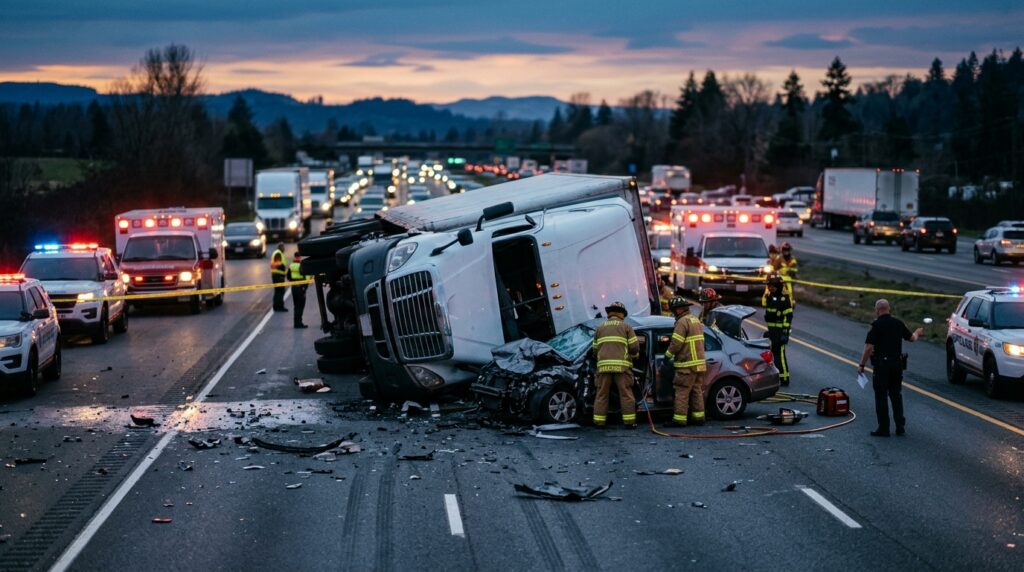
Not sure what your next step is?
Talk it through with our team — the first consultation is free, confidential, and carries no obligation.
What counts as a “serious injury” in a truck accident
A serious injury here means a catastrophic, permanent injury — one that causes lasting impairment or death, not one that heals in weeks.
We focus on injuries like these:
- Spinal cord injuries and paralysis (paraplegia and quadriplegia)
- Traumatic brain injury (TBI)
- Amputation and limb loss
- Severe burns
- Catastrophic back and neck injuries
The difference is permanence. A soft-tissue strain or an uncomplicated fracture usually resolves. A spinal cord injury often does not — the effects depend on the location and severity of the injury, and damage can be complete or incomplete, according to the Mayo Clinic. Doctors grade these injuries with the ASIA Impairment Scale (AIS), the international standard that classifies an injury from A (complete) to E, based on remaining motor and sensory function.
That grade isn’t just clinical shorthand — it drives cost for the rest of a person’s life. The National Spinal Cord Injury Statistical Center (NSCISC) at UAB and the Christopher & Dana Reeve Foundation both track the lifelong scale of paralysis in the U.S. This is why a permanent injury and a routine claim are not the same conversation.
The most catastrophic outcome is death. When a loved one dies in a truck crash, the family may bring a wrongful-death claim. We handle those cases with dignity — centered on the family and what they can do next. See our wrongful-death claims resource.
Why there is no reliable “average” settlement for a permanent injury
Here’s the premise those “average settlement” pages get wrong: an average is a single number that blends unlike cases together. For catastrophic injury, the cases aren’t alike, so the average describes no real person.
Consider two “truck injury” cases. One person will spend a lifetime using a wheelchair, needs a modified home and van, and can never return to their trade. Another has a bad scare and a hospital stay but recovers. Average those, and you get a figure that fits neither — and quietly minimizes the first.
A real recovery is assembled from that one person’s documented medical needs, lost earning power, and the daily impact on their life. It is an accounting, not a lookup.
So treat any quoted number as a red flag. No lawyer can truthfully promise or predict a specific figure for your case — and Florida Bar rules prohibit lawyers from promising results or advertising unverifiable outcomes. A competitor page confidently listing “$150,000 average” is doing something the rules forbid, and something no one can honestly know. The useful thing to understand instead is the categories of compensation.
What compensation can cover after a permanent injury
Compensation in a catastrophic truck claim generally falls into two groups: economic damages (money losses) and non-economic damages (human losses).
Economic damages cover countable costs:
- Emergency care, hospital stays, and surgeries
- Ongoing rehabilitation and therapy
- Assistive equipment — wheelchairs, prosthetics, communication devices
- Home and vehicle modifications for accessibility
- In-home or attendant care
- Lost income and lost earning capacity when the injury ends a career
Life-care planning is the backbone of a serious case. A certified life-care planner and treating physicians project the full arc of future medical and personal-care costs — often across decades for a young person with paralysis. This is exactly why rushing a settlement is dangerous: you need the projection before you agree to anything, because you can’t reopen it later.
Non-economic damages cover harm with no receipt:
- Physical pain and suffering
- Disfigurement and scarring
- Loss of independence
- Loss of enjoyment of life
For families who lost a loved one, wrongful-death damages may include funeral and burial costs, lost financial support, and loss of companionship.
Read more on specific injuries: spinal cord injuries, traumatic brain injuries, amputation injuries, and severe burn injuries.
What makes truck accident cases different from car crash cases
Truck cases are more complex than car crashes because more parties may be responsible and more evidence is in play.
More than one party may share the blame. Depending on the facts, that can include:
- The truck driver
- The trucking company
- The company that loaded the cargo
- A maintenance contractor
- The maker of a defective truck part
Commercial trucks also carry far larger insurance than passenger cars. Under federal rules (49 C.F.R. §387.9), many interstate freight carriers must carry at least $750,000 in liability coverage — and $1 million or $5 million for certain hazardous cargo. That matters when lifelong costs are on the line.
Carriers must follow safety rules set by the Federal Motor Carrier Safety Administration (FMCSA) covering driver hours, maintenance, and record-keeping. Key evidence includes electronic logging device (ELD) data, the engine control module (“black box”), and maintenance logs. Federal recordkeeping rules only require carriers to retain some of this for limited periods — driver duty logs, for example, generally for six months under 49 C.F.R. §395.8. Acting quickly, often through a preservation (spoliation) letter, helps keep it from disappearing. More on our truck accidents page.
Have questions about what happened?
Ask our team directly. The first conversation is free, confidential, and there is no obligation to continue.
Factors that can raise or lower what you recover
Several factors move a truck claim, from injury severity to the strength of the evidence and shared fault:
- Severity and permanence. The more the injury limits daily life and work, the greater the long-term losses.
- Clarity of fault. Strong evidence of who caused the crash strengthens a claim.
- Available insurance and company resources. Larger policies and better-capitalized defendants affect what’s realistically collectible.
- Trucking-company negligence. Hours-of-service violations, poor maintenance, or negligent hiring can become the center of a case.
- Shared fault. Your own role in the crash can reduce your recovery.
Florida uses modified comparative negligence. Under Fla. Stat. §768.81, your recovery is reduced by your percentage of fault — and if you’re found more than 50% at fault, you generally recover nothing. So shared fault reduces a recovery, but doesn’t always erase it.
Timing is a hard limit. For most negligence claims that accrue on or after March 24, 2023, Florida now requires filing within two years, under Fla. Stat. §95.11(5)(a) — cut from the four-year window that applied before the 2023 tort reform. Miss it, and you may lose the right to recover at all.
Common questions about truck accident settlements
Does medical treatment affect my claim?
Yes — but not the way some sites suggest. Getting the care you actually need and documenting it fully shows the true extent of your injury. It is not about running up procedures to inflate a payout. Honest, complete records reflect real harm.
How much of a settlement do I actually keep?
Not the full gross amount. Common deductions include attorney fees, case costs (expert and filing fees), and medical liens or insurance reimbursement. A medical lien is a provider’s or insurer’s claim to be repaid from your recovery. Part of a lawyer’s job is negotiating those liens down so more stays with you.
Can I be compensated for PTSD after a serious crash?
Yes. Psychological harm like PTSD can be part of your non-economic damages when supported by medical evidence.
Do I pay taxes on a truck accident settlement?
Generally, compensation for a physical injury is often not taxed, but the rules are nuanced and some portions may be treated differently. Confirm your situation with a tax professional.
Do these cases go to court, and how long do they take?
Many claims settle without a trial, but catastrophic cases often take longer — because the full cost of the injury has to be understood first.
The pivot point is maximum medical improvement (MMI): the stage where your condition has stabilized and doctors can describe your long-term outlook. Settle before MMI and you may accept far less than a lifetime of care actually costs — and once you sign, you can’t go back.
The timeline is shaped by investigating the crash, preserving trucking evidence, building a life-care plan, negotiating with insurers, and filing suit if needed. No honest lawyer can promise a duration. But a serious injury claim rewards patience and thorough preparation.
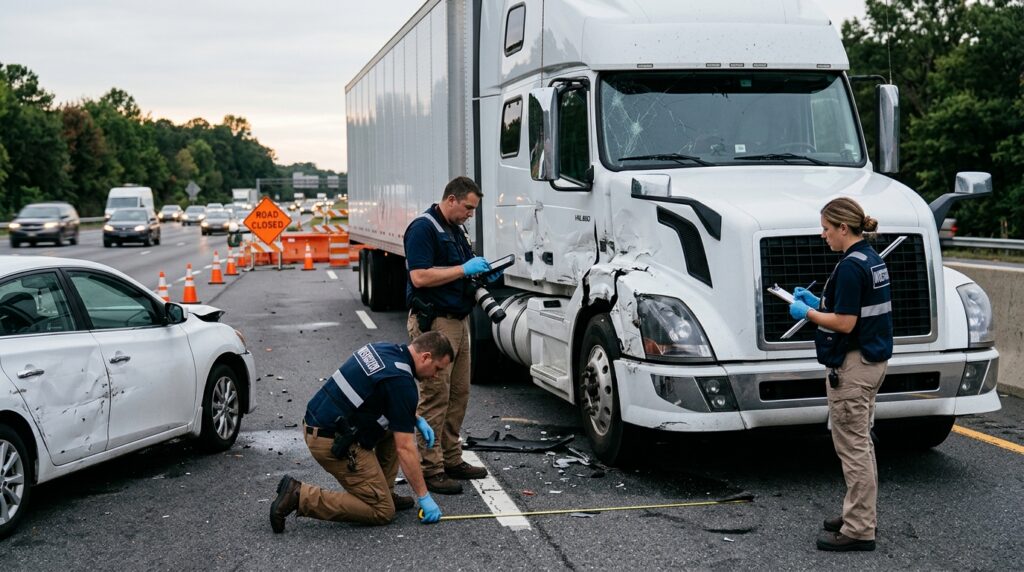
How a lawyer helps build a catastrophic truck accident claim
The job in a serious truck case is to prove fault, document your lifelong needs, and pursue every responsible party — so you can focus on healing. That work includes:
- Investigating the crash and preserving key trucking evidence before it’s gone
- Identifying every party who may share responsibility
- Working with medical and life-care experts to project lifetime costs
- Dealing with insurers so you don’t face them alone
Our attorneys are licensed and admitted to The Florida Bar. We handle catastrophic injury cases in Florida and nationwide, and we publish resources in English and Spanish for the families across Miami, Orlando, Tampa, and Jacksonville who need them.
If you or a loved one suffered a permanent injury in a truck crash, you deserve clear answers. See how these claims fit together on our catastrophic injury claims pillar page, then reach out when you’re ready.
Request a free case evaluation. There’s no cost to talk, and we’ll listen with the care your situation deserves.
This article is general information, not legal advice. For guidance about your specific case, speak with a licensed attorney.
Want to know where you stand?
Tell us what happened and our team will walk you through the options available to you, at no cost.
What Shapes a Serious Truck Accident Settlement
The Full Extent of Your Injuries
Catastrophic injuries like paralysis, TBI, or limb loss often require lifelong care. Complete, honest medical records show the true, lasting harm you've suffered.
Lifetime and Future Costs
Beyond current bills, a serious injury can affect future medical needs, lost earning ability, home modifications, and daily support for years to come.
Who Is Responsible
Truck cases can involve the driver, the trucking company, and others. Identifying every responsible party affects the resources available to a claim.
Insurance and Coverage Limits
Commercial trucks often carry larger policies than passenger vehicles, but coverage details and multiple insurers can make these claims complex.
A Note on Medical Treatment
Getting the care you genuinely need — and documenting it fully — reflects the real severity of your injury. It is never about inflating a claim with unnecessary procedures. Honest, complete records tell the truth about what happened to you.
Common Questions About Settlements
Does medical treatment affect my claim?
Yes — but not the way some sites suggest. Getting the care you actually need and documenting it fully shows the true extent of your injury. Honest, complete records reflect real harm, not a padded payout.
How much of a settlement do I actually keep?
Not the full gross amount. Legal fees, case costs, and outstanding medical liens are typically resolved from a settlement. A lawyer can walk you through exactly what to expect in your situation before anything is finalized.
What if the crash was fatal?
The loss of a loved one is the most catastrophic outcome of all. Families may be able to bring a wrongful-death claim. We handle these cases with dignity and focus on what you can do next.
How long does the process take?
Serious cases take time because the full scope of a permanent injury must be understood first. Every case is different, and we can give you a realistic picture during your evaluation.