
Florida Slip and Fall Claims
Slip and Fall Settlement Value: What Shapes a Florida Claim
Every fall tells a different story. Here is how the details of your accident, your injuries, and your records can affect what a claim is worth.
By CHG Lawyers · Published November 13, 2026
You fell on a wet floor, an uneven sidewalk, or a poorly kept parking area. Now you want to know what your claim could be worth.
Many connected factors affect the value of a slip and fall settlement. These include who was responsible, how badly you were hurt, and what the fall has cost you.
This page explains each factor in plain language. It does not give a settlement amount. Every claim depends on its own facts and records.
What Determines the Value of a Slip and Fall Claim in Florida?
Six main factors shape most slip and fall settlements:
- Liability: Was the property owner or manager responsible for the hazard?
- Injury severity: How serious are your injuries, and how long will they last?
- Medical care: Do your records show the injuries and the link to the fall?
- Lost income: Did you miss work or lose earning ability?
- Pain and suffering: How has the injury changed your daily life?
- Comparative fault: How much of the fall, if any, is blamed on you?
Each factor affects the others.
Your fall may have happened in a store, an apartment building, a hotel, or a parking lot. The location matters. The owner’s duty depends on how the owner and the injured person were related. For example, a customer, a guest, and a trespasser may be owed different levels of care.
If a fall you didn't choose has left you weighing an insurer's offer, our team is ready to talk through your situation in a free, confidential consultation. Talk it through with our team — the first consultation is free, confidential, and carries no obligation.

Liability: Who Was Responsible and What Did the Owner Know?
Liability asks one main question. Did the property owner or manager fail to keep the place reasonably safe?
In most cases, it also asks whether the owner knew about the hazard. It may also ask whether the owner should have known.
Florida’s Supreme Court has said that Florida’s business duty of care in Valladares requires businesses to keep premises reasonably safe. Businesses must also warn customers about hidden dangers. They must warn about dangers they knew of or should have known about.
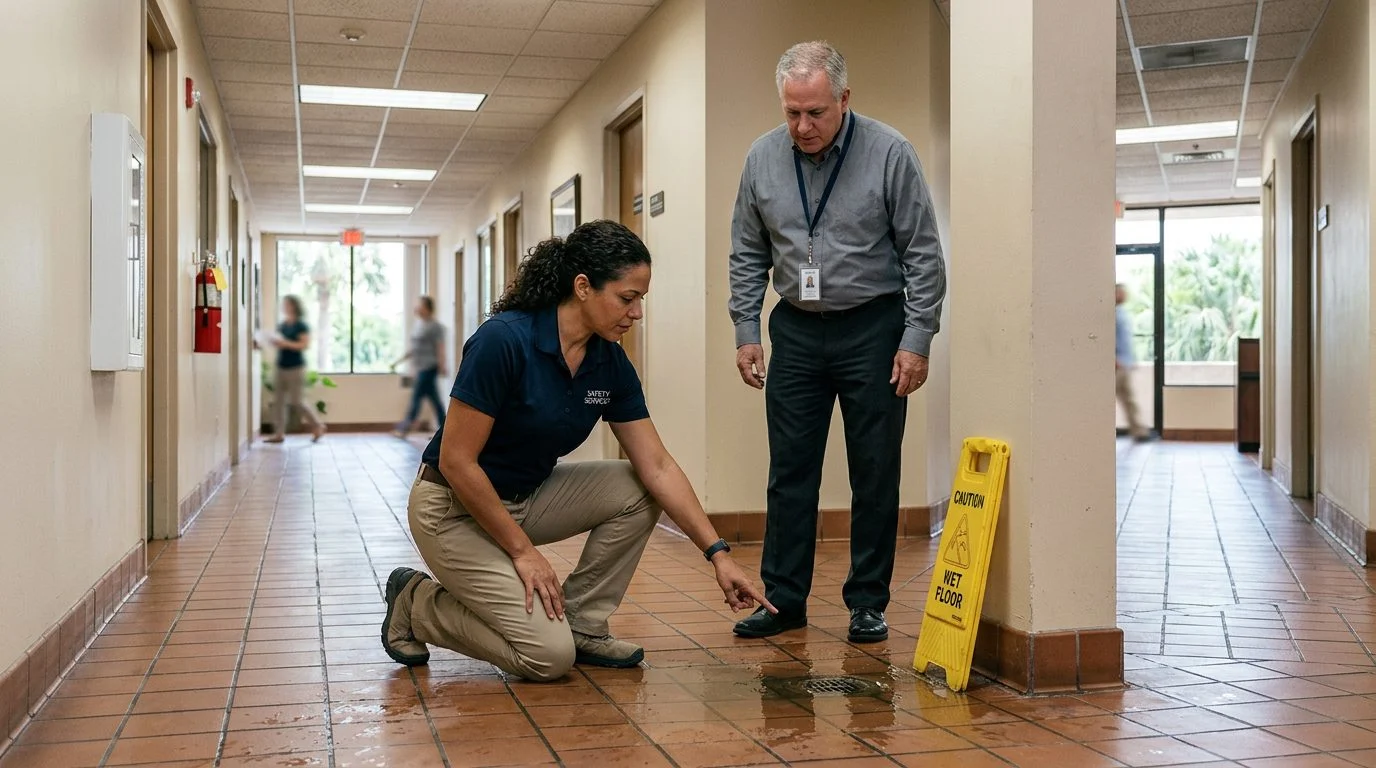
If you slipped on a spilled liquid or another loose substance inside a business, Florida adds a proof step. This step comes from Florida’s transitory substance statute. You generally must show the business had actual or constructive knowledge of the danger. Fla. Stat. § 768.0755 reads: “(1) If a person slips and falls on a transitory foreign substance in a business establishment, the injured person must prove that the business establishment had actual or constructive knowledge of the dangerous condition and should have taken action to remedy it.”
“Constructive knowledge” means the business should have known. You can show this in two ways:
- The condition lasted long enough that ordinary care should have found it.
- The problem happened often enough that it was foreseeable.
Helpful evidence includes:
- Incident reports and store or property logs
- Surveillance video from the area
- Cleaning and maintenance schedules
- Warning signs, or the lack of them
- Lighting conditions at the time
- Witness statements
Slip and fall cases are often hard to win. Owners often dispute what they knew, how long the hazard was there, and whether it caused the fall. Video and records can disappear. Acting early matters. Contact us promptly so we can request and preserve evidence.
Severity of Injuries and Documented Medical Care
The seriousness of your injuries is one of the largest factors in value. Your medical records show the link between the fall and your injuries.
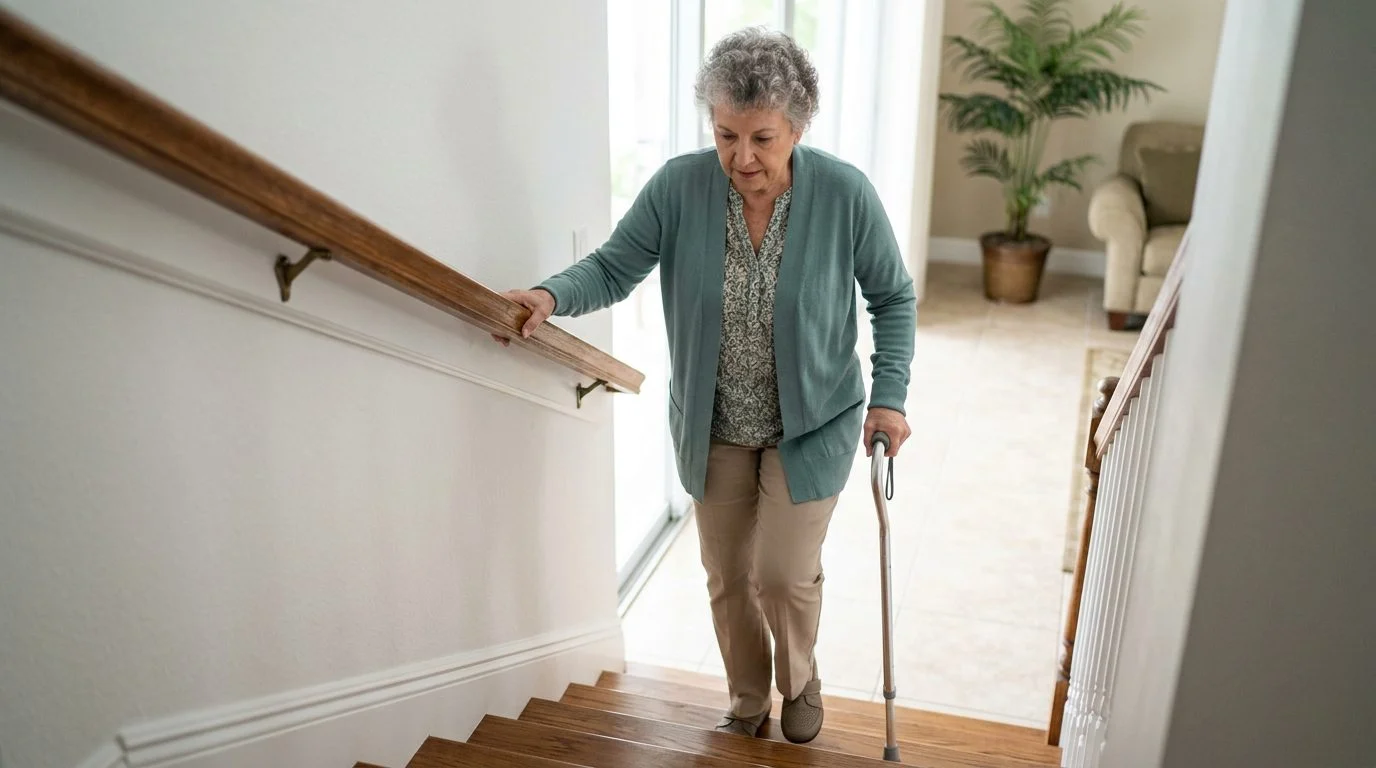
Slip and fall injuries range widely. They can include:
- Sprains and bruises
- Broken bones
- Head injuries
- Back or neck injuries
Longer-lasting injuries usually need more care. They also create larger losses over time.
Prompt evaluation and consistent follow-up matter. Gaps in treatment can make it harder to connect your symptoms to the fall.
Do injections increase a settlement? Injections are one treatment a doctor may recommend. They do not automatically raise a claim’s value. Value depends on the injury, the records, and the facts of your case. Follow your doctors’ care. Tell your lawyer about all treatment, including symptoms that continue.
Medical Bills, Lost Wages, and Pain and Suffering
A settlement generally combines two kinds of losses:
- Economic losses have a bill or paycheck attached to them.
- Non-economic losses include pain and suffering.
Economic losses include:
- Past and future medical bills
- Lost wages and reduced ability to earn
- Related costs of the injury
Proof of these losses includes bills, pay stubs, work schedules, and your doctor’s notes on work restrictions.
Florida limits how medical bills are proven. Under Florida’s medical expense evidence statute, evidence of treatment that has already been paid is limited to the amount actually paid. This applies no matter who made the payment. If treatment was given under a letter of protection, the claimant must disclose that arrangement as a condition precedent to asserting any claim for medical expenses for that treatment.
Non-economic losses include pain and suffering, emotional distress, and loss of enjoyment of life. These are harder to measure than bills. Medical records and personal testimony help show them.
A settlement value is not a simple formula. Each category is weighed against the others, based on the facts.
How Comparative Fault Can Lower a Settlement
Your recovery can drop by your share of fault.
Florida’s comparative fault statute divides fault among the responsible parties. Under Fla. Stat. § 768.81, in a negligence action, fault chargeable to the injured person reduces the economic and noneconomic damages awarded in proportion to that fault and does not bar recovery, subject to subsection (6) of the statute and its other stated exceptions.
Property owners may argue that you were distracted, ignored warning signs, or wore unsuitable footwear. What happened in the moments before the fall is central. That is why your account and the evidence matter.
Deadlines apply. Florida law generally allows two years to file most negligence claims, under Chapter 2023-15, Laws of Florida. Do not wait to find out where you stand.
How Settlement Offers Are Reached and How to Evaluate One
Most slip and fall claims move through several steps:
- Investigation
- Medical documentation
- A demand to the insurer
- Negotiation
A lawsuit may follow if the insurer disputes the claim.
The time a claim takes depends on the facts, the injuries, and whether liability is disputed. This page does not give a fixed timeline.
When you receive an offer, check these points:
- Does it cover all documented medical bills, lost wages, and future care?
- Does the insurer accept responsibility, or dispute it?
- Was the offer made before your doctors understood your condition?
- What does the release say? Under Florida’s release rule, a release signed with one party does not automatically release others who may be liable for the same harm.
An early offer may not account for future treatment. Understand exactly what you would give up before you agree to anything.
Not sure what your next step is?
Talk it through with our team — the first consultation is free, confidential, and carries no obligation.
How CHG Personal Injury Lawyers Helps Injured Clients
CHG Personal Injury Lawyers is a Florida-based personal injury firm. It handles slip and fall claims and other accidents. These range from everyday injuries to catastrophic ones.
Igor Hernandez is the responsible lawyer for this page. Our lawyers are licensed attorneys admitted to The Florida Bar.
Here is what to expect:
- Free first consultation. It is confidential and comes with no obligation to continue.
- Review. We look at the incident, the evidence, and your medical records.
- Preservation and documentation. We help request and keep key evidence. We also build the claim record.
- Negotiation or litigation. We pursue a resolution through negotiation or, when needed, a lawsuit.
CHG charges no attorney’s fees and no case costs unless there is a recovery.
Frequently Asked Questions About Slip and Fall Settlement Value
Why are slip and fall cases hard to win?
Owners often dispute what they knew, how long the hazard existed, and whether it caused the fall. Early evidence helps answer those questions.
What makes a slip and fall claim high value?
Claims often carry more value when injuries are more serious or longer-lasting. Value also tends to be higher when losses are well documented and responsibility is clear. No result is promised.
What are the signs of a good settlement offer?
A fair offer covers documented bills, lost income, and future care. It is also made after your medical picture is clear enough to understand.
Do injections increase a settlement?
Not automatically. Value depends on the injury, your records, and the facts of your case. Follow your doctors’ care.
How long do I have to file?
For actions founded on negligence, Florida law allows two years to bring the action (Fla. Stat. § 95.11(5)(a)). Deadlines apply, so contact us promptly.
Can I still recover if I was partly at fault?
Florida law may still allow recovery. Your award is reduced by your share of fault.
How CHG Personal Injury Lawyers Can Help
Free, Confidential Consultation
Tell us what happened in a private, no-obligation conversation. There is no cost to find out whether we can help.
No Fees Unless There Is a Recovery
The firm charges no attorney's fees and no case costs unless there is a recovery.
Licensed Attorneys
Our attorneys are licensed and admitted to practice law in Florida, and our team handles the paperwork and follow-up so you can focus on recovering.
Serving Florida
CHG Personal Injury Lawyers is a Florida-based firm representing people hurt in falls and other accidents throughout Florida.
Don't Let Key Evidence Slip Away
Photos, witness names, and incident reports are often the first things to disappear. Report the fall to the property owner, keep copies of your records, and follow your doctor's care.
Evidence That Often Shapes a Slip and Fall Claim
The Scene
Photos or video of the hazard, the lighting, the floor surface, and any warning signs taken as soon as possible.
Witnesses
Names and contact details of anyone who saw the fall or the condition that caused it.
Medical Records
Records from every visit, test, and treatment plan, so the full course of your injuries is documented.
Incident Reports
A copy of any report the property owner or store made, along with your own written account of what happened.