

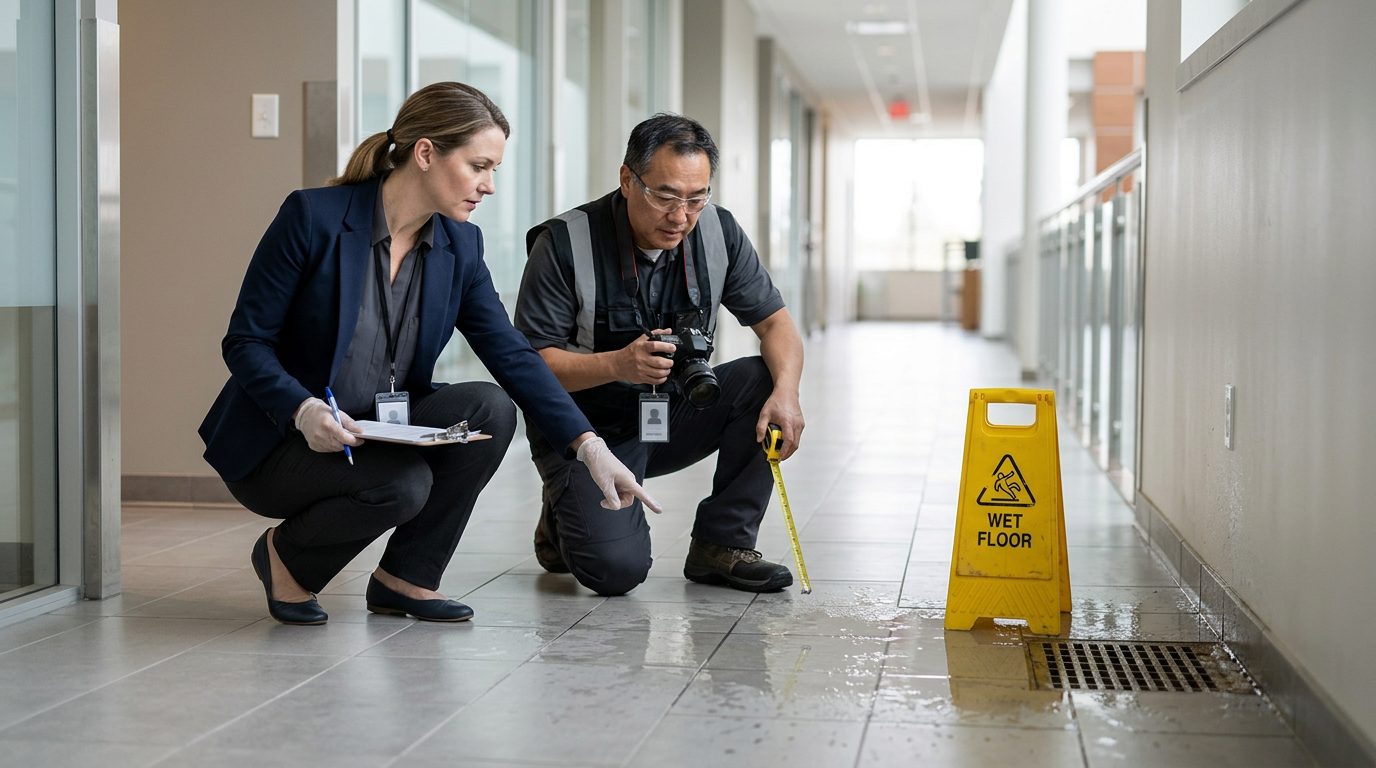
Slip and Fall Claims
How Hard Is It to Win a Slip and Fall Lawsuit?
The outcome depends on evidence, liability, and your state's rules. Here's what you need to know.
By CHG Lawyers · Published September 16, 2026
How Hard Is It to Win a Slip and Fall Lawsuit?
Slip-and-fall cases are not impossible to win. You need solid proof that the property owner’s carelessness caused your injury. The challenge is gathering the right evidence to prove four legal requirements. With strong documentation—photos, witness statements, maintenance records, and medical evidence—many slip-and-fall cases settle or succeed at trial.
Not sure what your next step is?
Talk it through with our team — the first consultation is free, confidential, and carries no obligation.
The Short Answer: It Depends on Your Evidence
Your chances of winning depend entirely on what you can prove. Success is not about whether slip-and-fall claims are “easy” or “hard” in general. It’s about whether you have the evidence to show the property owner was careless and that carelessness caused your fall and injury.
The real challenge is collecting solid proof: – Photos of the exact hazard – Eyewitness testimony – Maintenance logs showing the owner knew (or should have known) about the danger – Security footage showing how long the hazard existed – Clear medical records linking your injuries to the fall
Without this documentation, even a legitimate claim becomes hard to prove. With it, your case becomes much stronger.
What You Must Prove to Win a Slip and Fall Case
Florida law requires you to prove four things to win a slip-and-fall negligence claim:
1. Duty of Care
The property owner owed you a duty to keep the property reasonably safe. This is almost always easy to establish. Property owners have a legal obligation to keep their premises safe for visitors.
2. Breach of Duty
The owner failed to maintain safe conditions or failed to warn you of a known hazard. This means they either created the dangerous condition, knew about it, or should have discovered it during routine inspection. Then they failed to fix it or warn you.
3. Causation
The owner’s failure directly caused your fall and injury. You must show a clear link: the hazard existed, you encountered it, you fell, and you were injured. If you fell for an unrelated reason (such as a pre-existing medical condition), causation is weaker.
4. Damages
You suffered real, measurable harm: medical bills, lost wages, pain and suffering, permanent disability, or other losses. Without documented damages, there is nothing to recover.
All four elements must be proven. Missing even one—for example, failing to show the owner knew about the hazard—significantly weakens or defeats your claim.
The Biggest Hurdle: Proving the Owner Knew About the Hazard
The most critical and often most difficult element is proving the property owner knew (or reasonably should have known) about the hazard long enough to discover and fix it.
Property owners are not liable for every slip or fall on their premises. They are liable only for hazards they were aware of or should have discovered through reasonable inspection. If you slipped on a spill that occurred seconds before your fall, proving the owner “should have known” is far harder than if that spill sat there for hours.
You must establish how long the hazard existed. Did a security camera show the wet floor for 30 minutes before your fall? Were there prior complaints about the same spot? Did maintenance records show the owner failed to inspect regularly? This timeline is crucial. Without it, the owner can argue they had no reasonable opportunity to discover and address the danger.
Witness testimony is invaluable here. If someone saw the hazard before your fall, or saw it happen and can testify to how long it was present, that strengthens your case dramatically. Security footage showing the hazard’s duration is equally powerful.
Florida’s Comparative Negligence Rule: How Your Own Actions Affect Your Case
Florida follows a modified comparative negligence rule. This means you can recover damages even if you were partially at fault. However, your recovery is reduced by your percentage of blame.
Here’s how it works: If you were 30% responsible for the fall and the property owner 70% responsible, you can recover 70% of your total damages. However, if you were found more than 50% at fault, you cannot recover anything under Fla. Stat. §768.81(6).
Property owners routinely argue comparative negligence to reduce their liability. They may claim you were distracted, not watching where you stepped, wearing inappropriate footwear, ignoring warning signs, or rushing. The stronger the evidence of their carelessness, the easier it is to overcome these arguments. But if you were genuinely careless—for example, running in a clearly marked wet area despite visible warning signs—the owner’s comparative negligence defense becomes more persuasive.
Common Defenses That Make Cases Harder to Win
Property owners and their insurance companies use several defenses to fight slip-and-fall claims:
Assumption of Risk
“You knew the floor was wet” or “You should have expected that hazard in this type of location.” This defense argues you voluntarily accepted the risk.
Natural Accumulation Doctrine
In Florida, property owners may not be liable for naturally occurring conditions like rain, ice, or leaves. However, this doctrine has limits. If the owner failed to take reasonable steps to address the natural condition (like salting ice in a parking lot), liability may still apply.
Open and Obvious Hazard
If the danger was plainly visible, the owner may argue you should have seen and avoided it. This defense fails if the hazard was not truly obvious or if you had a legitimate reason not to see it.
Lack of Notice
The owner claims they had no way to know about the hazard and no reasonable opportunity to fix it. This defense is weak if you have evidence showing the hazard was present long enough for routine inspection to catch it.
Your Own Carelessness
Evidence that you were distracted, rushing, or not paying attention can reduce the owner’s liability. If you are found more than 50% at fault, it can bar recovery entirely.
Have questions about what happened?
Ask our team directly. The first conversation is free, confidential, and there is no obligation to continue.
What Strengthens Your Slip and Fall Case
Strong evidence dramatically improves your chances:
- Photos or video of the exact spot where you fell, showing the hazard and any absence of warning signs or barriers
- Eyewitness accounts from people who saw the fall, the hazard before it, or both
- Medical records documenting your injuries immediately after the fall, linking them to the incident
- Maintenance logs or incident reports showing the owner knew about similar hazards or failed to inspect regularly
- Expert testimony from a safety expert about industry standards for property maintenance and inspection
- Prior complaints or accidents at the same location, establishing a pattern of carelessness
- Security footage showing how long the hazard was present before your fall and that no warnings or barriers were in place
What Weakens Your Slip and Fall Case
These factors make your case harder to win:
- No witnesses to the fall or the hazard
- Delay in reporting the incident or seeking medical care, which can suggest the injury was minor
- Your own actions that contributed to the fall, such as running, not looking, or wearing inappropriate shoes
- A temporary hazard that the owner had no reasonable time to discover and fix
- Your failure to heed warning signs or barriers the owner placed
- No clear evidence of how long the hazard existed before your fall
- Pre-existing injuries or conditions that make it difficult to prove the fall caused your current problems
What Are the Odds of Winning a Slip and Fall Case?
There is no universal “win rate” for slip-and-fall cases. Outcomes vary widely based on the specific facts, evidence, and jurisdiction. Cases with strong evidence of the owner’s carelessness and clear causation settle or succeed at trial far more often than cases with weak proof.
Many slip-and-fall claims are resolved through settlement before trial, so “winning” often means reaching a fair agreement rather than obtaining a courtroom verdict. The strength of your case depends on what you can prove, not on how common slip-and-fall lawsuits are or what other cases have achieved.
Is It Worth Suing for a Slip and Fall?
Whether pursuing a claim makes sense depends on the severity of your injuries and the strength of your evidence.
If your injuries are minor—a few bruises, no significant medical bills—the cost and time of a lawsuit may outweigh the recovery. However, if you have substantial medical expenses, ongoing pain, lost income, or permanent injury, a claim is often worth pursuing.
Many slip-and-fall cases are resolved through insurance claims or settlement negotiations without going to trial. This is faster and less expensive than courtroom litigation. An attorney can evaluate your specific situation and advise whether the potential recovery justifies the effort and time involved.
Settlement vs. Trial: What Happens in Most Slip and Fall Cases
The vast majority of slip-and-fall cases settle before trial. Settlement means you and the property owner’s insurance company reach an agreement on compensation without a judge or jury deciding the outcome.
Settlement is usually faster, less expensive, and more predictable than trial. If the other side refuses a fair settlement offer, you retain the option to proceed to trial. A judge or jury will then decide the outcome. Your attorney will advise you on whether a settlement offer is reasonable or whether pursuing trial is in your best interest given the strength of your evidence and the risks of courtroom litigation.
Want to know where you stand?
Tell us what happened and our team will walk you through the options available to you, at no cost.
How Long Does a Slip and Fall Case Take?
Timeline varies significantly based on case complexity:
- Simple cases with clear liability and minor injuries may settle within months.
- Complex cases with serious injuries, disputed facts, or multiple parties can take 1–3 years or longer.
- Statute of limitations: In Florida, you generally have two years from the date of injury to file a lawsuit under Fla. Stat. §95.11(4)(a). You have time to investigate and build your case.
- Early settlement discussions often begin within weeks of filing a claim.
Key Takeaway: Difficulty Is About Evidence, Not Impossibility
Slip-and-fall cases are winnable when you can prove the property owner’s carelessness caused your injury. The “difficulty” lies in gathering solid evidence—photos, witnesses, maintenance records, medical documentation—not in the claim being inherently frivolous or impossible.
Florida’s comparative negligence rule means even partial fault on your part does not automatically bar recovery. Whether your case is strong or weak depends on the specific facts and evidence, not on slip-and-fall claims being universally hard to win.
An attorney with experience handling these cases can assess your evidence, identify weaknesses, explain the obstacles you face under Florida law, and advise on your realistic chances of success.

Frequently Asked Questions
What evidence do I need to win a slip and fall case?
Photos of the hazard, eyewitness testimony, maintenance records, security footage showing how long the hazard existed, and medical documentation of your injuries are the strongest forms of evidence.
Can I win a slip and fall case if I was partially at fault?
Yes, under Florida’s comparative negligence rule, you can recover damages even if you were partially responsible. However, your compensation is reduced by your percentage of fault. If you were more than 50% at fault, you cannot recover.
How long do I have to file a slip and fall lawsuit in Florida?
You generally have two years from the date of injury to file a lawsuit under Florida law.
What is the most important element to prove in a slip and fall case?
Proving that the property owner knew (or reasonably should have known) about the hazard is typically the most difficult and critical element.
Do most slip and fall cases go to trial?
No; the vast majority settle before trial through negotiation with the property owner’s insurance company.
If you’ve been injured in a slip and fall, you likely have questions about whether you have a valid claim. That’s exactly the situation our team helps people navigate regularly. Reach out for a free case evaluation to understand your options and what the evidence in your case might mean for your claim.
What Makes or Breaks a Slip and Fall Claim
Proof That the Property Owner Knew (or Should Have Known)
You must show the hazard existed long enough that a reasonable owner would have discovered it, or that the owner was already aware of it. Security footage, maintenance records, and witness statements help prove this.
Clear Evidence of the Hazard
Photos or video of the exact condition that caused your fall—a wet floor, a broken step, poor lighting, or debris—are crucial. The sooner you document it, the stronger your case.
Medical Records Linking Your Injury to the Fall
Hospital or doctor's records showing you were treated for injuries sustained in the fall establish the connection between the hazard and your harm.
Eyewitness Accounts
People who saw you fall or who can testify about the condition of the property strengthen your claim. Get their names and contact information at the scene if possible.
Your Own Actions Matter Too
Florida law allows a claim even if you were partly at fault—for example, if you weren't paying attention but the hazard was unreasonably dangerous or hidden. However, if you're found more than 50% responsible, you cannot recover. The property owner's duty to maintain safe conditions doesn't disappear just because you should have been more careful.
Why These Cases Can Be Difficult
Property owners have insurance and legal teams
They fight hard to avoid liability. Their insurers employ adjusters trained to minimize claims and find reasons to deny responsibility.
The burden of proof is on you
You must prove the owner knew or should have known about the hazard. A one-time spill that just happened may not meet that standard.
Comparative negligence can reduce your recovery
If the owner argues you were careless—not watching where you stepped, wearing unsuitable shoes, ignoring warning signs—the court may reduce what you're owed.
Delays weaken evidence
The longer you wait to report the fall, document the scene, or file a claim, the harder it becomes to prove the hazard existed and caused your injury.
Steps That Improve Your Chances
Report the Incident Immediately
Tell the property manager, store manager, or owner right away. Ask them to document the report in writing. This creates an official record.
Gather Evidence at the Scene
Take photos and video of the hazard, the surrounding area, lighting, and any warning signs (or lack thereof). Get the names and phone numbers of anyone who witnessed the fall.
Seek Medical Attention Promptly
Even if your injuries seem minor, see a doctor. Medical records create a documented link between the fall and your harm, which is essential to your claim.
Preserve Records and Communications
Keep all emails, text messages, incident reports, medical bills, and photographs. Do not post about the incident on social media, as it may be used against you.
Don't Delay—Time Matters
Florida law sets strict time limits for filing a personal injury claim. The sooner you act, the sooner evidence can be preserved and your claim can be evaluated. Waiting too long can cost you the right to pursue compensation.
Why You Need a Lawyer
We handle negotiations with insurers
Property owners and their insurance companies are skilled at minimizing claims. We know their tactics and fight to ensure you're treated fairly.
We gather and organize evidence
We obtain security footage, maintenance records, incident reports, and expert testimony to build a strong case on your behalf.
We understand Florida's slip and fall rules
Our experience with these cases means we know what evidence matters, which arguments work, and how to value your claim.
We communicate so you don't have to
We handle all contact with the property owner, their lawyer, and insurance adjusters, allowing you to focus on recovery.