


Catastrophic Spinal Injuries
Can You Still Walk With Cauda Equina Syndrome?
Cauda equina syndrome is a medical emergency. Fast treatment can preserve your ability to walk — while delays can lead to permanent paralysis. Here's what you need to know, in plain language.
Why Families Turn to CHG
24-48 hrs
The window when surgery most often protects nerve function
Nationwide
Catastrophic injury cases handled across the U.S.
Bilingual
Guidance in English and Spanish
Licensed
Florida Bar-admitted attorneys
By CHG Lawyers · Published July 27, 2026
Can You Still Walk With Cauda Equina Syndrome?
Yes — many people with cauda equina syndrome keep the ability to walk. Many who lose some strength get it back. This is most likely when surgeons take pressure off the nerves within the first 24 to 48 hours. That timing is the single biggest thing that shapes the outcome. Some people walk with little trouble afterward. Others need a cane, brace, or wheelchair. A smaller number lose the ability to walk for good. The honest truth is that recovery is different for each person. But faster surgery gives better odds.
Maybe you or someone you love is searching this question at 2 a.m., frightened. We wrote this for you. We answer the walking question first, in plain language. Then we explain what cauda equina syndrome is, how it affects the legs, and what shapes recovery. Near the end, we cover something most medical pages skip. That is what it can mean when a delay in care could have been prevented and caused permanent harm.
This article is educational. It is not medical advice. If you have the warning signs below, go to an emergency room right now. Do not wait for a regular appointment.
Not sure what your next step is?
Talk it through with our team — the first consultation is free, confidential, and carries no obligation.
The short answer: can you still walk with cauda equina?
Yes, many people do. A diagnosis is not automatically a life sentence of paralysis. Cauda equina syndrome (CES) covers a range of cases. Some people have mild leg weakness that improves. Others face lasting paralysis and loss of bladder or bowel control.
The deciding factor is time. CES is a surgical emergency. Surgeons “decompress” the nerves. This means they remove whatever is pressing on them. When they do this early, the chances of keeping or regaining walking are far better. Waiting raises the risk of permanent damage. So “can you still walk with cauda equina?” usually comes down to one thing: how quickly the condition was found and treated.
What cauda equina syndrome actually is
At the base of your spine, the spinal cord ends. It splits into a bundle of nerve roots. These fan out like the hairs of a horse’s tail. That’s exactly what the Latin cauda equina means: “horse’s tail.” Cauda equina syndrome happens when something presses on that bundle.
These nerves control your legs, feet, bladder, bowel, and sexual function. That’s why pressure here can cause so many problems at once. It can change how you walk, what you feel, and whether you control your bladder and bowel.
According to the Mayo Clinic, the most common cause is a large herniated disc in the lower back. But the pressure can also come from a spinal injury, a tumor, an infection, or a narrowing of the spinal canal. These nerves are so important that doctors treat CES as an emergency. It is not a wait-and-see problem. This is one of the few spinal cord and nerve injury situations where hours genuinely change the outcome.
How cauda equina affects walking and the legs
Cauda equina syndrome often causes leg weakness, numbness, and trouble coordinating movement. Some people say their legs feel heavy or unsteady. Others can’t lift a foot properly.
Does cauda equina affect the feet? Yes, it can. A common sign is “foot drop.” This is when you can’t lift the front of your foot. Your toes catch on the ground, and you trip. Numbness in the feet and poor balance are also common.
Why do some people walk fine while others can’t? It depends on how hard the nerves are squeezed, and for how long. Partial, short-lived pressure may cause weakness that recovers. Severe or long-lasting pressure can cause damage that doesn’t fully heal. That is the difference between temporary weakness and lasting harm. It’s a big reason doctors push to operate quickly.
Would you know if you had cauda equina? Warning signs to take seriously
Usually yes. The warning signs of CES are hard to ignore and tend to arrive together. The danger is when they get dismissed as ordinary back pain.
Watch for these red flags:
- Saddle numbness — loss of feeling in the area that would touch a saddle: inner thighs, buttocks, and genitals.
- New bladder or bowel changes — trouble starting to urinate, leaking, or not feeling when you need to go.
- Worsening weakness or numbness in both legs.
- Severe low back pain together with any of the signs above.
If you have these symptoms, this is an emergency. Go to an emergency room right away. Do not book a routine visit and wait. The American Association of Neurological Surgeons says plainly that patients with signs of CES need emergency surgery. This helps prevent permanent damage, including paralysis and loss of bladder and bowel control.
How quickly does cauda equina progress, and what makes it worse?
Cauda equina syndrome can get worse over hours to days. That’s why it’s treated as an emergency. Symptoms may start small, then get worse fast. Once bladder or bowel control begins to fail, the risk of permanent damage climbs.
What makes cauda equina worse? The core problem is ongoing pressure on the nerves. Anything that keeps that pressure in place can deepen the damage. This includes a delay in diagnosis or surgery. That’s why surgeons aim to relieve the pressure quickly.
This is the “timing window” you may hear doctors mention. The longer the nerves stay pressed, the harder it is for them to recover. Left untreated, CES carries a rising risk of permanent paralysis and loss of bladder and bowel function. That’s the honest reality behind the urgency. It’s not a scare tactic.
Have questions about what happened?
Ask our team directly. The first conversation is free, confidential, and there is no obligation to continue.
Walking again after cauda equina: what affects recovery
Whether you walk again after cauda equina syndrome depends on several factors. Recovery ranges from near-full to limited. No two cases are the same.
The main factors include:
- Speed of surgery. Faster treatment usually means better odds.
- How complete the pressure was. A partial nerve injury tends to recover better than a complete one.
- Your overall health and any other injuries.
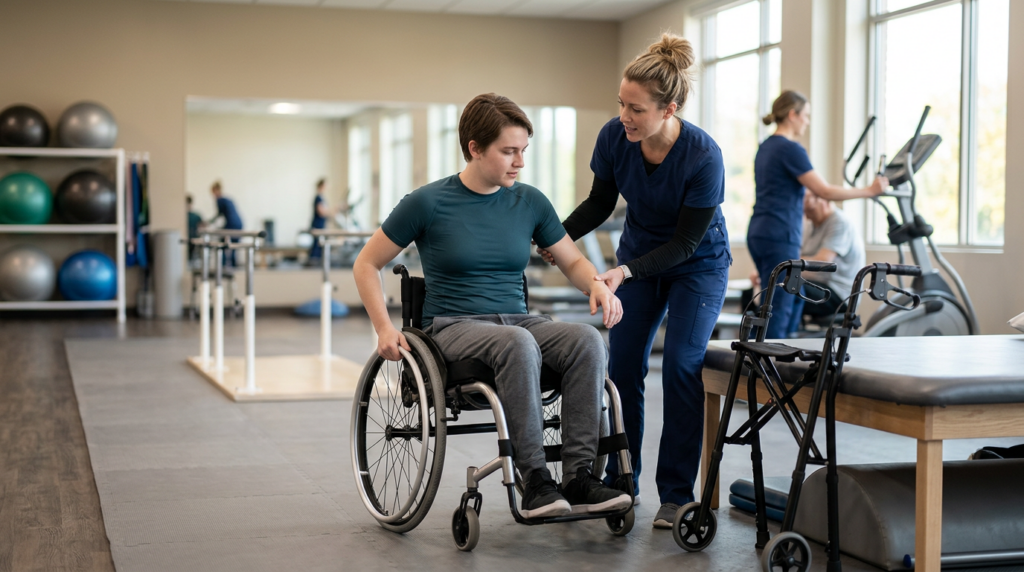
- Rehabilitation. Physical therapy rebuilds strength, balance, and mobility over time.
Recovery takes patience. Some people walk with braces, canes, or walkers while the nerves heal. Others regain steadier walking over weeks or months. Bladder and bowel control often recover on a different timeline than walking. Sometimes sooner, sometimes later, sometimes not fully.
Doctors describe how complete a spinal or nerve injury is with the ASIA Impairment Scale. This is a grading system from the American Spinal Injury Association. It ranks injuries from A (complete) to E (normal). This grade often helps predict recovery. It’s worth asking your treating team where you fall on it.
Our attorneys see catastrophic spinal-injury cases. Families often ask how much function might return. That’s a medical question for the treating doctors. We can’t promise any result, and neither can anyone else honestly. What we can say is this: early, correct care gives the best chance.
Is cauda equina a permanent disability?
Cauda equina syndrome can cause permanent disability. But it doesn’t always. Some people recover well. Others live with lasting changes to mobility, bladder, bowel, or sexual function.
For those with lasting effects, adapting is very possible. Mobility aids, intermittent catheterization (using a tube to empty the bladder), bowel programs, and ongoing therapy help people live full lives. The Christopher & Dana Reeve Foundation offers free resources for people living with paralysis in the U.S. This includes a nurse-staffed information line. A diagnosis is not a fixed sentence. But permanent effects are possible, especially after a delay in care.
When a delayed diagnosis may cause permanent harm
Cauda equina syndrome is very time-sensitive. A delay in finding or treating it can turn a fixable emergency into permanent paralysis. That’s a hard truth. It’s why timing gets so much attention.
Preventable delays happen in familiar ways:
- Sometimes red-flag symptoms get brushed off as simple back pain.
- Sometimes an urgent MRI or the surgery itself is put off too long.
- Sometimes scan results sit unread and don’t get acted on.
Families often wonder: would earlier care have changed the outcome? That’s a fair and reasonable question. We’re not assigning blame here or drawing legal conclusions. Every case turns on its own facts and its own medical records. But when a permanent, life-altering injury may have followed an avoidable delay, it’s reasonable to ask what happened and why.
How CHG Personal Injury Lawyers can help
Maybe a catastrophic spinal injury or permanent paralysis followed a serious accident. Or maybe it followed a delay in medical care that could have been prevented. If so, you may have legal options worth exploring. These are complex cases, and the details matter.
CHG Personal Injury Lawyers are licensed by The Florida Bar. We handle catastrophic-injury cases nationwide. Two Florida rules often shape these claims.
First, under Fla. Stat. §95.11, there is a limited time to file a negligence claim. For many negligence claims, the current window is two years. So acting early protects your rights.
Second, Florida uses a modified comparative negligence rule under Fla. Stat. §768.81. A person found more than 50% at fault generally recovers nothing.
We can’t promise any outcome, and we won’t. What we offer is a free, no-pressure case evaluation and clear, plain-language answers. Contact us for a free case evaluation whenever you’re ready.
Frequently asked questions
Can you still walk with cauda equina?
Many people can, especially when surgery relieves the nerve pressure quickly — often within 24 to 48 hours. But outcomes vary, and delayed treatment raises the risk of permanent paralysis.
Would I know if I had cauda equina?
Usually yes. Signs like saddle numbness, new bladder or bowel changes, and worsening weakness in both legs tend to appear together. These are emergency symptoms that need immediate care.
Does cauda equina affect the feet?
Yes. It can cause numbness, poor balance, and “foot drop,” where you can’t lift the front of your foot.
How quickly does cauda equina progress?
It can get worse over hours to days, which is why it’s a medical emergency. The sooner the nerves are decompressed, the better the odds of recovery.
Is cauda equina a permanent disability?
It can be, but not always. Some people recover well. Others live with lasting mobility, bladder, or bowel changes. A delay in care makes permanent effects more likely.

Want to know where you stand?
Tell us what happened and our team will walk you through the options available to you, at no cost.
Related reading
Warning: This Is an Emergency
Saddle numbness, sudden loss of bladder or bowel control, or rapidly worsening leg weakness are red-flag symptoms. Go to an emergency room immediately — every hour counts, and prompt surgery can be the difference between recovery and permanent paralysis.
What Affects Whether You Walk Again
How Fast Pressure Is Relieved
Many people regain the ability to walk when surgery relieves the nerve compression quickly — often within 24 to 48 hours of the first red-flag symptoms.
How the Symptoms Started
Sudden, complete symptoms tend to carry a higher risk of lasting damage than symptoms that come on gradually. Every case is different.
Whether Warning Signs Were Missed
Delayed diagnosis is a leading reason outcomes worsen. When a provider dismisses clear red flags, permanent harm can follow that a timely response might have prevented.
The Extent of Nerve Damage
Some function may return over months of rehabilitation, while other losses — including bladder, bowel, or mobility changes — can be permanent and life-altering.
When a Delay May Be Someone Else's Fault
Missed Red Flags
If you reported saddle numbness or new bladder or bowel changes and weren't sent for urgent imaging or surgery, that delay may have caused permanent harm.
Lost Time
Cauda equina outcomes hinge on speed. Hours of preventable delay in diagnosis or transfer can turn a recoverable injury into lasting paralysis.
The Records Tell the Story
Timelines, imaging orders, and provider notes often show whether the standard of care was met. We help families understand what happened.
A Life-Altering Loss
When paralysis or permanent impairment results from a preventable delay, families face lifelong costs. You may have a legal claim worth exploring.