

Catastrophic Spinal Injuries
Can You Walk Again After Cauda Equina Syndrome?
Many people do regain the ability to walk after cauda equina syndrome, especially when the nerve pressure is relieved quickly. Here is what recovery can look like — and what your family can do next.
Serious injuries deserve serious representation
Nationwide
Catastrophic injury cases across the U.S.
Florida
Florida Bar-admitted attorneys
EN/ES
Bilingual English & Spanish support
Free
No-cost case evaluation
By CHG Lawyers · Published August 04, 2026
Can You Walk Again After Cauda Equina Syndrome? What Recovery Really Looks Like
Yes — many people do walk again after cauda equina syndrome. But results vary a lot, and no one can honestly promise a specific outcome. The biggest factor is how fast doctors take the pressure off the nerve roots with surgery. The sooner that happens, the better your odds.
This page explains what recovery really looks like, in plain language. It is educational only. It is not medical or legal advice. If you have new symptoms, call your doctor or go to the emergency room right away.
Not sure what your next step is?
Talk it through with our team — the first consultation is free, confidential, and carries no obligation.
The short answer: it depends on how fast the pressure was relieved
Whether you walk again depends on timing. Cauda equina syndrome (CES) is a surgical emergency. When surgeons decompress the nerve roots quickly — that means taking the pressure off — many people regain strength and the ability to walk.
The American Association of Neurological Surgeons warns that untreated CES can cause permanent paralysis. It can also cause loss of bladder and bowel control (AANS). Time really is the difference between recovery and lasting harm.
Still, every person is different. Some walk normally again. Others walk with a brace or a cane. Some keep permanent weakness. No honest doctor or lawyer can guarantee one result.
What cauda equina syndrome does to the nerves that control walking
Cauda equina syndrome presses on the bundle of nerve roots at the bottom of the spinal cord. These roots are called “cauda equina” — Latin for “horse’s tail” — because that is what they look like.
These nerves carry signals between the brain and the lower body. They control the legs, bladder, bowel, and sexual function. The spinal cord and its nerves send messages in both directions (Mayo Clinic).
When something presses on these nerves, the signals get blocked. That is why CES can cause leg weakness, numbness, trouble walking, and loss of bladder or bowel control. The longer the pressure lasts, the more the nerve roots can be damaged.
Want to know the early warning signs? See our guide on the first signs of cauda equina.
How long does it take for cauda equina nerves to heal?
Nerve healing after cauda equina is slow. It can continue for months or even years. Nerve tissue heals much more slowly than skin or muscle. So patience is part of the process.
Surgeons often talk about a narrow decompression window. It is often said to be within about 24 to 48 hours of severe symptoms. But the exact timing is still debated in medical studies. Faster decompression usually gives the nerves a better chance to recover.
Recovery is rarely a straight line. Some function may return early, like leg strength. Other functions, like bladder control, may come back slowly or only partly. A peer-reviewed study of traumatic cauda equina injury found that patients had a reasonable chance of walking again and of regaining bowel and bladder function (Attabib et al., 2021).
That is genuinely hopeful. It also shows that outcomes differ from one person to the next.
Can you walk normally again with cauda equina syndrome?
Some people walk normally again. Others walk with help or keep lasting problems. Where you land depends on how much the nerves were damaged and how quickly you were treated.
Here are the common outcomes:
- Full or near-full recovery. Strength and balance return. You walk without aids.
- Walking with support. You may use a brace, cane, or walker. Foot drop — trouble lifting the front of the foot — is common.
- Permanent difficulty. Some people keep weakness, numbness, or balance problems that limit how far they can walk.
One hard truth: walking and other functions do not always recover together. You might walk again but still struggle with bladder, bowel, or sexual function. Doctors use tools like the ASIA Impairment Scale to rate how severe the injury is and to set realistic expectations (American Spinal Injury Association).
For a step-by-step picture, read about the stages of cauda equina recovery.
What helps recovery and rehabilitation after treatment
Rehabilitation is the heart of getting moving again after cauda equina surgery. The goal is to rebuild strength, retrain your walk, and adapt daily life.
Recovery often includes:
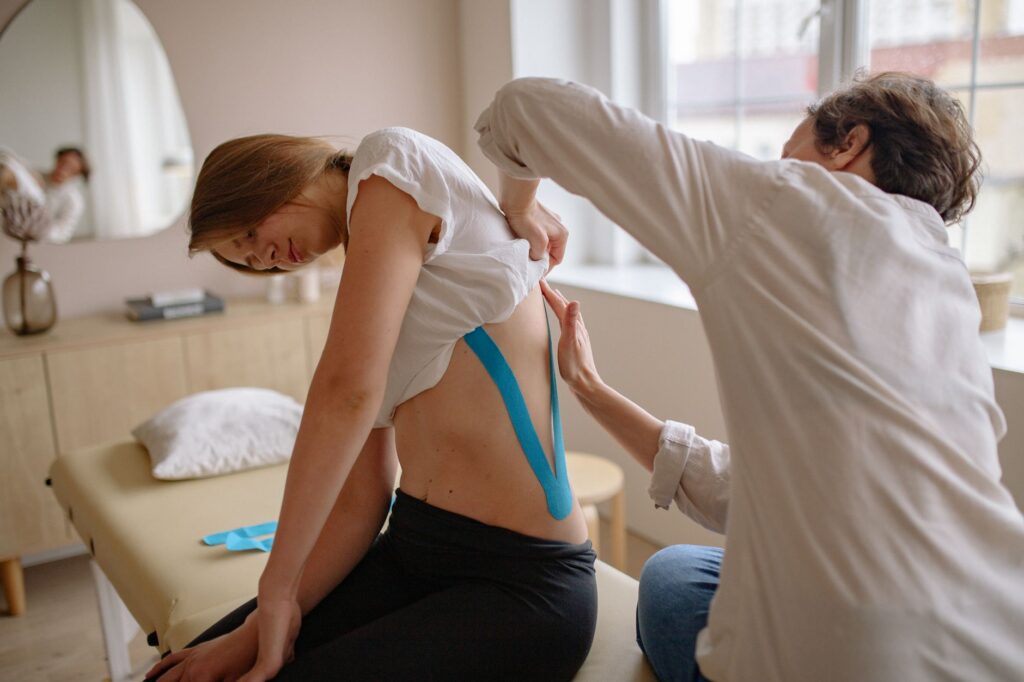
- Physical therapy and gait training. Therapists help you rebuild leg strength and relearn how to walk safely.
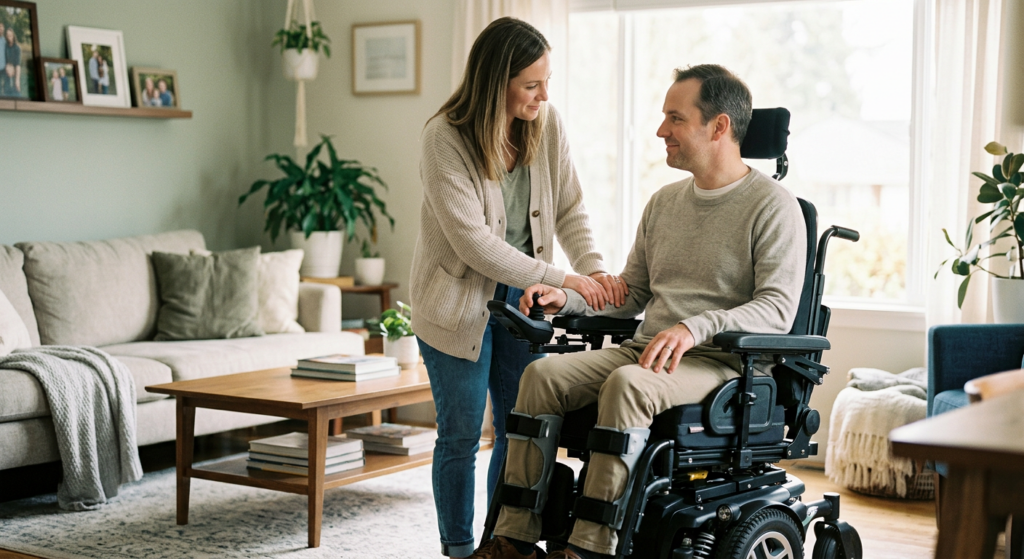
- Assistive devices. Braces, canes, or walkers keep you moving while nerves heal.
- Occupational therapy. This helps you adjust tasks at home and work during recovery.
- Ongoing medical follow-up. Your care team checks your nerve, bladder, and bowel function over time.
Progress often comes in small steps. Many people find that swimming, gentle walking, and guided exercise build endurance safely. For a plain-language overview, see how doctors treat cauda equina syndrome.
Have questions about what happened?
Ask our team directly. The first conversation is free, confidential, and there is no obligation to continue.
What aggravates cauda equina, and can it happen twice?
Cauda equina can get worse if pressure on the nerve roots comes back. It can also get worse if the original cause goes untreated. New or growing pressure — from a disc, tumor, swelling, or injury — can set back recovery.
Can it happen twice? Yes, it can come back. That is why follow-up care matters, even after you feel better.
Get emergency care right away if you notice:
- New or worsening leg weakness or numbness
- Numbness in the groin or inner thighs (the “saddle” area)
- Loss of bladder or bowel control
Do not wait to “see if it passes.” With cauda equina, hours matter. Fast action protects the nerve function you have left.
When a delayed or missed diagnosis changes the outcome
Because outcomes depend on speed, a delayed diagnosis can turn a treatable problem into permanent paralysis. This is where a medical emergency can become a life-altering injury.
Cauda equina is sometimes missed in emergency rooms and urgent-care clinics. A patient reports back pain, leg weakness, or new bladder trouble — the classic warning signs. If providers do not order an urgent MRI, or do not get the patient to surgery in time, the decompression window can close.
When care falls below the accepted medical standard and causes lasting harm, that may be medical negligence. In the catastrophic-injury cases our attorneys review, timing is often the whole story. Delayed imaging, a missed saddle-numbness complaint, or a slow specialist referral can be the difference between walking and permanent impairment.
Families should not have to sort out the legal side alone while managing rehab and recovery. Every case is different, and no outcome is guaranteed.
Talk to a catastrophic injury attorney about a free case evaluation
Did a delay in diagnosing or treating cauda equina leave you or a loved one with permanent impairment? If so, you may have a claim — and you do not have to figure this out by yourself.
Here are a few Florida facts you can check for yourself:
- Deadline to file (statute of limitations). Florida generally gives you two years to file most negligence claims that arose on or after March 24, 2023 (Fla. Stat. §95.11). Medical-negligence claims also have their own presuit notice and investigation rules under Fla. Stat. §766.106. Deadlines are strict, so do not wait.
- Shared fault (modified comparative negligence). Under Florida law, a person found more than 50% at fault for their own harm generally recovers nothing. If you are 50% or less at fault, your recovery is reduced by your share (Fla. Stat. §768.81).
- How to work with a lawyer. The Florida Bar publishes free consumer guides. They cover how to hire and work with an attorney and your rights as a client (The Florida Bar — Consumer Resources).
CHG Personal Injury Lawyers is staffed by licensed attorneys admitted to the Florida Bar. We focus on catastrophic, life-altering injuries. We take cases nationwide, and we serve clients in English and Spanish — so language does not have to be one more barrier during an already hard time.
Request a free, no-obligation case evaluation. You can also explore related topics in our injury resource glossary.
Frequently asked questions
Can you walk again after cauda equina?
Yes, many people walk again after cauda equina syndrome. This is especially true when surgery relieves the nerve pressure quickly. Outcomes vary, and no result is guaranteed.
How long does it take for cauda equina nerves to heal?
Nerve recovery is slow. It can continue for months to years after surgery. Healing is not a straight line, and it differs from person to person.
Can you walk normally with cauda equina syndrome?
Some people fully recover and walk normally. Others need a brace, cane, or walker. Foot drop and balance problems are common.
What aggravates cauda equina?
New or renewed pressure on the nerve roots can make symptoms worse. Examples include a growing disc problem, swelling, or an untreated cause. Any return of warning-sign symptoms needs emergency care.
Can a delayed cauda equina diagnosis be medical negligence?
It may be, if care fell below the accepted medical standard and caused lasting harm. In Florida, medical-negligence claims have specific presuit steps and deadlines. So a licensed attorney should review your specific situation.
Want to know where you stand?
Tell us what happened and our team will walk you through the options available to you, at no cost.
What Affects the Chance of Walking Again
How Fast Pressure Is Relieved
Cauda equina syndrome is a surgical emergency. When decompression surgery happens quickly after symptoms appear, outcomes tend to be better. Delays can worsen permanent nerve damage.
Severity at Onset
How much bladder, bowel, and leg function was affected before surgery matters. Complete loss of function is generally harder to reverse than partial loss.
Rehabilitation Over Time
Nerve healing is slow and can continue for months to years. Physical therapy and ongoing care play a major role in what movement returns.
Individual Factors
Age, overall health, and the underlying cause all influence recovery. Outcomes vary from person to person, and no result is guaranteed.
Cauda Equina Syndrome Is a Medical Emergency
Sudden loss of bladder or bowel control, numbness around the groin, or weakness in both legs needs emergency care right away. When a delayed diagnosis or a preventable accident caused the damage, the timing of treatment can also matter to a legal claim.
Common Questions About Recovery
Can you walk again after cauda equina?
Yes, many people walk again, especially when surgery relieves the nerve pressure quickly. Outcomes vary from person to person, and no result is guaranteed.
How long does nerve healing take?
Nerve recovery is slow. It can continue for months to years after surgery, and progress is rarely a straight line.
When did this become life-altering?
When cauda equina causes permanent paralysis, loss of function, or lasting impairment, it is a catastrophic injury with long-term medical and financial consequences.
Could someone else be responsible?
If a truck crash, a fall, or a delayed medical diagnosis caused or worsened the damage, you may have a claim. An attorney can review what happened.
Facing a life-altering spinal injury? Let us review your situation at no cost.
Related practice areas
- How to Prove a Serious Back and Neck Injury