


Spinal Cord Injuries
Can You Walk After Cauda Equina Syndrome?
Time is everything. The hours between your first symptoms and emergency surgery determine whether you'll regain mobility—or face permanent paralysis.
By CHG Lawyers · Published September 10, 2026
Can You Walk After Cauda Equina Syndrome? What Treatment Timing Really Means for Your Legs
Whether you’ll walk again after cauda equina syndrome depends almost entirely on one thing: how many hours passed between your first symptoms and emergency surgery. If you were treated within 24 to 48 hours, you have a realistic chance of regaining significant walking ability. If treatment was delayed beyond 48 hours, permanent paralysis becomes likely. This is not gradual decline—it’s a medical emergency with a narrow window where nerve damage can still be reversed.
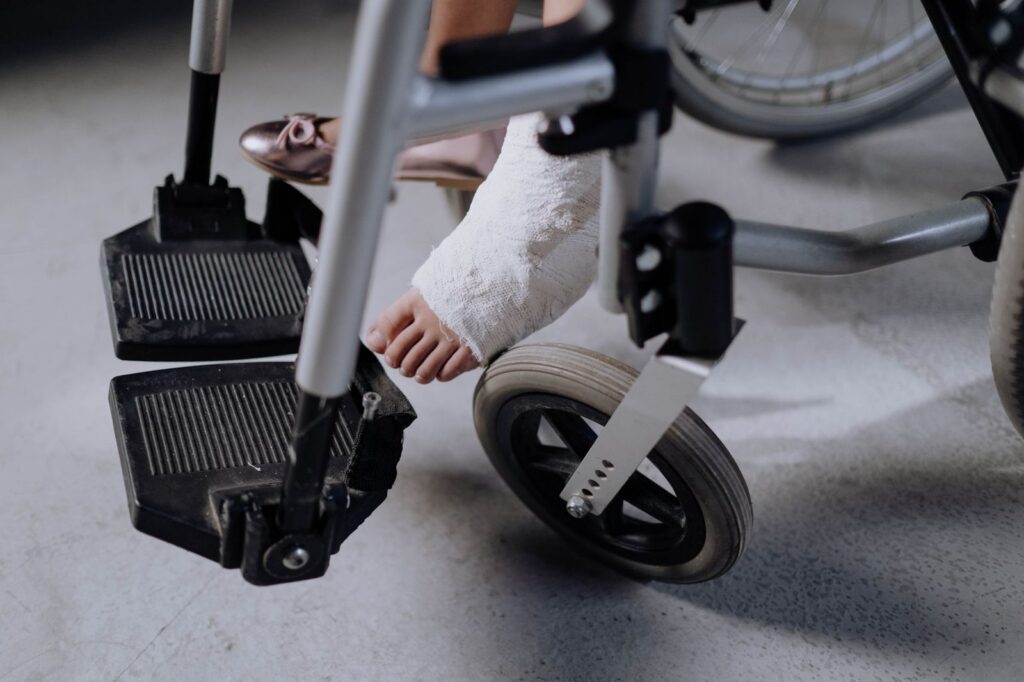
If you or a loved one experienced delayed diagnosis or treatment, you may have a claim against the healthcare provider responsible. Talk it through with our team — the first consultation is free, confidential, and carries no obligation.
What Is Cauda Equina, and Why Does the Timing Matter So Much?
Cauda equina is a bundle of nerve roots at the base of your spinal cord (around the level of your lower back) that control leg movement, sensation, bowel function, and bladder control. When these nerves are compressed—usually by a herniated disc, spinal fracture, or other obstruction—the signals that tell your legs to move and your body to function normally get cut off.
The reason timing is everything: nerve tissue dies when it’s starved of oxygen. Compressed nerves lose their blood supply. Within hours, that damage becomes permanent. After 48 hours, even if surgery successfully removes the compression, the dead nerve tissue cannot regenerate. You can’t bring back dead nerves.
This is why cauda equina syndrome is classified as a medical emergency by the American Academy of Orthopaedic Surgeons (AAOS) and why emergency rooms are trained to recognize it immediately. A person treated within 12 hours has a substantially better outcome than someone treated at 72 hours—not because the surgery is different, but because more nerve tissue is still alive and capable of recovery.
What Does Cauda Equina Feel Like? Recognizing the Emergency
Cauda equina syndrome announces itself suddenly. Symptoms develop over hours to days, not weeks. If you experience any of these, call 911 or go to an emergency room immediately—do not wait for an appointment or try home treatment.
The warning signs:
- Sudden, severe lower back pain affecting both sides of your back
- Rapid onset of leg pain, numbness, or tingling in one or both legs, buttocks, or groin
- Leg weakness or difficulty moving your legs—you may trip, drop your foot, struggle to stand on your toes, or find your legs giving out
- Loss of bladder or bowel control, inability to urinate, or sudden constipation
- Saddle anesthesia—numbness in the area that would touch a saddle (your buttocks, inner thighs, genitals, and the area around your anus)
Saddle anesthesia is a red-flag symptom. If you have it, you are having a medical emergency. The presence of this symptom combined with leg weakness and loss of bladder or bowel control makes cauda equina diagnosis nearly certain.
The 24-48 Hour Window: Why Every Hour Matters
The medical literature is clear: patients treated within 24 to 48 hours of symptom onset have significantly better outcomes for walking recovery and bowel/bladder preservation than those treated after 48 hours.
Here’s what the research shows:
- Within 24 hours: Approximately 50–70% of patients regain the ability to walk independently or with minimal assistance after surgery and rehabilitation.
- 24–48 hours: Recovery rates remain good, but the percentage of patients with complete recovery drops.
- After 48 hours: Permanent paralysis becomes the most likely outcome. Recovery of walking ability is rare.
These are not guarantees—they’re probabilities based on how much nerve tissue remains viable. The compression itself may be identical in two patients, but the one treated in 12 hours will have a vastly different outcome than the one treated in 72 hours, simply because more of their nerve tissue is still alive.
Delays in diagnosis are the enemy. If a physician misdiagnoses cauda equina as a simple herniated disc or sciatica, or if imaging is not ordered promptly, those lost hours can mean the difference between walking and permanent paralysis.
Not sure what your next step is?
Talk it through with our team — the first consultation is free, confidential, and carries no obligation.
What Happens in Surgery, and What Comes After
Emergency decompression surgery (also called laminectomy or discectomy, depending on the cause) is the only treatment that stops nerve damage. The surgeon removes whatever is compressing the nerves—usually a herniated disc fragment or bone—to restore blood flow and oxygen to the nerve roots.
The surgery itself is straightforward and well-established. Most people undergo it within hours of arriving at the hospital. Recovery from the surgery itself is usually quick—you may go home within 1–2 days.
But here’s the reality that doesn’t always get explained: surgery stops the damage, but it does not instantly restore function. Your nerves heal slowly. Recovery is measured in months and years, not weeks.
What the first weeks and months look like:
- Immediate post-op (days 1–2): Pain management, monitoring for complications, early movement to prevent blood clots.
- Weeks 1–4: Physical therapy begins. You may not be able to walk or may walk only with assistance. Bowel and bladder function may not return immediately.
- Months 1–6: Gradual improvement in leg strength and sensation. Many people begin walking short distances with a walker, cane, or brace. Bowel and bladder control often improves but may not fully normalize.
- Months 6–12 and beyond: Continued slow improvement. Some people regain near-normal walking ability; others plateau with permanent weakness or numbness.
Assistive devices are often part of long-term life: Canes, walkers, braces (AFOs—ankle-foot orthoses), or wheelchairs may be necessary depending on the degree of nerve recovery. This is not failure; it’s adaptation. Many people return to work, driving, and meaningful activity with these tools.
What Walking Recovery Actually Looks Like: Three Real Scenarios
Scenario 1: Early treatment, good recovery A 45-year-old woman woke up with sudden bilateral leg pain and numbness. She went to the ER immediately. MRI confirmed cauda equina from a large disc herniation. She had surgery within 8 hours of symptom onset. Six months later, she walks independently without assistive devices, though she tires more easily than before. She has some residual numbness in her feet but normal bowel and bladder function. She returned to work part-time after 4 months.
Scenario 2: Delayed diagnosis, partial recovery A 52-year-old man had lower back pain and went to an urgent care clinic. He was told he had sciatica and sent home with muscle relaxers. Three days later, he lost bladder control and went to the ER. MRI showed cauda equina. He had emergency surgery 72 hours after symptom onset. Recovery was slower. He regained some leg strength but walks with a cane and has chronic numbness in his feet. He experiences ongoing bowel and bladder issues requiring careful management. He works from home.
Scenario 3: Very delayed treatment, severe permanent disability A 38-year-old man had back pain that was treated as a muscle strain for a week. By the time cauda equina was diagnosed, he had complete paralysis of both legs and had lost all bowel and bladder control. Even after emergency surgery, the nerve damage was too extensive. He uses a wheelchair for mobility and requires ongoing catheterization and bowel management. He has adapted to his new life with significant support and assistive technology.
The difference between these three outcomes was not the surgery—it was the hours before surgery.
Living with Long-Term Effects: The Reality Beyond Surgery
Even with successful early surgery, many people experience lasting effects:
- Weakness or numbness in the legs that may improve over time but often persists
- Chronic pain in the lower back or legs
- Bowel and bladder dysfunction requiring ongoing management (catheterization, medications, scheduled routines)
- Sexual dysfunction (common but rarely discussed)
- Fatigue and reduced exercise tolerance
- Psychological adjustment to permanent disability
These are not minor inconveniences—they are real, ongoing challenges that require adaptation, medical support, and often lifestyle changes.
Rehabilitation and adaptation are essential:
- Physical therapy continues for months or years to rebuild strength and relearn movement patterns.
- Occupational therapy helps with daily activities and work accommodation.
- Assistive devices—wheelchairs, braces, specialized equipment—maintain independence.
- Bowel and bladder management often requires medical supervision and may involve medications or catheterization.
- Mental health support helps navigate the emotional impact of permanent disability.
Many people find that connecting with others who have experienced cauda equina—through support groups or online communities—provides practical advice and emotional support that clinical care alone cannot offer.
Have questions about what happened?
Ask our team directly. The first conversation is free, confidential, and there is no obligation to continue.
What Causes Cauda Equina Syndrome?
Most commonly: – Large herniated disc pressing on the nerve bundle – Spinal fracture or trauma from an accident (motor vehicle crash, fall, workplace injury) – Spinal stenosis (narrowing of the spinal canal, usually from arthritis or bone spurs) – Infection or abscess in the spine – Tumor or cancer affecting the spine – Bleeding into the spinal canal (epidural hematoma) – Complications from spinal surgery or epidural injection

When Cauda Equina Results from Someone Else’s Negligence
In some cases, cauda equina syndrome results from preventable circumstances:
- Delayed diagnosis by a physician who misdiagnosed the condition as sciatica or muscle strain
- Surgical error during a prior spine procedure
- Motor vehicle accident caused by a negligent driver
- Workplace accident due to unsafe conditions or lack of safety equipment
- Fall on someone else’s property due to negligent maintenance or security
If your cauda equina syndrome resulted from an accident, a physician’s failure to diagnose promptly, or another person’s negligence or wrongdoing, you may have legal rights. Medical errors that delay diagnosis of cauda equina can result in permanent disability that might have been prevented with timely treatment. Similarly, accidents caused by negligence can result in catastrophic spinal injuries.
If you’re facing cauda equina syndrome and wondering whether the accident or delay that caused it was someone else’s responsibility, we can help you understand your options. Many people in your situation have questions about whether they have a claim and what their rights are. Contact us for a free case evaluation to discuss what happened and what comes next.
This Is a Medical Emergency
Cauda equina syndrome requires emergency surgery within 24 to 48 hours of symptom onset. Delays beyond this window can cause irreversible nerve damage and permanent loss of leg function. If you or a loved one experienced delayed diagnosis or treatment, you may have a claim against the healthcare provider responsible.
What Affects Your Recovery Chances
Treatment Within 24–48 Hours
Emergency decompression surgery performed early gives you the best realistic chance of regaining significant walking ability and other lost functions.
Delayed Treatment (Beyond 48 Hours)
Permanent paralysis becomes likely when surgery is postponed. Nerve damage that goes untreated for too long cannot be reversed.
Severity at Onset
How complete the nerve damage is when you first seek help influences how much function may return, even with prompt surgery.
Rehabilitation and Physical Therapy
Intensive therapy after surgery plays a critical role in retraining your nervous system and maximizing whatever mobility recovery is possible.
Why Delayed Diagnosis Matters Legally
Medical Negligence Claims
If a doctor, hospital, or urgent care failed to recognize cauda equina symptoms or delayed ordering emergency imaging and surgery, you may have a claim for the permanent injuries that resulted.
Preventable Harm
Cauda equina syndrome is a recognized medical emergency. Providers who miss it or delay treatment breach the standard of care and can be held accountable.
Life-Altering Damages
Permanent paralysis from delayed treatment qualifies as a catastrophic injury. Compensation can cover medical care, mobility equipment, home modifications, lost income, and pain and suffering.
Time Limits Apply
Medical negligence claims are subject to strict filing deadlines. Consulting with an attorney promptly protects your right to pursue justice and fair compensation.