

Spinal Cord Injuries
Can a Tetraplegic Walk Again? Honest Answers About SCI Recovery
A tetraplegia (quadriplegia) diagnosis raises one urgent question. We give you straight, plain-language answers about what recovery can look like — and what it means for your family's future.
By CHG Lawyers · Published July 26, 2026
Can a Tetraplegic Walk Again? An Honest Look at Spinal Cord Injury Recovery
The honest answer is: it depends. Two things matter most. First, is the injury “complete” or “incomplete”? Second, where on the neck did it happen? Some people with tetraplegia do walk again. Many do not. An inspiring “success story” won’t tell you the truth about your case. Neither will a blunt “there’s no cure.”
If you’re reading this, you or someone you love faces a frightening new reality. You deserve a straight answer. It should not crush your hope. It should also not sell a cure that doesn’t exist. That’s what this page tries to give you.
One note first. Nothing here is medical advice. Only your treating medical team can judge one person’s outlook. What follows comes from clinical sources. It will help you know which questions to ask. Further down, we explain what a family can do if someone else caused the injury.
If your injury resulted from a truck crash, another accident, or unsafe conditions someone else was responsible for, you may have a legal claim. Talk it through with our team — the first consultation is free, confidential, and carries no obligation.
What tetraplegia (quadriplegia) actually means
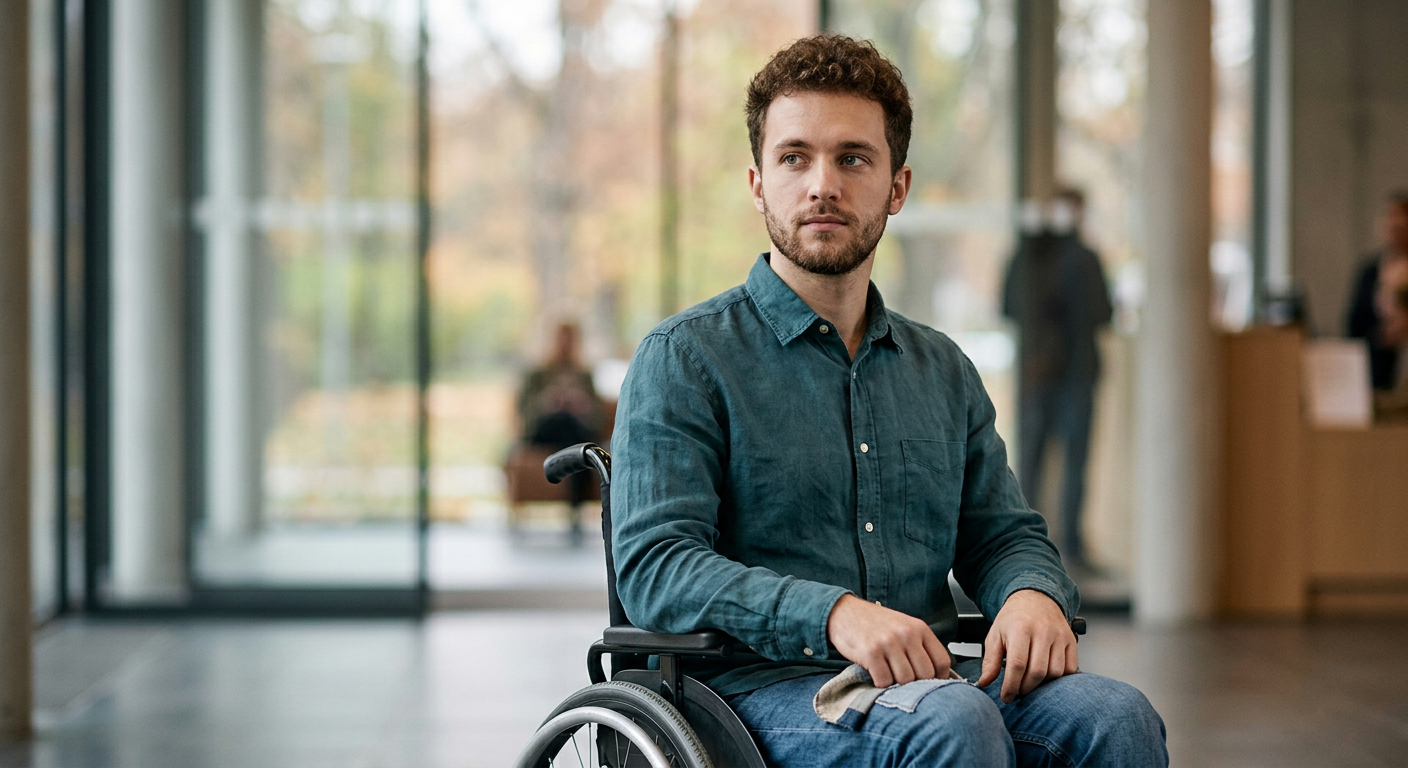
Tetraplegia means paralysis or loss of function in all four limbs and the torso. It comes from an injury to the cervical (neck) part of the spinal cord.
“Tetraplegia” and “quadriplegia” mean the same thing. Doctors use both words. According to the Mayo Clinic, this injury can affect the arms, hands, trunk, legs, and pelvic organs.
Paraplegia is different. It affects the lower body. The arms usually keep working. You can learn more on our pages about paralysis, paraplegia, and quadriplegia and spinal cord injuries.
The level of injury shapes what function may remain. Doctors number the neck levels C1 through C8. A C4 injury sits higher on the cord. It usually affects more of the body than a lower C7 injury. That’s why two people can both be “tetraplegic” yet have very different abilities.
Complete vs. incomplete: the single biggest factor
Is the injury complete or incomplete? The answer tells doctors how much signal still passes through the spinal cord. It’s the strongest clue about walking again.
In a complete injury, no movement or feeling signal passes below the injury site. Feeling and movement below that point are lost. Walking recovery is far less likely with a complete injury.
In an incomplete injury, some signals still get through. Some feeling or movement remains below the injury. That means more chance of recovery. In some cases, it can mean walking again.
Doctors grade this using the ASIA Impairment Scale (AIS). It is a five-grade scale, from A to E. It is part of the International Standards for Neurological Classification of Spinal Cord Injury (ISNCSCI). This scale is maintained by the American Spinal Injury Association. AIS A is a complete injury. AIS D means at least half the key muscles below the injury can move against gravity. If your medical team says “AIS C” or “AIS D,” that grade is a real, meaningful signal about the odds. Ask them what it means for walking.
Many people search for “severed spinal cord.” Here’s the honest truth. A truly severed cord rarely regrows with today’s medicine. But most spinal cord injuries are not fully severed. Instead, the cord is bruised, stretched, or squeezed. That difference matters a great deal to the outlook.
What is spinal shock, and why early predictions change
Spinal shock is a temporary shutdown of reflexes and function right after an injury. It can hide what will eventually return. That’s why the first few days are not the final word.
Swelling and shock ease over weeks. As they do, some function may come back. This is why many doctors wait before offering a firmer outlook. Sometimes it takes weeks. Sometimes it takes months. If your medical team seems cautious early on, this is usually why. It is a sign of good care, not bad news.
We share this to give honest context, not a promise. Early signs can change in either direction. Only the treating team can say what’s likely for one person.
Factors that influence whether someone walks again
No single factor decides the outcome. Doctors weigh several together:
- Completeness of the injury. Incomplete injuries carry more recovery potential than complete ones.
- Level of the injury. Higher neck injuries are generally more severe than lower ones.
- Age and overall health. Younger, healthier bodies sometimes respond better to intensive rehab.
- Timing and consistency of rehab. Starting early and staying with it matters.
- Preserved feeling or movement early on. Any feeling or muscle control soon after injury is often an encouraging sign.
That’s why two people with similar-sounding injuries can have very different journeys.
How rehabilitation supports recovery
Rehabilitation can rebuild strength, retrain movement, and restore independence. It helps even when full walking isn’t the outcome. It’s central to life after a spinal cord injury.
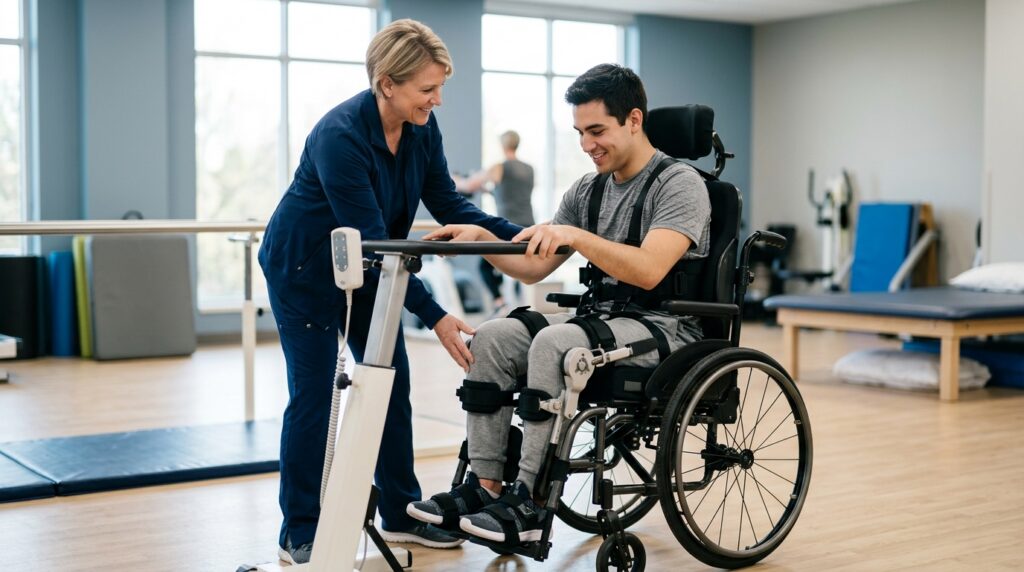
Physical therapy and gait training rebuild muscle and retrain the body to move. Therapists may use braces, harnesses, and body-weight-supported treadmill systems. For some people with incomplete injuries, this work supports stepping again.
Occupational therapy helps people regain independence in daily tasks. That means dressing, eating, moving between chairs, and using a wheelchair or adaptive tools. These skills deeply shape quality of life.
Here’s the realistic frame. Intensive therapy at a specialized rehab center can improve strength, health, and independence. That’s true even when walking doesn’t return. That progress is real and worth fighting for.
Not sure what your next step is?
Talk it through with our team — the first consultation is free, confidential, and carries no obligation.
Emerging treatments: what the headlines really mean
You may have seen news stories about paralyzed people walking with implants. Those studies are real. Techniques like epidural spinal cord stimulation and brain–spine interfaces have shown promise in small research settings. That includes studies published in journals such as Nature and The New England Journal of Medicine.
Here’s the honest context. These are not approved cures you can get at your local hospital. They are tested in controlled clinical trials with only a few participants. Outcomes differ from person to person, and much is still unknown. A promising result for one patient in a trial is not a treatment plan for everyone.
Curious about trials? Talk to your medical team. You can also search current studies at ClinicalTrials.gov. Don’t assume a headline treatment is available to you. Your doctors are your best guide.
Common questions families ask
What percentage of people with paralysis walk again?
There’s no reliable single percentage. Any page that gives you one is oversimplifying. Recovery depends heavily on whether the injury is complete or incomplete. People with incomplete injuries generally have a better chance. The Christopher & Dana Reeve Foundation publishes data on how common paralysis is in the United States.
What’s the life expectancy of a person with quadriplegia?
It varies by person and has improved with modern care. Level of injury, overall health, and access to good medical support all play a role. Many people with quadriplegia live full, meaningful lives for decades.
Can people with paralysis regain bladder and bowel control?
Bladder and bowel changes are common after spinal cord injury, notes the Mayo Clinic. Some people regain control. Others use management routines. There’s nothing shameful about this, and good care makes a real difference.
Do all people with paralysis use diapers?
No. This is a common misconception. Many people manage with catheters, scheduled bowel routines, and other methods. The right approach depends on the person and their care plan.
The lifelong cost of a catastrophic spinal cord injury
A catastrophic spinal cord injury brings costs that last a lifetime. They reach far beyond the first hospital bill. Families often face:
- Long-term rehab and therapy
- Wheelchairs, braces, and other assistive equipment
- Home changes — ramps, wider doorways, accessible bathrooms
- Around-the-clock or part-time personal care
- Lost income when the injured person can no longer work
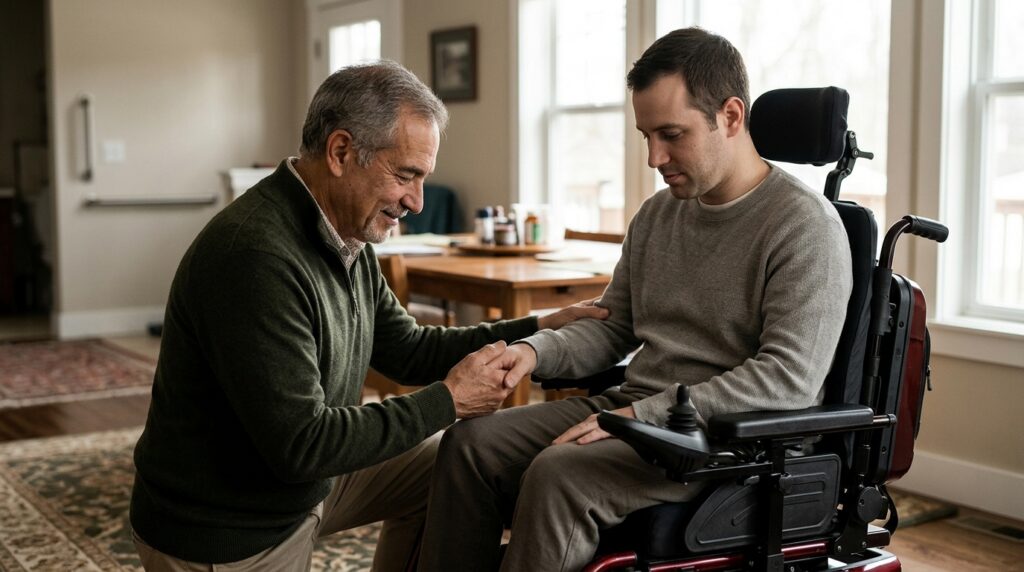
These costs are emotional as much as financial. A single injury can reshape a whole family’s future. That’s why understanding your options matters.
When someone else caused the injury: what a family can do next
Did another person or company cause the injury? Then your family may have a legal claim. It can help cover medical care, rehab, and lost income — now and in the years ahead.
Serious spinal cord injuries often come from truck crashes, medical mistakes, or violence a property owner should have prevented. That last situation is worth explaining in plain terms.
Say someone was assaulted, robbed, shot, or attacked. Maybe it happened at an apartment complex, parking garage, hotel, gas station, or store. Did the owner fail to provide reasonable security — working locks and gates, lighting, cameras, or guards? If so, the owner may share responsibility. The legal term for this is negligent security. Read more on our negligent security and truck accidents pages.
Two Florida rules matter early.
First, the deadline. For most negligence cases arising on or after March 24, 2023, Fla. Stat. § 95.11 generally gives you two years to file a lawsuit. And evidence like security footage can disappear long before that.
Second, shared fault. Under Fla. Stat. § 768.81, a person found more than 50% at fault generally cannot recover damages.
No lawyer can promise a specific result. But a licensed attorney can review the facts and explain your options clearly. CHG Personal Injury Lawyers is based in Florida. We handle catastrophic-injury cases nationwide. We offer resources in English and Spanish (recursos disponibles en español). To learn where you stand, request a free case evaluation.
To keep learning, visit our catastrophic injury claims and catastrophic back and neck injuries pages. You don’t have to face this alone.
This article is for general information only and is not medical or legal advice.
Have questions about what happened?
Ask our team directly. The first conversation is free, confidential, and there is no obligation to continue.
What Actually Affects the Chance of Recovery
Complete vs. Incomplete Injury
Whether some signals still pass through the injured area of the spinal cord matters more than almost anything else. People with incomplete injuries generally have a better chance of regaining some function.
Level of the Injury
Where along the spine the injury happened shapes which muscles and functions are affected. Higher cervical injuries affect more of the body than lower ones.
Time and Rehabilitation
Recovery, when it happens, often unfolds over months and years of intensive therapy. Access to quality rehabilitation can make a real difference to outcomes.
Overall Health and Care
Preventing complications and getting consistent, specialized medical care all influence long-term quality of life.
Be Wary of a Single Percentage
There is no reliable, one-size-fits-all number for how many people with paralysis walk again — any source that promises one is oversimplifying. Recovery depends on the specifics of the injury. We can never guarantee a medical or legal result, but we can help you understand your situation clearly.
Common Questions Families Ask Us
What percentage of people walk again?
There's no dependable single figure. Outcomes vary widely based on whether the injury is complete or incomplete and where it occurred. The Christopher & Dana Reeve Foundation publishes data on how common paralysis is in the U.S.
What is the difference between paraplegia and tetraplegia?
Paraplegia affects the lower body and legs. Tetraplegia (also called quadriplegia) affects all four limbs and often the trunk, resulting from higher injuries to the cervical spine.
Why does the cost of care matter to my claim?
Catastrophic spinal cord injuries can require a lifetime of medical care, equipment, home modifications, and lost income. Understanding those future costs is central to pursuing full and fair compensation.
How was the injury caused?
If your injury resulted from a truck crash, another accident, or unsafe conditions someone else was responsible for, you may have a legal claim. We can review what happened and explain your options.
Why Families Turn to CHG
Focused on Catastrophic Injuries
We concentrate on life-altering cases — spinal cord injuries, paralysis, brain injuries, amputations, and severe burns — so we understand what these injuries truly demand.
Licensed, Florida Bar-Admitted Attorneys
Our team is made up of licensed attorneys admitted to the Florida Bar, and we take serious injury cases nationwide.
Plain-Language Guidance in English & Spanish
We explain your rights clearly and publish bilingual educational resources so you and your family understand every step.