


Understanding Paralysis
Can Anxiety Cause Paralysis? What You Need to Know
Learn the difference between temporary anxiety-related symptoms and permanent paralysis from injury—and when to seek emergency care.
By CHG Lawyers · Published September 16, 2026
Anxiety Paralysis vs. Permanent Injury: When You Need Legal Help
Yes, anxiety can cause temporary paralysis. During a severe panic attack, your nervous system triggers a “freeze” response—you cannot move or speak for seconds to minutes. This is not structural nerve damage.
But here’s what matters: if your paralysis followed a car crash, fall, or assault, it is not anxiety. It is a serious injury requiring emergency medical care and potentially legal action. This article helps you tell the difference—and tells you what to do next.

If your paralysis followed an accident, fall, assault, or other trauma—not anxiety—you may have a legal claim. Talk it through with our team — the first consultation is free, confidential, and carries no obligation.
What Is Anxiety Paralysis?
Anxiety paralysis is temporary inability to move or speak during severe anxiety. You remain conscious and aware. It’s sometimes called a “freeze response.” The key word: temporary.
Episodes last seconds to several minutes. Rarely, they extend beyond 30 minutes. According to research published in the Journal of Sleep Research, individuals with anxiety disorders, PTSD, or chronic stress face increased risk of temporary immobility episodes. Sleep paralysis—a specific form occurring upon waking or falling asleep—affects an estimated 8% of the population.
This differs fundamentally from permanent paralysis caused by spinal cord injury or traumatic brain injury. Anxiety paralysis involves no structural nerve damage. Your spinal cord remains intact. The paralysis resolves as your nervous system calms down.
The Neuroscience: Why Anxiety Freezes Your Body
Your nervous system has a built-in survival mechanism: fight-flight-freeze. When your brain perceives threat—real or imagined—it floods your body with adrenaline and cortisol.
Your muscles tense. Your heart races. Your breathing quickens.
In some cases, your nervous system chooses freeze. Your brain may lock your body in place as a survival strategy. Your muscles become rigid or unresponsive. You feel paralyzed despite trying to move.
This is a normal response to perceived danger. It’s not a sign of weakness or mental illness—it’s your body’s ancient survival system activating.
Conversion Disorder: When Psychology Produces Real Physical Symptoms
Some people experience what’s called conversion disorder—a condition in which psychological stress produces real physical symptoms, including temporary paralysis or weakness. The National Institute of Mental Health (NIMH) describes conversion disorder as a genuine neurological symptom that arises from psychological distress, not from structural damage to the nervous system.
This is important: conversion disorder is real. The symptoms are not “all in your head” in the sense of being imaginary. Your body genuinely cannot move. But the cause is psychological, not a spinal cord or brain injury.
However, conversion disorder does not cause permanent paralysis. It does not follow a traumatic accident. And it does not require emergency neurosurgical intervention.
If your paralysis began after a car crash, motorcycle accident, fall onto your head or spine, or violent assault, it is not conversion disorder. It is a structural injury.
What Does Paralyzing Anxiety Feel Like?
People experiencing anxiety paralysis describe sudden inability to move limbs or speak. You feel “stuck” despite wanting to move. Your mind races. Your body won’t respond.
You might experience:
- Racing thoughts or mental fog
- Chest tightness or difficulty breathing
- Intense helplessness or loss of control
- Your body not obeying your brain’s commands
- Intense fear that something is seriously wrong
- Tingling or pins-and-needles sensation in your limbs
The experience is frightening and disorienting. But it is temporary. Once your nervous system calms—through breathing, grounding, or time—movement and speech return.
Causes of Anxiety Paralysis
Anxiety paralysis doesn’t happen randomly. It’s triggered by:
- Severe panic attacks or acute anxiety episodes overwhelming your nervous system
- Past trauma or PTSD reactivating a freeze response
- Overwhelming stress or feeling trapped with no escape
- Specific phobias activating your threat-detection system
- Underlying anxiety disorders such as generalized anxiety disorder or panic disorder
- Sleep paralysis, a temporary inability to move upon waking or falling asleep
Not sure what your next step is?
Talk it through with our team — the first consultation is free, confidential, and carries no obligation.
How Long Can Anxiety Paralysis Last?
Most anxiety paralysis episodes last seconds to several minutes. Rarely, an episode extends to 30 minutes.
Anything longer than 30 minutes is not anxiety paralysis. If you experience paralysis persisting for hours or days, or worsening over time, seek emergency medical care immediately.
If you experience repeated anxiety paralysis episodes, your underlying anxiety disorder needs treatment. A mental health professional can help manage the root cause. Episodes become less frequent and less severe with proper care.
Immediate Techniques to Regain Movement
If you’re experiencing anxiety paralysis right now, these evidence-based techniques can help:
Grounding Technique (5-4-3-2-1 Method)
Name five things you see, four things you can touch, three things you hear, two things you smell, one thing you taste. This redirects your brain from threat-detection mode to present-moment awareness.
Controlled Breathing (4-4-4 Box Breathing)
Breathe in through your nose for four counts. Hold for four counts. Exhale through your mouth for four counts. Hold for four counts. Repeat 5–10 times. This activates your parasympathetic nervous system—your body’s “rest and digest” mode.
Progressive Muscle Relaxation
Tense your toes for 5 seconds, then release. Move up through your calves, thighs, abdomen, chest, arms, and head. Tensing and releasing breaks the freeze pattern.
Micro-Movements
Start small: wiggle your fingers or toes. Blink your eyes. Move your jaw. These tiny movements signal safety to your nervous system.
Seek Immediate Support
Call someone you trust or contact a mental health crisis line. A familiar voice calms your nervous system faster than techniques alone. In the U.S., the 988 Suicide and Crisis Lifeline (call or text 988) provides immediate support for mental health crises.
Anxiety Paralysis vs. Permanent Paralysis from Injury
This distinction is critical. It determines your next steps:
| Anxiety Paralysis | Permanent Paralysis from Injury |
|---|---|
| Temporary (seconds to minutes) | Permanent or long-term (hours, days, lifelong) |
| No structural nerve damage | Actual spinal cord or brain damage |
| Resolves with breathing/grounding | Requires emergency medical intervention |
| Triggered by anxiety or stress | Caused by trauma, accident, or negligence |
| Responds to mental health treatment | Requires emergency care, surgery, rehabilitation |
If your paralysis began after an accident, fall, or assault, it is not anxiety paralysis. Seek immediate emergency medical care.
Red Flags: When Paralysis Is Not Anxiety
Paralysis is not anxiety if you experience any of the following:
- It follows a car accident, truck crash, motorcycle accident, or fall—especially if you struck your head, neck, or spine
- It occurs after a violent assault, shooting, stabbing, or attack on an unsafe property (apartment complex, parking lot, hotel, bar, or business)
- You experience permanent loss of movement in one or more limbs that does not return within minutes
- The paralysis persists for hours or days, or worsens over time
- You have numbness, tingling, loss of sensation, or loss of bowel/bladder control alongside the paralysis
- You cannot feel pain or temperature in affected limbs
- You experience weakness that spreads from one limb to others
- You have difficulty breathing or swallowing after a head, neck, or spine injury
In these cases, you may have suffered a spinal cord injury, traumatic brain injury, or other serious injury. You need emergency medical care immediately.
Why Emergency Evaluation Matters
After a traumatic event—a crash, fall, or assault—your adrenaline surge may mask serious injury. You might feel “okay” in the moment but have a spinal cord injury causing permanent paralysis if not treated within hours.
According to the National Spinal Cord Injury Statistical Center (NSCISC), spinal cord injuries are time-sensitive: emergency intervention in the first 8 hours can significantly reduce long-term disability. High-dose corticosteroids administered within 3–8 hours of injury may reduce inflammation and preserve nerve function.
Do not wait. Call 911 or go to the nearest emergency room.
When to Seek Medical Help
Contact a doctor or emergency room if:
- Your paralysis occurs after an accident, fall, or trauma
- You experience sudden weakness or inability to move without a clear anxiety trigger
- Your anxiety paralysis episodes are frequent, severe, or interfering with daily life
- You’re unsure whether your symptoms are anxiety-related or caused by injury
- You have numbness, tingling, or loss of sensation
- Your paralysis persists beyond a few minutes
A medical professional can determine whether your symptoms are anxiety-related or caused by neurological damage through:
- Physical and neurological examination
- MRI or CT imaging of the spine and brain
- Nerve conduction studies and electromyography (EMG)
- Assessment of reflexes, sensation, and motor control
Have questions about what happened?
Ask our team directly. The first conversation is free, confidential, and there is no obligation to continue.
FAQ
Can anxiety make you unable to walk?
Yes. During a severe anxiety episode, your legs may feel weak or paralyzed. Walking becomes difficult or impossible. This is temporary and resolves as your anxiety subsides. However, if you cannot walk after an accident or fall, seek emergency care immediately—this may signal spinal cord injury.
How long does anxiety paralysis typically last?
Most episodes last seconds to a few minutes. Rarely, an episode extends to 30 minutes. Anything longer than 30 minutes suggests a medical problem beyond anxiety and requires emergency evaluation.
What’s the difference between anxiety paralysis and spinal cord injury?
Anxiety paralysis is temporary and reversible with no structural nerve damage. Spinal cord injury causes permanent or long-term paralysis due to actual spinal cord damage. It requires emergency medical care, hospitalization, and long-term rehabilitation. Spinal cord injuries are diagnosed through imaging and neurological examination.
What is conversion disorder?
Conversion disorder is a condition in which psychological stress produces real physical symptoms, including temporary paralysis or weakness, without structural nerve damage. According to the Mayo Clinic, conversion disorder is a genuine neurological symptom arising from psychological distress. It does not follow traumatic accidents and does not cause permanent paralysis. If your paralysis began after a crash or fall, it is not conversion disorder.
Should I go to the emergency room if I think I’m experiencing anxiety paralysis?
If this is your first episode, or if paralysis follows an accident or trauma, seek emergency care immediately. Rule out injury first. If you have a diagnosed anxiety disorder and recognize the episode, and it occurred in a safe environment with no preceding trauma, you may manage it at home with grounding and breathing. Consult your mental health provider afterward. When in doubt, go to the ER.
What if I was in an accident and now have paralysis—can I get compensation?
If your paralysis resulted from someone else’s negligence—a truck driver, a property owner who failed to provide security, a manufacturer of a defective product, or another party—you may have a legal claim for damages. This includes compensation for medical care, rehabilitation, lost income, and pain and suffering. You need to speak with an attorney who focuses on catastrophic injury claims.
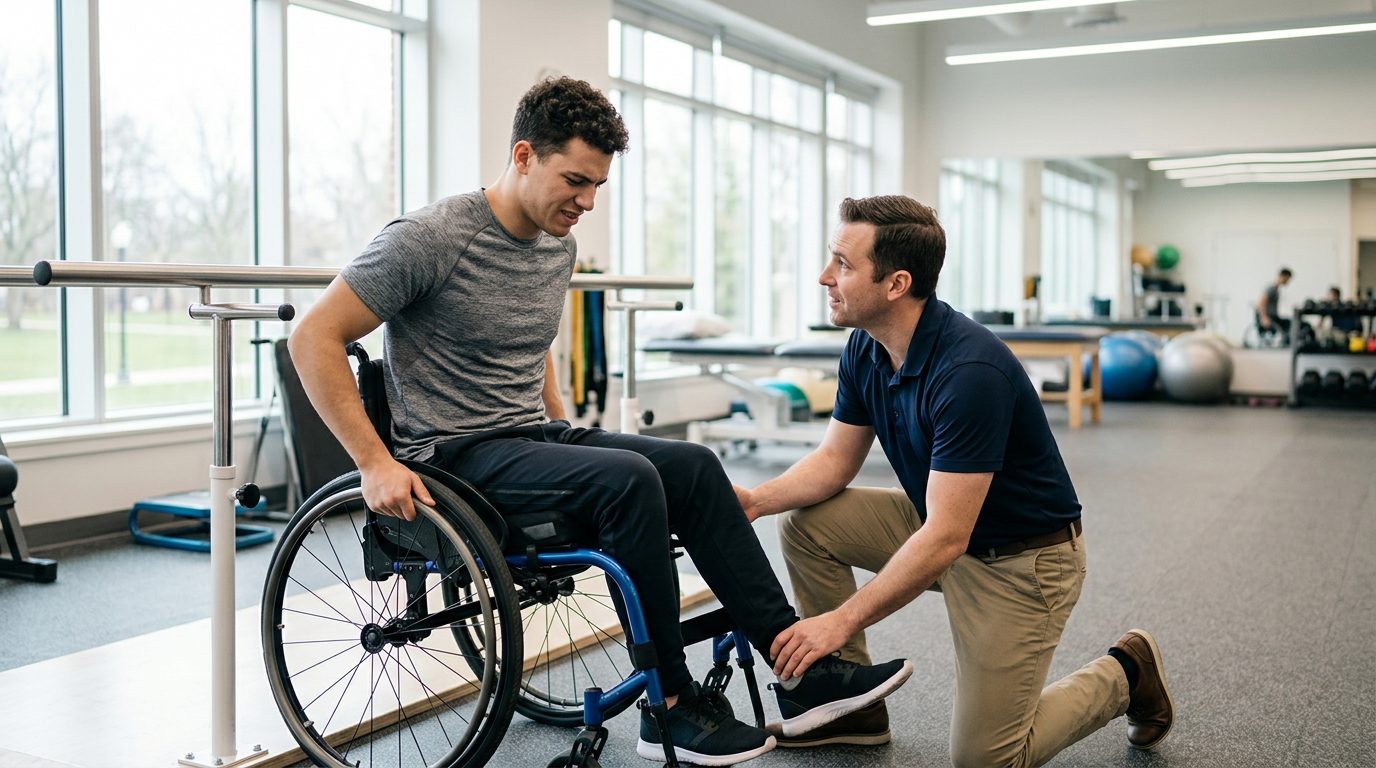
If Your Paralysis Followed an Accident, Trauma, or Assault
If your paralysis followed an accident, fall, assault, or other trauma—not anxiety—you may have a legal claim.
Our team focuses exclusively on catastrophic injury claims, including spinal cord injuries, traumatic brain injuries, and permanent paralysis. We work with you to understand what happened, gather evidence, and pursue compensation from the responsible party.
Your first step is emergency medical care. After any serious accident or trauma, call 911 or go to the nearest emergency room.
Your second step is a free case evaluation with our team. We’ll review what happened, answer your questions, and explain your legal options—at no cost to you.
Get a free case evaluation today.
⚠️ When to Seek Emergency Care
If you cannot walk or move your legs after an accident, fall, or trauma, call 911 immediately. Paralysis following an injury may signal a spinal cord injury or other serious condition requiring urgent medical attention. Do not wait to see if it resolves on its own.
Anxiety-Related Paralysis vs. Injury-Related Paralysis
Anxiety-Related Paralysis
During severe anxiety or panic attacks, your legs may feel weak, numb, or temporarily unable to support your weight. This happens because anxiety triggers physical responses in your nervous system. These symptoms are temporary and fade as your anxiety subsides. They do not cause permanent damage.
Injury-Related Paralysis
Paralysis from a spinal cord injury, traumatic brain injury, or other trauma is permanent or long-lasting. It results from actual damage to the nervous system caused by accidents, falls, or violence. This requires immediate medical care and may lead to permanent disability.
How Long Does Anxiety Paralysis Last?
Anxiety-related paralysis typically resolves within minutes to hours as your anxiety decreases. Grounding techniques, deep breathing, and calming your nervous system can help. If paralysis persists for hours or days, or follows a traumatic event, seek medical evaluation.
What Causes Anxiety Paralysis?
During anxiety, your body enters a 'fight or flight' state. Blood flow shifts, muscles tense, and your nervous system becomes hyperactive. This can make your legs feel weak or locked. Once your nervous system calms, normal function returns.
What to Do If You Experience Paralysis
Identify the Cause
Did paralysis follow an accident, injury, or trauma? Or did it occur during an anxiety episode? The cause determines whether you need emergency care or anxiety management.
Note the Duration
How long has the paralysis lasted? Temporary weakness during anxiety typically resolves quickly. Paralysis lasting hours or days after an injury needs urgent medical evaluation.
Seek Medical Care When Needed
After any accident or injury, get evaluated by a doctor even if you feel okay. Some serious injuries develop symptoms over time. A medical record also protects your legal rights if you need to pursue a claim.
Document What Happened
If your paralysis followed an accident, injury, or someone else's negligence, write down details: what happened, when, where, who was involved, and any witnesses. This information is crucial if you have a legal claim.
Injured in an Accident or on Someone Else's Property?
If you or a loved one suffered paralysis, spinal cord injury, or other serious harm from an accident, a fall, a vehicle crash, or violence on an unsafe property, you may have a legal claim. The property owner or responsible party may be liable for your medical care, lost wages, and other damages.