

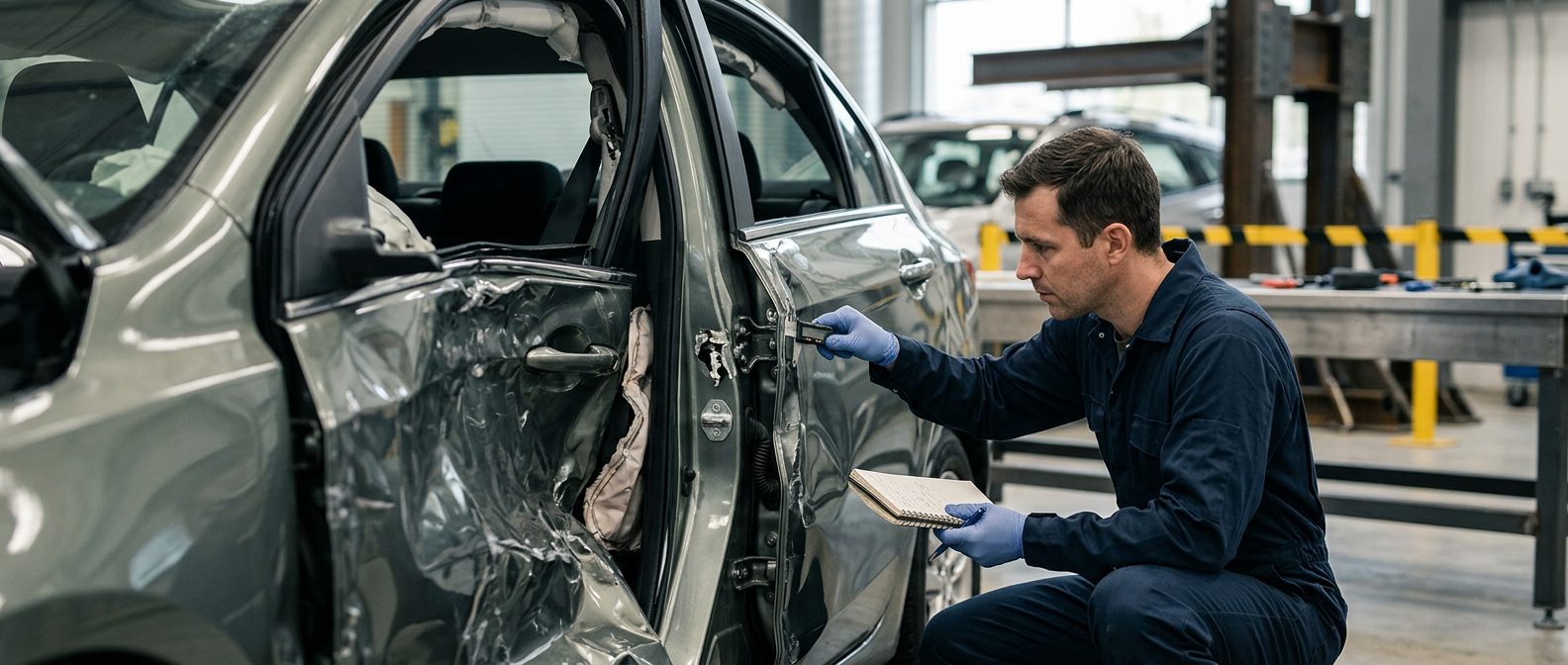
Crashworthiness & Vehicle Defects
When a Vehicle Defect Makes Injuries Worse
You may have a claim against the manufacturer even if you caused the crash. A defective design or failure to protect can turn a minor accident into a catastrophic injury.
By CHG Lawyers · Published October 03, 2026
Crashworthiness Claims: When Vehicle Defects Cause Catastrophic Injuries
A crashworthiness claim holds a vehicle manufacturer accountable when a defect makes your injuries worse during a crash. Common defects include airbags that fail to deploy, roofs that crush inward, seatbelts that don’t lock, or fuel tanks that rupture.
Unlike a typical accident claim—which focuses on who caused the crash—a crashworthiness case targets the vehicle itself: its design, safety systems, and how well it protects you.
Here’s what many injured people don’t know: you may have a crashworthiness claim even if you caused the collision, and under Florida law the trier of fact must consider the fault of all persons who contributed to the accident when apportioning fault. The manufacturer’s duty to protect you is separate from the question of who caused the accident, but Florida law requires the trier of fact to consider the fault of all persons who contributed to the accident when apportioning fault.
Some crashes that should have been survivable become life-altering. A rollover that crushes the roof, leaving someone with a spinal cord injury and permanent paralysis. An airbag system that fails to deploy in a moderate-speed crash, resulting in traumatic brain injury. A fuel-system rupture that ignites after the crash, causing severe burns. These aren’t random misfortunes—they’re often the result of a manufacturer’s failure to design and build a vehicle that protects occupants.
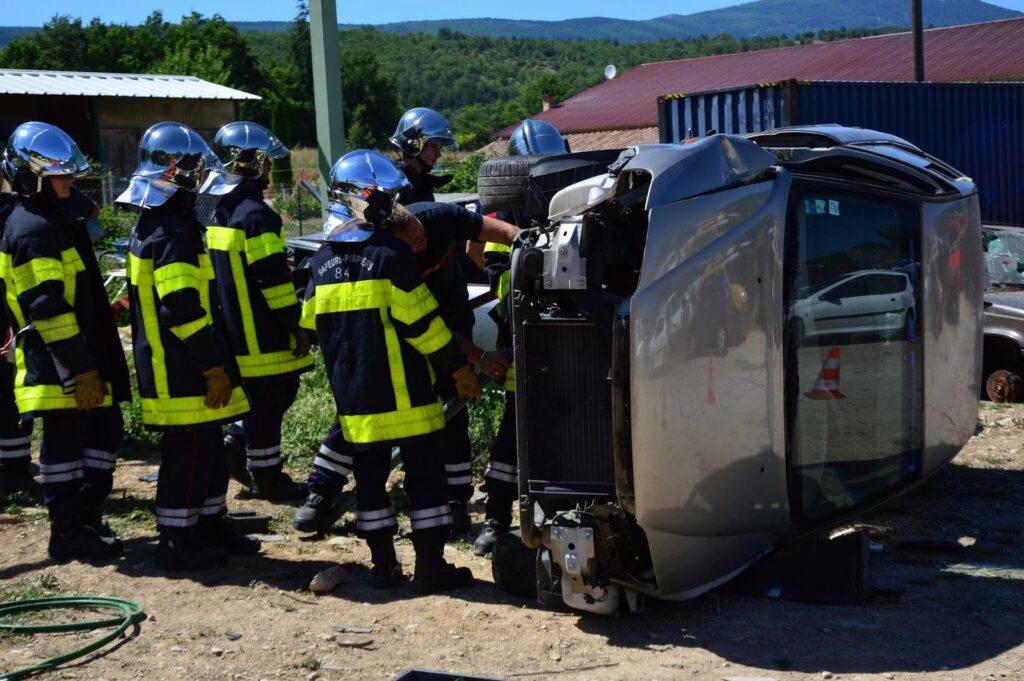
If you believe a vehicle defect made your injuries worse, you may have a valid claim regardless of who caused the accident. Talk it through with our team — the first consultation is free, confidential, and carries no obligation.
What Does Crashworthiness Mean?
Crashworthiness is a vehicle’s ability to protect occupants during and after a collision. It includes the vehicle’s design, safety features, and structural strength. This is different from crash causation—the question of who caused the accident itself.
Think of it as two separate legal events:
First, the crash happens. You may have run a red light. Another driver may have hit you. Weather may have caused you to lose control. You may be 100% responsible for that collision.
Second, the vehicle either protects you or fails you. If the airbag deploys, the seatbelt locks, the roof stays intact, and the fuel system doesn’t rupture, the vehicle has done its job. If any of those systems fail, the manufacturer may be liable for the injuries that result.
This distinction is enormous. Many injured people believe that if they caused the crash, they have no legal claim. Under Florida law, in a products liability action alleging that a defect enhanced your injuries, the trier of fact must consider the fault of all persons who contributed to the accident when apportioning fault (Fla. Stat. § 768.81).
How Vehicle Defects Turn Survivable Crashes Into Catastrophic Injuries
The concept of the “second collision” captures this reality. The first collision is the impact itself. The second collision is what happens inside the vehicle: your body strikes the steering wheel, dashboard, or side panel.
A well-designed vehicle absorbs crash energy and protects occupants. A defective vehicle fails to protect you, and your injuries become catastrophic.
Common vehicle defects in crashworthiness cases:
-
Airbag non-deployment or malfunction: An airbag that fails to inflate, deploys too late, ruptures, or deploys with insufficient force leaves occupants unprotected. In moderate-speed frontal collisions, a non-deploying airbag can result in facial trauma, head injury, or spinal trauma.
-
Seatbelt failures: Seatbelts that don’t lock during a crash fail to restrain the body. A lap belt that rides up over the abdomen instead of staying on the pelvis can cause internal injuries and spinal trauma.
-
Roof crush in rollovers: Insufficient structural rigidity causes the roof to collapse inward, crushing occupants. Roof crush frequently results in spinal cord injury, paralysis, or death.
-
Seat-back collapse: Rear-impact crashes can cause front-seat backs to collapse backward, injuring rear-seat occupants and causing spinal injuries.
-
Fuel-system rupture: Fuel tanks that rupture or leak during a crash can ignite, causing post-crash fires and severe burns to occupants trapped in a burning vehicle.
-
Door-latch failures: Doors that open during or after a crash can eject occupants or allow them to fall from the vehicle, resulting in catastrophic injury or death.
-
Frame and structural defects: Inadequate crumple zones or structural support fail to absorb crash energy. Force transfers directly to occupants instead of being dissipated.
Each of these defects can transform a survivable collision into a life-altering catastrophe. Spinal cord injuries and paralysis result from roof crush or seat-back collapse. Traumatic brain injuries arise from inadequate head protection. Amputations can result from door-latch failures or entrapment. Severe burns follow fuel-system ruptures. In the most devastating cases, these defects result in wrongful death.
The Legal Duty: What Manufacturers Owe You
Vehicle manufacturers, designers, and component suppliers have a legal duty to design and build vehicles that protect occupants in foreseeable crashes. This duty exists independently of who caused the collision. Manufacturers must anticipate that crashes will happen and design vehicles to minimize resulting injuries.
This duty applies to crashes of all severities—high-speed head-on collisions, moderate-speed side impacts, even low-speed rear-end crashes. A defect that fails to protect occupants in any foreseeable crash scenario can create liability.
Dealers and distributors can also bear liability in certain circumstances—for example, if they knew of a defect and failed to perform a required repair or recall.
Crashworthiness Claims Even If You Caused the Crash
This principle transforms lives. Under Florida’s comparative-negligence statute (Fla. Stat. § 768.81), an injured person can recover damages even if they were partially at fault for the collision—as long as they were not more than 50% at fault.
Here’s a concrete example:
You’re speeding and run a red light, causing a collision. The crash is your fault. But your vehicle’s airbag fails to deploy. As a result, you suffer a traumatic brain injury that leaves you with permanent cognitive impairment.
This distinction is crucial. Many injured people don’t pursue crashworthiness cases because they believe their role in causing the crash disqualifies them. It doesn’t. If you believe a vehicle defect made your injuries worse, you may have a valid claim regardless of who caused the accident.
Proving a Vehicle Defect: The Role of Expert Witnesses
Proving a crashworthiness case requires expert engineering analysis. This is where the complexity of these cases becomes apparent. You cannot rely on eyewitness testimony or photographs alone. Forensic engineers, biomechanical specialists, and accident reconstructionists must examine the vehicle, the crash dynamics, the design standards applicable to that vehicle, and how other manufacturers addressed the same safety challenge.
The proof process typically involves:
-
Forensic engineering examination: A qualified mechanical engineer inspects the vehicle, documents the defect, and analyzes whether the design or manufacturing was deficient. This expert examines structural integrity, weld quality, material specifications, and whether the component met applicable industry standards.
-
Biomechanical analysis: A biomechanical specialist analyzes how crash forces were transmitted to your body and how the defect caused or worsened your specific injury. This expert links the vehicle’s failure to your catastrophic outcome.
-
Crash reconstruction: A crash-reconstruction expert analyzes the impact forces, the vehicle’s response, and how the defect contributed to your injury. This expert uses physics, vehicle dynamics, and accident-investigation data to establish what happened during the collision.
-
Comparison to industry standards: What did competing manufacturers do? If other vehicles in the same class had better protection, that strengthens your case. Industry standards, federal motor vehicle safety standards (FMVSS), and engineering best practices all inform this analysis.
-
NHTSA crash-test data and safety ratings: The National Highway Traffic Safety Administration publishes crash-test results and safety ratings. These data show how vehicles perform in standardized crash scenarios and provide objective benchmarks for design adequacy. NHTSA’s New Car Assessment Program (NCAP) tests vehicles in frontal, side, and rollover scenarios.
-
Vehicle recalls and technical service bulletins: If the manufacturer later issued a recall for the same defect, that’s powerful evidence that the defect existed and that the manufacturer knew about it. Technical service bulletins (TSBs) issued to dealers can also reveal known defects.
-
Medical causation: A medical expert links the defect to your specific catastrophic injury. They explain how the defect caused or worsened your condition.
This multi-disciplinary approach requires years of investigation and expert coordination. Crashworthiness cases are among the most complex product-liability claims. Expect your attorney to work with multiple specialists, each bringing distinct experience to establish both the defect and its role in your injury.
Vehicle Recalls and NHTSA Data
A vehicle recall occurs when the manufacturer or the National Highway Traffic Safety Administration (NHTSA) identifies a safety defect affecting multiple vehicles. The manufacturer must notify owners and typically offer a free repair.
A recall is not required for a crashworthiness claim.
If no recall has been issued, that doesn’t eliminate your claim. The absence of a recall may mean the defect hasn’t been widely recognized or reported—or it may mean the manufacturer is aware of the defect but hasn’t yet issued a recall.
NHTSA maintains a public database of vehicle complaints, defect investigations, and recalls at safercar.gov. This data can be invaluable in proving that your vehicle’s defect is part of a pattern affecting multiple vehicles.
If you lost a family member in a crash and believe a vehicle defect played a role, a wrongful-death claim may be available to your family. Talk it through with our team — the first consultation is free, confidential, and carries no obligation.
Who Is Liable in a Crashworthiness Case?
Multiple parties can bear liability:
-
The vehicle manufacturer: The company that designed and assembled the vehicle is typically the primary defendant.
-
Component suppliers: Companies that manufactured specific defective parts—an airbag supplier, a seatbelt manufacturer, a fuel-tank supplier—can be held liable for defects in their components.
-
Dealers and distributors: In some circumstances, if they knew of a defect or failed to perform a required repair or recall, they may share liability.
In complex cases, multiple defendants may share liability. For example, a roof-crush case might name the vehicle manufacturer, the steel supplier, and the roof-panel manufacturer.
Preserving Vehicle Evidence After a Crash
The vehicle itself is the primary evidence in a crashworthiness case. Do not allow the vehicle to be scrapped, crushed, or repaired without first documenting the defect and consulting an attorney.
Immediately after a crash:
-
Photograph the vehicle from multiple angles, focusing on any visible damage, defects, or failed safety systems.
-
Document the vehicle’s condition: Note the position of airbags, seatbelts, doors, and any signs of structural failure.
-
Preserve the vehicle: Do not authorize repairs, scrapping, or crushing. Notify your insurance company and the other party’s insurance that you are preserving the vehicle as evidence.
-
Contact an attorney: As soon as possible, notify an attorney experienced in crashworthiness cases. They can issue a preservation notice (a legal hold) to prevent the vehicle from being destroyed.
Once the vehicle is scrapped or crushed, critical evidence is lost forever. Forensic engineers need to examine the vehicle’s structure, safety systems, and the specific way it failed during the crash. Without the vehicle, proving the defect becomes exponentially more difficult.
Statute of Limitations: Time Limits for Filing
In Florida, the statute of limitations for product-liability claims is generally 4 years from the date of injury to file a lawsuit, per Fla. Stat. § 95.11.
For wrongful-death claims, the deadline is 2 years from the date of death, per Fla. Stat. § 95.11(5)(e).
In some cases, the “discovery rule” may extend the deadline. If you didn’t discover the defect until after the crash—for example, if a hidden manufacturing defect only became apparent during repair—the clock may start when you discovered the defect, not when the crash occurred.
If your crash occurred in another state, different statutes of limitations may apply. Nationwide cases require careful attention to each jurisdiction’s deadlines. Don’t delay: contact an attorney as soon as possible to ensure your claim is timely filed.
Wrongful-Death Crashworthiness Claims
When a vehicle defect results in death, the surviving family members may bring a wrongful-death claim. This is the most catastrophic outcome—a death that might have been prevented or delayed if the vehicle had been properly designed and built.
Wrongful-death damages typically include:
-
Loss of life: The value of the deceased’s life and lost years.
-
Loss of companionship and consortium: The emotional loss suffered by surviving spouse, children, and parents.
-
Funeral and medical expenses: Costs incurred before death.
-
Loss of financial support: Income the deceased would have earned.
Vehicle defects can turn a survivable crash into a fatal one. When a defect prevents a vehicle from protecting occupants in a survivable crash, it can mean the difference between life and death. If you lost a family member in a crash and believe a vehicle defect played a role, a wrongful-death claim may be available to your family.
How a Crashworthiness Case Begins
The process typically unfolds as follows:
-
Initial consultation: You meet with an attorney and describe the crash, your injuries, and the vehicle.
-
Investigation: The attorney gathers crash reports, medical records, vehicle information, and photographs. The vehicle is preserved.
-
Expert retention: Forensic engineers, biomechanical specialists, crash-reconstruction experts, and medical specialists are hired to analyze the defect and your injuries.
-
Demand and negotiation: The attorney presents evidence to the manufacturer’s insurance and legal team, demanding compensation.
-
Litigation: If settlement is not reached, the attorney files a lawsuit. The case then proceeds through discovery, expert reports, depositions, and potentially trial.
Crashworthiness cases are complex and typically take 2 to 5 years or longer from crash to settlement or verdict. The process requires extensive expert analysis, document review, and often depositions of engineers and company representatives.
Why Crashworthiness Cases Are Different
Crashworthiness cases differ from typical personal injury lawsuits in several important ways:
-
Product liability, not negligence: The focus is on the vehicle’s design and safety, not the driver’s conduct.
-
Complex causation: Requires expert testimony on engineering, crash dynamics, biomechanics, and medical causation—not just eyewitness accounts.
-
High-value claims: Catastrophic injuries and wrongful death often result in substantial damages.
-
Manufacturer resources: Defendants are large corporations with extensive legal and technical resources, sophisticated defense strategies, and access to their own experts.
-
Long timeline: Investigation, expert analysis, and litigation take years, requiring patience and commitment from the injured person and their family.
Not sure what your next step is?
Talk it through with our team — the first consultation is free, confidential, and carries no obligation.
Frequently Asked Questions
Can I sue for a vehicle defect if I caused the crash?
Yes. Crashworthiness is separate from crash causation. You may still have a claim for injuries worsened by a vehicle defect even if you caused the collision, and under Florida law the trier of fact must consider the fault of all persons who contributed to the accident when apportioning fault.
What if the vehicle was recalled after my crash?
A recall strengthens your case but is not required. If your crash occurred before the recall was issued, you still have a claim. The manufacturer’s later acknowledgment of the defect is evidence that the defect existed at the time of your crash.
How much is a crashworthiness case worth?
Damages depend on injury severity, medical costs, lost income, pain and suffering, and other factors. Catastrophic injuries—spinal cord injury, paralysis, traumatic brain injury, amputation, severe burns—command higher awards. Each case is unique.
Do I need to prove the manufacturer knew about the defect?
Not always. Design defects can be proven without showing prior knowledge. Manufacturing defects also don’t require proof of knowledge. Failure-to-warn claims do require evidence that the manufacturer knew of the hazard.
How long does a crashworthiness case take?
Typically 2 to 5 years from crash to settlement or verdict, depending on the complexity of the case and whether it goes to trial.
Can I recover if I wasn’t wearing a seatbelt?
Yes, but comparative negligence may reduce your award (Fla. Stat. § 768.81(6)). Consult an attorney about your specific circumstances.
What if the other driver was at fault for the crash?
You can still pursue a crashworthiness claim against the vehicle manufacturer. Your claim against the manufacturer is separate from any claim against the other driver. Both may be pursued simultaneously.
Next Steps: If You Believe a Vehicle Defect Caused Your Catastrophic Injury
If you suffered a spinal cord injury, paralysis, traumatic brain injury, amputation, severe burns, or a family member died in a crash, and you suspect the vehicle’s design or safety systems failed to protect you:
-
Preserve the vehicle: Do not allow it to be scrapped, crushed, or repaired without documenting the defect.
-
Gather documentation: Collect crash reports, medical records, photographs, and any recall notices.
-
Act within the statute of limitations: In Florida, you have 2 years from injury (or 2 years from death) to file a claim.
-
Consult an attorney: An attorney who focuses exclusively on catastrophic injuries and product liability can evaluate your case and explain your options.
If you’ve been injured in a crash and believe a vehicle defect made your injuries worse—whether you caused the collision or not—contact CHG Personal Injury Lawyers for a free case evaluation. We focus exclusively on catastrophic injuries and have the experience to navigate the complex engineering and medical issues that define these cases.
What Crashworthiness Claims Cover
Defective Design
A vehicle designed in a way that fails to protect occupants in a crash—such as inadequate crumple zones, weak roof structures, or doors that open on impact.
Manufacturing Defects
Flaws in how a specific vehicle was built—welds that fail, airbags that don't deploy, or seatbelts that malfunction during a collision.
Failure to Warn
When a manufacturer knows of a safety risk but fails to warn drivers or provide adequate instructions for safe operation.
Separate from Fault
Crashworthiness claims focus on whether a vehicle defect worsened injuries, which is a different question from who caused the accident.
Key Point: Crash Causation ≠ Injury Causation
Even if you caused the collision, the vehicle manufacturer still has a duty to protect you from injury, and under Florida law the trier of fact must consider the fault of all persons who contributed to the accident when apportioning fault. A defect that worsens harm—or turns a survivable crash into a catastrophic one—can be the basis for a claim, with fault for the accident still considered under Florida law.
Common Crashworthiness Defects
Airbag Failures
Airbags that don't deploy, deploy late, or deploy with excessive force can result in severe head, chest, and facial injuries that should have been prevented.
Seatbelt Defects
Seatbelts that lock up, fail to retract, or don't hold occupants in place leave you unprotected during a crash.
Structural Weakness
Vehicles with weak roof structures, inadequate side-impact protection, or poor crumple zones can collapse during a collision, crushing occupants.
Fuel System Defects
Fuel tanks positioned or protected inadequately can rupture and catch fire, turning a survivable crash into a severe burn injury or fatality.
Frequently Asked Questions
Can I sue for a vehicle defect if I caused the crash?
Yes. Crashworthiness is separate from crash causation. You may still have a claim for injuries worsened by a vehicle defect even if you caused the collision, and under Florida law the trier of fact must consider the fault of all persons who contributed to the accident when apportioning fault.
What if the vehicle was recalled after my crash?
Whether a recall issued after your crash bears on your case is a question to discuss with your attorney, who can review the facts of your accident and your vehicle’s history.
How do I know if my injuries were caused by a defect?
An investigation of the vehicle, the crash scene, medical records, and accident reconstruction can show whether a defect played a role in your injuries. We work with engineers and medical professionals to build that evidence.
What damages can I recover?
Damages may include medical expenses, lost wages, pain and suffering, permanent disability, and other losses tied to injuries caused or worsened by the defect. Each case is unique.
We Focus Exclusively on Catastrophic Injury Claims
Related practice areas
- Seat Belt Failure Injury Claims: When a Defective Restraint Fails to Protect in a Crash
- Vehicle Roof Crush & Rollover Injury Claims: Spinal and Brain Injuries From Roof Collapse
- Vehicle Fire & Fuel System Defect Claims: Severe Burn Injuries From Post-Crash Fires
- Defective Vehicle Wrongful Death Claims
- What Is Crashworthiness? Understanding the ‘Second Collision’ That Causes the Worst Injuries
- How Long Do You Have to File a Crashworthiness Claim in Florida? Statute of Limitations for Vehicle Defect Cases
- Florida Crashworthiness Lawyers for Catastrophic Vehicle-Defect Injuries
- Defective Airbag & Seat-Belt Failure Lawyers: When Safety Systems Caused Life-Altering Harm