

Catastrophic Injury | Wrongful Death
When a Vehicle Defect Causes a Fatal Crash
Your family has a separate legal claim against the manufacturer when a design flaw, brake failure, airbag malfunction, or known safety defect takes a life.
By CHG Lawyers · Published September 29, 2026
When a Vehicle Defect Causes a Fatal Crash: Your Family’s Right to Accountability
When a loved one dies in a crash caused by a vehicle defect—a failed airbag, brake failure, structural collapse, or known safety flaw the manufacturer ignored—your family has a separate legal claim against the vehicle maker. This is different from suing another driver for negligence. You’re holding the manufacturer accountable for putting an unsafe product on the road.
A defective vehicle wrongful death claim targets the vehicle manufacturer or seller when a design flaw, manufacturing defect, or safety system failure caused or contributed to a fatal crash. The legal principle is crashworthiness: a vehicle must protect occupants in a crash it reasonably should have survived. If it doesn’t, the manufacturer is liable.
This guide explains what these claims cover, who can bring them, the critical 2-year Florida deadline, and how the legal process works.

Not sure what your next step is?
Talk it through with our team — the first consultation is free, confidential, and carries no obligation.
What Makes a Vehicle Defect Claim Different From a Regular Wrongful Death Case
In an ordinary wrongful death case, you sue another driver for negligence—speeding, running a red light, distracted driving. In a defective vehicle claim, the defendant is the manufacturer, and the focus is the product itself, not driver error.
The crash may have been caused by driver error, weather, or another vehicle. That doesn’t matter. What matters is whether a properly designed vehicle would have protected your loved one in that same crash, and whether the defect made the outcome fatal.
Example: A driver makes a mistake and hits a guardrail at 35 mph—a survivable crash. In a properly designed sedan, occupants would walk away. But if the vehicle’s roof collapses, the airbags don’t deploy, or the fuel tank ruptures and ignites, and your loved one dies, the manufacturer is liable for the defect—even though driver error caused the crash.
Under Florida Statute § 768.81 (comparative fault law), a defect claim can succeed even if the driver was partly at fault. The vehicle’s failure to protect occupants is the focus.
Common Vehicle Defects That Lead to Fatal Crashes
These claims arise from specific, identifiable defects that engineers can inspect, measure, and prove:
Airbag failures: Airbags that don’t deploy in impact, deploy with a delay, deploy with excessive force causing blunt-force trauma, or fail to deploy on the driver or passenger side. NHTSA investigations into airbag defects (such as Takata airbag inflator ruptures, which led to the largest automotive recall in U.S. history) show how widespread these failures are.
Brake system defects: Sudden complete brake failure, loss of braking function, brake fluid leaks that render brakes inoperable, or defective brake proportioning valves. These defects are often documented in NHTSA complaints and recalls.
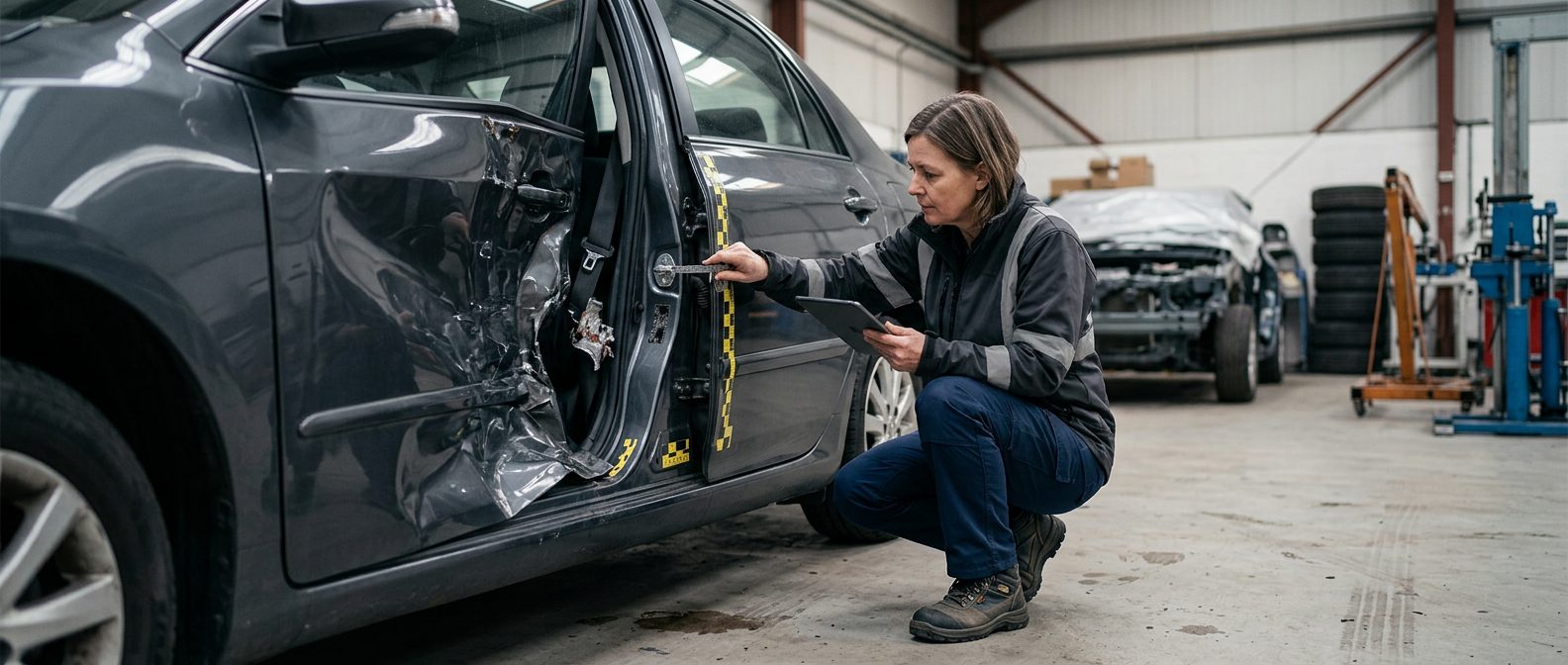
Structural collapse: The vehicle’s frame, roof, or door pillars fail to maintain passenger compartment integrity in moderate-speed impact, crushing occupants. This is measured against Federal Motor Vehicle Safety Standards (FMVSS), particularly FMVSS 216 (roof crush resistance).
Rollover tendency: A vehicle design prone to rolling over in normal driving conditions or evasive maneuvers, particularly in SUVs and pickup trucks with high centers of gravity. NHTSA’s rollover resistance ratings (FMVSS 208) establish industry standards.
Fire risk: Fuel system leaks, electrical shorts, or design flaws that cause post-crash fires. Fuel tank placement, fuel line routing, and crash-test performance are examined.
Seatbelt or restraint failures: Defective restraint systems that don’t lock during impact, release during a crash, or fail to hold occupants safely. Seatbelt pretensioners and load limiters are common failure points.
Steering or suspension defects: Sudden loss of steering control, suspension failure, or tie-rod separation that causes loss of vehicle control.
Unintended acceleration: Electronic throttle defects or software flaws that cause engines to accelerate without driver input, leading to uncontrolled crashes.
If a properly designed vehicle would have protected your loved one, but the defect made it fatal, you have grounds for a claim. The claim is stronger if the defect was recalled (showing manufacturer knowledge), if similar complaints existed before the crash, or if internal manufacturer documents show the company knew of the risk.
How NHTSA Recalls and Investigations Prove a Defect Existed
NHTSA (National Highway Traffic Safety Administration) maintains a public database of vehicle recalls and safety investigations. If your vehicle was subject to a recall or investigation related to the defect that caused the crash, that’s powerful evidence the defect existed and the manufacturer knew about it.
Example: If your loved one died in a crash involving airbag failure, and NHTSA issued a recall for that vehicle model and year for airbag defects, the recall is objective proof the defect existed. Internal manufacturer documents often surface during litigation showing the company received complaints, conducted testing, and knew of the danger before the recall was issued.
You can search NHTSA’s database at safercar.gov to find recalls and investigations for your vehicle. Bring this information to your attorney—it strengthens your claim significantly.
What a Defective Vehicle Wrongful Death Claim Covers
Compensation includes economic damages, non-economic damages, and punitive damages in cases of reckless manufacturer conduct.
Economic damages cover: – Funeral and burial costs – Medical expenses incurred before death – Lost wages and earning capacity the deceased would have provided to the family over their lifetime – Cost of dependent care or household services the deceased provided – Other out-of-pocket losses directly related to the death
Non-economic damages include: – Loss of companionship and emotional pain suffered by surviving family members – Loss of guidance, support, and parental care (if the deceased was a parent) – Loss of consortium (spousal relationship, emotional support, and companionship) – Grief and mental anguish
Punitive damages may be awarded if the manufacturer’s conduct was reckless or showed conscious disregard for safety. These damages punish the defendant and deter similar conduct. Under Florida Statute § 768.72, punitive damages are available when a manufacturer knew of a defect and failed to warn or recall despite that knowledge.
Who Can Bring a Defective Vehicle Wrongful Death Claim
Under Florida Statute § 768.19, surviving spouses, children, parents, and dependents of the deceased may pursue a wrongful death action. An attorney can determine who has legal standing to file and represent the estate.
Have questions about what happened?
Ask our team directly. The first conversation is free, confidential, and there is no obligation to continue.
The Critical Deadline: 2 Years From the Date of Death
This is urgent. Under Florida Statute § 95.11, the statute of limitations for wrongful death claims in Florida is 2 years from the date of death. Statutes of limitations vary by state for crashes that occur elsewhere, but most are 2–4 years.
Do not delay. Once the deadline passes, your family loses the right to file a claim, regardless of the strength of your case. Evidence can be lost, witnesses’ memories fade, and vehicle wreckage may be destroyed. The manufacturer may also move or destroy internal documents.
If your loved one died in a crash within the past 2 years, contact an attorney immediately for a free case evaluation.
How the Process Works: Step-by-Step
Initial consultation. You meet with an attorney to discuss the crash, the vehicle (year, make, model, VIN), any known defects or recalls, and your family’s circumstances. This conversation is free and confidential. The attorney will explain whether a viable claim exists and what the next steps are.
Investigation and evidence gathering. The firm obtains the vehicle itself (if possible), crash data from the vehicle’s event data recorder (“black box”), medical records, police reports, NHTSA recall and investigation records, and manufacturer documents. Engineers inspect the vehicle for defects and compare it to industry standards, Federal Motor Vehicle Safety Standards, and similar vehicles.
Expert analysis. Safety engineers, accident reconstructionists, and medical experts review all evidence to establish that a defect existed and caused or contributed to the death. Their reports form the foundation of the claim. Manufacturer knowledge—internal emails, safety reports, prior complaints, or recalls—provides powerful corroborating evidence.
Demand and negotiation. The firm prepares a detailed demand letter with expert reports, manufacturer knowledge, NHTSA evidence, and damages analysis. This is sent to the manufacturer, its insurer, and other liable parties. Settlement negotiations begin. Many cases resolve at this stage without trial.
Litigation (if necessary). If settlement talks fail, the case proceeds to court. Discovery (exchange of documents and information), depositions (sworn testimony), and expert testimony follow. Trial occurs if no settlement is reached.
Resolution. Settlement, judgment, or verdict leads to compensation. Funds are distributed to cover valid claims, liens, and family compensation according to law.
Timeline and What to Expect
Every case is unique, but here’s a realistic timeline:
- Initial investigation: 2–6 weeks to gather basic evidence and police reports
- Expert retention and analysis: 2–4 months for engineers to inspect the vehicle and prepare reports
- Demand and negotiation: 1–3 months for the firm to present the case and negotiate
- Litigation (if needed): 1–3 years from filing to trial
- Settlement or judgment: Can occur at any stage; many cases settle before trial
Remember the 2-year deadline. The statute of limitations is strict and cannot be extended. Even if your case is still in investigation, filing a claim before the deadline is critical.
What Families Ask: Common Questions
Q: What if the crash was partly caused by driver error?
Driver error doesn’t eliminate a manufacturer’s responsibility for an unsafe design. A driver may make a mistake, but if a properly designed vehicle would have protected occupants in that same crash, the manufacturer is still liable for the defect. Florida’s comparative fault law allows defect claims to succeed even if the driver was partly at fault.
Q: How do we prove the vehicle had a defect?
Engineers inspect the vehicle, review manufacturer testing and design documents, compare the vehicle to industry standards and competing vehicles, and analyze crash data from the vehicle’s event data recorder. Expert testimony establishes the defect and its role in the fatal outcome. NHTSA recalls and investigations provide objective evidence. Manufacturer knowledge—internal emails, safety reports, prior complaints—provides powerful corroborating evidence.
Q: What if the vehicle was recalled?
A recall strengthens the claim by showing the manufacturer knew of the defect. If the recall was not completed before the crash, or if the defect was never recalled despite known risks or similar complaints, the claim remains viable and may be stronger. Recalls also establish that the manufacturer knew the defect was dangerous.
Q: How much is a defective vehicle wrongful death claim worth?
Value depends on the deceased’s age, earning capacity, family circumstances, the severity of the defect, the manufacturer’s knowledge and conduct, and the strength of expert evidence. Each case is unique. An attorney can discuss the potential range after reviewing your specific circumstances and consulting with economic experts.
Q: How long do we have to file a claim?
In Florida, 2 years from the date of death. In other states, typically 2–4 years. Do not delay. Deadlines are strict and cannot be extended.
Q: Will the case go to trial?
Many cases settle before trial. The firm prepares every case as if it will go to trial, which strengthens settlement negotiations. Your family’s preferences and the strength of the evidence guide the decision. Settlement often provides faster resolution and certainty; trial offers the possibility of punitive damages but carries risk and delay.
Want to know where you stand?
Tell us what happened and our team will walk you through the options available to you, at no cost.
Why This Firm Handles Defective Vehicle Wrongful Death Claims
Exclusive focus on catastrophic and fatal injuries. The firm focuses exclusively on cases involving permanent, life-altering harm and death. Defective vehicle wrongful death claims demand deep experience in product liability, engineering, and catastrophic injury law.
Nationwide reach. Licensed to practice in Florida, the firm handles cases across the United States. Families nationwide can access experienced representation regardless of where the crash occurred.
Catastrophic injury experience. Work on spinal cord injuries, traumatic brain injuries, amputations, severe burns, and wrongful death claims builds deep knowledge of how vehicles fail and how to prove manufacturer liability.
Resources for complex cases. The firm retains top-tier engineers, accident reconstructionists, and medical experts. We have relationships with leading safety researchers who can uncover manufacturer knowledge and industry standards.
No upfront cost. Cases are handled on a contingency basis—you pay nothing unless the firm recovers compensation. This removes financial barriers for grieving families.
Bilingual support. English and Spanish-language resources ensure families nationwide can access the help they need.

Take the Next Step
If your loved one died in a crash where a vehicle defect or safety system failure played a role, you have options. A free, confidential case evaluation can help you understand whether a viable defective vehicle wrongful death claim exists and what your family can expect.
Act now. The 2-year statute of limitations is strict. Don’t wait.
When you reach out, be ready to discuss the crash details, the vehicle (year, make, model, VIN), any known defects or recalls, and your family’s circumstances. The firm will explain the process, answer your questions, and tell you honestly whether a claim makes sense.
Contact CHG Personal Injury Lawyers for a free case evaluation. Families in your situation reach out regularly to pursue accountability and get the compensation they deserve.
How We Approach Defective Vehicle Wrongful Death Claims
Holding Manufacturers Accountable
We focus exclusively on pursuing claims against vehicle makers and sellers who put unsafe products on the road. This is separate from any claim against another driver.
Investigating Design and Manufacturing Defects
We examine crash data, vehicle history, engineering records, and prior complaints to prove the defect existed and the manufacturer knew or should have known about the risk.
Building Your Family's Case
We work with accident reconstructionists, engineers, and medical professionals to establish how the defect caused the fatal crash and the damages your family has suffered.
Nationwide Experience with Catastrophic Loss
We represent families across the country who have lost loved ones due to vehicle defects. We understand the legal and emotional complexity of these claims.
Time Matters in Wrongful Death Claims
The law sets strict deadlines for filing wrongful death claims. Waiting to act can jeopardize your family's right to pursue accountability. Contact us as soon as possible to protect your claim.
Types of Vehicle Defects That Lead to Fatal Crashes
Brake Failures
Complete or partial loss of braking ability due to design flaws, manufacturing defects, or failure to warn drivers of known risks.
Airbag Defects
Airbags that fail to deploy, deploy unexpectedly, or deploy with excessive force, causing fatal injuries or preventing protection in a crash.
Structural Defects
Weak frames, roof crush, or door latch failures that collapse during impact and fail to protect occupants.
Steering and Suspension Failures
Loss of steering control, suspension collapse, or component failure that causes the driver to lose control of the vehicle.
What We Investigate in Your Claim
Pre-Crash Defect History
We examine whether the manufacturer received prior complaints, recall notices, or safety reports about the same defect in other vehicles.
Design and Manufacturing Records
We obtain internal documents, testing data, and communications showing whether the manufacturer knew about the risk and chose not to fix it.
The Fatal Crash Itself
We reconstruct the accident to prove the defect—not driver error or another cause—was the reason for the crash and your loved one's death.
Your Family's Damages
We document the financial and emotional impact of your loss, including funeral costs, lost income, and the pain of losing a family member.