

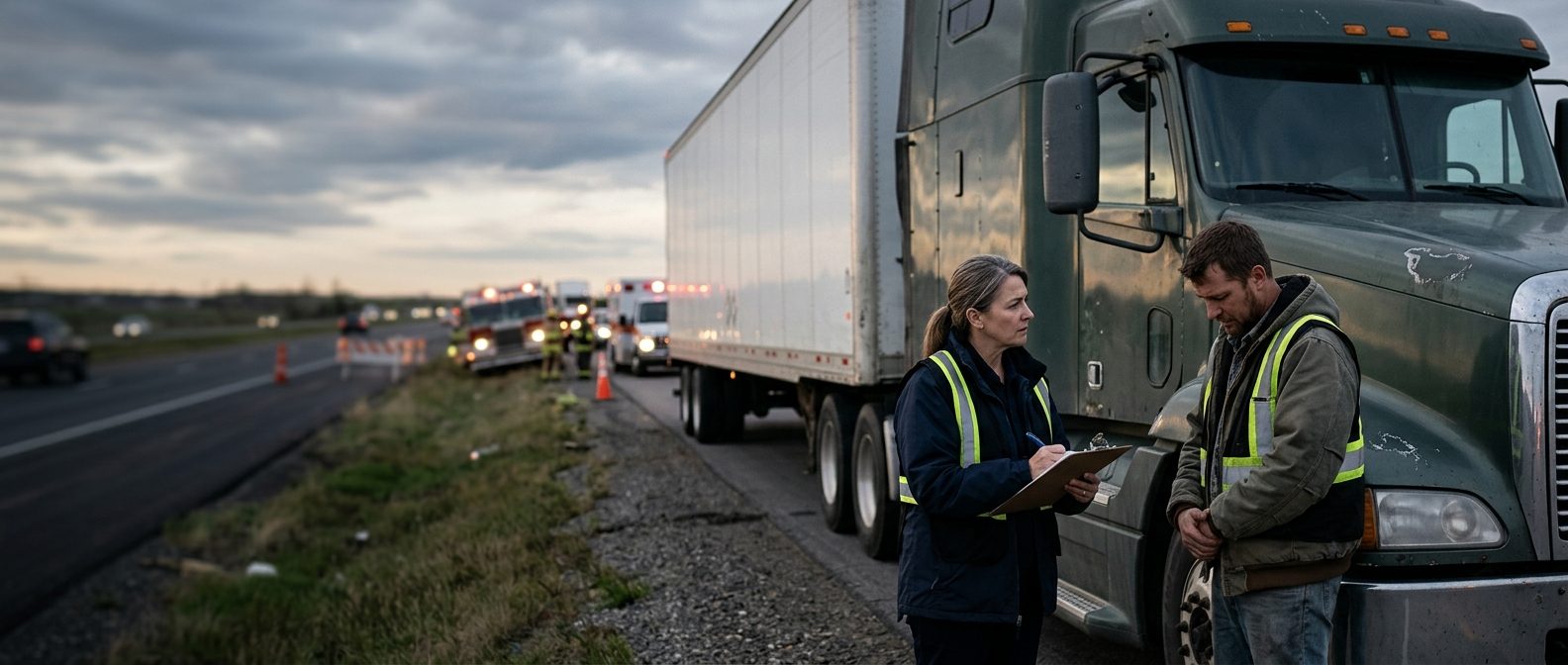
Trucking Insurance Claims for Catastrophic Injuries
When a truck accident causes a catastrophic injury, the insurance claim process becomes far more complex than routine accidents. Spinal cord injuries, paralysis, traumatic brain injury, amputation, severe burns, or catastrophic back or neck injuries cause permanent, life-altering harm. Understanding how to navigate a trucking insurance claim for serious injury is critical. Damages often reach millions of dollars over a lifetime.
Trucking companies carry commercial liability insurance with much higher coverage limits than personal auto policies. But higher limits don’t guarantee fair or faster payouts. In fact, the opposite often happens. Because catastrophic injuries cost millions over a lifetime, insurance companies have enormous financial incentives to deny claims, delay settlements, or pressure you to accept far less than your injury is worth.
Understanding how trucking insurers approach catastrophic injury claims—and what tactics they use—helps you protect yourself and your family.
Why Higher Coverage Limits Don’t Mean Faster Payouts
Trucking companies typically carry commercial liability insurance with limits ranging from $1 million to $5 million or higher per accident. This far exceeds coverage on a personal vehicle.
But higher limits do not mean faster or more generous settlements for a trucking insurance claim involving serious injury.
Insurance adjusters are trained negotiators working for a company with one clear goal: pay you as little as possible. When your injury is catastrophic—permanent, life-altering, and requiring decades of medical care—the stakes become very high for the insurer. Their approach becomes more aggressive.
In catastrophic injury claims, insurers routinely delay investigations, request repeated medical exams, or pressure injured people to settle quickly. They do this before you understand your long-term needs. The goal is simple: minimize the payout before you fully grasp what your injury will cost over a lifetime.
If your damages exceed the policy limit, you may have a claim against the trucking company's personal assets. Talk it through with our team — the first consultation is free, confidential, and carries no obligation.
Catastrophic Injuries Trigger Different Claim Handling
Catastrophic injuries trigger different claim handling because the damages are permanent and often exceed policy limits. These injuries include:
- Spinal cord injury causing paralysis (paraplegia or quadriplegia)
- Traumatic brain injury with cognitive or physical impairment
- Amputation
- Severe burns requiring ongoing specialized care
- Catastrophic back or neck injuries
A spinal cord injury requiring lifelong care can cost millions. This includes adaptive equipment, home modifications, and lost earning capacity. A traumatic brain injury affecting cognitive function may require decades of rehabilitation and support. An amputation means permanent disability, prosthetics, and ongoing medical care. Severe burns require specialized wound care, skin grafts, and psychological support.
These costs create powerful financial incentives for insurers to deny claims, delay settlements, or offer far less than the injury is worth. Adjusters know injured people often need money quickly for medical bills and living expenses. They exploit that urgency by pressuring you to settle before you understand your full future needs.
How Insurers Investigate Catastrophic Claims
After a catastrophic truck accident, the insurer’s investigation is thorough. But that thoroughness serves their interests, not yours.
Adjusters request medical records, accident scene photos, police reports, and witness statements. They look for inconsistencies or gaps that could reduce liability or cast doubt on whether your injury is permanent.
In catastrophic cases, insurers routinely hire independent medical examiners (IMEs)—doctors hired by the insurance company to review your injuries. These doctors may challenge your treating physicians’ findings about permanence and future care needs.
Insurers also investigate the truck driver’s logbook, maintenance records, and compliance history to understand liability. They look for any violation by you to argue comparative fault under Fla. Stat. §768.81. This allows them to reduce their liability if you are found partially at fault.
Insurance companies may also delay investigations or request repeated medical exams to wear you down or create doubt about injury severity. This is not accidental—it is a tactic.
Common Tactics Insurers Use to Minimize Catastrophic Injury Claims
Insurance companies have refined tactics to reduce payouts on serious injury claims. Knowing these tactics helps you avoid their traps.
Disputing causation. Arguing that your injury was pre-existing or caused by something other than the truck accident. They may claim you had a prior back injury or that your symptoms are unrelated to the crash.
Challenging permanence. Claiming your injury will improve or that you will recover, even when medical evidence shows otherwise. This is especially common with traumatic brain injury, where symptoms are often invisible and subjective.
Requesting excessive medical exams. Scheduling repeated independent medical exams (IMEs) to create doubt or exhaust you. Each exam is a chance for their hired doctor to contradict your treating physicians.
Offering quick, low settlements. Pressuring you to accept a small amount before you understand your long-term needs or have had time to consult an attorney.
Blaming the injured person. Arguing comparative fault to reduce the insurer’s liability. Under Florida law, if you are more than 50% at fault, you may recover nothing.
Delaying. Slow-walking the investigation or claim process to pressure you into accepting less out of desperation or financial hardship.
What NOT to Say or Do When Dealing with Insurance Companies
Your words can be used against you. Here’s what to avoid:
Do not minimize your injuries or say you are “fine” or “feeling better.” Insurers will use this against you in settlement negotiations or at trial. A casual comment to an adjuster can become evidence that your injury is less severe than you claim.
Do not post on social media about your recovery, activities, or feelings. Insurers monitor social media and may use photos or posts to argue you are not as injured as you claim. A photo of you sitting up in a wheelchair or attending a family event can be misrepresented as evidence of recovery.
Do not give a recorded statement to the insurance adjuster without legal representation. Anything you say can be used to reduce your claim. Adjusters are trained to ask leading questions and phrase statements in ways that later support the insurer’s position.
Do not accept the first settlement offer, no matter how urgent your financial situation feels. Early offers are almost always far below what your injury is worth. Accepting quickly means you forfeit the right to recover additional compensation when your long-term needs become clear.
Do not sign any document the insurer sends without understanding it fully. Some releases waive future claims or limit your rights to pursue additional compensation if your condition worsens or new medical needs emerge.
The Catastrophic Injury Claim Process: What to Expect
Understanding the timeline and stages helps you prepare for what’s ahead.
Initial notification. You or your family report the injury to the trucking company’s insurer, or your own insurer files a claim against theirs. This triggers the formal claim process.
Investigation phase. The adjuster gathers evidence, interviews witnesses, and reviews medical records. This can take weeks or months. During this time, the insurer is building a file to support their position—which may be to minimize your claim.
Demand letter. If you have legal representation, your attorney sends a detailed demand explaining liability, injury severity, and damages. Damages include medical costs, lost wages, pain and suffering, and future care needs. This is where negotiation begins in earnest.
Negotiation. The insurer responds with a counteroffer, often far below your demand. Back-and-forth negotiation follows. In catastrophic cases, this phase can last months or years.
Settlement or litigation. If negotiation succeeds, you settle and sign a release. If not, your case may proceed to trial. In catastrophic injury claims, the entire process often takes 1–3+ years because the damages are complex and high.
Not sure what your next step is?
Talk it through with our team — the first consultation is free, confidential, and carries no obligation.
Insurance Coverage Limits and Damages That Exceed Them
Trucking companies carry liability insurance with stated limits—for example, $1 million per person or $5 million per accident. If your damages exceed the policy limit, you may have a claim against the trucking company’s personal assets. But you can only do this if you can prove negligence or wrongdoing.
In some cases, multiple insurance policies may apply: the truck driver’s personal policy, the trucking company’s policy, the shipper’s policy, or others. This allows recovery from more than one source. Underinsured motorist (UIM) coverage on your own policy may also help bridge the gap, though this varies by state and your specific policy.
Why Traumatic Brain Injury Is Harder to Prove
Not all catastrophic injuries are equally easy to prove to an insurance company.
Traumatic brain injury (TBI) can be difficult to prove because symptoms—cognitive impairment, mood changes, headaches, sleep disturbance—are often invisible and subjective. Insurers may argue they are temporary or exaggerated, even when neuroimaging and neuropsychological testing show objective damage.
Chronic pain and psychological injuries (PTSD, depression) are harder to quantify than visible injuries like amputation or spinal cord damage. Injuries that worsen over time (post-traumatic arthritis, chronic pain syndromes) require expert testimony about causation and permanence.
By contrast, catastrophic injuries like spinal cord damage or amputation are easier to prove because the permanence is clear and medical evidence is objective. An MRI showing spinal cord damage, or the medical fact of amputation, is difficult for an insurer to dispute.
Expert witnesses—neurologists, physiatrists, life-care planners, and economists—are often essential to prove the severity, permanence, and lifetime cost of serious injuries, especially TBI.
Why Legal Representation Matters for Catastrophic Injury Claims
Insurance adjusters are trained negotiators working for a company with a financial incentive to pay you as little as possible. An attorney levels the playing field by investigating the accident independently, gathering medical evidence, and negotiating on your behalf.
Attorneys understand insurance tactics and know how to counter them. They know when an offer is unreasonably low and when to push back. In catastrophic cases, attorneys often hire expert witnesses (medical specialists, economists, life-care planners) to quantify your lifetime costs and strengthen your claim.
Most catastrophic injury attorneys work on contingency—no upfront cost; they are paid from your settlement—so you have no financial risk in seeking representation. Under Fla. Stat. §95.11, you have only two years from the date of injury to file a claim in Florida. Time is critical.
Frequently Asked Questions
How long does a catastrophic injury claim take?
In catastrophic cases, the process often takes 1–3+ years because the damages are complex, high, and heavily disputed by insurers.
What if I’m partially at fault for the truck accident?
Under Florida’s comparative-fault rule, you can still recover damages unless you are more than 50% at fault. The insurer will try to maximize your share of blame to reduce their payout.
What should I do if the insurance company denies my claim?
Do not accept the denial without legal review. Many denials are improper and can be challenged by an attorney.
Can I recover if my damages exceed the insurance policy limit?
Yes, you may pursue a claim against the trucking company’s personal assets or other available insurance policies. But you can only do this if negligence or wrongdoing can be proven.
Do I need an attorney for a catastrophic injury claim?
For catastrophic injuries, legal representation is strongly recommended. Insurers have enormous resources and financial incentives to minimize your claim.
Have questions about what happened?
Ask our team directly. The first conversation is free, confidential, and there is no obligation to continue.
Next Steps
If you or a family member has suffered a catastrophic injury in a truck accident and are now navigating an insurance claim, you’re facing a complex, high-stakes process. The insurance company has strong financial incentives to minimize your recovery.
The decisions you make now—what you say, what you sign, whether you seek legal help—will shape your ability to recover fair compensation for permanent, life-altering harm.
People in your situation reach out to us regularly to discuss their options and understand what they’re up against. We focus exclusively on catastrophic injuries and work on contingency, so there’s no cost to you unless we recover compensation.
Contact us for a free case evaluation to discuss your claim and learn how we can help.