

Truck Accidents · Catastrophic Injury
When a Car Slides Under a Truck, the Injuries Are Rarely Minor
Underride crashes strike the passenger cabin at head and neck height — causing traumatic brain injuries, spinal cord damage, and fatal outcomes. If your family is facing one, we're here to help.
Why Families Turn to CHG
Nationwide
Catastrophic cases taken across the U.S.
Bilingual
English & Spanish support
Licensed
Florida Bar–admitted attorneys
$0
Free, no-obligation case review
By CHG Lawyers · Published August 08, 2026
Underride and Jackknife Crashes: How These Truck Accidents Cause Life-Altering Injuries
Most articles about deadly truck crashes cover only underride crashes — when a car slides under a trailer. But two different failures cause the worst commercial-truck injuries: underride crashes and jackknife crashes.
This page explains both in plain language. It also tells an injured person or a grieving family what they can do next. That includes two Florida rules that quietly decide whether a claim survives.
Not sure what your next step is?
Talk it through with our team — the first consultation is free, confidential, and carries no obligation.
What is an underride crash?
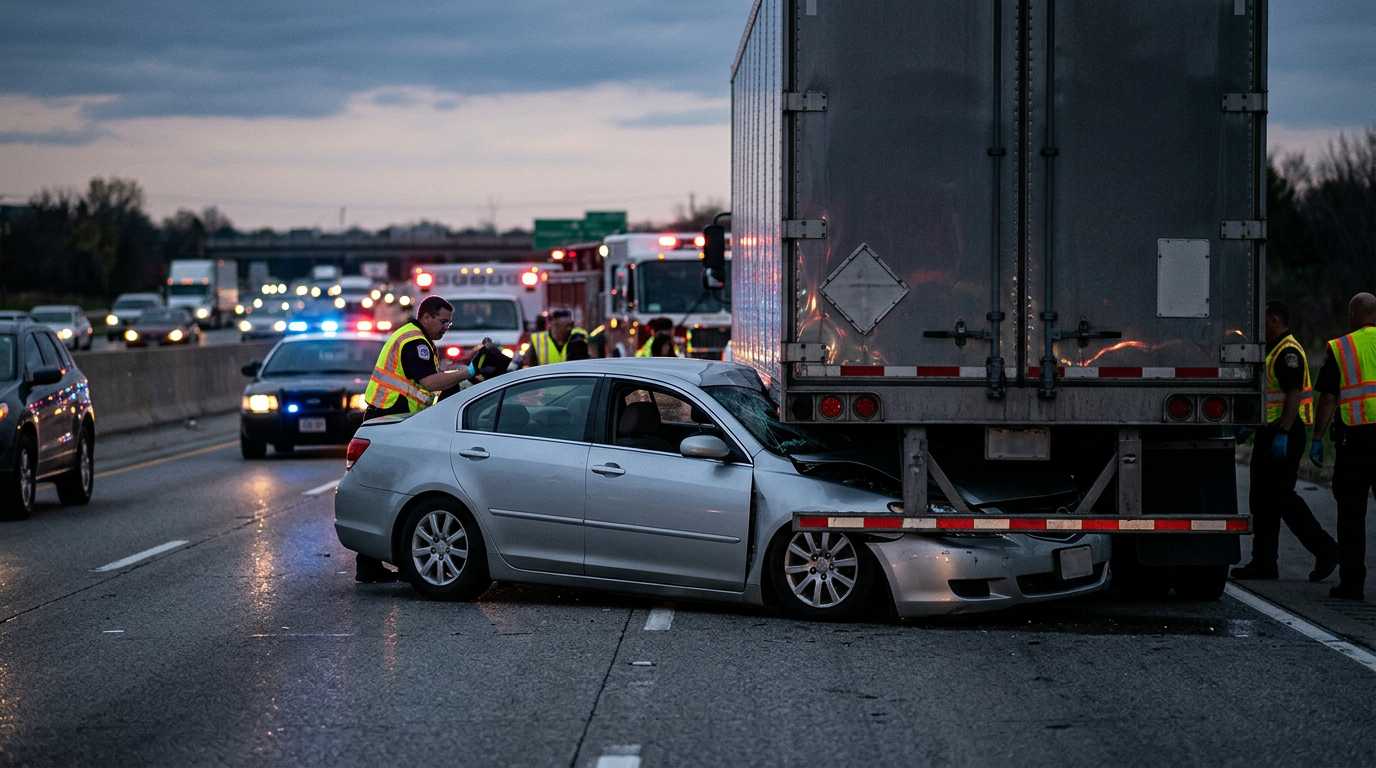
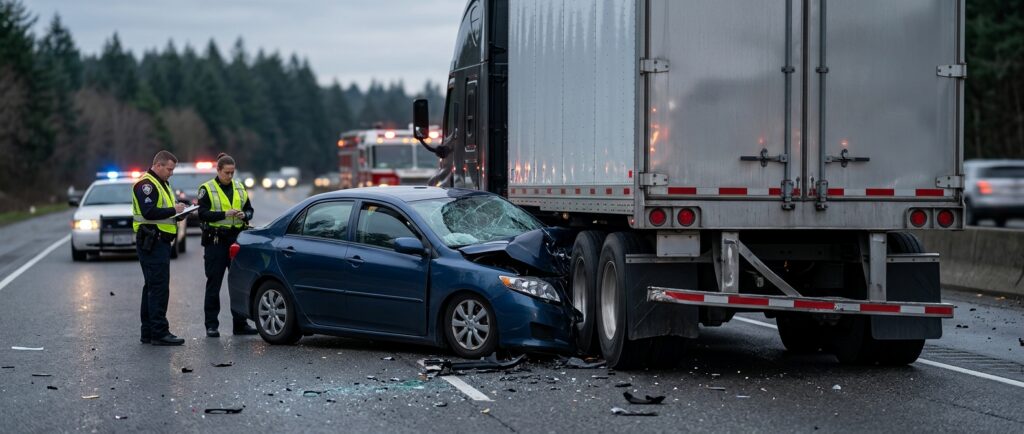
An underride crash is when a car goes partly or fully under a truck’s trailer. The trailer then strikes the cabin at head and neck height, not at the bumper.
In an ordinary crash, your bumper and crumple zones absorb the hit. Your airbags fire. The frame folds in a controlled way to protect the space around you.
An underride crash skips all of that. The strong lower body of your car slides beneath the trailer. Then the trailer slams into the weaker upper cabin — the windshield, roof, and the space where people’s heads are.
As PBS Frontline has documented, underride results are far more likely to be severe. They range from serious head and neck injuries to death. It is a distinct and especially deadly type of truck crash.
Underride vs. override: two ways a truck can crush a smaller vehicle
In an underride crash, the car goes under the truck. In an override crash, the truck rides up over the car. It crushes the roof and cabin from above. This often happens when a heavy truck can’t stop in time behind slower or stopped traffic.
In both cases, the crash force reaches the passenger area directly. There is little or no crumple zone left to absorb it. That is why these two crashes are so hard to survive without lasting harm.
Rear, side, and front underride crashes
Underride happens in three main ways. Each one delivers the impact at windshield or roof height.
Rear underride
A car strikes the back of a trailer and slides beneath it. This is common at night or when a trailer stops suddenly. A steel bar called a rear underride guard is supposed to stop the car from going under. But if that guard is weak, damaged, or mounted too high, the car keeps going.
Side underride
A car strikes the side of a trailer and slides under it. This often happens when a long truck turns across a road or crosses lanes at an intersection. Most trailers have no side guards at all, so nothing stops the car.
Front underride and override
A truck that can’t stop in time rides over the car ahead. Again, the point of impact reaches the cabin, not the bumper. In every version, the height of the strike is what makes these crashes so severe.
What is a jackknife crash — and why it belongs in the same conversation
A jackknife crash happens when the trailer swings out of line with the cab. The rig folds like a pocketknife. It usually follows hard braking or a loss of grip on the road.
This is a real hazard on wet Florida highways during afternoon thunderstorms. Standing water can break a trailer’s grip in an instant.
Here is the connection most pages miss. A jackknifed trailer sweeps sideways and can block several lanes at once. It presents its long, low, guardless side to oncoming traffic.
In other words, a jackknife often creates a side-underride hazard. These two dangers are not separate topics. One commonly leads to the other.
What causes underride and jackknife crashes
These crashes usually trace back to preventable failures in equipment, visibility, or driving:
- Weak, damaged, or missing rear underride guards — the one part meant to keep a car from sliding under.
- No side underride guards — most trailers still lack them, leaving the whole side open.
- Low visibility — unlit or poorly marked trailers, night driving, and trailers crossing dark roads.
- Speeding, fatigue, and improper braking — a tired or rushed driver reacts too late, and sudden braking can trigger a jackknife.
- Poor maintenance — worn brakes, badly adjusted brakes, and bald tires make a loaded rig far harder to control.
We call these preventable failures — not to accuse any one party. We say it because prevention is exactly why accountability matters after a crash.
Why these injuries are so catastrophic
The trailer strikes at head, neck, and chest level. It bypasses the airbags and crumple zones that protect you in ordinary crashes. The result is often permanent, life-altering harm.
The injuries seen in catastrophic truck cases include:
- Traumatic brain injuries (TBI) — a direct impact to the head can cause lasting changes to thinking, memory, movement, and personality.
- Spinal cord injuries and paralysis — crushing force to the neck and back can cause paraplegia (loss of function in the legs and lower body) or quadriplegia (loss of function in the arms and legs). According to the Mayo Clinic, how severe a spinal cord injury is depends on its location and on whether it is complete or incomplete. Motor-vehicle crashes are a leading cause of these injuries in the United States.
- Catastrophic back and neck injuries that may need surgery and lifelong care.
- Amputation and limb loss from crushing forces.
- Severe burns when a fuel tank ruptures and ignites.
It helps to know who actually tracks and classifies these injuries, rather than relying on a vague statistic. Physicians grade spinal cord injuries using the ASIA Impairment Scale (AIS). It is published by the American Spinal Injury Association and measures how much movement and feeling remain below the injury.
Long-term national data on spinal cord injury is kept by the National Spinal Cord Injury Statistical Center (NSCISC) at the University of Alabama at Birmingham. And the Christopher & Dana Reeve Foundation publishes figures on how many Americans live with some form of paralysis.
These are not the minor injuries of an ordinary fender-bender. They change a person’s life permanently.
When a loved one doesn’t survive
Underride, override, and jackknife crashes are among the deadliest. Fatal truck crashes are part of the national record. The U.S. National Highway Traffic Safety Administration compiles fatal-crash data through its Fatality Analysis Reporting System (FARS). But for a family, this is not a statistic. It is the most catastrophic outcome there is.
If your family is living through this, please know a few things. You may have the right to bring a wrongful-death claim in your loved one’s name. There are decisions with deadlines. You do not have to make them alone or all at once.
The goal of a claim is not to replace who you lost — nothing can. It is to secure the accountability and support your family is entitled to.
Have questions about what happened?
Ask our team directly. The first conversation is free, confidential, and there is no obligation to continue.
Injuries commonly seen in jackknife crashes
Jackknife crashes cause the same catastrophic injuries as underride, often in multi-vehicle pileups. When a trailer swings across lanes and stops, other vehicles strike it or each other at highway speed.
These secondary impacts cause the same pattern: traumatic brain injuries, spinal cord damage and paralysis, amputations, and severe burns. People in smaller vehicles are most at risk. Their cars simply cannot absorb the weight and force of a loaded commercial trailer.
Are these crashes preventable?
Many are. Federal safety standards require rear underride guards on many trailers. There is also an ongoing national debate over requiring side underride guards. Well-maintained brakes, bright reflective markings, and careful driving all reduce the danger.
As a driver, you can lower your own risk. Keep a generous following distance behind trucks. Avoid lingering alongside a trailer or in a truck’s blind spots. Slow down at night and in rain, when trailers are hard to see.
These steps help. But they can never fully protect you from another party’s failure. And following them is never a reason to blame yourself if the worst happens.
Two Florida rules that can decide your claim
Most informational pages skip the law that actually governs your case. Two Florida statutes matter early:
- The filing deadline. Under Fla. Stat. §95.11, you generally have two years to file most negligence-based injury lawsuits for claims arising on or after March 24, 2023. Miss it, and you can lose the right to sue — no matter how strong the case is.
- The comparative-fault rule. Under Fla. Stat. §768.81, Florida uses modified comparative negligence. Your recovery is reduced by your share of fault. And a person found more than 50% at fault generally cannot recover damages at all.
A truck crash often involves more than one responsible party. That can include the trucking company, a maintenance provider, or a trailer manufacturer. So how fault is assigned can change everything.
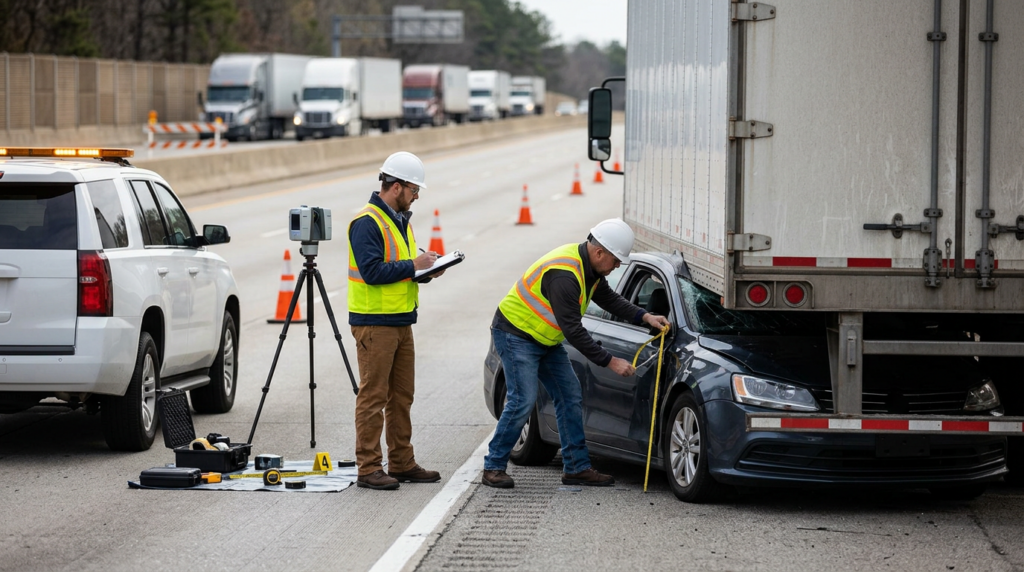
Acting sooner helps preserve evidence. This includes the truck’s electronic control module, maintenance logs, and driver hours-of-service records — before they are lost.
What a catastrophic truck crash can mean for your family
A permanent injury often brings surgeries, rehabilitation, wheelchairs, and home changes like ramps and wider doorways. That means years of care. It places a heavy financial and emotional weight on families. After a fatal crash, that strain arrives on top of grief.
A lawyer can help investigate the crash, preserve evidence, and identify every party who shares responsibility. No lawyer can promise a specific result. But you deserve to understand your options.
How CHG Personal Injury Lawyers can help
CHG Personal Injury Lawyers represents people who suffer catastrophic and fatal truck-crash injuries — in Florida and nationwide. Our team includes attorneys admitted to The Florida Bar. We also offer bilingual (English and Spanish) support.
We handle underride and jackknife cases involving traumatic brain injuries, spinal cord injuries and paralysis, amputations, severe burns, and catastrophic back and neck injuries.
Contact us for a free, no-obligation case evaluation.
Frequently asked questions
What does an underride crash mean?
It’s when a smaller vehicle slides beneath a truck’s trailer. The trailer then strikes the passenger cabin at head and neck height instead of the bumper.
What is the difference between underride and override?
In an underride crash, the car goes under the truck. In an override crash, the truck rides up over the car and crushes the roof and cabin from above.
How is a jackknife crash different from underride?
A jackknife is the trailer folding sideways, out of line with the cab. It usually follows hard braking or lost grip. The danger is that the sideways trailer often creates a side-underride hazard for other drivers.
Why are these truck-crash injuries so severe?
The trailer hits above the bumper. It bypasses airbags and crumple zones and strikes the head, neck, and chest. This often causes permanent or fatal injuries.
Can my family file a claim after a fatal truck crash in Florida?
A family may bring a wrongful-death claim. Under Fla. Stat. §95.11, most injury lawsuits must generally be filed within two years for claims arising on or after March 24, 2023.
Want to know where you stand?
Tell us what happened and our team will walk you through the options available to you, at no cost.
Related resources
- Read our pillar guide: Catastrophic truck accident injuries.
If you or someone you love was catastrophically hurt — or lost — in an underride or jackknife crash, contact CHG Personal Injury Lawyers for a free case evaluation.
Why Underride Crashes Cause Catastrophic Harm
Impact at Head and Neck Height
Instead of striking the bumper, the trailer hits the level of the driver's and passengers' heads — bypassing the crumple zones designed to absorb a collision.
Traumatic Brain Injuries
Direct force to the skull can cause severe TBI, permanent cognitive impairment, and lifelong care needs.
Spinal Cord and Neck Damage
Crushing forces at neck height can sever or damage the spinal cord, leading to paralysis — paraplegia or quadriplegia.
Fatal Outcomes
Underride crashes are among the deadliest collisions on the road. When a loved one is lost, surviving family may bring a wrongful-death claim.
Evidence Can Disappear Quickly
Trucking companies and their insurers often begin investigating within hours. Electronic logs, maintenance records, and guard-rail data can be lost or overwritten. Speaking with an attorney early helps preserve what your case depends on.
Understanding the Terms
What Is an Underride Crash?
It's when a smaller vehicle slides beneath a truck's trailer. The trailer then strikes the passenger cabin at head and neck height instead of the bumper — a leading reason these crashes are so severe.
Underride vs. Override
In an underride crash, the car goes under the truck. In an override crash, the truck rides up over the car and crushes it from above. Both can cause catastrophic, life-altering injuries.
Rear and Side Underride
Rear underride happens when a car strikes the back of a trailer; side underride when it strikes the trailer's length. Rear and side guards are meant to reduce these impacts — when they fail or are missing, the results can be devastating.
Who May Be Responsible
Liability can extend beyond the driver to the trucking company, maintenance providers, or equipment makers. Our attorneys work to identify every party accountable for a catastrophic injury.