

Catastrophic Truck Accidents
Underride Truck Accidents: When a Smaller Vehicle Slides Beneath a Truck
Underride crashes cause severe, life-altering injuries. If you or a family member was hurt in an underride accident, you may have a claim against the truck driver, the trucking company, or the truck's manufacturer.
By CHG Lawyers · Published August 30, 2026
Underride Truck Accidents: Liability, Catastrophic Injuries & Legal Options
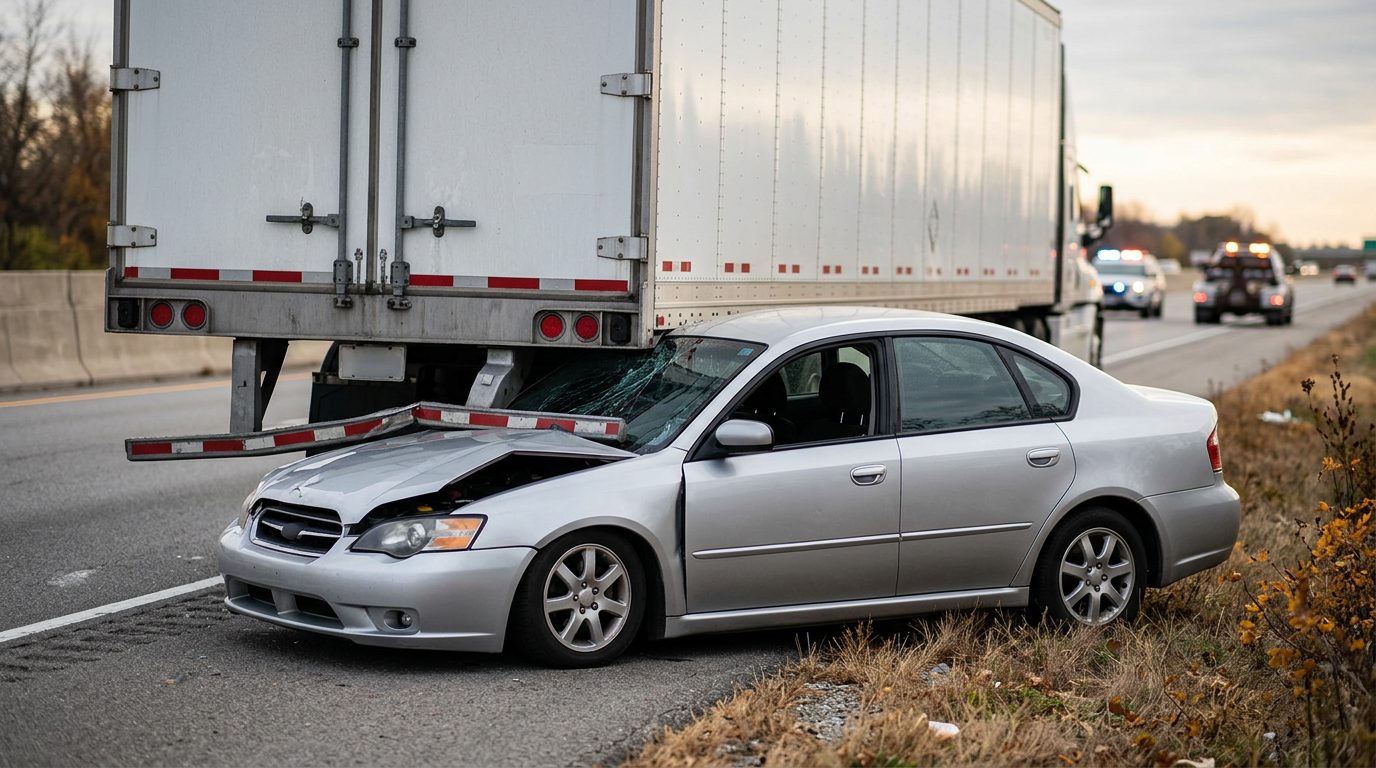
An underride truck accident occurs when a smaller vehicle slides underneath a large truck’s trailer during a collision. The smaller vehicle’s protective roof and cabin offer no protection. Occupants are exposed directly to the truck’s undercarriage, wheels, and cargo. Underride truck accidents are among the deadliest truck collisions—and investigation often reveals they were preventable.
If you or someone you care about was injured in an underride crash, or if a loved one was killed in one, this page explains what happened, why it’s so dangerous, and what you should know about your legal options.
Not sure what your next step is?
Talk it through with our team — the first consultation is free, confidential, and carries no obligation.
What Is an Underride Accident?
An underride accident happens when a passenger car slides beneath a semi-truck or tractor-trailer during a collision. The vehicle doesn’t hit the truck head-on. Instead, it slides or wedges underneath the truck’s body or trailer, often at the rear or side. The truck’s undercarriage then passes over or crushes the smaller vehicle’s roof and cabin.
This is different from an override accident, in which a large truck slides underneath an even larger vehicle or object (like a bridge overpass).
Underride crashes commonly occur in these scenarios:
- Rear-end collisions: A car strikes a truck’s rear when the truck brakes suddenly or is stopped in traffic.
- Side-impact crashes: A car merges into or is struck by a truck, sliding under the truck’s side.
- Merging accidents: A vehicle attempts to merge and becomes trapped beneath the truck’s trailer.
- Sudden truck stops: A truck brakes hard, and a following vehicle cannot stop in time.
The smaller vehicle’s protective structure—designed to absorb impact at bumper height—offers no protection when the vehicle is underneath the truck. Occupants face direct exposure to the truck’s mass, undercarriage, and wheels.
Why Are Underride Truck Accidents So Catastrophic?
Underride truck accidents are among the deadliest truck collisions because occupants of the smaller vehicle have almost no protection. According to the National Highway Traffic Safety Administration (NHTSA), underride accidents result in severe and often fatal injuries. The agency has documented that underride guards, when properly designed and maintained, significantly reduce injury severity and fatality rates—yet many trucks operate with inadequate or missing guards.
The injuries that result from underride truck accidents are life-altering:
- Traumatic brain injury (TBI): Loss of consciousness, cognitive impairment, memory loss, personality changes, and permanent disability requiring lifelong rehabilitation.
- Spinal cord injury and paralysis: Damage to the spinal cord can result in paraplegia (paralysis of the lower body) or quadriplegia (paralysis of all four limbs). Survivors face permanent loss of sensation and motor function.
- Amputation and limb loss: Crushing injuries to limbs often require surgical amputation. Survivors must adapt to life without a limb and use prosthetics and assistive devices.
- Severe burns: Friction from the undercarriage, fuel leaks, or fire following the crash can cause severe burns requiring skin grafts and long-term rehabilitation.
- Catastrophic back and neck injuries: Fractures, herniation, and nerve damage that cause chronic pain and permanent disability.
- Wrongful death: Fatal underride truck accidents leave families grieving the loss of a loved one and facing financial devastation.
Survivors of underride truck accidents often require lifelong medical care, rehabilitation, assistive devices, and home modifications. Many face permanent disability and loss of independence. Families left behind after a fatal crash face emotional loss, sudden loss of income, medical bills, and funeral expenses.
What Causes Underride Truck Accidents?
Underride truck accidents result from a combination of equipment failures, driver negligence, and inadequate safety measures. Investigation often reveals preventable negligence.
Insufficient or Missing Underride Guards
Federal law requires rear underride guards on most commercial trucks under the standard FMVSS 223. However, many guards are inadequate, poorly maintained, or missing entirely. Side guards and front guards are not yet federally mandated, despite evidence that they reduce injury severity. A truck without proper guards is far more likely to cause a catastrophic underride truck accident. When a trucking company or manufacturer fails to install, inspect, or maintain these guards, that failure is often actionable negligence.
Lack of Visibility
Trucks that lack adequate lighting, reflectors, and high-visibility markings are harder to see, especially at night or in poor weather. A driver who cannot see a stopped truck until the last moment may not be able to brake in time. Trucking companies have a duty to maintain reflectors and lighting equipment. Failure to do so contributes to preventable crashes.
Driver Error and Negligence
Truck drivers who brake suddenly without warning, make unsafe lane changes, fail to signal, or drive too fast for conditions increase the risk of underride truck accidents. Passenger-vehicle drivers who follow too closely or merge unsafely can also contribute. However, truck drivers operate much larger vehicles, so their duty of care is heightened.
Road and Weather Conditions
Wet roads, fog, darkness, and other conditions that reduce visibility make underride truck accidents more likely. A driver may not see a truck until it’s too late to brake. Trucking companies and drivers have a duty to adjust speed and following distance for conditions.
Mechanical Failure
Brake failure, tire blowouts, or other mechanical problems can cause a truck to stop suddenly or unpredictably. This increases the risk that a following vehicle will underride it. Trucking companies have a legal duty to inspect and maintain their vehicles’ braking systems and tires.
Negligent Truck Maintenance
Trucking companies that fail to inspect, repair, or replace underride guards, reflectors, and lighting equipment create dangerous conditions. A truck with a broken or missing rear guard is a hazard to every vehicle behind it. Maintenance records and inspection logs are critical evidence of whether a company failed in its duty to maintain safe equipment.
Underride Truck Accidents Are Often Preventable
Most underride truck accidents could be prevented with proper equipment, maintenance, and driver conduct.
Federal regulations mandate that commercial trucks be equipped with rear underride guards that meet minimum strength and design standards. These guards are meant to prevent a following vehicle from sliding underneath the truck’s trailer during a collision. When properly maintained and functioning, rear guards significantly reduce the severity of underride truck accidents.
Side guards and front guards are not yet federally required, but they are proven to reduce injury and fatality rates. Some trucking companies and manufacturers voluntarily install them. When they do not, that choice may be relevant to liability.
Visibility improvements—including reflectors, lighting, and high-visibility markings—help other drivers see trucks, especially at night or in poor weather. This reduces the likelihood of rear-end collisions that can lead to underride truck accidents.
Driver training and safe practices matter too. Truck drivers who signal lane changes, brake smoothly, and maintain safe speeds reduce the risk of accidents. Passenger-vehicle drivers who maintain safe following distances and avoid sudden merges also play a role in prevention.
When an underride truck accident occurs, investigation often reveals that one or more of these preventive measures failed: the guard was inadequate or missing, the truck lacked visibility markings, the driver was negligent, or the truck was not properly maintained. This is why investigating the cause of an underride crash is critical—it often reveals negligence or failure on the part of the truck driver, the trucking company, or the truck manufacturer.
Catastrophic Injuries from Underride Truck Accidents
The injuries that result from underride truck accidents are catastrophic and permanent.
Traumatic Brain Injury
A blow to the head during an underride crash can cause traumatic brain injury. Survivors may experience loss of consciousness, cognitive impairment, memory loss, difficulty concentrating, personality changes, and emotional dysregulation. Many require ongoing rehabilitation and may never fully recover. Families often describe a loved one as “not the same person” after a severe TBI.
Spinal Cord Injury and Paralysis
The force of an underride crash can damage the spinal cord, resulting in paraplegia or quadriplegia. According to the American Spinal Injury Association (ASIA), spinal cord injuries are classified by the level and completeness of the injury. Survivors face permanent loss of sensation and motor function below the level of injury. They require lifelong care, assistive devices, and home modifications. A person with quadriplegia may require 24-hour attendant care, mechanical ventilation, and specialized medical equipment.
Amputation and Limb Loss
Crushing injuries to arms and legs during an underride crash often require surgical amputation. Survivors must adjust to life without a limb, learn to use prosthetics, and navigate a world not designed for people with limb loss. Phantom pain, infection, and the need for prosthetic replacement throughout life add ongoing medical and financial burden.
Severe Burns
Friction from the undercarriage or fire following an underride crash can cause severe burns. Burn survivors often require extensive medical treatment, skin grafts, and long-term rehabilitation. Scarring and contractures (permanent tightening of skin and muscle) can limit movement and function. Psychological trauma from severe burns is also significant.
Catastrophic Back and Neck Injuries
Compression, fracture, or herniation of the spine during an underride crash can cause chronic pain, weakness, and disability. Some injuries result in permanent nerve damage and loss of function. Survivors may require spinal fusion surgery, ongoing pain management, and permanent restrictions on activity.
Wrongful Death
Fatal underride truck accidents leave families grieving the loss of a loved one and facing financial hardship. The family may pursue a wrongful death claim to recover damages on behalf of the deceased and to hold the responsible parties accountable.
Have questions about what happened?
Ask our team directly. The first conversation is free, confidential, and there is no obligation to continue.
Who Is Liable in an Underride Truck Accident?
Liability in an underride truck accident is often complex because multiple parties may share responsibility. Investigation and legal analysis are required to determine who is liable and to what degree.
The Truck Driver
A truck driver may be liable if their negligent operation caused or contributed to the crash. Examples include:
- Braking suddenly without warning
- Failing to signal a lane change or turn
- Driving too fast for conditions
- Driving while fatigued or impaired
- Failing to maintain safe following distance
- Operating a truck known to have mechanical problems
The Trucking Company
The trucking company that employs the driver may be liable for:
- Failing to maintain the truck, including inspecting and repairing underride guards
- Failing to inspect or replace reflectors, lighting, and high-visibility markings
- Inadequate driver training or safety protocols
- Negligent hiring or retention of an unsafe driver
- Pressuring drivers to meet unrealistic schedules, leading to speeding or fatigue
- Failing to comply with federal maintenance and inspection requirements
The Truck Manufacturer
The truck or trailer manufacturer may be liable if the underride guard is defectively designed or manufactured, or if the truck lacks adequate visibility features that the manufacturer could have provided.
Maintenance Providers
A third-party maintenance company may be liable if it failed to properly inspect, repair, or replace underride guards or other safety equipment.
Other Drivers
If another driver’s negligence contributed to the crash, that driver may share liability.
In most underride truck accidents, multiple parties share liability. Determining fault requires investigation of the crash scene, vehicle maintenance records, driver logs, weather conditions, and witness statements.
What Should You Do After an Underride Truck Accident?
If you or a loved one has been in an underride crash, the steps you take immediately after the accident can affect your health, safety, and legal rights.
Seek Medical Attention
Call 911 or go to an emergency room immediately, even if you don’t think you’re seriously injured. Underride injuries can be hidden—internal bleeding, spinal cord damage, and traumatic brain injury may not be immediately apparent. Early medical evaluation and documentation are essential. They create a medical record that will support your claim.
Call Police and Request a Crash Report
Police will document the scene, take statements, and create an official crash report. This report is critical evidence in any claim. Request a copy of the report and note the report number.
Preserve Evidence
If it’s safe to do so, take photos of the damaged vehicles, the condition of the underride guard, road conditions, lighting, and any visible injuries. Preserve the damaged vehicles—do not allow them to be scrapped or repaired until an attorney has reviewed them. The physical evidence of the crash is crucial to establishing liability.
Collect Contact Information
Get the names, phone numbers, and addresses of the truck driver, the trucking company, witnesses, and the insurance company. Do not rely on the police report alone. Witnesses may have important information.
Do Not Sign Anything or Give a Recorded Statement
Do not sign documents or give a recorded statement to the trucking company’s insurance adjuster without consulting an attorney first. Anything you say can be used against you in negotiations or litigation.
Keep Records
Document all medical treatment, prescriptions, therapy sessions, and out-of-pocket expenses. Keep records of lost wages, time off work, and any changes to your daily life or ability to work. This documentation will support your claim for damages.
Consult with an Attorney Immediately
Time limits apply to filing a claim. Under Florida Statute § 95.11, a personal-injury claim must generally be filed within two years of the accident. For wrongful-death claims, the same two-year deadline applies. Delay can bar your right to recover. An attorney who focuses exclusively on catastrophic truck accident claims can guide you through the process, investigate the crash, identify all liable parties, and fight for fair compensation.
Understanding Your Legal Options
Underride truck accidents often involve multiple liable parties and complex liability questions. You may have several legal options:
Personal Injury Claim
If you survived the underride crash, you may have a personal-injury claim against the truck driver, the trucking company, the truck manufacturer, or other liable parties. You can recover economic damages (medical bills, lost wages, future care costs) and non-economic damages (pain and suffering, loss of enjoyment of life, emotional distress).
Wrongful-Death Claim
If a loved one was killed in an underride accident, your family may pursue a wrongful-death claim. Under Florida Statute § 768.81, the family can recover damages even if the deceased was partially at fault—though the recovery is reduced by the deceased’s percentage of fault. Wrongful-death damages include loss of companionship, loss of financial support, and the pain and suffering of the deceased before death.
Insurance Claims and Litigation
The trucking company’s insurance may cover some of your damages, but insurance settlements are often inadequate for catastrophic injuries. Litigation may be necessary to recover full compensation.
Why Legal Representation Matters
Trucking companies and their insurers have teams of lawyers working to minimize liability and reduce payouts. An injured person or family facing catastrophic injury needs experienced counsel to:
- Investigate the crash and identify all liable parties
- Obtain and analyze the truck’s maintenance records, driver logs, and safety protocols
- Retain expert witnesses (accident reconstructionists, medical specialists) to establish liability and damages
- Negotiate with insurance companies or litigate against them
- Ensure that damages account for lifelong care, rehabilitation, and loss of function
Frequently Asked Questions
What’s the difference between underride and override?
In an underride accident, a smaller vehicle slides underneath a larger truck’s trailer or body. In an override accident, a large truck slides underneath an even larger vehicle or object (like a bridge).
Are underride truck accidents preventable?
Yes. Most underride truck accidents could be prevented with proper underride guards, adequate visibility markings, regular maintenance, and safe driving practices. When they occur, investigation often reveals preventable negligence.
How long do I have to file a claim after an underride truck accident?
In Florida, you generally have two years from the date of the accident to file a personal-injury or wrongful-death claim under Fla. Stat. § 95.11. Do not delay in consulting an attorney.
Can I recover damages if I was partially at fault?
Yes. Under Florida’s comparative fault law (Fla. Stat. § 768.81), you can recover damages even if you were partially at fault—though your recovery is reduced by your percentage of fault.
What damages can I recover?
You may recover economic damages (medical bills, lost wages, future care costs) and non-economic damages (pain and suffering, loss of enjoyment of life, emotional distress). In wrongful-death cases, the family may also recover damages for loss of companionship and financial support.
If you or a family member survived an underride truck accident, or if you lost someone in one, you’re facing urgent questions about what happened and what your rights are. People in your situation reach out to us regularly—many are still in the hospital, in rehabilitation, or grieving the loss of a loved one. We focus exclusively on catastrophic injury lawsuits and wrongful-death claims. We understand the complexity of underride truck accidents and the multiple parties involved.
The two-year deadline under Florida law means time is critical. Contact us for a free case evaluation to discuss what happened and explore your options. You don’t have to navigate this alone.
Underride Accidents Are Often Preventable
Federal safety standards require underride guards on commercial truck trailers. Many underride crashes happen because trucks lack proper guards, have guards that fail to work, or are not maintained. If a preventable failure contributed to your injury, the truck owner or manufacturer may be liable.
Common Causes of Underride Accidents
Missing or Defective Underride Guards
Trailers without working rear or side underride guards leave smaller vehicles vulnerable. A car or motorcycle can slide underneath the trailer in a rear-end or side-impact crash.
Inadequate Lighting or Visibility
Trucks with broken lights, reflectors, or markers are harder to see at night or in poor weather. Drivers may not realize a truck is stopped or slowing down until it's too late.
Sudden Stops or Lane Changes
When a truck brakes hard or changes lanes without warning, a following vehicle may not have time to stop and can slide underneath the trailer.
Truck Maintenance Failures
Trucking companies that fail to inspect, repair, or replace worn underride guards create a dangerous condition that puts other drivers at risk.
Want to know where you stand?
Tell us what happened and our team will walk you through the options available to you, at no cost.
Why Underride Accidents Cause Catastrophic Injuries
No Protection in the Underride Zone
When a smaller vehicle slides under a truck, the roof and sides of the car offer little or no protection. The vehicle is crushed or decapitated, causing severe head trauma, spinal cord injuries, paralysis, amputation, or death.
Injuries Are Often Permanent
Survivors of underride accidents frequently suffer traumatic brain injuries, spinal cord damage, severe burns, or loss of limbs. These injuries require lifelong medical care, rehabilitation, and support.
Families Face Devastating Loss
Many underride accidents result in wrongful death. Families left behind may pursue a claim against those responsible for the negligence or failure that caused the crash.
Who May Be Liable for Your Underride Accident
The Truck Driver
A driver who fails to maintain safe speed, signal lane changes, or keep the truck properly lit may be liable for negligence.
The Trucking Company
Trucking companies that fail to maintain underride guards, inspect equipment, or enforce safe driving practices can be held responsible.
The Truck or Trailer Manufacturer
If a truck or trailer has a defective underride guard or design flaw that contributed to the crash, the manufacturer may be liable for the injury.
The Truck Owner
If the truck is leased or owned by a separate entity, that owner may be liable if they failed to maintain the vehicle or ensure it met safety standards.
Underride Accidents Require Immediate Investigation
Evidence at the crash scene—including the condition of underride guards, truck maintenance records, driver logs, and vehicle inspection reports—must be preserved quickly. Trucking companies often destroy or alter evidence after an accident. The sooner you contact an attorney, the sooner we can secure the evidence needed to build your claim.