

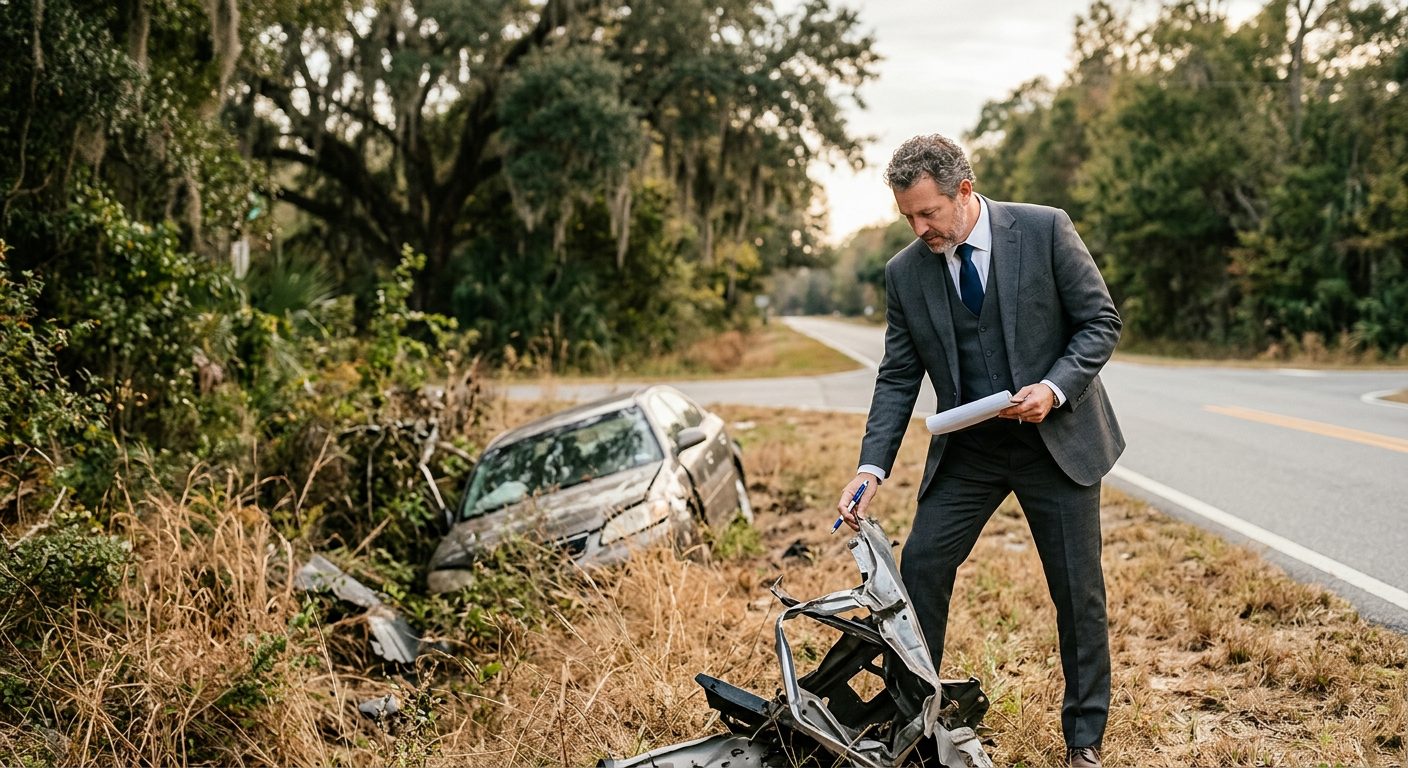
Catastrophic Injury Law in South Florida
What a Catastrophic Injury Lawyer Does for You
When a serious accident leaves you permanently changed, you need someone who understands the full scope of your losses—medical, financial, and personal—and knows how to fight for fair compensation.
By CHG Lawyers · Published October 05, 2026
What a Catastrophic Injury Lawyer Does — and When to Call One in South Florida
A catastrophic injury lawyer investigates serious accidents, identifies who is responsible, and fights to recover full compensation for permanent, life-altering injuries. They handle everything from gathering evidence and negotiating with insurance companies to preparing your case for trial if needed—so you can focus on recovery instead of legal paperwork.
If you've been seriously injured, contact us as soon as possible so we can protect your claim. Talk it through with our team — the first consultation is free, confidential, and carries no obligation.
What Counts as a Catastrophic Injury?
A catastrophic injury is a permanent condition that fundamentally changes your ability to work, move, think, or care for yourself. Unlike a broken arm or a minor cut, catastrophic injuries cause lasting impairment and require ongoing medical care, rehabilitation, and sometimes lifelong assistance.
The injuries this firm focuses on include:
- Spinal cord injuries and paralysis (paraplegia and quadriplegia)
- Traumatic brain injuries that affect memory, movement, or personality
- Amputations and limb loss
- Severe burns covering large areas of the body
- Catastrophic back and neck injuries causing permanent nerve damage
- Wrongful death from a fatal accident
These injuries typically arise from serious, high-impact accidents: truck crashes, assaults or shootings on unsafe property, construction zone accidents, motorcycle collisions, and other events where someone else’s negligence or wrongful act caused the harm.
What Does a Catastrophic Injury Lawyer Do?
A catastrophic injury lawyer builds a complete picture of what happened, proves who was at fault, and calculates every dollar you’re owed—then fights to get it.
Investigate the accident. The lawyer and their team gather police reports, medical records, photographs, surveillance footage, and witness statements. They preserve evidence before it disappears and identify all parties who may be responsible.
Determine liability. The lawyer proves that the defendant owed you a duty of care (a legal obligation to act safely), that they breached that duty, and that their breach directly caused your injury. For example, in a truck crash, the driver may have been speeding or fatigued. In a negligent security case, a property owner may have failed to provide adequate lighting, locks, or security guards.
Quantify damages. The lawyer calculates the full scope of your losses: past and future medical expenses, lost wages, rehabilitation costs, home modifications, assistive devices, pain and suffering, and loss of life enjoyment. In catastrophic cases, these numbers are often substantial because the injuries are permanent.
Negotiate with insurers. The lawyer handles all communication with the at-fault party’s insurance company. They prepare a detailed demand letter, present evidence, and negotiate to reach a fair settlement. You don’t have to speak to the insurance company or worry about saying something that hurts your case.
Prepare for trial if needed. If the insurance company won’t offer fair compensation, the lawyer files motions, manages discovery (the exchange of evidence), and prepares the case for court. They present evidence to a jury and fight for a verdict in your favor.
Manage the legal process. The lawyer tracks deadlines, files paperwork, complies with court rules, and ensures nothing falls through the cracks. This frees you to heal instead of juggling legal requirements.
How Can a Catastrophic Injury Attorney Help Prove Liability?
Proving liability means showing that the defendant’s negligence or wrongful act directly caused your injury. In catastrophic cases, this often requires expert testimony and detailed evidence.
Retain expert witnesses. The lawyer works with medical doctors, accident reconstructionists, engineers, and other specialists who testify about how the injury occurred and why the defendant’s conduct was negligent. For example, a medical specialist might explain the mechanism of a spinal cord injury. An accident reconstructionist might show that a truck driver was traveling too fast for road conditions.
Gather and preserve evidence. The lawyer secures surveillance video, maintenance records, safety reports, prior complaints, and other documents that prove the defendant knew or should have known of a dangerous condition. In negligent security cases, this might include prior incidents of crime, broken locks, or inadequate lighting.
Build a clear narrative. The lawyer connects the defendant’s failure to act (or their wrongful action) directly to your injury. They show that reasonable care would have prevented the harm. This narrative is presented to a jury in a way that is easy to understand and compelling.
Address comparative negligence (Fla. Stat. § 768.81(6)). In Florida, if you are found partially at fault for the accident, your damages may be reduced by your percentage of fault. A skilled lawyer minimizes or eliminates any finding of comparative fault by proving the defendant’s negligence was the primary cause.
What Is the 51% Rule in Florida?
Florida’s comparative negligence law determines how much you can recover if both you and the defendant share some blame for the accident (Fla. Stat. § 768.81(6)).
Under Florida Statute § 768.81(6), you can recover damages only if you are 50% or less at fault. If you are found 50% at fault, you recover 50% of your damages. If you are found 51% or more at fault, you recover nothing.
For example, if a jury awards $1 million in damages but finds you 40% at fault, you receive $600,000 (60% of the award). If the jury finds you 51% at fault, you receive $0.
A catastrophic injury lawyer’s job is to present evidence that minimizes your share of fault and proves the defendant bears primary responsibility. This can make the difference between a substantial recovery and no recovery at all.
How Much Can I Sue for Pain and Suffering in Florida?
Florida law allows you to recover “non-economic damages”—compensation for pain, suffering, emotional distress, and loss of quality of life—in addition to medical bills and lost wages.
Unlike medical malpractice cases (which have damage caps), catastrophic injury cases have no fixed ceiling on pain-and-suffering damages. The amount depends on:
- The severity and permanence of your injury
- How long you will experience pain and limitation
- The impact on your daily life, relationships, and activities you once enjoyed
- What a jury believes is fair compensation for your specific harm
A catastrophic injury lawyer presents medical testimony, your own account of your suffering, photographs, and expert opinions to help a jury understand the full scope of what you’ve endured. Every case is unique. The lawyer’s role is to build a compelling case for the specific harm you have suffered.
Not sure what your next step is?
Talk it through with our team — the first consultation is free, confidential, and carries no obligation.
What Is the Hardest Injury to Prove?
Injuries with clear, visible physical damage—broken bones, amputations, severe burns—are often easier to prove. The harm is documented in medical records and obvious to a jury.
Traumatic brain injuries and spinal cord injuries can be harder to prove because the full extent of damage may not be immediately apparent. These injuries require specialized medical imaging (MRI, CT scans), neuropsychological testing, and expert testimony to document. A traumatic brain injury may cause cognitive changes, memory loss, mood disorders, or reduced physical function that only emerge over time.
Similarly, a spinal cord injury’s impact on nerve function, sensation, and movement must be proven through medical records and the injured person’s testimony about what they can no longer do.
A catastrophic injury lawyer works with medical specialists to gather, organize, and present this evidence. They help a jury understand the real, lasting impact of an invisible injury on your life.
When Should You Call a Catastrophic Injury Lawyer?
You should call immediately if:
- You or a family member has suffered a spinal cord injury, paralysis, traumatic brain injury, amputation, severe burn, or catastrophic back/neck injury
- The injury resulted from a serious accident caused by someone else’s negligence (a truck crash, an assault or shooting on unsafe property, a construction accident, etc.)
- You were injured in South Florida or another state (this firm takes cases nationwide)
- An insurance company is pressuring you to settle quickly or offering an amount that doesn’t cover your full medical and care needs
- You’re unsure whether you have a claim or what your rights are
A free consultation can clarify your options and help you understand next steps. There’s no obligation, and the sooner you reach out, the sooner the lawyer can preserve evidence and begin building your case.
How the Representation Process Works
Initial consultation. You meet with the lawyer (often by phone or video), tell your story, and review the accident. The lawyer explains whether you likely have a viable claim and what compensation might be available.
Investigation and evidence gathering. The lawyer and their team collect police reports, medical records, witness statements, photographs, surveillance footage, and expert opinions. They send preservation letters to ensure evidence isn’t destroyed.
Demand and negotiation. The lawyer prepares a detailed demand letter explaining your injuries, damages, and why the defendant is liable. They negotiate with the insurance company to reach a fair settlement.
Settlement or trial. If a settlement is reached, the case closes and you receive your compensation. If not, the case proceeds to trial, where a jury hears evidence and decides liability and damages.
No upfront cost. Most catastrophic injury lawyers work on a contingency fee basis. You pay nothing unless and until you recover money. The lawyer’s fee comes from your recovery, not from your pocket.
Why Location Matters: South Florida Catastrophic Injury Cases
South Florida presents unique injury risks. High-speed truck traffic on I-95 and the Florida Turnpike, busy commercial districts, tourist destinations with security concerns, and active construction zones all create opportunities for serious accidents.
A lawyer based in South Florida understands local courts, judges, juries, and the specific laws and procedures that apply in Miami-Dade, Broward, and Palm Beach counties. They can respond quickly to accidents, preserve evidence, and manage your case from start to finish without delay.
Have questions about what happened?
Ask our team directly. The first conversation is free, confidential, and there is no obligation to continue.
What to Expect: No Promises, Only Honest Guidance
A reputable catastrophic injury lawyer will never promise a specific outcome or guarantee a particular amount of money. What they will do is:
- Explain the strength of your case based on the facts and evidence
- Discuss the likely range of damages
- Outline the risks and benefits of settlement versus trial
- Present the strongest possible case on your behalf
- Fight for fair compensation
The outcome depends on the facts, the evidence, the jury, and the judge. Your lawyer’s job is to maximize your recovery—not to guarantee a result.
FAQ
How long do I have to file a catastrophic injury lawsuit in Florida?
For most personal injury claims, you have two years from the date of injury to file a lawsuit. Wrongful death cases also have a two-year deadline. Missing this deadline means losing your right to sue.
Can I recover if I was partially at fault for my injury?
Yes, if you are 50% or less at fault under Florida’s comparative negligence law. Your damages are reduced by your percentage of fault. If you are 51% or more at fault, you cannot recover.
What damages can I recover in a catastrophic injury case?
You can recover medical expenses (past and future), lost wages, rehabilitation costs, home modifications, assistive devices, pain and suffering, and loss of life enjoyment. In wrongful death cases, surviving family members can recover funeral expenses and loss of companionship.
Do I have to go to trial?
Most catastrophic injury cases settle before trial. Your lawyer will negotiate with the insurance company to reach a fair settlement. If settlement is not possible, the case goes to trial and a jury decides the outcome.
What does contingency fee mean?
It means you pay your lawyer a percentage of the money you recover, rather than an upfront bill. The exact percentage depends on your written fee agreement and whether the case settles or goes to trial. You pay nothing upfront and nothing if you don’t recover.
If you or a family member has suffered a spinal cord injury, paralysis, traumatic brain injury, amputation, or severe burn from an accident in South Florida, you may have a claim against the at-fault party. Contact us for a free case evaluation to discuss your rights and next steps. You don’t have to face this alone.
How We Help You Move Forward
Investigate Your Accident Thoroughly
We gather evidence, interview witnesses, obtain police reports and medical records, and work with accident reconstructionists and other professionals to build a clear picture of what happened and who is responsible.
Calculate Your True Damages
Catastrophic injuries mean lifetime costs. We account for emergency care, ongoing medical treatment, rehabilitation, home modifications, lost wages, reduced earning capacity, pain and suffering, and other losses you'll face for years to come.
Handle All Communication with Insurance Companies
Insurance adjusters are trained to minimize payouts. We negotiate on your behalf, present evidence of your damages, and push back against lowball offers so you don't have to.
Explore Every Source of Recovery
Depending on your case, we may pursue claims against the at-fault driver, a property owner, a business, a manufacturer, or multiple defendants. We identify all responsible parties and all available insurance coverage.
Meet All Legal Deadlines
Catastrophic injury claims involve strict timelines and procedural rules. We manage every deadline so you never lose your right to pursue compensation.
Prepare for Trial if Needed
Most cases settle, but we're ready to take your case to court. We prepare thoroughly, present your story to a jury, and advocate for the compensation you deserve.
The Types of Cases We Handle in South Florida
Spinal Cord Injuries & Paralysis
Accidents that cause paraplegia or quadriplegia change everything. We help you recover compensation for lifetime medical care, mobility equipment, home modifications, and lost quality of life.
Traumatic Brain Injuries
Brain injuries can affect memory, cognition, personality, and independence. We pursue claims that account for ongoing therapy, cognitive rehabilitation, and the long-term impact on your life and family.
Truck Accidents & Severe Collisions
Commercial trucks and high-impact crashes cause catastrophic harm. We investigate driver negligence, mechanical failure, and company liability to hold all responsible parties accountable.
Amputation & Severe Burn Injuries
Limb loss and severe burns require specialized, lifelong care. We fight for compensation that covers prosthetics, reconstruction surgery, pain management, and the emotional toll of permanent disfigurement.
Negligent Security & Violent Crime
If you were assaulted, shot, robbed, or attacked on someone else's property because the owner failed to provide adequate security, you may have a claim against that property owner.
Wrongful Death
When a fatal accident takes a loved one, your family has the right to pursue a claim. We help you recover funeral costs, lost financial support, and compensation for the loss itself.
Time Matters
In Florida, you have a limited window to file a lawsuit for a catastrophic injury. Waiting too long can cost you your right to recover. If you've been seriously injured, contact us as soon as possible so we can protect your claim.