

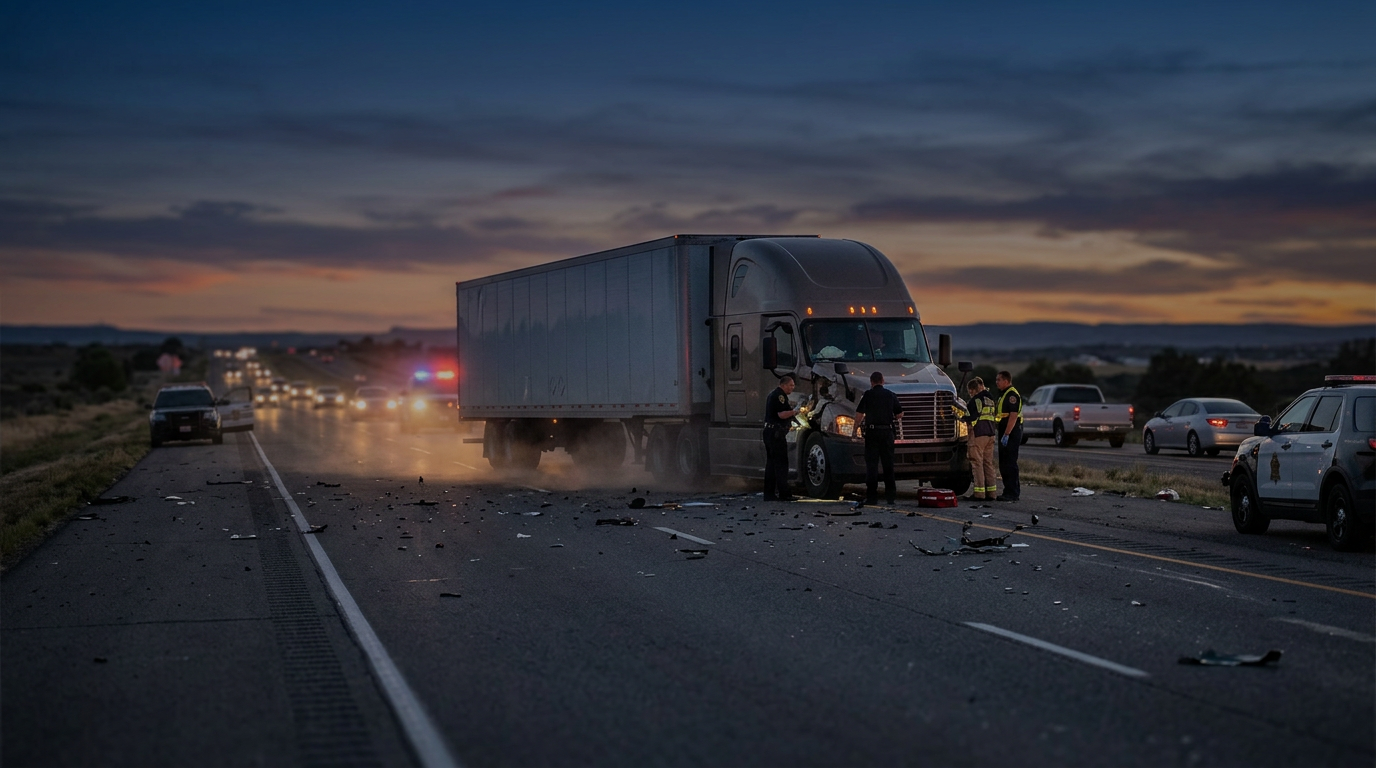
Truck Accidents · Florida & Nationwide
When a Truck Causes a Catastrophic Crash, More Than One Party May Be Responsible
A serious truck collision can change a life or take one in an instant. Understanding who can be held accountable is the first step toward the care and answers your family deserves.
Why Families Turn to CHG
Licensed
Florida Bar-admitted attorneys
Nationwide
Catastrophic cases across the U.S.
Bilingual
English & Spanish support
24/7
Talk to our team anytime
By CHG Lawyers · Published July 29, 2026
Who Is Liable in a Catastrophic Truck Crash? Driver, Carrier & Beyond
In a truck accident, more than one party is often at fault. The truck driver, the trucking company, a cargo loader, a repair shop, or a parts maker can each share legal blame. It depends on what caused the crash.
This matters most when injuries are severe. A fully loaded tractor-trailer can legally weigh up to 80,000 pounds under federal limits. That’s about 20 times a normal car. When that weight hits a smaller vehicle, the harm is often permanent.
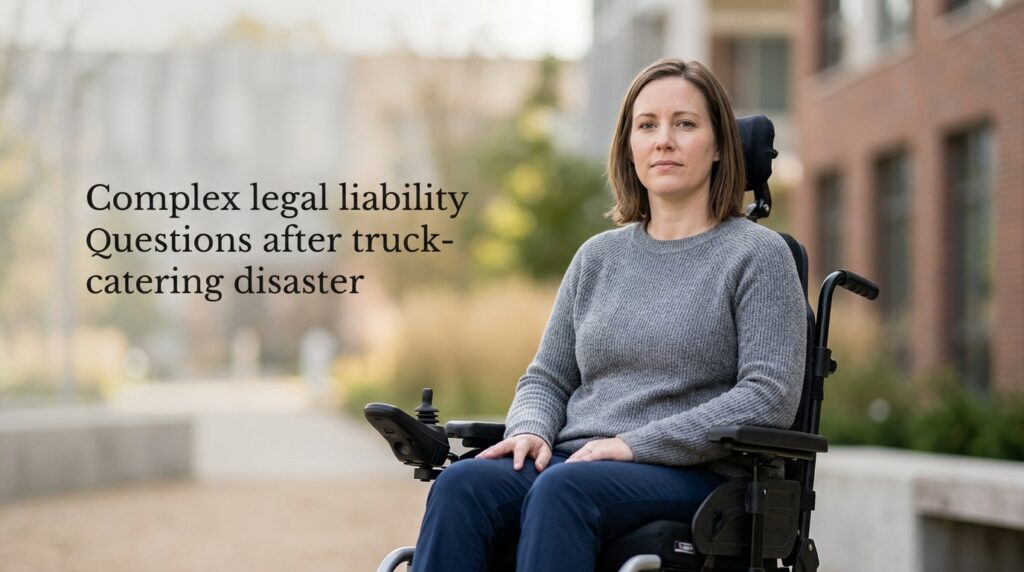
The result can be a spinal cord injury, paralysis, a brain injury, an amputation, severe burns, or the loss of a loved one. This page explains, in plain language, who may be responsible. A licensed attorney still needs to look at the facts of your case.
Not sure what your next step is?
Talk it through with our team — the first consultation is free, confidential, and carries no obligation.
Why liability in a truck crash is rarely simple
A two-car fender-bender is simple. A commercial truck crash is not. Several businesses usually stand behind the driver.
A driver may work for a motor carrier (the trucking company). That carrier may lease the truck from another company. A separate crew may have loaded the cargo. A different shop may have fixed the brakes.
Being “liable” means being legally responsible for the harm and its costs. In catastrophic cases, that word carries huge weight. The most severe spinal cord injuries can cost more than a million dollars in the first year alone, according to the Christopher & Dana Reeve Foundation. In the most severe cases, costs can run into six figures each year after that.
One driver’s insurance policy almost never covers a lifetime of that care. Finding every responsible party can be the difference between a partial recovery and a full one.
In the truck-crash cases our attorneys handle, sorting out who’s at fault is often the first and hardest step. It’s normal to feel overwhelmed. That’s exactly what a careful investigation is for.
Does the truck driver always bear responsibility?
Not always. The driver may carry all the fault, share it, or bear little of it. Sometimes a company decision set the driver up to fail. Still, drivers do cause many crashes. Common driver-related causes include:
- Fatigue and broken hours-of-service rules — federal law generally caps driving at 11 hours after 10 hours off duty (49 CFR §395.3)
- Distraction, such as phone use or eating while driving
- Speeding or going too fast for the conditions
- Impairment from alcohol or drugs
- Improper lane changes and unsafe turns
Do you think a drowsy driver caused your crash? Learn more on our page about driver fatigue and hours-of-service violations.
Here’s the key point. Even when the driver is clearly at fault, they are often not the only one. And they rarely have the deepest resources to pay for a lifetime of care.
When the trucking company (carrier) is liable
A trucking company can be legally responsible for a crash its driver caused. It can also be at fault for its own separate failures.
There’s a rule called vicarious liability. It means an employer can be held responsible for the actions of a worker doing their job. So if a driver crashes while hauling a company load on an assigned route, the carrier may share the blame.
Companies can also be at fault directly. Examples include:
- Negligent hiring — putting an unsafe driver on the road
- Poor training or no training at all
- Unrealistic schedules that pressure drivers to skip rest
- Ignoring a bad driving record or past violations
- Failing to enforce safety rules the law requires
Motor carriers must follow federal safety rules from the Federal Motor Carrier Safety Administration (FMCSA). Interstate carriers must also carry minimum liability insurance. It is commonly $750,000, and up to $5 million for certain hazardous loads, under 49 CFR §387.9. When a company breaks a safety rule, the violation can point straight to responsibility.
There’s a practical reason this matters. Carriers usually carry much larger policies than individual drivers. When someone faces the lifelong costs of a spinal cord injury or a brain injury, that difference can shape the whole recovery.
Other parties who can be held liable beyond the driver and carrier
Several other companies can share fault, depending on what went wrong. A thorough investigation looks well past the driver.
The cargo loader or shipper
Was the freight overloaded or poorly secured? Then it can shift and cause a rollover or jackknife. The crew or company that loaded the trailer may share the blame.
A maintenance shop or repair provider
Trucks need working brakes, tires, and steering. Say a shop skipped a repair or did it badly. If that failure caused the crash, the shop may be liable.
A truck or parts manufacturer
Sometimes a part fails even when everyone did their job. A defective brake, tire, or coupling can make a manufacturer responsible for the harm.
The truck or trailer owner
Big rigs are often leased. When the company that owns the truck isn’t the one running it, the owner may share fault too.
A broker, or a government entity
So can a government agency that left a road in a dangerous condition.
Can you sue if a truck driver hits you?
Yes. An injured person, or a family that lost someone, can bring a claim against the parties responsible for the crash. But Florida adds a wrinkle you should understand.
Florida is a “no-fault” state, so your own Personal Injury Protection (PIP) coverage pays first for certain medical bills after a crash. But PIP tops out at $10,000 under Fla. Stat. §627.736. That’s a fraction of the cost of one catastrophic hospital stay.
When injuries are serious and permanent, the law lets you step outside the no-fault system. You can then pursue the at-fault parties directly for the full harm.
When a crash is fatal, Florida law lets certain close relatives bring a wrongful-death claim. Losing someone is the most catastrophic outcome there is. A wrongful-death case is never about a number. It’s about the family left behind and what they can do next. You can read more on our wrongful death after a truck accident page.
No page can promise a result. Every case depends on its own facts and evidence.
Have questions about what happened?
Ask our team directly. The first conversation is free, confidential, and there is no obligation to continue.
How fault is actually proven
Fault is proven with evidence. Much of it sits inside the truck itself.
Since December 2017, most commercial trucks must run an electronic logging device (ELD). It records driving hours automatically (FMCSA ELD rule). Many trucks also carry an event data recorder — the “black box.” It logs speed and braking in the seconds before impact.
Other key evidence includes:
- Driver logs showing hours on the road
- Maintenance and repair records
- Dashcam and nearby surveillance footage
- Witness statements and the police report
- The carrier’s hiring and training files
Timing is critical. ELD data may only be kept for a limited time. Footage can be overwritten within weeks. That’s why we send a spoliation letter to the carrier early. A spoliation letter is a formal notice asking the carrier to preserve records, but it does not by itself create a legal duty to do so. A duty to preserve evidence can arise by contract, by statute, or by a properly served discovery request after a lawsuit has been filed. Our page on black box and ELD evidence explains this in more detail.
A strong investigation does more than assign blame. It connects each responsible party to the harm, so no source of recovery is missed.
How shared fault can affect a claim
Fault can be split among several parties. Sometimes the injured person shares a small part too.
Since a 2023 change to Fla. Stat. §768.81, Florida follows a modified comparative-negligence rule. Your recovery is reduced by your own percentage of fault. And if you’re found more than 50% at fault, you generally recover nothing.
Here’s a simple way to picture it. If a court finds you 10% at fault, your recovery drops by 10%. Insurance for the other parties then pays based on their share of the blame.
Are you unsure who was at fault? That’s completely normal. Figuring that out isn’t your job right now. It’s what a careful investigation resolves.
Why identifying every liable party matters after a catastrophic injury
Finding every responsible party can decide whether a family recovers enough to cover a lifetime of care. These injuries are extraordinarily expensive over time. The costs stack across three categories a full claim must cover:
- Medical care. Per the Mayo Clinic, a spinal cord injury can bring lasting loss of movement and feeling, plus lifelong complications. That means surgeries, rehabilitation, and daily help.
- Home and vehicle changes. Ramps, wider doorways, accessible bathrooms, and adapted vehicles. These one-time costs can run into six figures.
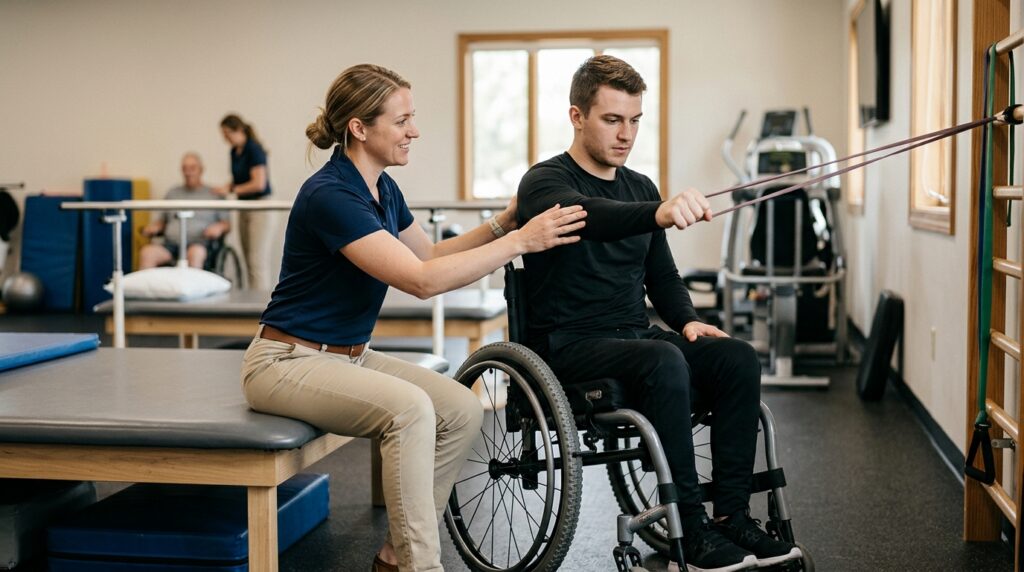
- Lost earning ability. A serious spinal cord injury, a traumatic brain injury that changes thinking, or an amputation can end a career. It can also require decades of prosthetics and replacements.
The Reeve Foundation estimates that roughly 5.4 million Americans live with some form of paralysis. Each one represents costs that a single driver’s policy rarely touches. When multiple parties share fault, multiple insurance policies may be available. That’s why thorough, early investigation matters so much in serious and fatal truck-crash cases. Learn more about catastrophic injury claims and how they work.
Talk to a catastrophic truck accident attorney
Did a truck crash leave you or someone you love with a life-altering injury? You deserve clear answers about who’s responsible. Figuring out who is liable takes investigation, not guesswork. And you shouldn’t have to carry that alone.
CHG Personal Injury Lawyers is a Florida-based firm with attorneys admitted to the Florida Bar. We focus on catastrophic and fatal injury cases. We take cases nationwide, with support in English and Spanish. You can request a free case evaluation to learn who may be responsible in your situation.
To understand the bigger picture, visit our main truck accident resource page.
Want to know where you stand?
Tell us what happened and our team will walk you through the options available to you, at no cost.
Frequently asked questions
Who is liable in a truck accident?
Liability often falls on more than one party. This can include the truck driver, the trucking company, a cargo loader, a maintenance shop, or a parts maker. It depends on the cause.
Can you sue if a truck driver hits you?
Yes. An injured person or a surviving family can bring a claim against the parties responsible. Every case depends on its own facts and evidence.
Is the trucking company responsible for its driver’s actions?
Often yes. Under vicarious liability, an employer can be legally responsible for a crash its driver caused while doing their job.
How long do I have to file a truck accident claim in Florida?
Most negligence claims arising after March 24, 2023, must be filed within two years of the crash under Fla. Stat. §95.11. Deadlines vary, so talk to an attorney quickly.
What if I was partly at fault for the crash?
Under Florida’s modified comparative-fault rule, your recovery is reduced by your share of fault. If you’re more than 50% at fault, you generally recover nothing.
Parties That May Share Liability
The Truck Driver
A driver who was fatigued, distracted, speeding, impaired, or violated federal safety rules may bear direct responsibility for the crash.
The Trucking Company
Employers can be liable for negligent hiring, inadequate training, pushing unrealistic schedules, or failing to enforce hours-of-service and maintenance rules.
The Cargo Loader
Improperly loaded, overweight, or unsecured freight can cause a truck to jackknife, roll over, or lose its load — putting the loading company at fault.
Maintenance & Parts Makers
A shop that skipped critical repairs, or a manufacturer of defective brakes, tires, or other components, may share responsibility for a failure that led to the crash.
Evidence Can Disappear Fast
Trucking companies often have insurers and investigators at the scene within hours. Critical proof — like driver logs, black-box data, and maintenance records — can be lost or overwritten. Acting early helps protect your family's ability to identify every responsible party.
Common Questions About Truck Accident Liability
Who is liable in a truck accident?
Liability often falls on more than one party — the truck driver, the trucking company, a cargo loader, a maintenance shop, or a parts maker. The right answer depends on what caused the crash, which is why a careful investigation matters.
Can you sue if a truck driver hits you?
Yes. An injured person, or a surviving family after a fatal crash, can bring a claim against the parties responsible. Every case is different, so we review the specific facts before advising on your options.
What if the crash was fatal?
A death is the most catastrophic outcome of any crash. Surviving family members may be able to bring a wrongful-death claim. We handle these matters with the dignity and care your loved one deserves.
How long do I have to act?
Deadlines vary by state and by the type of claim. Because evidence fades quickly and time limits apply, it's best to talk with an attorney as soon as possible.