

Truck Accidents · Florida & Nationwide
When a Tired Trucker Changes a Family's Life Forever
Driver fatigue causes some of the most devastating truck crashes on the road. If you or someone you love suffered a catastrophic injury or was killed, you deserve answers about what really happened behind the wheel.
Why Families Turn to CHG
Nationwide
Cases handled across the U.S.
Bilingual
English & Spanish support
Florida Bar
Licensed, admitted attorneys
Catastrophic
Focused on life-altering injury
By CHG Lawyers · Published July 29, 2026
Truck Driver Fatigue and Hours-of-Service Violations After a Serious Crash
If you’re reading this, something has already happened. Maybe a phone call. A hospital waiting room. A police report you’re still trying to understand. Maybe your husband is in a spinal unit. Maybe your daughter’s brain injury means she’ll never be quite the same. Maybe you’re planning a funeral you never imagined.
And one question keeps coming back: was the truck driver too tired to be on the road?
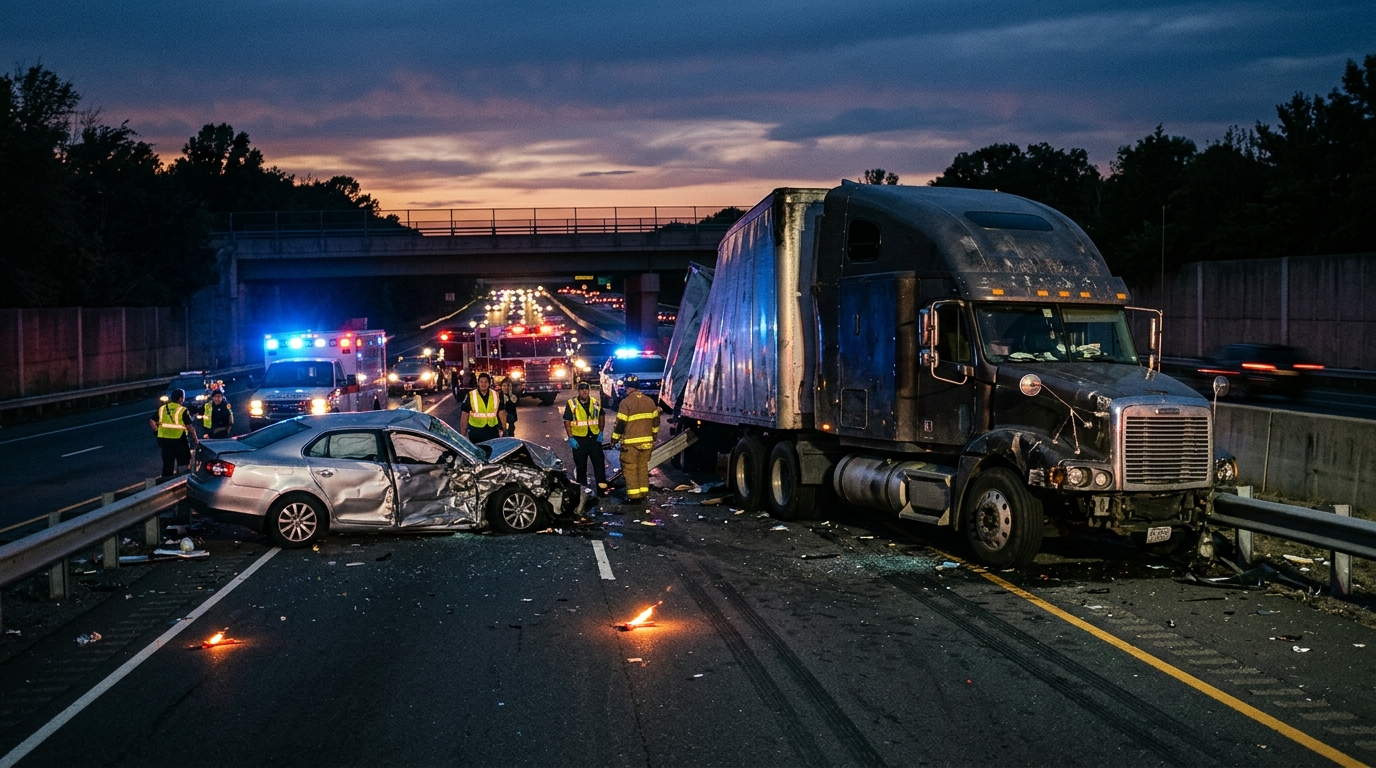
That question matters. A tractor-trailer can weigh 80,000 pounds. When a tired driver makes one split-second mistake, the harm can be permanent and life-altering. Sometimes it takes a life. No family can prepare for that.
This page explains, in plain language, why fatigue is so dangerous. It covers what the federal rest rules require, how a violation becomes evidence, and what you can do next.

If you believe a fatigued truck driver caused your crash, we're ready to listen. Talk it through with our team — the first consultation is free, confidential, and carries no obligation.
When a tired truck driver causes a catastrophic crash
Many families who reach us were not in a “fender-bender.” They are dealing with paralysis, a brain injury, an amputation, severe burns, or a death. And the early facts point to a driver who kept going past safe limits.
A fully loaded semi can weigh 20 to 30 times more than a car. That weight is the whole problem. Between two cars, a moment of inattention might just dent a bumper. Behind a big rig, that same moment can cause spinal cord injuries and paralysis, traumatic brain injuries, amputation and limb loss, catastrophic burns, and fatal outcomes.
Why fatigue is so dangerous behind the wheel of a big rig
Drowsy driving hurts a person in ways that look like alcohol impairment. Reactions slow down. Judgment gets worse. And “microsleeps” happen — brief lapses of a few seconds when the brain switches off.
The NHTSA reports that a driver awake for about 18 hours performs like someone at a 0.05% blood-alcohol level. Awake for 24 hours? That’s like 0.10% — over the legal limit for a car driver.
At 65 mph, a truck covers about 95 feet every second. A five-second microsleep means nearly 500 feet of highway crossed by a driver who wasn’t really there.
Fatigue rarely acts alone. It combines with tight delivery windows, night driving, and long solo stretches. Each factor makes the others worse. Some carriers set up pay and schedules that quietly reward pushing past the limit. That business pressure is exactly where company responsibility can begin.
Federal hours-of-service rules explained in plain language
The Federal Motor Carrier Safety Administration (FMCSA) sets legal limits on how long a commercial driver can drive and work. These are the hours-of-service (HOS) rules. Their whole purpose is to keep exhausted drivers off the road.
Rules can change. Check the current details at fmcsa.dot.gov:
- 11-hour driving limit. A driver may drive up to 11 hours after 10 hours off duty in a row.
- 14-hour on-duty window. All driving must be done within a 14-hour workday. Breaks do not reset this window.
- 30-minute break. Required after 8 hours of driving.
- Weekly limits. No driving after 60 hours on duty in 7 days, or 70 hours in 8 days.
The rules also cover off-duty rest and “sleeper berth” time (the bunk inside the cab). These are general limits for most property-carrying drivers. How they apply depends on the facts.
Think of these limits as the safety floor. They are the minimum — not proof of safe driving.
How a violation becomes evidence in your case
Modern trucks quietly record what a driver did. That record is often the difference between “we think he was tired” and “here is proof he drove past his limit.”
The main source is the electronic logging device (ELD) — a device that tracks a driver’s hours. It has been required for most interstate carriers since December 2017. The ELD automatically records driving time, on-duty status, and rest breaks. It replaced the paper logs a driver could once fudge.
The truck’s event data recorder (“black box”) can capture speed, braking, throttle, and other data in the seconds before impact. Our page on truck black-box and ELD evidence goes deeper.
Other records fill in the timeline:
- Driver logs and daily inspection reports
- Dispatch and delivery records
- Fuel and toll receipts (they place the truck at a time and place, which can contradict a log)
- Cell phone records
- Post-crash inspection findings
Sometimes one log entry shows a single violation. Other times, months of records reveal a carrier that allowed the pattern. That can support a claim against the company, not just the driver.
Here is the hard, time-sensitive truth: this evidence can vanish. ELD data may be overwritten over time. Paper documents get lost. The truck goes back into service.
An attorney can send a spoliation / legal hold letter — a formal demand to preserve records. But it only works if it’s sent before the records are gone. That is one of the strongest reasons not to wait.
Not sure what your next step is?
Talk it through with our team — the first consultation is free, confidential, and carries no obligation.
Who may be responsible when fatigue causes a crash
Fault often reaches well beyond the person behind the wheel:
- The driver who kept going while too tired to be safe.
- The trucking company that built impossible schedules, ignored red flags in the logs, or pressured drivers to break the rules.
- A freight broker, depending on the arrangement and control over the load.
- A maintenance provider, if poor upkeep played a part.
Commercial trucks often carry several layered insurance policies. So one crash can involve several defendants and insurers.
Florida follows a modified comparative negligence rule under Fla. Stat. § 768.81. This rule reduces or blocks recovery based on your share of fault. As amended in March 2023, a person found more than 50% at fault generally recovers nothing. If you share some smaller amount of fault, your recovery is reduced by your percentage.
Sorting out these percentages takes a careful review of the evidence. No honest lawyer can promise a specific result before that review is done.
Catastrophic injuries and fatal outcomes in fatigue crashes
Because the forces are so large, fatigue crashes tend to cause permanent harm:
- Spinal cord injuries and paralysis (paraplegia and quadriplegia). Car crashes are a leading cause of spinal cord injury, according to the Mayo Clinic. Doctors rate severity using the American Spinal Injury Association (ASIA) scale. The National Spinal Cord Injury Statistical Center tracks national data. It estimates that lifetime costs for a high-cervical injury can top several million dollars.
- Traumatic brain injury (TBI), which can change memory, movement, and personality for life.
- Amputation and limb loss.
- Severe burns, especially when fuel ignites after impact.
- Catastrophic back and neck injuries.
When a family loses someone, that is the most catastrophic outcome there is. Florida’s Wrongful Death Act, Fla. Stat. §§ 768.16–768.26, lets certain surviving family members seek accountability and support after a loss. They do this through a personal representative of the estate. Our focus in these cases is always on the people left behind and what they can do next — never on the details of the loss itself.
What you can do after a suspected fatigue crash
Medical care comes first. Legal options come second. But both matter:
- Follow through on treatment. Your recovery and your medical records both depend on it.
- Preserve what you already have. Save the crash report number, photos, and the names and numbers of any witnesses.
- Be careful with insurers. Trucking companies and their insurers often start building a defense within hours. You are not required to give a recorded statement before you understand your rights.
- Ask about evidence preservation early. A catastrophic-injury attorney can move fast to demand ELD and log data before it’s overwritten.
You should not have to untangle federal trucking rules during the hardest weeks of your life.
Frequently asked questions
How do investigators prove a truck driver was fatigued?
They rebuild the driver’s real timeline using ELD data, logs, dispatch records, and fuel/toll receipts. Sometimes logged “rest” doesn’t match where receipts and GPS say the truck actually was. That gap can expose both fatigue and an hours-of-service violation.
What are the FMCSA hours-of-service limits?
For most property-carrying drivers: up to 11 hours of driving within a 14-hour workday. A required 30-minute break after 8 hours of driving. And weekly caps of 60 hours in 7 days or 70 hours in 8 days. Confirm current rules at fmcsa.dot.gov.
Can the trucking company be held responsible for the driver’s fatigue?
It can. This may apply if it set unrealistic schedules, ignored warning signs in the logs, or pressured a driver to break the rest rules. The answer depends on the specific facts and records in your case.
How long do I have to act after a truck crash in Florida?
For most Florida negligence claims arising on or after March 24, 2023, the deadline to file suit is generally two years under Fla. Stat. § 95.11. The 2023 reform reduced it from four years. Wrongful-death deadlines differ. Because exceptions exist, confirm your specific deadline with an attorney promptly.
What if my family member did not survive the crash?
Your family may be able to bring a wrongful-death claim under Florida’s Wrongful Death Act. A lawyer can explain who is allowed to file, what the claim can seek, and how the process works — in English or Spanish.

Have questions about what happened?
Ask our team directly. The first conversation is free, confidential, and there is no obligation to continue.
Talk with a catastrophic truck accident attorney
A catastrophic or fatal truck crash changes everything. You deserve clear answers from people who take your loss seriously.
CHG Personal Injury Lawyers is a Florida-based firm. Our attorneys are admitted to The Florida Bar. We handle catastrophic-injury and wrongful-death truck cases nationwide, and we offer support in both English and Spanish.
If you believe a fatigued truck driver caused your crash, we’re ready to listen. Request a free case evaluation — no pressure and no obligation. We can’t promise a specific outcome, but we can help you understand where you stand.
To learn more, visit our truck accidents pillar page. You can also read about catastrophic injury claims and wrongful death after a truck accident.
How Fatigue Cases Are Built
Electronic Logging Data
Modern trucks record driving hours automatically. We pull ELD data to compare what the driver actually did against what the logs claim.
Hours-of-Service Rules
Federal law limits how long a driver may stay behind the wheel. When those limits are ignored, fatigue and liability often follow.
GPS, Fuel & Toll Records
Receipts and location data can reveal whether logged 'rest' periods ever really happened, or whether the truck was still moving.
Dispatch & Company Pressure
Sometimes the fatigue traces back to a schedule the company should never have demanded. We investigate the carrier, not just the driver.
Evidence Disappears Quickly
ELD data, dispatch logs, and physical evidence can be overwritten or lost within weeks of a crash. Acting early helps preserve the proof a fatigue case depends on. Speak with an attorney before critical records are gone.
What Victims and Families Should Know
Fatigue Is a Choice Someone Made
A driver who kept going past safe limits, or a company that pushed an impossible schedule, may bear legal responsibility for the harm that followed.
Catastrophic Injuries Deserve a Full Investigation
Spinal cord injuries, traumatic brain injuries, amputations, and severe burns carry lifelong costs. A thorough case works to account for every one of them.
A Death Is the Most Serious Outcome of All
When a fatigue crash takes a life, surviving family members may bring a wrongful-death claim. We handle these cases with dignity and care for the people left behind.
You Don't Pay Out of Pocket to Start
A free case evaluation lets you understand your options and next steps before deciding anything, with no obligation.