

Truck Accidents
What Happens When a Truck Driver Gets in an Accident?
Understanding the immediate aftermath, the investigation, and your rights if you or a loved one was catastrophically injured.
By CHG Lawyers · Published August 18, 2026
Truck Accident Investigation & Liability: What Happens When You’re Hit by a Commercial Vehicle
When a commercial truck crashes into a vehicle carrying you or a loved one, the immediate chaos—sirens, emergency responders, shock—is followed by a complex legal and investigative process that will shape your ability to recover compensation. If the crash caused catastrophic injury—spinal cord damage, traumatic brain injury, amputation, severe burns, or death—understanding who investigates, how liability is determined, and what your legal rights are under Florida law is critical to protecting your family’s future.
This page walks you through the investigation process, explains how liability is assigned, and clarifies the legal framework and deadlines that govern your claim.

Not sure what your next step is?
Talk it through with our team — the first consultation is free, confidential, and carries no obligation.
What Happens at the Scene: The First Hours
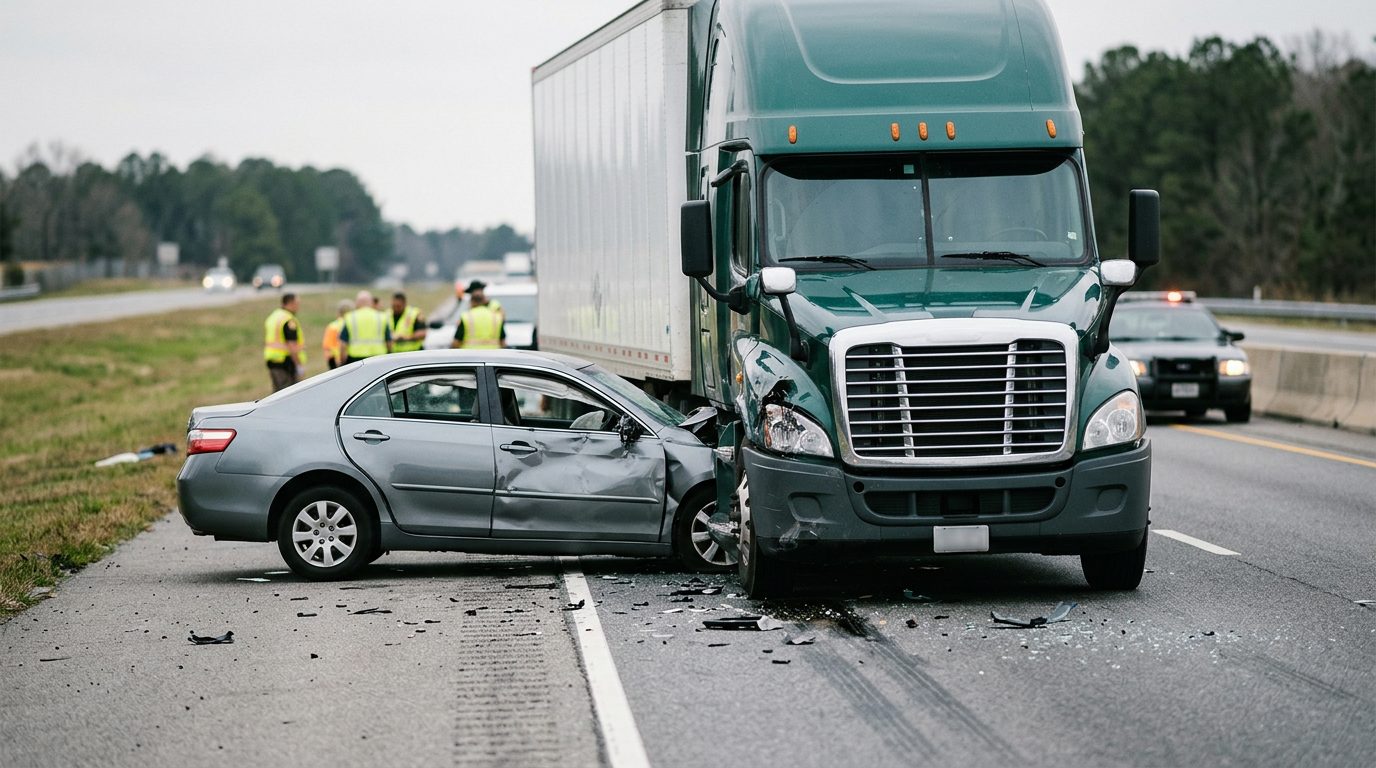
Police and emergency medical personnel arrive within minutes of a serious truck crash. Officers secure the scene, provide emergency care, and begin documenting the accident by photographing the vehicles, road conditions, skid marks, debris, traffic signals, and weather. They interview the truck driver, passengers, witnesses, and bystanders. Within hours, a police crash report is filed and becomes part of the public record; you can request a copy using the report number.
The trucking company is typically notified and sends a representative to the scene. The company’s insurance adjuster may also arrive to begin their own investigation. If the crash involves a fatality or serious injury requiring hospitalization, law enforcement may preserve the scene longer for more detailed analysis and may call in accident reconstructionists or federal investigators.
The truck driver is required by law to remain at the scene and cooperate with police. If the crash is serious or fatal, the Federal Motor Carrier Safety Administration (FMCSA) requires the driver to submit to drug and alcohol testing under Department of Transportation (DOT) regulations. This testing is mandatory and typically occurs at the scene or immediately after. A positive result can lead to criminal charges and permanent loss of the driver’s Commercial Driver’s License (CDL).
The Multi-Agency Investigation: Who Investigates and Why
A serious truck accident triggers investigations by multiple parties, each with different goals and authority.
Police and Local Law Enforcement
Police arrive first, document the scene, and file a crash report. If the driver violated traffic laws, was impaired, or drove recklessly, officers may issue citations or make arrests at the scene. The police report becomes evidence in both civil and criminal proceedings.
Federal Motor Carrier Safety Administration (FMCSA)
The FMCSA investigates serious accidents involving commercial vehicles to determine whether federal safety regulations were violated. Under 49 CFR Part 390, the trucking company must report accidents involving fatalities, injuries requiring hospitalization, or property damage exceeding a threshold amount. The FMCSA’s investigation focuses on driver qualifications, maintenance records, hours-of-service compliance, and whether the company enforced safety policies.
Insurance Companies
The at-fault driver’s insurance company and the trucking company’s liability carrier investigate to determine fault and calculate damages. Insurance investigators interview witnesses, obtain medical records, and may hire their own accident reconstructionists. Their goal is to minimize the company’s liability and payout.
Private Investigators and Accident Reconstructionists
Attorneys representing injured parties hire private investigators to gather evidence the insurance company may overlook or suppress. Accident reconstructionists—engineers who specialize in crash analysis—examine the truck’s electronic logging device (ELD) records, black box data, vehicle maintenance records, and physical evidence to determine how the crash occurred and who was at fault. This expert analysis is often critical in catastrophic-injury cases.
Critical Evidence in Truck Accident Investigations
Investigators examine multiple categories of evidence to establish what happened and who caused it.
Electronic Logging Device (ELD) Records
Federal law requires commercial trucks to be equipped with ELDs that record the driver’s hours of service. These records show whether the driver exceeded the 11-hour daily driving limit or violated mandatory rest periods. Fatigue is a leading cause of truck accidents. ELD data that shows a driver was operating while fatigued or falsified their logs is powerful evidence of negligence.
Black Box Data (Event Data Recorder)
Modern trucks have onboard computers that record speed, braking force, engine performance, throttle position, and other metrics in the seconds before and after a crash. This data is objective and difficult to dispute. If the black box shows the truck was traveling at excessive speed, failed to brake, or experienced mechanical failure, it establishes liability.
Dashcam and Traffic Camera Footage
Dashcam footage from the truck itself, nearby vehicles, or traffic cameras at intersections or on highways often provides a clear, real-time record of how the crash occurred. This video evidence is highly persuasive to juries and judges.
Vehicle Maintenance and Inspection Records
Trucking companies are required to maintain detailed records of vehicle inspections, repairs, and maintenance. If the truck had known brake defects, tire problems, or other mechanical issues that the company failed to repair, the company is negligent. Poor maintenance is a common basis for holding the trucking company liable even if the driver was not at fault.
Driver Qualification Files
The trucking company must maintain a qualification file for each driver that includes their CDL, medical certification, driving history, and safety training records. If the company hired a driver with a history of accidents, traffic violations, or failed drug tests, or failed to verify the driver’s qualifications, the company is liable for negligent hiring.
Witness Statements
Statements from other drivers, passengers, pedestrians, or business owners who witnessed the crash provide firsthand accounts of how the accident occurred. Witness credibility and consistency are evaluated by investigators and later by a jury.
Have questions about what happened?
Ask our team directly. The first conversation is free, confidential, and there is no obligation to continue.
Understanding Liability: Driver, Company, or Both?
Liability means legal responsibility for the accident and the injuries it caused. In a truck crash, liability may rest with the driver, the trucking company, or both.
Driver Negligence
A truck driver is negligent if they violated traffic laws, drove while fatigued, were impaired by drugs or alcohol, drove recklessly, or failed to maintain control of the vehicle. Evidence of driver negligence includes traffic citations, ELD records showing hours-of-service violations, positive drug or alcohol tests, witness statements, and black box data showing excessive speed or failure to brake.
Trucking Company Negligence (Vicarious Liability)
The trucking company may be liable under a legal doctrine called vicarious liability—the company is responsible for the driver’s negligent actions. Additionally, the company may be directly negligent if it:
- Failed to maintain the truck (brakes, tires, lights, coupling devices)
- Hired an unqualified, unsafe, or impaired driver
- Pressured the driver to exceed hours-of-service limits to meet delivery deadlines
- Failed to enforce safety policies or training
- Ignored a driver’s prior accidents or safety violations
Third-Party Liability
In some accidents, liability extends beyond the driver and company. A maintenance contractor who failed to repair a known brake defect, a cargo loader who improperly loaded the truck (causing instability or shifting cargo), a parts manufacturer who sold a defective component, or a shipper who failed to secure cargo may also be liable.
Florida’s Comparative-Negligence Rule: How Your Percentage of Fault Affects Your Recovery
Under Florida Statute §768.81, Florida follows a modified comparative-negligence rule. This rule is critical to understanding what you can recover:
- If you are more than 50% at fault, you cannot recover any damages.
- If you are 50% or less at fault, you can recover damages, but your award is reduced by your percentage of fault.
For example, if a jury determines that you were 20% at fault and the truck driver was 80% at fault, and your total damages are $100,000, you would recover $80,000 (your award reduced by your 20% share of fault).
In truck accidents, your percentage of fault is often low or zero—you were simply driving lawfully when a negligent truck driver hit you. However, insurance companies and defense attorneys will argue that you were partially at fault to reduce their liability. This is why evidence, expert analysis, and aggressive legal representation matter.
The Statute of Limitations: Your Deadline to File
Florida law imposes strict deadlines for filing lawsuits. Under Florida Statute §95.11, you have 2 years from the date of the accident to file a personal-injury lawsuit. If the accident caused death, the family has 2 years from the date of death to file a wrongful-death claim.
After 2 years, your claim is barred by the statute of limitations and you lose the right to sue, regardless of the strength of your case (Fla. Stat. § 95.11(5)(a)). This deadline is not negotiable and cannot be extended except in rare circumstances. Do not wait. Contact an attorney as soon as possible after a catastrophic truck accident.
When a Truck Accident Results in Catastrophic Injury or Death
If the truck crash caused catastrophic injury—spinal cord injury, traumatic brain injury, amputation, severe burns, or catastrophic back or neck injury—or resulted in death, the investigation intensifies and the stakes are higher.
Catastrophic Injury Cases
In catastrophic-injury cases, medical experts document the extent of injury, prognosis, and lifetime care needs. Life-care planners calculate the cost of ongoing medical treatment, rehabilitation, assistive devices, home modifications, and personal care attendants over the injured person’s lifetime. Vocational experts assess the person’s lost earning capacity. These damages are substantial—often in the millions of dollars for spinal cord injury or traumatic brain injury cases.
Wrongful Death Cases
If the truck accident caused death, the family can file a wrongful-death claim under Florida law. Damages in a wrongful-death case include funeral and burial expenses, the deceased’s lost income and benefits, the loss of companionship and support, and compensation for the family’s pain and suffering. The claim is brought by the personal representative of the deceased’s estate on behalf of the surviving family members.
Criminal Investigation
If the driver’s conduct was grossly reckless—driving while impaired, fleeing the scene, or driving at extreme speed—criminal charges may be filed. These can include DUI, reckless driving, vehicular assault, or vehicular manslaughter. Criminal conviction can result in jail time, fines, and permanent CDL revocation. A criminal conviction also strengthens your civil case by establishing the driver’s negligence.
Want to know where you stand?
Tell us what happened and our team will walk you through the options available to you, at no cost.
What You Should Do Immediately After a Truck Accident
Seek immediate medical attention. Even if you feel okay, get checked by a doctor. Internal injuries, spinal cord injuries, and traumatic brain injuries may not be obvious right away. A medical evaluation creates a documented record of your injuries and is essential evidence in your claim.
Document the scene. Take photos and video of the truck, your vehicle, the road, traffic signs, weather conditions, and any visible injuries. Note the truck’s license plate, company name, and any visible damage or mechanical problems.
Report the accident to police. Get the police report number and the officer’s name. Request a copy of the police report once it is filed.
Gather witness information. Collect names, phone numbers, and email addresses from anyone who saw the accident. Ask them to write down what they saw while it is fresh in their memory.
Preserve evidence. Keep all medical records, photographs, videos, text messages, emails, and correspondence related to the accident. Do not discard or alter anything.
Avoid discussing fault. Do not apologize, admit blame, or discuss the accident on social media. Anything you say can be used against you by the insurance company.
Do not sign anything or accept a settlement offer without legal advice. Insurance adjusters may pressure you to sign a release or accept a quick settlement. Do not do this. An early settlement offer is almost always far less than your claim is worth, especially in catastrophic-injury cases.
Contact an attorney immediately. The statute of limitations is 2 years. An attorney who focuses exclusively on catastrophic truck-accident injuries can immediately preserve evidence, retain experts, investigate the crash, identify all liable parties, and pursue the full compensation you deserve.
Frequently Asked Questions
What happens if a CDL driver gets in an accident?
A CDL driver must report the accident to the FMCSA within the required timeframe. If the accident is serious or fatal, the driver must submit to drug and alcohol testing. The accident is recorded on the driver’s record and may trigger a federal safety investigation. Employment termination depends on fault and severity.
Do truck drivers get fired if they crash?
It depends on fault and severity. If the driver caused the accident through negligence, fatigue, or impairment, termination is common. If the driver was not at fault, they usually keep their job. Fatal accidents almost always result in termination and criminal investigation.
What is vicarious liability?
Vicarious liability means the trucking company is legally responsible for the driver’s negligent actions, even if the company itself did not directly cause the accident. The company can also be directly liable if it failed to maintain the truck, hired an unqualified driver, or violated safety regulations.
How long do I have to sue after a truck accident in Florida?
You have 2 years from the date of the accident to file a personal-injury lawsuit (Fla. Stat. § 95.11(5)(a)). In a wrongful-death case, the family has 2 years from the date of death. After 2 years, your claim is barred by the statute of limitations.
Can I recover damages if I was partially at fault?
Yes, if you are 50% or less at fault under Florida’s comparative-negligence rule (Fla. Stat. § 768.81(6)). Your award will be reduced by your percentage of fault. If you are more than 50% at fault, you cannot recover.
What damages can I recover in a truck accident case?
Damages include medical expenses (past and future), lost wages and lost earning capacity, pain and suffering, permanent disability, loss of enjoyment of life, and in fatal cases, wrongful-death compensation.
If you or a loved one suffered catastrophic injury—spinal cord damage, traumatic brain injury, amputation, severe burns, or loss of life—in a truck accident, you are likely facing overwhelming medical, financial, and emotional challenges. The investigation process is complex, and the legal deadlines are strict. Many families in your situation reach out to understand what happened, who was responsible, and what compensation may be available. We’re here to listen and help you understand your options. Contact us for a free case evaluation.
The Immediate Aftermath
Federal Reporting Requirements
Commercial truck drivers must report serious accidents to the Federal Motor Carrier Safety Administration (FMCSA) within a set timeframe. If the crash causes injury, death, or significant property damage, federal investigators may be notified and the accident becomes part of the driver's permanent record.
Drug and Alcohol Testing
After a serious or fatal truck accident, the driver is typically required to submit to immediate drug and alcohol testing. These results become part of the federal investigation and can establish negligence or recklessness as a cause of the crash.
Scene Investigation and Evidence
Police, federal safety inspectors, and sometimes the trucking company's own investigators will examine the crash scene, the truck's condition, the driver's logs, and maintenance records. This evidence is critical to understanding what went wrong and who is responsible.
Employment Consequences
Whether a driver keeps their job depends on fault, the severity of the accident, and the company's policies. A serious or fatal crash often results in termination, especially if negligence or violation of safety rules is found.
If You Were Catastrophically Injured
A truck accident that causes spinal cord injury, paralysis, traumatic brain injury, amputation, severe burns, or other life-altering harm is not just a traffic incident—it is a serious injury claim. The trucking company, the driver, and potentially others may be liable for your medical care, lost income, and pain and suffering.
What You Need to Know About Your Rights
Liability Goes Beyond the Driver
The trucking company itself can be held responsible for hiring an unqualified driver, failing to maintain the vehicle, pressuring the driver to violate safety rules, or ignoring a history of accidents or violations.
Evidence Is Preserved Quickly
Truck maintenance records, electronic logs, dispatch communications, and safety inspection reports must be preserved immediately. These documents prove negligence and are often destroyed if not requested in time.
Time Matters
Florida and federal law impose strict deadlines for filing catastrophic injury claims. Acting quickly protects your right to compensation and ensures critical evidence is not lost or destroyed.
Your Recovery Is the Priority
A catastrophic truck injury changes everything. You deserve support from a firm that focuses exclusively on serious, permanent injuries and understands the full scope of your medical, financial, and personal needs.