


Truck Accidents · Florida & Nationwide
How Trucking Insurers Try to Pay You Less After a Catastrophic Crash
After a serious truck crash that leaves you with a spinal cord injury, brain injury, amputation, or the loss of a loved one, the trucking company's insurer moves fast to protect itself. Understanding their playbook helps you protect your family.
By CHG Lawyers · Published August 17, 2026
Why Insurance Companies Fight Catastrophic Truck Claims So Hard
A truck crash can leave someone with a spinal cord injury, paralysis, a traumatic brain injury, an amputation, or severe burns. It can also take a life. When that happens, the insurance company starts fighting almost right away. This fight is far tougher than in a small fender-bender.
Knowing why helps. So does spotting the exact tactics they use. This knowledge can help you protect your family while you are still trying to take in what happened.

Not sure what your next step is?
Talk it through with our team — the first consultation is free, confidential, and carries no obligation.
Why the stakes are different in a catastrophic truck claim
A catastrophic injury is not a repair bill. It is a lifetime.
Think about the numbers the insurer already knows. The National Spinal Cord Injury Statistical Center (NSCISC) tracks these costs. First-year costs for a high tetraplegia (paralysis affecting the neck, C1–C4) injury pass $1.2 million. Each year after that costs well over $200,000. And that number leaves out lost wages. NSCISC also estimates lifetime costs can top $5 million for a 25-year-old with the most severe injuries.
The Christopher & Dana Reeve Foundation explains why those costs keep rising. Paralysis rarely stays the same. It brings other health problems over time. These include pressure injuries, breathing failure, urinary tract infections, and autonomic dysreflexia (a dangerous spike in blood pressure). Each one needs steady, costly care for decades.
Traumatic brain injury works the same way. The Mayo Clinic notes that a moderate to severe TBI can cause lasting changes to thinking, memory, mood, and physical function. These effects can appear slowly, long after the patient leaves the emergency room.
Now add the insurance coverage. Big commercial trucks that cross state lines must carry at least $750,000 in liability insurance. Many carriers hold $1 million or more. This rule comes from 49 C.F.R. §387.9.
The possible payout is huge. The true cost of the injury runs into millions. So the insurer has a big reason to lower or delay the claim. That is why these cases feel like a fight from day one. It is not personal. It is arithmetic.
Who you are actually dealing with after a truck crash
The person calling you sounds friendly, helpful, and concerned. This is usually a claims adjuster who works for the trucking company’s insurer. Their job is to protect that company’s money. The politeness is part of the job. It is not proof they are on your side.
In serious cases, defense investigators and lawyers may step in within hours. By the time an injured person or grieving family can even think, the other side has moved fast. They have already secured evidence, interviewed witnesses, and started building a defense. This is why your earliest decisions matter so much.
Do insurance companies use scare tactics?
Yes. Some tactics are built to create pressure and self-doubt. Common ones include:
- “The crash was partly your fault.” Blame-shifting is very common in truck cases (more on why below).
- “Your injuries aren’t as serious as you think.” They say this before doctors have finished checking a spinal cord or brain injury.
- “You don’t really need a lawyer—that will just complicate things and cost you.” This one helps only the insurer.
- “This offer expires soon.” Fake deadlines push you to decide before you understand the injury.
- “We’ll only pay if you sign today.” A rush to close a file that should stay open for months.
Once you see pressure for what it is—a tactic, not the truth—it loses much of its power. You are allowed to slow down.
What should you NOT say to a truck insurance adjuster?
Families ask this most, so here is a direct answer.
Do not say any of these things to the other side’s adjuster:
- “I’m fine,” “I feel okay,” or “I’m not that hurt.” You may be on medication, in shock, or simply unaware that a spinal cord or brain injury is permanent. Weeks later, a “fine” quote can be used to argue the injury was minor.
- “It might have been my fault,” or “I didn’t see the truck.” Never guess or accept blame. Fault in truck cases is complex. It turns on evidence you likely do not have yet.
- A specific diagnosis or prognosis. You cannot yet know the full extent. Do not lock yourself into a description that later proves too hopeful.
- “Yes, you can record this.” You usually do not have to give a recorded statement to the other side’s insurer.
- Details about past injuries or medical history. The insurer will use these to argue your condition was already there before the crash.
What you can safely do: confirm basic facts (the date, the place, the vehicles involved). Say you are still under medical care. Say you will give any further statement in writing after you speak with a lawyer. When in doubt, say less.
Tactic 1: The recorded statement, requested too early
One of the first calls you get may ask for a recorded statement. The adjuster will sound reasonable. They just need to understand what happened, they say. But the timing is the trap.
You may answer before doctors know the full picture. Before you know paralysis is permanent. Before you know a brain injury will affect memory and mood for life. Those early answers can later be used to shrink your claim.
You usually do not have to give the other side’s insurer a recorded statement. It is okay to say no. It is okay to say you are still being treated and cannot talk now. Slowing the conversation down protects you.
Have questions about what happened?
Ask our team directly. The first conversation is free, confidential, and there is no obligation to continue.
Tactic 2: Delay
Watch for long silences. Watch for repeated requests for papers you already sent. Watch for contact people who keep changing. These are common delay patterns. Delay helps the insurer for three reasons:
- Financial pressure builds. Medical bills and lost income pile up. This pushes a family to accept less than the injury requires.
- Evidence decays. Memories fade and records disappear.
- The clock runs. Under Fla. Stat. §95.11, most negligence claims in Florida must be filed within two years of the injury. (This deadline dropped from four years in 2023.) If the insurer stalls long enough, that window can close.
Keep a simple log. Write down the dates of calls, the names of adjusters, what they promised, and what you sent. That record protects you.
Tactic 3: A fast, low offer before the full injury is known
Early settlement offers often come before doctors finish their review. For a spinal cord or brain injury, the true picture of permanent disability can take weeks or months to appear.
The real cost includes future surgeries, lifelong rehab, and special equipment. It includes home changes like wheelchair ramps and accessible bathrooms. It includes attendant care and lost lifetime earnings—the very NSCISC figures above. An early offer rarely covers any of that. Once you sign a release, the door usually closes on asking for more. The injury does not change. Your ability to be paid for it does.
Why would the insurer blame you if the truck hit you?
Because blame is money. Florida uses a modified comparative-fault rule, Fla. Stat. §768.81. Under it, a person found more than 50% at fault recovers nothing. Any smaller share of fault cuts the recovery by that percentage. So every bit of fault the insurer pins on you shrinks what it pays. Blame-shifting is a money strategy, not the truth.
How trucking companies move to protect themselves
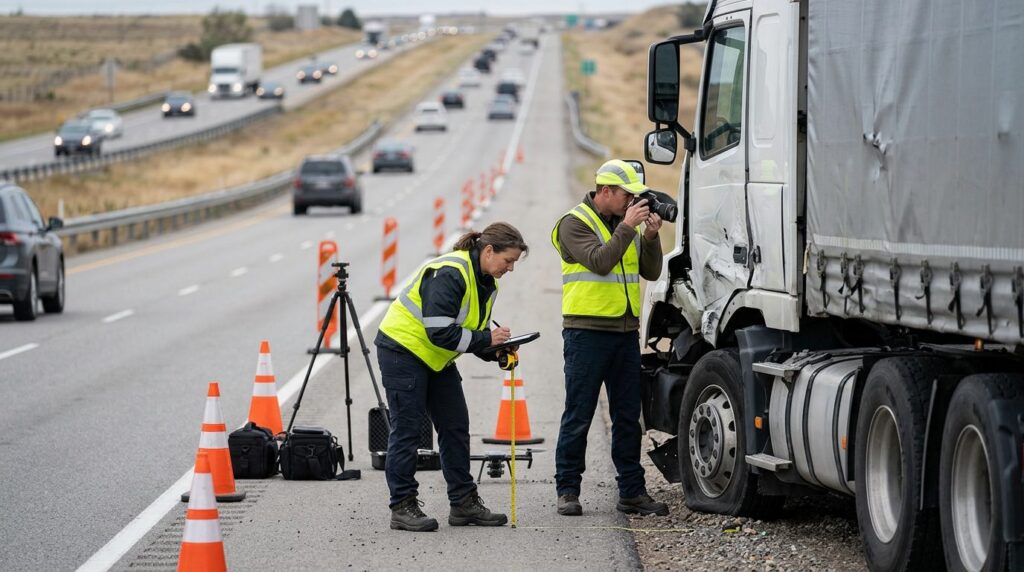
Within hours of a crash, the trucking company usually moves to lock down electronic evidence. Modern trucks record data that can prove—or disprove—negligence:
- The Electronic Control Module (ECM), the truck’s “black box.” It records speed, braking, throttle, and engine data around the moment of impact.
- The Electronic Logging Device (ELD). This device is required under 49 C.F.R. Part 395. It automatically records the driver’s hours of service.
This data can show if the driver was speeding, braking late, or driving too many hours. The Federal Motor Carrier Safety Administration (FMCSA) sets those hour limits to prevent tired driving.
But ECM data can be written over. ELD records can cycle out if no one acts fast to save them. The company knows this. It may also shape the driver’s account of events. That is why the injured side needs its own investigation early, before evidence vanishes. This often starts with a formal letter demanding that the truck and its data be preserved.
If your family is grieving a fatal truck crash
A death is the most catastrophic outcome there is. If you lost a spouse, parent, or child in a truck crash, these tactics do not stop. They can grow stronger, because the possible payout is highest.
Florida’s Wrongful Death Act, Fla. Stat. §§768.16–768.26, lets a personal representative bring a claim for surviving family members. It covers losses like lost support, lost companionship, and the survivors’ mental pain and suffering.
You should not have to argue with an adjuster while planning a funeral. It is fair to decline calls, decline recorded statements, and route all contact through a lawyer. That way your family can grieve.
What this means for you or your loved one
You do not need to learn every tactic. You just need to know the process is not neutral. Early decisions matter. In practical terms:
- Be careful with recorded statements. You can decline or delay.
- Keep records of every contact—dates, names, promises.
- Understand the full scope of the injury before settling. Do not rush.
- Preserve evidence—the truck’s data, photos, and witness contact information.
Nothing here promises any result. This is general information to help you make good decisions during a very hard time.
Want to know where you stand?
Tell us what happened and our team will walk you through the options available to you, at no cost.
Frequently Asked Questions
What should I not say to a truck insurance adjuster?
Do not play down your injuries (“I’m fine”). Do not guess about or accept fault. Do not give a diagnosis before doctors finish checking you. Do not agree to a recorded statement. Confirm only basic facts. Say you will respond in writing after you speak with a lawyer.
How long do I have to file a truck accident claim in Florida?
Under Fla. Stat. §95.11, you generally have two years from the date of injury. (This dropped from four years in 2023.) Delay tactics can quietly run out this clock.
Can I refuse to give the insurance company a recorded statement?
Yes. You do not have to give a recorded statement to the other side’s insurer. You may say no politely and ask for questions in writing.
Why would the insurance company blame me if the truck hit me?
Because Florida’s comparative-fault law (Fla. Stat. §768.81) lowers or ends recovery based on your share of fault. So shifting blame directly lowers what they pay.
What is the truck’s black box and why does it matter?
The Electronic Control Module (ECM) records speed, braking, and engine data around the crash. Paired with the Electronic Logging Device’s hours-of-service records, it can prove or disprove negligence. But it must be saved quickly before it is written over.
Did you or a loved one suffer a catastrophic injury in a truck crash—a spinal cord injury, paralysis, traumatic brain injury, amputation, or severe burns? Did you lose someone in a fatal crash? If so, you are facing a system built to protect the trucking company, not you. Families in this spot often find it helpful to talk with someone who understands both the medical reality of catastrophic injury and the insurer’s playbook. Contact us for a free case evaluation to discuss what happened and what your options are.
For more on the lifelong costs of catastrophic truck injuries, see our guide to life after a paralysis-causing truck crash.
Do Not Give a Recorded Statement Without a Lawyer
An adjuster may call within hours and sound friendly. A recorded statement is not required to start your claim, and anything you say can later be used to argue you were partly at fault or that your injuries are minor. Confirm only basic facts, then say you will respond in writing after you speak with a lawyer.
Common Insurance Company Tactics
The Fast, Lowball Offer
A quick settlement check may arrive before you know the full extent of a spinal cord or brain injury. Catastrophic injuries carry lifelong costs; an early offer rarely accounts for future surgeries, rehabilitation, or lost earning capacity.
Blaming You
Under Florida's comparative negligence rules, the more fault they shift to you, the less they pay. Adjusters may push you to guess about how the crash happened so your words can later be used against you.
Downplaying Your Injuries
Requests for broad medical authorizations, quick 'independent' medical exams, and questions like 'Are you feeling better?' are often aimed at minimizing serious, permanent harm on paper.
Delay and Silence
Long gaps in communication can pressure an injured family facing mounting bills to accept less. A filing deadline is also running, and missing it can end the claim entirely.
How to Protect Yourself
Say Less to the Adjuster
Do not play down your injuries or accept blame. Confirm only basic facts and decline a recorded statement until you have legal advice.
Keep Everything
Save medical records, bills, the crash report, and any photos. Preserving evidence early matters, especially truck driver logs and electronic data that a company may otherwise discard.
Watch the Deadline
Florida sets a limited time to file a truck accident or wrongful-death claim. Acting promptly protects your right to be heard.
Let Counsel Handle Contact
Once a lawyer represents you, the insurer speaks to your lawyer. That removes the pressure and levels the field with the company's own legal team.
Why Families Turn to CHG
Licensed
Florida Bar–admitted attorneys
Nationwide
Catastrophic-injury cases across the U.S.
Bilingual
Guidance in English & Spanish
Free
No-cost case evaluation