

Truck Accidents · Florida & Nationwide
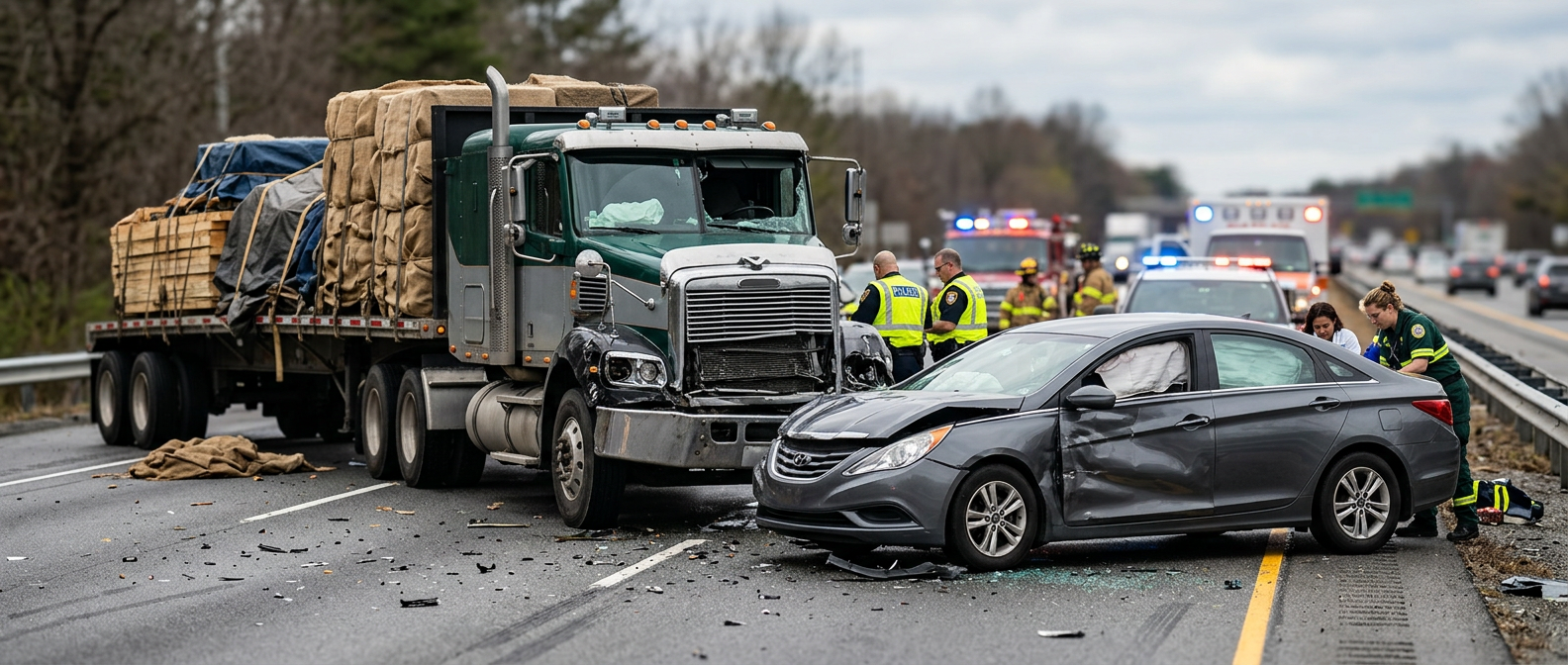
When a Truck Carried Too Much, the Damage Is Catastrophic
Overloaded and improperly secured trucks take longer to stop and are harder to control. When they fail, families face spinal cord injuries, brain trauma, amputations, and wrongful death. We help you understand what happened and who is responsible.
Why Families Turn to CHG
Nationwide
Catastrophic truck injury cases accepted
Licensed
Attorneys admitted to the Florida Bar
Bilingual
Resources in English and Spanish
No Fee
Free, no-obligation case evaluation
By CHG Lawyers · Published August 12, 2026
Overloaded and Improperly Secured Cargo: How Truck Loading Failures Cause Catastrophic Crashes
An overloaded truck accident happens when a truck carries too much weight, or when its cargo is not tied down and balanced right. That failure makes a crash far more violent than it should have been. When a loaded tractor-trailer loses control, people in smaller vehicles nearby suffer the most. The result is often permanent, life-altering harm — or the loss of a loved one.
Were you or a family member seriously hurt in a crash involving a truck’s load? You deserve plain answers. This page explains how loading failures cause catastrophic crashes. It also explains who the law may hold responsible. It connects back to our main guide on catastrophic truck accident injuries.
Not sure what your next step is?
Talk it through with our team — the first consultation is free, confidential, and carries no obligation.
When a truck’s load is the reason a crash was catastrophic
A loading failure turns a normal truck movement — a turn, a stop, a lane change — into a crash that causes permanent injury or death. Under federal law, a loaded tractor-trailer can legally weigh up to 80,000 pounds on the Interstate System (23 U.S.C. §127). A typical car weighs around 4,000 pounds. That 20-to-1 mismatch means the person in the smaller vehicle absorbs almost all of the energy in a crash.
An overloaded truck crash is not like a routine fender-bender. When a truck carries too much weight or a poorly secured load, the physics work against everyone around it. The truck needs more distance to stop. It tips more easily. It hits with more force. That is why these crashes so often cause paralysis, brain injury, or the loss of a limb — not just bruises.
In the catastrophic truck-crash cases our attorneys handle, the load itself is often where the negligence started. Understanding the load helps explain why someone was hurt. It also helps show who should answer for it.
How overloading and shifting cargo cause serious crashes
Extra weight and loose cargo ruin a truck’s ability to stop, turn, and stay upright. Here is how each loading failure leads to a crash.
Overweight trucks cannot stop in time. More weight means a longer stopping distance. On a downhill grade or in an emergency, an overloaded truck keeps rolling forward when a legal-weight truck would already have stopped. This is a leading cause of high-speed rear-end and underride crashes.
Heavy loads strain brakes and tires. Too much weight overheats the brakes and overloads the tires. This raises the risk of brake fade and tire blowouts at highway speed. A blowout on a fully loaded rig can push it across lanes in seconds.
Shifting cargo tips the trailer. A load that slides during a turn drives the trailer’s weight to one side. That force can roll the truck over. It can also cause a jackknife, where the trailer swings out of line with the cab. Learn more on our page about jackknife and rollover truck accidents.
Bad weight balance makes trucks unstable. Cargo stacked too high or loaded unevenly raises the truck’s center of gravity. A top-heavy truck rolls more easily in a curve or a sudden swerve.
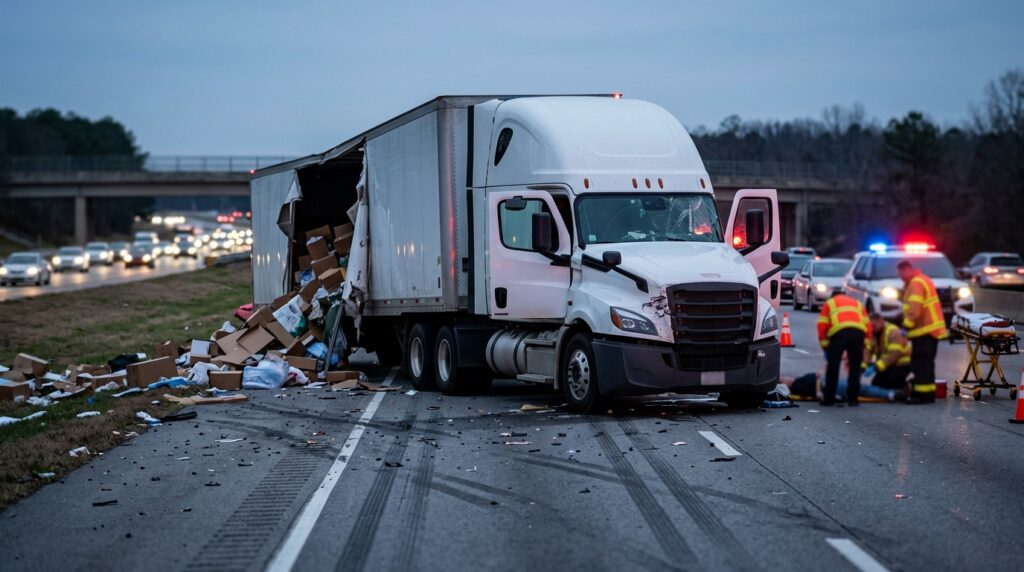
Spilled loads strike other drivers. Cargo that falls onto the road can hit vehicles directly. It can also force drivers to swerve into a worse crash. A spilled load often sets off a chain-reaction collision.
The catastrophic injuries these crashes cause
Trucks are huge and heavy. So the people in cars, SUVs, and motorcycles absorb enormous force — and that force causes life-altering injuries. A cargo failure rarely leaves a small dent. It leaves lasting damage to a human body.
Spinal cord injuries and paralysis. High-force and crushing impacts can damage the spinal cord. The Mayo Clinic explains that a spinal cord injury can cause permanent loss of movement and feeling below the injury. It names motor vehicle crashes as a leading cause. Depending on where the cord is hurt, this can mean paraplegia or quadriplegia. Doctors grade how severe it is using the ASIA Impairment Scale — the International Standards for Neurological Classification of Spinal Cord Injury. It tells a complete injury (ASIA A) apart from incomplete injuries (ASIA B–D). The Christopher & Dana Reeve Foundation documents the lifelong care many of these injuries require, from mobility equipment to attendant care.
Traumatic brain injuries. A violent crash or rollover can strike the head or shake the brain inside the skull. As the Mayo Clinic notes, a moderate-to-severe traumatic brain injury can permanently change thinking, memory, mood, and behavior.
Amputations and limb loss. Crushing forces can destroy limbs or require surgical amputation. Survivors can also suffer catastrophic back and neck injuries that never fully heal.
Severe burns. When a fuel tank or hazardous load catches fire, victims can suffer severe burn injuries. These often need skin grafts and long, painful rehab, with permanent scarring.
Fatal injuries. Some cargo crashes take a life — the most catastrophic outcome there is. When a truck’s loading failure kills a loved one, the surviving family may bring a wrongful death claim. Nothing undoes the loss. But the law gives families a way to seek accountability and support.
Have questions about what happened?
Ask our team directly. The first conversation is free, confidential, and there is no obligation to continue.
The rules trucks and loads are supposed to follow
Federal and state rules set weight limits and require cargo to be secured. Breaking those rules is strong evidence of negligence. These rules exist to keep dangerous loads off the road.
The Federal Motor Carrier Safety Administration (FMCSA) sets detailed cargo securement standards at 49 C.F.R. §§393.100–393.136. These rules set the working load limits of tiedowns. They set the minimum number of tiedowns based on cargo length and weight. They also require specific blocking and bracing so a load cannot shift, spill, or fall. Federal weight limits and state weigh-station checks are meant to catch overweight trucks before they reach the open road.
Drivers and carriers must inspect and secure the load before a trip. They must also re-check it along the way. When they skip those steps, or knowingly run a truck over the legal weight, they break rules written to protect the public.
Breaking a safety rule does not guarantee any outcome in a case. But it is powerful proof of negligence — a failure to use reasonable care. It helps show that someone put schedule or profit ahead of safety.
Who may be responsible when a loading failure causes a crash
More than one party can share fault in a cargo crash — often beyond just the driver. Loading is usually a chain of decisions made by several companies. Any of them may be responsible.
- The trucking company (motor carrier). The carrier may be at fault for overloading a truck, skipping inspections, or pushing drivers to haul more than is safe.
- The shipper or third-party loader. The company that packed or secured the cargo can share fault when the load was unbalanced or poorly tied down.
- Maintenance and equipment providers. Worn tiedowns, cracked bracing, or failed securement hardware can point to another responsible party.
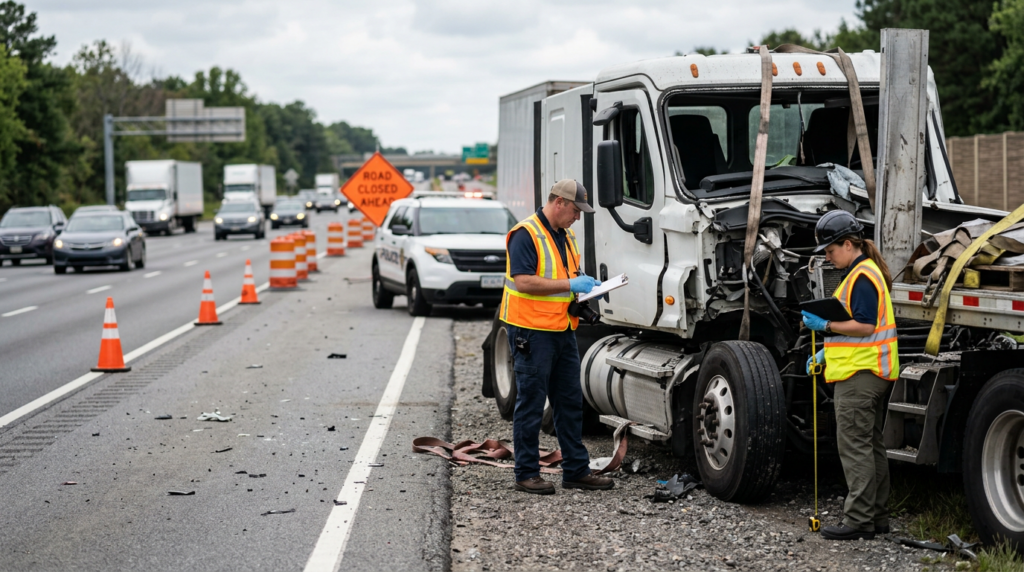
Figuring out who is at fault takes investigation. Records show what was loaded, how much it weighed, and who handled it. These include weigh-station tickets, bills of lading, load manifests, driver vehicle inspection reports, and securement logs. An experienced catastrophic-injury attorney gathers and reads these records to find every party at fault.
Florida follows modified comparative negligence under Fla. Stat. §768.81. A person found more than 50% at fault generally recovers nothing. Otherwise, their recovery is reduced by their share of fault. So even a partly at-fault victim may still have a claim.
Evidence that disappears fast after a cargo-related crash
The proof that shows a loading failure can vanish within days. So acting early matters. Trucking companies often move quickly after a crash.
Loading and weight records, electronic logging device (ELD) data, and the cargo itself can be moved, unloaded, or changed before anyone thinks to look. Once that evidence is gone, it is far harder to show how the crash really happened.
Acting early lets your attorney send a spoliation letter. That is a formal demand that the carrier keep records and physical proof safe. You do not need to collect any of this yourself. That is the firm’s job while you focus on healing.
Time matters for another reason too. Florida’s deadline to file most negligence claims is generally two years under Fla. Stat. §95.11. Waiting can cost you the right to file at all.
What families and injured victims can do next
Focus on medical care and recovery. Let a catastrophic-injury attorney handle the legal side. After a serious truck crash, your energy belongs on healing — yours or your loved one’s.
When you’re ready, our attorneys can review the crash. We look at the weight records, the securement, and every party who handled the load. We work to find who is accountable and to preserve the evidence that proves it.
CHG Personal Injury Lawyers is made up of licensed attorneys admitted to the Florida Bar. We serve clients across Florida — including Orlando, Miami, Tampa, and Jacksonville — and we take catastrophic cases nationwide.
There is no charge to talk. You can request a free case evaluation and get straight answers about your options. Contact CHG Personal Injury Lawyers to speak with our team about your situation.
Want to know where you stand?
Tell us what happened and our team will walk you through the options available to you, at no cost.
Frequently asked questions
What is an overloaded truck accident?
It’s a crash made worse because a truck carried too much weight, or a load that was not secured or balanced right. That failure makes the truck harder to stop and control.
Who is liable when improperly secured cargo causes a truck crash?
Fault can fall on the trucking company, the shipper, or the third-party company that loaded the cargo. More than one party can share fault.
What injuries do overweight and unsecured-load truck crashes cause?
They often cause spinal cord injuries, paralysis, traumatic brain injuries, amputations, catastrophic back and neck injuries, severe burns, and sometimes death.
What are the FMCSA cargo securement rules?
They are federal rules at 49 C.F.R. §§393.100–393.136. They require enough tiedowns, blocking, and bracing so a truck’s cargo cannot shift, spill, or fall. The requirements vary by load type.
How long do I have to file a truck accident claim in Florida?
Florida generally allows two years for most negligence claims under Fla. Stat. §95.11. It’s best to act well before the deadline.
Can my family file a claim if a loved one was killed?
Yes. When a truck’s loading failure causes a death, surviving family members may bring a wrongful-death claim. Contact us to learn what steps apply to your situation.
How Overloading Causes Serious Harm
Longer Stopping Distances
Extra weight means the truck needs far more room to stop. When traffic slows suddenly, an overloaded rig may not be able to brake in time.
Loss of Control
Weight that is too heavy, unbalanced, or shifting makes a truck harder to steer, especially on curves, ramps, and in wind.
Failed or Unsecured Loads
Cargo that is not tied down properly can shift, spill, or fall onto the road, causing violent crashes for everyone nearby.
Catastrophic Outcomes
Because of the mass and force involved, these crashes cause spinal cord injuries, traumatic brain injuries, amputations, severe burns, and in the worst cases, death.
Evidence Disappears Fast
Weigh tickets, cargo manifests, loading records, and truck data can be lost or overwritten quickly after a crash. Acting early helps preserve the proof of who overloaded or mis-secured the truck.
Who Can Be Held Responsible
The Trucking Company
The carrier may be responsible for accepting too much weight, failing to train drivers, or pressuring drivers to haul unsafe loads.
The Shipper
The company that sent the freight can share fault if it provided too much weight or misrepresented what was being shipped.
The Loading Company
A third party that packed, balanced, or secured the cargo may be liable if it did that work carelessly.
More Than One Party
Catastrophic truck cases often involve several responsible parties. A careful investigation identifies each one.