

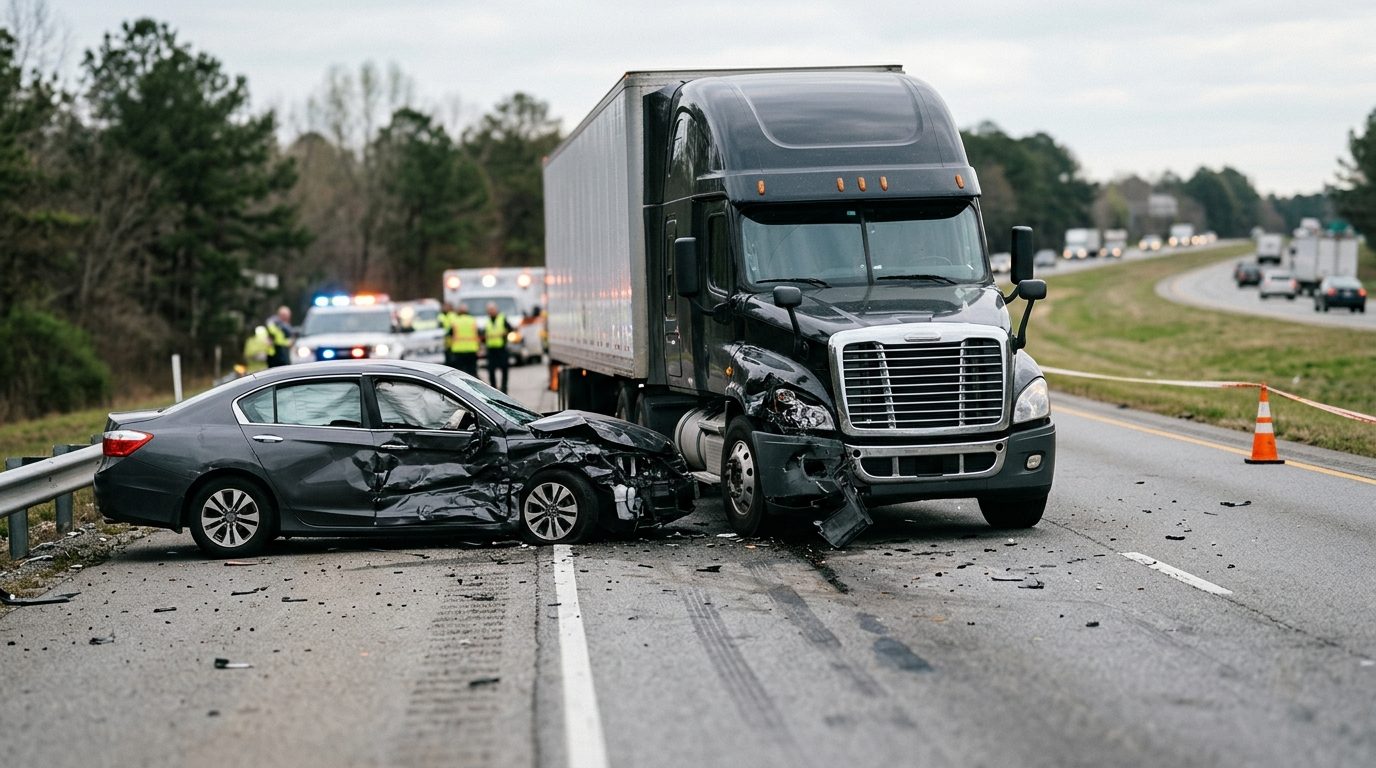
Truck Accident Evidence
Truck Accident Evidence Preservation: What You Must Do Now
Critical evidence disappears fast. Learn what to protect and why acting immediately matters for your catastrophic injury claim.
By CHG Lawyers · Published August 21, 2026
Preserving Truck Crash Evidence: EDRs, ELDs, and Dashcams—Critical Steps to Protect Your Claim
After a catastrophic truck crash, the evidence that proves what really happened can vanish in days—sometimes hours. Black box data gets overwritten. Dashcam footage is deleted. Electronic logs disappear. And the trucking company has every financial reason to let it happen.
If you’ve been seriously injured or lost a loved one, understanding what evidence exists and how to preserve it right now is one of the most important actions you can take.

Not sure what your next step is?
Talk it through with our team — the first consultation is free, confidential, and carries no obligation.
Why Evidence Preservation Matters After a Serious Truck Crash
The difference between a strong claim and a weak one often comes down to what happened in the seconds before impact. Was the driver speeding? Did they fail to brake? Were they distracted or dangerously tired? That evidence exists. But it won’t exist for long unless you act.
In the catastrophic-injury cases we handle, we’ve seen critical evidence disappear because families didn’t know it was there or didn’t know how to preserve it.
A truck’s black box can prove the driver was going 75 miles per hour in a 55-mile-per-hour zone. Electronic logs can show the driver had been on the road for 18 hours straight, violating federal hours-of-service limits. Dashcam footage can capture a driver texting seconds before the collision. But all of this data is routinely overwritten or deleted within days or weeks.
The trucking company and their insurance carrier know this. They have a financial incentive to let evidence vanish. The more evidence that disappears, the harder it becomes to prove fault, and the smaller your claim becomes.
Preserving evidence early is often the difference between holding the responsible parties accountable and being left with only their version of what happened.
Event Data Recorders (EDRs): The Truck’s Black Box
Commercial trucks are equipped with Event Data Recorders (EDRs)—similar to airplane black boxes. These devices capture critical data in the moments before, during, and after a crash.
An EDR records: – Vehicle speed – Engine RPM – Throttle position – Brake application and force – Steering input – Seatbelt status – Airbag deployment
This data is stored in the truck’s engine control module (ECM)—the computer that controls the truck’s engine and systems. The EDR can reveal whether the driver was speeding, failed to brake, or was distracted at the moment of impact.
The critical problem: EDR data is typically preserved for 30 days to several months before being overwritten. After that window closes, the data is gone forever.
A formal preservation letter—a legal demand sent to the trucking company and their insurer—can stop the clock. Once the letter is received, the company is legally obligated to preserve that data. If they destroy it anyway, the court can impose sanctions and adverse inferences (a legal instruction that tells the jury the destroyed evidence would have been unfavorable to the company that destroyed it).
Electronic Logging Devices (ELDs): Proving Driver Fatigue and Hours Violations
Federal law requires commercial trucks to use Electronic Logging Devices to record driver hours of service under 49 CFR § 395.8. An ELD creates a digital record of when the driver was on duty, driving, off duty, and sleeping. It’s a complete timeline of the driver’s work schedule leading up to the crash.
Fatigue is a leading cause of catastrophic truck crashes. According to the National Highway Traffic Safety Administration (NHTSA), driver fatigue is a factor in approximately 13% of all truck crashes. ELD data can prove the driver was operating illegally or was dangerously tired at the time of the collision.
For example: Federal rules limit a driver to 11 hours of driving per 14-hour work period. If ELD records show the driver exceeded that limit, that violation is direct evidence of negligence.
Delays in preservation can result in records being “lost” or carriers claiming data was routinely deleted. A preservation letter ensures the ELD records are kept and can later be subpoenaed as part of your claim.
Dashcam and Onboard Video: What the Cameras Captured
Many commercial trucks are equipped with forward-facing and inward-facing dashcams that record video of the road and the driver’s cab.
Forward-facing cameras capture: – The truck’s position on the road – Lane changes – Following distance – Traffic signals – Weather conditions
Inward-facing cameras may capture whether the driver was alert, distracted, eating, using a phone, or showing signs of drowsiness.
Dashcam footage is often the most persuasive evidence in a truck crash case. It can show exactly what the driver was doing in the moments before impact.
But here’s the critical issue: trucking companies typically retain dashcam footage for only 30 to 90 days before it is overwritten or deleted. If you wait, the footage is gone.
A preservation demand must be sent immediately to prevent the footage from being lost. Once preserved, this video can be analyzed frame-by-frame to establish fault, driver negligence, and the severity of the impact—all of which directly affect your claim’s value.
Other Critical Evidence in Truck Crashes
Black boxes, ELDs, and dashcams are the most time-sensitive evidence. But other records are equally important:
Maintenance and inspection records reveal whether the truck was properly maintained, brakes were functioning, tires were safe, and required inspections were completed under 49 CFR § 396. A truck with faulty brakes or worn tires may have been negligently maintained—a fact that increases the company’s liability.
Dispatch and communication records, including text messages, radio logs, and GPS data, can show whether the driver was pressured to speed, skip rest breaks, or violate safety rules. If the company pushed the driver to meet an unrealistic deadline, that pressure contributed to the crash.
Driver qualification files contain the driver’s background, training, prior accidents, and violations. A driver with a history of crashes or safety violations should never have been behind the wheel.
Cellphone records can show whether the driver was texting, calling, or using apps at the time of the crash—a critical fact in proving distraction.
Scene photographs and police reports document road conditions, vehicle damage, debris field, and initial witness statements. The police report will identify the truck’s carrier and may include preliminary findings about fault.
Have questions about what happened?
Ask our team directly. The first conversation is free, confidential, and there is no obligation to continue.
How to Preserve Truck Crash Evidence Right Now
Contact an attorney immediately. A lawyer can send a formal preservation letter (also called a spoliation notice) to the trucking company, the driver’s employer, the insurance carrier, and any other responsible party. This letter legally demands that all evidence be preserved. Do not wait—the sooner the letter is sent, the sooner the clock stops on automatic data deletion.
Photograph and document the scene yourself if you are able. Take photos of vehicle damage, road conditions, traffic signals, weather, and any visible debris. If you’re injured, ask a family member or bystander to do this for you. These photographs become part of your evidence file.
Obtain the police report. Request a copy from the law enforcement agency that responded to the crash. The report will identify the truck’s carrier, provide the officer’s initial findings, and include witness statements.
Preserve your own records. Keep all medical records, hospital bills, photographs of injuries, and communications about the crash. These documents establish the severity of your injuries and the damages you’ve suffered.
Do not speak to the trucking company’s insurance adjuster or investigator without legal counsel. This is critical. Anything you say can and will be used against your claim. Insurance adjusters are trained to minimize claims and to get you to accept blame or downplay your injuries. They may call you in the hospital or while you’re still in pain. They may sound sympathetic. But their job is to protect the company, not you. Let your attorney handle all communication with the other side. This single step protects you from inadvertently harming your own case.
Why Trucking Companies and Insurers Resist Evidence Preservation
Black box data, ELD records, and dashcam footage often prove driver error, speeding, fatigue, or maintenance failures. These facts increase the company’s liability and the claim’s value. Trucking companies and their insurers know that missing or “lost” evidence makes it harder for injured people to prove what happened.
Without preserved data, the case may come down to conflicting witness accounts. The injured person may be blamed for the crash through comparative fault (shared responsibility for the accident).
This is why a formal preservation demand from an attorney is so important. It creates a legal obligation and a paper trail. If evidence is destroyed anyway, you have proof the company was ordered to preserve it and chose not to.
What Happens If Evidence Is Destroyed After Preservation Demand
If evidence is destroyed after a preservation demand is sent, the court may impose sanctions against the responsible party. One powerful remedy is an adverse inference—a legal instruction that tells the jury the destroyed evidence would have been unfavorable to the party that destroyed it. In other words, the court presumes the missing data would have proven your case.
Adverse inferences can shift the burden of proof and significantly strengthen your claim. Florida presumes the rear driver was negligent, but the presumption can be rebutted and fault can be shared. However, prevention is always better than remedy. Preserving evidence from the start is far more effective than fighting over destroyed evidence later. This is another reason to act quickly and involve an attorney as soon as possible after a serious truck crash.
The Statute of Limitations: Your Time to Act
That clock is ticking. The sooner you preserve evidence and begin your investigation, the stronger your position becomes.

Want to know where you stand?
Tell us what happened and our team will walk you through the options available to you, at no cost.
Frequently Asked Questions
How quickly do I need to act after a truck crash?
Within days. Black box data and dashcam footage can be overwritten or deleted within 30 to 90 days. Contact an attorney immediately to send a preservation letter.
What if I can’t afford an attorney?
Many catastrophic-injury attorneys work on a contingency basis. They don’t charge upfront fees. They’re paid only if your case succeeds.
Can I preserve evidence myself?
You can photograph the scene and obtain the police report. But only an attorney can send a formal preservation letter that creates a legal obligation and stops the clock on automatic data deletion.
What if the trucking company says the data was already deleted?
If a preservation letter was sent and evidence was destroyed anyway, the court may impose an adverse inference. This is a powerful remedy that presumes the missing evidence would have proven your case.
How long does an investigation take?
It depends on the complexity of the case and the amount of evidence. But the sooner evidence is preserved, the sooner the investigation can begin.
If you or a family member has suffered a catastrophic injury in a truck crash—spinal cord damage, paralysis, traumatic brain injury, amputation, or severe burns—and you’re facing questions about evidence, liability, and what comes next, you don’t have to navigate this alone. Contact us for a free case evaluation. Many people in your situation reach out in those first critical days after a crash, and we’re here to help you understand your options and protect your rights.
Act Within Days, Not Weeks
Black box data, dashcam footage, and electronic logs can be overwritten or deleted within 30 to 90 days. The truck company's legal team may also move to destroy or limit access to evidence. Contact an attorney immediately to send a formal preservation letter that legally requires the trucking company and other parties to hold onto all evidence.
Key Evidence to Preserve
Electronic Data & Black Boxes
Commercial trucks carry electronic control modules (ECMs) that record speed, braking, acceleration, and steering. This data is often overwritten within weeks. Dashcam and onboard video footage must also be secured before it's deleted.
Driver Logs & Maintenance Records
Hours-of-service logs, vehicle maintenance history, and inspection reports reveal whether the driver was fatigued or the truck was unsafe. These records are legally required to be kept but can be lost or altered.
Scene Evidence & Witness Information
Photos and video of the crash scene, vehicle damage, road conditions, and weather must be documented early. Witness names and contact information should be collected before memories fade or witnesses become unavailable.
Communications & Company Records
Text messages, dispatch records, GPS data, and internal company communications about the driver or vehicle can reveal negligence or policy violations. These are often the first things companies try to delete or hide.
Why Evidence Preservation Matters for Your Claim
Protects Your Right to Recovery
Without preserved evidence, proving what happened and who was responsible becomes nearly impossible. A preservation letter creates a legal obligation that strengthens your claim.
Stops Evidence Destruction
Companies know that evidence hurts their case. A formal notice prevents them from deleting data, altering records, or claiming evidence was lost by accident.
Builds Your Case Foundation
Black box data, video, and maintenance records are often the strongest proof of how the crash happened and whether the truck company or driver was negligent.
Supports Settlement & Trial
Preserved evidence gives your attorney the facts needed to negotiate fairly or present a strong case if the claim goes to trial.
Immediate Steps After a Catastrophic Truck Crash
1. Seek Medical Care First
Your health is the priority. Get emergency treatment and follow all medical advice. Medical records also document the severity of your injuries.
2. Contact an Attorney Immediately
Call within days—not weeks. An attorney can send a preservation letter to the trucking company, insurance carrier, and other parties before evidence is lost or destroyed.
3. Document What You Can Safely
If you're able, take photos of the crash scene, vehicle damage, road conditions, and any visible injuries. Note the date, time, location, and weather. Collect names and phone numbers of witnesses.
4. Avoid Discussing the Crash
Do not post about the accident on social media or give recorded statements to insurance companies without legal guidance. Anything you say can be used against your claim.
What About Legal Fees?
Many catastrophic-injury attorneys handle truck accident cases on a contingency basis. That means no attorney’s fees unless there is a recovery. You don't pay upfront—the attorney's fee comes only if your claim is resolved.