

Truck Accident Evidence
Preserving Evidence After a Truck Accident: Critical Steps
The first hours matter. Learn what evidence must be protected and how an attorney can help secure it before it disappears.
By CHG Lawyers · Published August 23, 2026
Preserving Evidence After a Truck Accident: Why Speed Matters When Your Life Has Changed
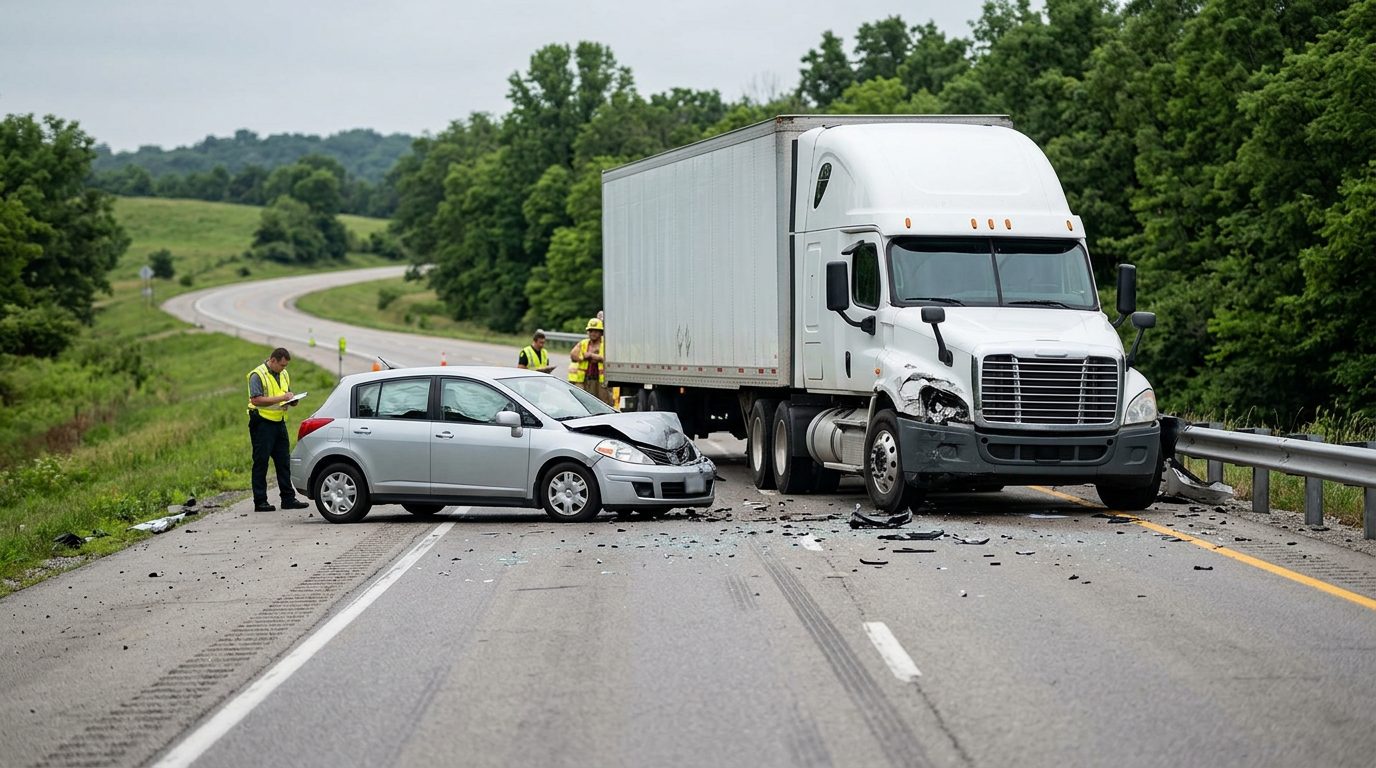
You’re in a hospital bed. Or your family is making impossible decisions about your future. A truck crash has left you with a spinal cord injury, paralysis, traumatic brain injury, amputation, or worse.
While you’re trying to survive and adapt, the evidence that proves what happened is disappearing—right now, in real time.
The truck’s black box is overwriting. Surveillance video is being deleted. Witness memories are fading. The vehicle itself may be scrapped within weeks. Every hour that passes makes your claim harder to prove and less valuable.
But there is something you can do immediately: preserve the evidence before it vanishes.

Not sure what your next step is?
Talk it through with our team — the first consultation is free, confidential, and carries no obligation.
Why Trucking Companies and Insurers Benefit When Evidence Disappears
This is not an accident. Truck companies and their insurers have a direct financial incentive to let evidence vanish.
The less proof you have that the driver was speeding, fatigued, or reckless—the less you can prove the company was negligent—the less they owe you. A claim with strong evidence settles for far more than one without it. A claim with no evidence may not settle at all.
When evidence is gone, the burden shifts to you. You must prove what happened without the objective record. The insurance company benefits from silence.
This is why acting within hours or days—not weeks—is critical. Once evidence is destroyed, no lawyer can recover it.
What Evidence Disappears and When
Black box data (event data recorder): This device records the truck’s speed, braking force, throttle position, steering angle, and whether airbags deployed. It captures all this in the seconds before and after impact. It is the most objective record of what the driver did.
Depending on the truck model and manufacturer, this data is overwritten within days or weeks as the vehicle continues to operate. Once overwritten, it cannot be recovered.
Electronic logging device (ELD) records: Federal law requires all commercial trucks to have ELDs. These automatically record hours of service, location, and vehicle movement. These records are often deleted automatically after 30–90 days as part of routine data management.
If no preservation order is in place, the company can destroy them legally—and you will never know what they said about the driver’s fatigue or hours worked.
Surveillance footage: Video from nearby businesses, traffic cameras, ATMs, gas stations, and dashcams is routinely deleted after 30–90 days. This footage can show exactly how the crash happened, the impact severity, and who was at fault. Once deleted, it is gone forever.
Vehicle wreckage: The truck is towed away and may be scrapped or sold for parts within weeks. The physical evidence—damage patterns, mechanical condition, evidence of defects—is destroyed.
Witness memories: A witness who vividly describes the crash hours afterward may have only a vague recollection weeks later. Witnesses move, change phone numbers, or become unreachable.
Driver logs, training records, and maintenance files: These can be altered or destroyed, erasing proof of driver fatigue, inadequate training, or known mechanical defects.
How Evidence Determines Your Claim’s Value
In a catastrophic truck crash case, evidence determines two critical things: liability (who is responsible) and damages (what you recover).
Black box data shows whether the truck was speeding, whether the driver braked, and the force of impact. It often contradicts the driver’s or insurance company’s account. Without it, you are left arguing against their story with only your own recollection.
ELD records and driver logs reveal whether the driver was fatigued or working excessive hours in violation of federal safety rules. Fatigued driving is a leading cause of catastrophic truck crashes. Proof of fatigue significantly strengthens your claim.
Maintenance records and inspection reports show whether the truck had known defects—failed brakes, worn tires, steering problems, or coupling failures. A mechanical defect can shift liability entirely to the trucking company or manufacturer.
Surveillance video and dashcam footage are objective and hard to dispute. They corroborate or contradict accounts given by the driver and insurance company.
Witness statements, recorded while memories are fresh, lock in what people saw. A detailed statement recorded hours after the crash is far more credible than one collected months later.
Vehicle damage analysis by accident reconstructionists determines the angle of impact, relative speeds, and which vehicle struck the other. This analysis is often decisive in proving fault.
In the catastrophic-injury cases we handle, evidence often determines not only whether you win but also how much you recover. A strong claim with solid evidence settles for substantially more than a weak one.
What Happens When Evidence Is Lost
Without black box data, you lose the most reliable proof of the truck’s speed and the driver’s actions. The case becomes harder to prove, and the insurance company’s settlement offer reflects that weakness.
Without ELD records, you cannot prove the driver was fatigued or violating federal safety rules. This eliminates a powerful argument for negligence.
Without maintenance records, you cannot prove the truck had a defect that contributed to the crash. The trucking company escapes liability.
Without surveillance footage or dashcam video, the case becomes a dispute over who is telling the truth. Without objective evidence, your account may be discounted.
Without witness statements, key details are lost forever. The only accounts remaining are those given to police or insurance companies, which may not fully capture what witnesses saw.
The burden of proof shifts against you. You must prove what happened without evidence, while the other side benefits from its absence. This is a massive disadvantage.
Intentional destruction of evidence—called “spoliation”—can result in legal sanctions. If you can prove the truck company destroyed evidence after being ordered to preserve it, the court may instruct the jury that the destroyed evidence is presumed to be unfavorable to the truck company. But you must act fast enough to preserve what remains and prove that destruction occurred.
Types of Evidence to Preserve Immediately
- Black box and event data recorder (EDR): Records speed, braking, throttle position, steering angle, and airbag deployment in the seconds before and after impact. Must be preserved within days.
- Electronic logging device (ELD) records: Federal law requires ELDs on all commercial trucks. These records are often automatically deleted after 30–90 days and must be preserved immediately.
- Driver qualification files and training records: Show the driver’s experience, training, and any history of violations or safety complaints.
- Hours-of-service logs and dispatch records: Prove whether the driver was within legal driving limits or fatigued and working excessive hours.
- Maintenance and inspection records: Document the truck’s mechanical condition, recent repairs, and any known defects.
- Surveillance footage and dashcam video: From nearby businesses, traffic cameras, ATMs, gas stations, or the vehicles involved. Often deleted after 30–90 days.
- Photographs and video of the crash scene, vehicle damage, and road conditions: Taken immediately after the crash to document the scene before it is cleaned up or altered.
- Witness contact information and statements: Recorded while memories are fresh and accurate.
- Police report and accident reconstruction data: Official documentation of the crash and preliminary investigation findings.
- Cell phone records and GPS data: May show whether the driver was distracted or speeding.
Have questions about what happened?
Ask our team directly. The first conversation is free, confidential, and there is no obligation to continue.
How a Preservation Letter Stops Evidence Destruction
A preservation letter (also called a “litigation hold” or “spoliation notice”) is a formal written demand. It tells the truck company, driver, insurance company, and other parties to preserve all evidence related to the crash. The letter identifies specific evidence that must be preserved and warns that failure to do so may result in legal sanctions.
Once a preservation letter is sent, the recipient has a legal duty to stop routine destruction of evidence. Automatic deletion of ELD records must cease. Video retention policies must be suspended. The truck must not be scrapped. Driver logs and maintenance files must be secured.
A preservation letter creates a paper trail. If evidence is destroyed after the letter is sent, it strengthens your claim of intentional spoliation. The court may penalize the party responsible for the destruction.
An attorney can send a preservation letter immediately after a crash, often before the insurance company or trucking company has time to act. Without a preservation letter, evidence can be destroyed as part of normal business operations, and you may have no recourse.
What You Can Do Right Now
- Photograph and video everything: The crash scene, vehicle damage, road conditions, traffic signs, weather, and any visible injuries. Use your phone if necessary. These images are evidence.
- Get witness names and contact information: Ask anyone who saw the crash for their name, phone number, and email address. Write down what they say they saw, as close to their exact words as possible.
- Do not move or allow the truck to be moved or scrapped: The vehicle is evidence. If it is towed, find out where it is being stored and notify an attorney immediately so the vehicle can be inspected and preserved.
- Request the police report: Contact the police department that responded to the crash and ask for a copy of the accident report. This is public record.
- Do not sign anything or make a recorded statement to the insurance company without legal advice: Anything you say can be used against you. Insurance adjusters are trained to minimize claims.
- Preserve your own records: Keep all medical records, bills, photographs, text messages, emails, and handwritten notes about the crash and your injuries.
- Contact an attorney as soon as possible: An attorney can send a preservation letter, secure black box data and ELD records before they are deleted, and begin the evidence-gathering process immediately. Time is critical.
How an Attorney Preserves Evidence in a Truck Crash Case
An attorney sends a preservation letter to the truck company, driver, insurance company, and other parties within hours or days of the crash. This stops routine destruction of evidence.
The attorney may file a lawsuit or send a formal demand that triggers the truck company’s legal duty to preserve evidence under court rules and common law.
The attorney uses discovery—the legal process of demanding documents and information—to obtain black box data, ELD records, maintenance files, driver logs, and surveillance footage. The trucking company must respond or face court sanctions.
The attorney may hire an accident reconstructionist or engineer to inspect the vehicle, analyze the damage, and examine the mechanical condition. This expert analysis can prove or disprove claims about how the crash occurred.
The attorney coordinates with medical experts to document the extent of your injuries and their permanence. This is essential in a catastrophic-injury case where damages are substantial.
The attorney negotiates with the insurance company and trucking company to preserve evidence and settle the claim fairly, or prepares the case for trial if necessary.
Why Time Is the Enemy in Evidence Preservation
Every day that passes increases the risk that critical evidence will be deleted, destroyed, or lost. Black box data can be overwritten within days or weeks. Surveillance footage is routinely deleted after 30–90 days. Witness memories fade and witnesses become unreachable. The truck may be scrapped or sold for parts, destroying physical evidence forever.
The longer you wait to contact an attorney, the narrower your window to preserve evidence becomes. Once evidence is gone, it is gone forever—and your claim is weakened or lost.
Want to know where you stand?
Tell us what happened and our team will walk you through the options available to you, at no cost.
Frequently Asked Questions
Can I preserve evidence on my own?
You can photograph the scene and collect witness information immediately. But an attorney has the legal authority to send a preservation letter and compel the truck company to preserve evidence. Acting fast with an attorney’s help is far more effective.
What if the trucking company destroys evidence after a preservation letter is sent?
Intentional destruction of evidence after a preservation letter is called “spoliation” and can result in legal sanctions. These may include a judgment against the truck company or an instruction to the jury that the destroyed evidence is presumed to be unfavorable to the truck company.
How long do I have to file a claim?
Florida law gives you two years from the date of the crash to file a personal-injury lawsuit in most cases. However, evidence preservation cannot wait—the sooner you act, the more evidence you will have.
What if I was partially at fault for the crash?
Florida is a comparative negligence state. Even if you were partially at fault, you may still have a claim against the truck company if the driver or trucking company was also at fault. Evidence will determine the degree of fault and your recovery.
If you or a family member suffered catastrophic injuries in a truck crash, the evidence that proves what happened may be disappearing right now. Contact us for a free case evaluation today. The sooner you act, the more we can preserve and the stronger your claim becomes.
Act Quickly—Evidence Disappears Fast
Trucking companies and their insurers have a legal duty to preserve evidence after a crash. But evidence can be lost, destroyed, or altered if you don't act immediately. The sooner you contact an attorney, the sooner a preservation letter can be sent to compel the truck company to safeguard critical evidence.
What Evidence Must Be Preserved
The Truck and Vehicle Damage
The physical condition of the truck, the cargo, braking systems, tires, and mechanical components can reveal what caused the crash. Damage patterns on both vehicles tell the story of impact and force.
Electronic Data and Records
Modern trucks contain electronic control modules (ECMs) that record speed, braking, acceleration, and steering data. Logbooks, GPS records, maintenance logs, and driver records are essential to establishing what happened and why.
Scene Evidence and Photographs
Skid marks, debris fields, road conditions, weather, lighting, and traffic signals all matter. Scene photos and measurements taken immediately after the crash are irreplaceable.
Witness Statements and Video
Eyewitness accounts, dashcam footage, traffic cameras, and security footage from nearby businesses can corroborate what occurred and may be the only record of conditions at the moment of impact.
How an Attorney Protects Your Evidence
Preservation Letter
An attorney sends a formal legal notice to the trucking company, requiring them to preserve all evidence related to the crash. This creates a documented duty and a record of the demand.
Legal Authority
An attorney has the power to compel evidence preservation through discovery and can pursue sanctions if evidence is destroyed after notice. You cannot do this on your own.
Immediate Action
Every hour counts. An attorney can send a preservation letter within hours of retaining them, before evidence is lost, discarded, or recorded over.
Expert Investigation
An attorney can coordinate with accident reconstructionists, engineers, and other specialists to identify and secure evidence you might not know to look for.
What You Can Do Right Now
Photograph the Scene
If you are able and safe to do so, take photos and video of the truck, your vehicle, the road, traffic signals, weather, and debris. Capture wide shots and close-ups of damage.
Collect Witness Information
Get the names, phone numbers, and email addresses of anyone who saw the crash. Ask them what they saw and write it down. Witnesses can disappear quickly.
Note the Truck Details
Record the truck's license plate, company name, driver name, and any visible markings. Get the police report number and the responding officer's name.
Contact an Attorney Immediately
Do not wait. An attorney can send a preservation letter and begin securing evidence before the trucking company has a chance to destroy or alter it.
What Happens If Evidence Is Destroyed?
If a trucking company destroys evidence after receiving a preservation letter, an attorney can pursue legal remedies, including sanctions and adverse inferences (a court instruction that the destroyed evidence would have supported your claim). This is why the preservation letter is so powerful—it creates a record and a legal obligation.