
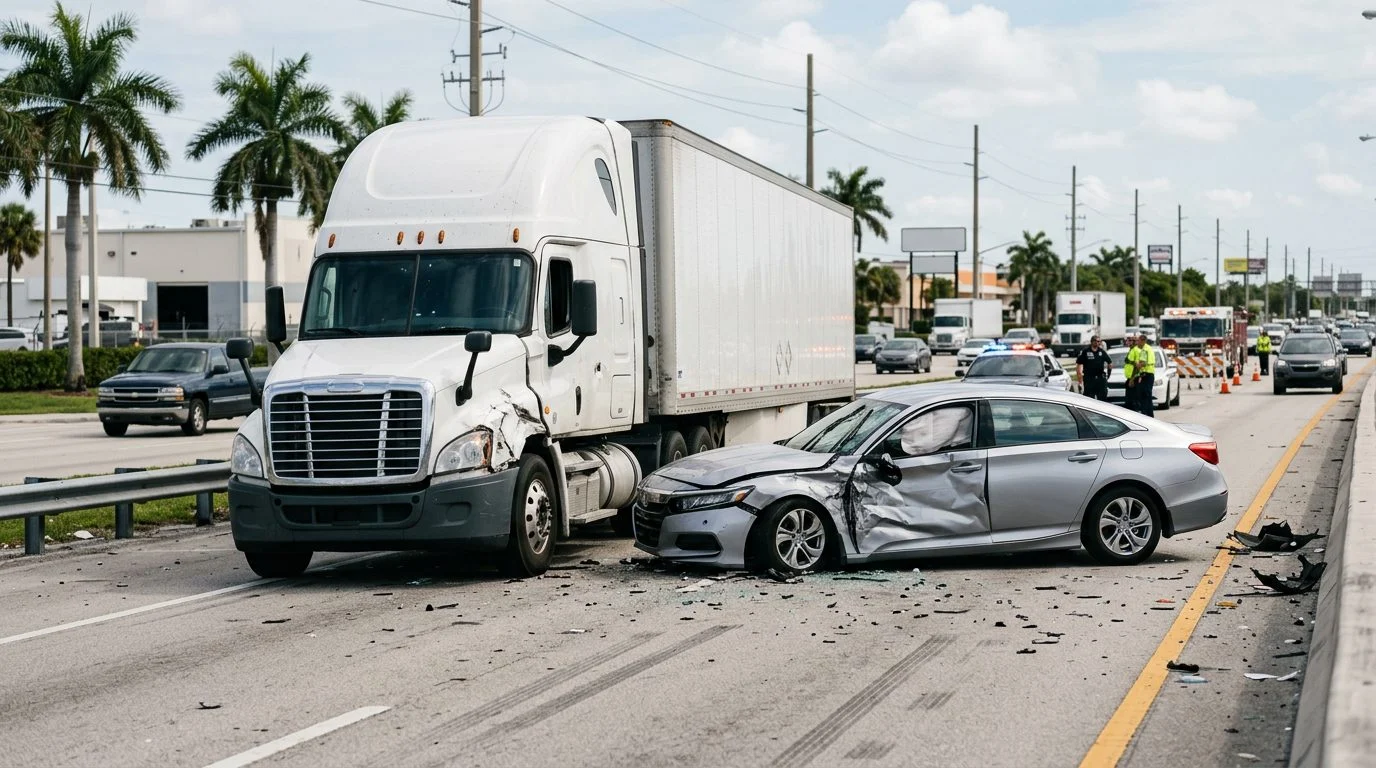
Florida Personal Injury | Delivery Truck & Van Crashes
Hurt in a Delivery Truck or Van Crash? Start With a Free Consultation
When a package truck or delivery van injures you, more than one party may share responsibility. CHG Personal Injury Lawyers helps Florida families understand their options in plain language.
By CHG Lawyers · Published November 27, 2026
Delivery Truck and Van Accident Lawyer in Florida
Picture a weekday morning on a busy Miami street. A delivery van pulls out from a loading zone. It cuts in front of a sedan. The driver is trying to reach the next stop on a tight schedule. In a moment, the car is wrecked. The driver is in the hospital. The family has questions that nobody has answered yet.
Or picture a Tampa neighborhood. A pedestrian is walking in a crosswalk. A box truck makes a wide right turn during a delivery run. The driver never sees the person. The pedestrian suffers a broken pelvis and a head injury.
These examples show how these crashes happen. They are not the facts of any client’s case.
If a delivery van or truck hit you or someone you love on a Florida road, you may have many questions. Most people ask three things first:
- Who pays the bills?
- Who is responsible?
- What should you do first?
Many people hurt in these crashes may have a claim. A claim may be against the driver. It may be against the company that employed or hired the driver. It may also be against others tied to the delivery. Whether a claim exists depends on how the crash happened. It also depends on how the delivery operation was run. A Florida delivery truck accident lawyer can explain how these claims work.
If a delivery van or truck hit you or someone you love in Florida, you may have a claim, and our team can review it with you at no cost. Talk it through with our team — the first consultation is free, confidential, and carries no obligation.
What a Delivery Truck or Last-Mile Van Accident Is
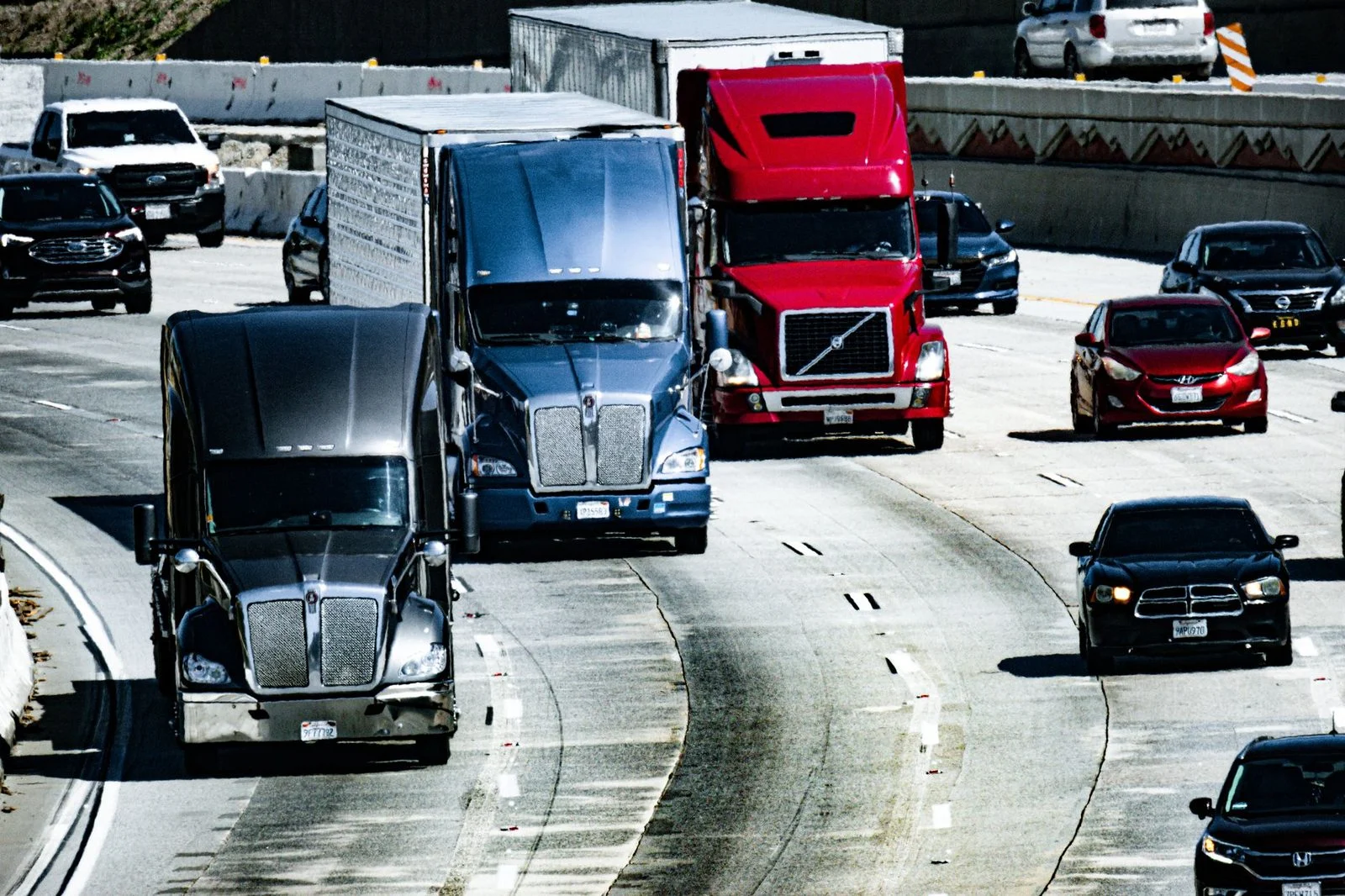
A delivery truck or last-mile van accident is a crash involving a box truck or van. These vehicles carry packages from a regional hub to homes and businesses. The “last mile” is the final part of that trip. It happens on neighborhood and commercial streets.
These vehicles are common in Miami, Orlando, Tampa, and Jacksonville. Drivers often make dozens of stops in one shift. They work on crowded streets. Parked cars, pedestrians, and cyclists are all around them.
Delivery vehicles are smaller than an 18-wheeler. But a loaded box truck or van is still heavy. It can cause serious harm to people in smaller cars, to motorcyclists, and to anyone on foot or on a bicycle.
This page is for anyone hurt in a crash involving a delivery vehicle. That includes drivers, passengers, pedestrians, and cyclists. It also includes families who lost a loved one.
Who Owns the Van? Contractors, Employers, and Liability
Many vans carry the logo of a large company. But a separate contractor often runs them. The name on the van may not be the name on the driver’s paycheck. That gap matters.
Lawyers use the term independent contractor for a worker. This is a person labeled as a business owner, not an employee. Lawyers also look at who controlled the work. That includes routes, scanners, schedules, and training. The label on paperwork is only a starting point. Claims look at who actually hired, trained, and directed the driver.
That is why the first step is to identify every company connected to the delivery. Do not stop at the company whose logo is on the side.
Common Causes and Who May Be Responsible
Delivery crashes often trace back to how the driver and the route were managed. Lawyers look at the whole delivery operation. They do not look only at the moment of impact.
Common causes that lawsuits examine include:
- Driver fatigue and long shifts
- Distraction from handheld devices or navigation screens
- Pressure to meet tight delivery windows
- Blind spots and wide turns on residential streets
- Backing accidents in driveways and loading zones
- Cargo that shifts or falls
- Brake, tire, or lighting failures
These are allegations. They must be checked against evidence. They are not proven facts.
Possible defendants include the driver, the employer, a delivery contractor, and the vehicle owner. A defendant is a person or company that a lawsuit is filed against.
Determination of Liability in a Truck Accident
Determining liability means deciding who was at fault, and how much. Liability is legal responsibility for harm.
In Florida, this is not an all-or-nothing question. Each party that is liable pays based on its own percentage of fault. Florida does not use joint and several liability for this purpose (§ 768.81). Fla. Stat. § 768.81 reads: “(4) APPLICABILITY.—This section does not apply to any action brought by any person to recover actual economic damages resulting from pollution, to any action based upon an intentional tort, or to any cause of action as to which application of the doctrine of joint and several liability is specifically provided by chapter 403, chapter 498, chapter 517, chapter 542, or chapter 895.” Fla. Stat. § 768.81(3) provides that, in a negligence action, “the court shall enter judgment against each party liable on the basis of such party’s percentage of fault and not on the basis of the doctrine of joint and several liability.” That is why it matters to identify every company and insurer involved.
Florida also lets a defendant point to nonparties. A nonparty is someone who is not in the lawsuit but who contributed to the crash. The defendant must raise that claim properly. The defendant must also identify the nonparty if known, or otherwise describe the nonparty as specifically as practicable, unless there is a showing of good cause (§ 768.81). Early investigation helps prevent surprises later.
If a vehicle part failed, a product claim may be considered. Examples include brakes, tires, or a latch on a cargo door. If a vehicle part failed, a product claim may be considered. Examples include brakes, tires, or a latch on a cargo door. In a products liability action alleging that injuries were enhanced by a defective product, Florida law requires that the fault of all persons who contributed to the accident be considered when fault is apportioned (§ 768.81).
Florida’s fault rule also matters. How fault is divided among everyone involved can affect whether, and how much, an injured person may recover under Florida law, so it is worth asking a lawyer how those rules may apply to your situation. Comparative fault means a party found to be greater than 50 percent at fault for their own harm may not recover any damages (Fla. Stat. § 768.81(6)).
Do not assume you are at fault because the other side says so. Let a lawyer review the evidence.
Federal Regulations in the Trucking Industry
Federal trucking rules govern many commercial vehicles. These rules can become important evidence.
- Who is covered. The federal rules apply to employers, employees, and commercial motor vehicles. These vehicles carry property or passengers in interstate commerce, meaning trade that crosses state lines (49 CFR 390.3T). Whether a particular van falls under these rules depends on the vehicle and how it is used.
- Driver qualifications. A person may not drive a commercial motor vehicle unless qualified. The driver must be at least 21 years old. The driver must read and speak English well enough to understand traffic signs and make entries on reports. The driver must also hold a currently valid commercial motor vehicle operator’s license issued only by one State or jurisdiction (49 CFR 391.11).
- Driving hours. A driver may not drive after a 14-hour period. That period must start after 10 consecutive hours off duty. Within that period, the driver may drive 11 hours (49 CFR 395.3). Driving is also limited after 60 hours on duty in any period of 7 consecutive days, or after 70 hours on duty in any period of 8 consecutive days, depending on whether the carrier operates commercial motor vehicles every day of the week. The limit depends on the carrier’s schedule.
- Records. Carriers must keep records of duty status and supporting documents. They must keep them for at least six months from receipt (49 CFR 395.8). These records can show when a driver was on the road and for how long.
When these records and the actual schedule do not match, that gap can be important.
Not sure what your next step is?
Talk it through with our team — the first consultation is free, confidential, and carries no obligation.
Injuries Common in Delivery Van and Truck Crashes
Crashes with large vehicles often cause catastrophic injuries. These injuries can change a family’s future. The most serious include:
- Spinal cord injuries and paralysis, including paraplegia and quadriplegia
- Traumatic brain injuries
- Amputations and limb loss
- Severe burns
- Serious back and neck injuries that cause lasting pain or loss of function
Pedestrians and cyclists have little protection when a large vehicle strikes them.
Get medical care right away, even if you feel fine. Some symptoms appear hours or days later. Follow your doctors’ care plan. Tell them about every symptom.
Keep every bill, prescription receipt, and appointment record.
When a crash takes a life, the family may seek compensation for their loss. Wrongful death claims are covered below.
Florida Deadlines, Fault Rules, and Dates That Matter
Florida sets a deadline for filing a lawsuit. Crash evidence can also disappear quickly. Acting early protects both your claim and the evidence.
Florida’s filing deadlines are set in Fla. Stat. § 95.11. Section 95.11 sets the filing time for actions other than for recovery of real property, by type of action.
Do not guess. Deadlines apply, so contact a lawyer promptly.
Crash reports matter too. The officer who investigates the crash must complete a Florida Traffic Crash Report, Long Form, and submit it within 10 days after the investigation is completed, when the crash resulted in a death, a personal injury, or any indication of complaints of pain or discomfort (§ 316.066). Crash reports list the parties and vehicles involved. This helps identify who to pursue.
Evidence to protect includes:
- Electronic logging device (ELD) data and GPS records
- Dashcam video and delivery scan logs
- Maintenance records and the vehicle itself
Photograph the scene. Write down witness names. Keep every medical and repair record.
How a Delivery Truck Claim Works, Step by Step
A delivery truck claim usually moves through five steps. The steps run from the first call to a settlement or lawsuit. Timelines vary. No timeline can be promised.
- Free consultation. The first consultation is free and confidential. It carries no obligation to continue. (La consulta inicial es gratuita, confidencial y sin compromiso de continuar.)
- Preservation and investigation. Letters ask that key evidence be kept. The firm gathers police reports, medical records, and scene evidence.
- Identifying responsible parties and insurers. The driver, employer, contractor, and insurers may all be involved. More than one company can share responsibility.
- Building the claim. Medical costs, lost income, and the effects on daily life and family are documented.
- Negotiation or lawsuit. Many claims resolve through negotiation. If a fair resolution is not reached, the claim may go to court.
Avoid giving a recorded statement to an insurer until you have spoken with a lawyer.
What Compensation May Cover
Compensation in these cases can cover medical bills, lost income, and changes to daily life. The categories below may apply. They depend on the injury and the family’s losses.
- Economic losses: past and future medical bills, rehabilitation, assistive equipment, home changes, lost wages, and lost ability to earn.
- Pain and suffering: physical pain, loss of enjoyment of life, and emotional distress.
- Wrongful death: Florida’s wrongful death statute lets surviving family seek lost support and services. It also lets a surviving spouse seek loss of companionship and mental pain and suffering, lets minor children (or all children if there is no surviving spouse) seek lost parental companionship and mental pain and suffering, lets each parent of a deceased minor child seek mental pain and suffering, and lets each parent of an adult child seek mental pain and suffering if there are no other survivors (§ 768.21).
Medical bills need careful handling. Some providers treat on a letter of protection. This is a promise of payment from any judgment or settlement. Florida requires the claimant to disclose a letter of protection and related arrangements. This applies in a personal injury or wrongful death action (§ 768.0427).
If the injured person is on Medicare, the claim must be reported. Medicare may make a conditional payment for services that another payer may be responsible for. That payment must be repaid when a settlement, judgment, award, or other payment is made (CMS). A beneficiary must notify Medicare when a claim is made against a party with liability insurance. This applies whether the beneficiary acts through an attorney or otherwise (CMS).
No amount can be promised or predicted. Every case rests on its own facts.
Wrongful Death After a Delivery Vehicle Crash
When a delivery crash causes a death, the family faces grief, daily losses, and many decisions at once. Florida law gives the family a path to seek damages, meaning money for their losses. The claim may proceed under the wrongful death act when a wrongful act or negligence causes a death. The claim may proceed under the wrongful death act when a wrongful act, negligence, default, or breach of contract or warranty causes a death and the event would have entitled the injured person to maintain an action and recover damages had death not ensued. This is true even though the injured person has died (§ 768.19).
A surviving spouse may recover for two things. The first is loss of the decedent’s companionship and protection. The second is mental pain and suffering from the date of injury (§ 768.21).
When the injured person dies of the injury, the surviving spouse does not bring a separate loss of consortium claim. Consortium means the loss of a spouse’s companionship and support. Thus, under the Act, the surviving spouse does not pursue a distinct cause of action based on loss of consortium (Ripple v. CBS Corp.).
Minor children may also have claims for their losses. So may parents of a deceased minor child (§ 768.21). Our team can explain which family members may be included. We can also explain what the filing deadlines require.
If a delivery van or truck hit you or someone you love in Florida, you may have a claim, and our team can review it with you at no cost. Talk it through with our team — the first consultation is free, confidential, and carries no obligation.
Why Contact CHG Personal Injury Lawyers
CHG Personal Injury Lawyers is a Florida-based firm. It handles truck accidents, catastrophic injury claims, wrongful death, and other personal injury cases of every severity. The firm has represented people in Florida throughout its practice. It also handles the case types listed on this site.
- The firm serves people throughout Florida, including Miami, Orlando, Tampa, and Jacksonville.
- Our lawyers are licensed in Florida and admitted to The Florida Bar.
- Igor Hernandez is the responsible lawyer for this page.
- Educational resources are available in English and Spanish. A Spanish version of this page is available for Florida families.
- CHG charges no attorney’s fees and no case costs unless there is a recovery.
- Some matters may be handled together with, or referred to, another law firm when the case calls for it.
Frequently Asked Questions
Can I bring a claim if the driver worked for a contractor?
A claim may reach more than the driver. It may reach others involved in the delivery. Whether the company that benefited from the deliveries can be held responsible depends on the facts. The key fact is how the work was directed.
Do federal trucking hour rules apply to a delivery van?
Federal rules cover commercial motor vehicles that carry property or passengers in interstate commerce. So the vehicle and how it is used matter. Some delivery vehicles may fall under these rules. Some may not.
What if I was partly at fault?
Even partial fault can affect a claim. Speak with a lawyer before drawing conclusions.
How long do I have to file?
Florida’s filing deadlines are set in § 95.11. Speak with a lawyer promptly.
Should I talk to the delivery company’s insurer?
Speak with a lawyer first. Do this before giving any recorded statement.
Talk to a Florida Lawyer About Your Delivery Van Crash
If a delivery van or truck hit you or someone you love on a Florida road, the bills and missed work will not wait. Florida deadlines apply. So contact CHG Personal Injury Lawyers soon. We can talk through what happened and who may be responsible.
The first consultation is free and confidential. It carries no obligation to continue. (La consulta inicial es gratuita, confidencial y sin compromiso de continuar.)
Who Could Be Responsible After a Delivery Vehicle Crash?
The Driver
The person behind the wheel may have been speeding, distracted, fatigued, or otherwise careless when the crash happened.
The Delivery Company
Large retailers and carriers, including Amazon and FedEx, often run delivery networks that involve many drivers, routes, and contractors.
Contractors and Subcontractors
Many delivery drivers work for smaller companies hired by a larger brand. Whether those companies can be held responsible depends on the facts.
Vehicle Owners and Maintenance Providers
Brake failures, tire problems, or poor repairs can also play a role in a crash and may point to another responsible party.
Protect Your Evidence Early
If you are able, photograph the vehicles, the scene, and your injuries. Write down the driver's name and the company name on the vehicle, and keep any delivery receipts or tracking information. Follow your doctors' care. Talking with a lawyer before you give a recorded statement to any insurance company can help you understand your situation.
Why Injured Floridians Contact CHG
Licensed Florida Attorneys
Our attorneys are licensed and admitted to The Florida Bar. Igor Hernandez is responsible for this page.
Florida-Based Firm
We represent people hurt in accidents throughout Florida, from car and truck crashes to catastrophic injuries.
No Fees Unless There Is a Recovery
CHG charges no attorney's fees and no case costs unless there is a recovery.
Free, Confidential Consultation
Your first consultation is free and confidential, with no obligation to continue.