

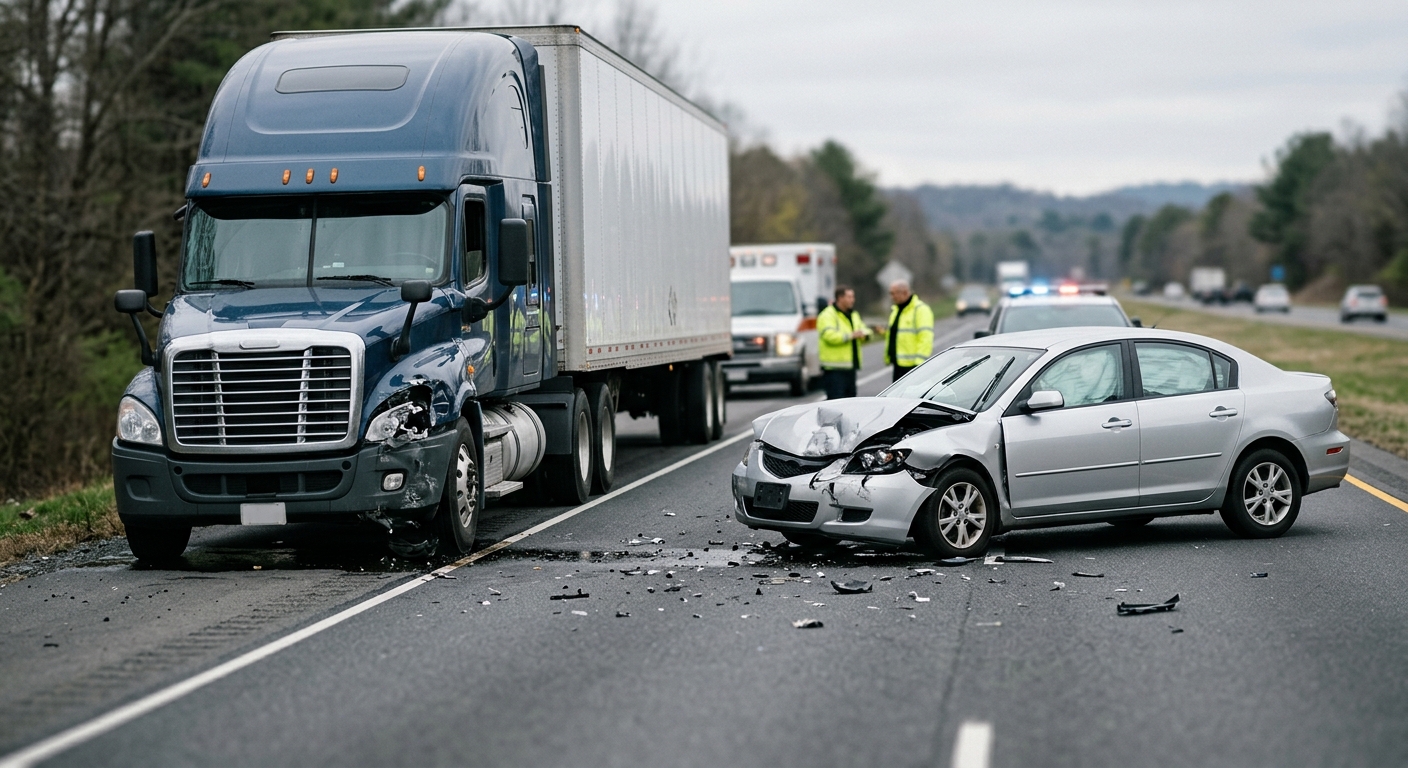
Truck Accidents · Florida & Nationwide
The Evidence That Wins a Truck Accident Claim Disappears Fast
After a catastrophic truck crash, the proof you need can be erased within days. Learn what evidence matters and why acting quickly protects your family's future.
Serious Injuries. Serious Cases.
Nationwide
Truck crash cases accepted
Bilingual
English & Spanish support
Licensed
Florida Bar–admitted attorneys
Days
How fast evidence can vanish
By CHG Lawyers · Published August 01, 2026
What Evidence Do You Need After a Catastrophic Truck Crash?
Here is what most people don’t know. Some of the most important evidence in a truck crash can be legally erased within days. This can happen before you even leave the hospital.
A truck’s onboard computer can record over crash data on its next trip. Driver logs and dispatch messages are kept for only a short time. A wrecked truck can be repaired, sold, or scrapped. Once that proof is gone, you usually can’t get it back.
That is why the best move after a serious truck crash is often the fastest one. Someone must send a letter of preservation (also called a spoliation letter). This letter legally tells the trucking company to keep everything.
This guide explains what evidence matters. It shows how quickly proof can vanish. And it explains how the preservation letter works.
Maybe you are healing from a spinal cord injury. Maybe you are caring for someone with a brain injury, or grieving a death. You should not have to chase this proof alone.
This page is general information, not legal advice about your specific case.
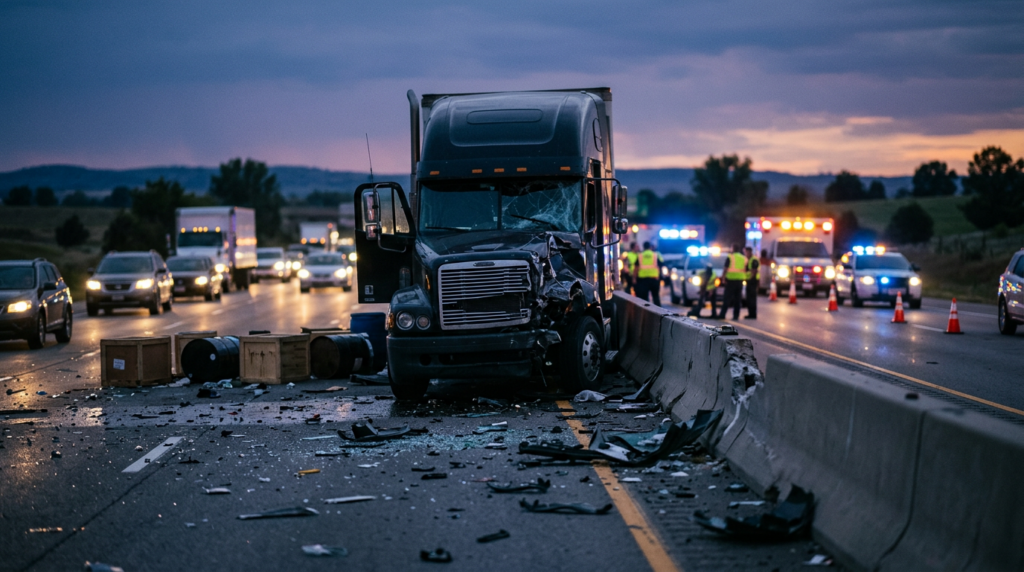
Not sure what your next step is?
Talk it through with our team — the first consultation is free, confidential, and carries no obligation.
Start here: the preservation letter and why speed protects your case
A letter of preservation is a formal written demand. It tells the trucking company (and its insurer) to keep all evidence from the crash. They must not change, repair, or destroy anything.
Once a company gets this letter, destroying evidence can cause legal trouble. A court can tell a jury to assume the missing evidence would have hurt the company. This penalty is called a spoliation sanction. That is where the letter gets its nickname.
Why the rush? Federal rules only require companies to keep some records for a short time:
- Driver hours-of-service logs (ELD records): trucking companies must keep supporting documents for six months under 49 C.F.R. §395.8.
- Driver Vehicle Inspection Reports: kept for three months under 49 C.F.R. §396.11.
- Onboard crash data (the “black box”): not on any legal schedule. It can be recorded over the next time the truck runs enough miles.
A preservation letter freezes all of this before the time runs out. In the serious truck-crash cases our attorneys handle, we usually send it quickly. This is one of the first steps. The proof itself is on a clock.
Florida also sets a deadline to file in court. For most negligence claims that began on or after March 24, 2023, you have two years to file under Fla. Stat. §95.11. Saving evidence and filing on time are two separate clocks. The evidence clock often runs much faster.
Why evidence matters more in catastrophic truck crashes
Catastrophic injuries change everything. Spinal cord damage and paralysis, traumatic brain injury (TBI), amputation, severe burns, or a death mean lifelong medical bills and lost income.
Car and truck crashes are among the leading causes of spinal cord injury in the United States, according to the Mayo Clinic. About 5.4 million Americans live with some form of paralysis, per the Christopher & Dana Reeve Foundation.
When the harm lasts for decades, proving what happened protects the money a family will need. That money must cover decades of care.
Trucks also create evidence that regular cars don’t. This includes electronic recorders, federal logs, and company files. Several parties may share the blame too — the driver, the trucking company, the cargo loader, or a maintenance contractor. Finding all of it is a big job. You don’t have to do it while you heal or grieve.
Evidence from the crash scene itself
Scene evidence shows how the crash happened. It captures things before anyone moves or cleans them up:
- The police or crash report. The officer records the basic facts and may note what caused the crash.
- Photos and video. Vehicle positions, skid marks, debris, damage, and road and weather all tell a story.
- Camera footage. Nearby traffic cameras, business cameras, and doorbell cameras sometimes catch the crash. This footage is often recorded over within days.
- Eyewitnesses. Names and statements from people who saw the crash can be powerful.
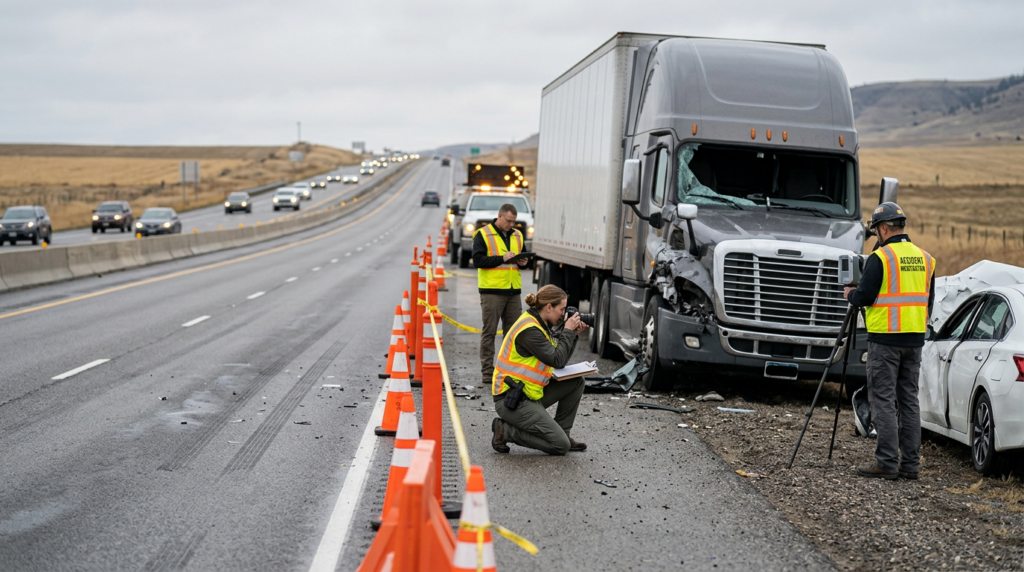
- The vehicles and cargo. Accident reconstruction experts study the trucks and loads to explain what went wrong.
Maybe you couldn’t get to the scene. Much of this can still be found later. But someone must act before footage is erased or the truck is repaired.
The truck’s “black box” and electronic data
Most trucks carry an Event Data Recorder (EDR). Some store data in the Engine Control Module (ECM). This can log how fast the truck was going, when the driver hit the brakes, and other details in the seconds before impact.
Trucks also carry an Electronic Logging Device (ELD). This is required by 49 C.F.R. Part 395 to record driving time.
Federal hours-of-service rules from the Federal Motor Carrier Safety Administration (FMCSA) limit most truck drivers. They can drive 11 hours after 10 hours off duty, within a 14-hour work window. ELD data is key to proving fatigue and rule violations.
Other electronic data can help too:
- In-cab and dash camera video.
- GPS and telematics showing routes and speeds.
- Records from collision-avoidance and automatic-braking systems.
The catch: much of this can be recorded over on the next trip. That is exactly why the preservation letter goes out first.
Trucking company and driver records
Company and driver files often show the deeper cause of a crash. They reveal whether the company hired, trained, watched over, and maintained safely:
- Driver logs and hours-of-service records. Fatigue is a leading cause of severe truck crashes.
- The driver qualification file (49 C.F.R. §391.51) — training, license history, and past violations.
- Post-crash drug and alcohol testing, required after certain serious crashes under 49 C.F.R. §382.303.
- Maintenance and inspection records, which can show neglected brakes, worn tires, or other defects.
- Cargo and weight documents. A bill of lading shows what the truck carried. An overloaded or badly loaded truck can lose control.
You usually can’t ask for most of these files on your own. A lawyer can demand them. If needed, a lawyer can ask a court to force the company to hand them over.
Have questions about what happened?
Ask our team directly. The first conversation is free, confidential, and there is no obligation to continue.
Cell phone, communication, and dispatch records
Phone records may show texting or calls at the moment of the crash. This can point to distracted driving.
Dispatch logs and messages can reveal something else. They may show pressure to drive faster or longer than the law allows. Internal emails sometimes show a company knew about a safety problem and ignored it. This kind of proof connects the crash to company choices, not just one driver’s mistake.
Insurance policies and the parties who may be responsible
The driver isn’t always the only one at fault. Others may share blame:
- The trucking company.
- A maintenance contractor.
- A cargo-loading company.
- A truck or parts manufacturer.
Each may carry its own insurance. Commercial policies are usually much larger than personal-car policies. Interstate carriers must carry minimum liability coverage set by 49 C.F.R. §387.9. This is commonly $750,000 and up to $5 million for certain hazardous loads.
Want to know how insurers handle these claims? See our guide on dealing with trucking company insurance adjusters.
Florida follows a modified comparative-negligence rule under Fla. Stat. §768.81. This means fault is shared by percentage. A person found more than 50% at fault usually cannot recover damages. That is one more reason clear, well-saved evidence of the other side’s fault matters.
Medical evidence documenting a catastrophic injury
Medical evidence proves how serious and permanent an injury is. Key records include emergency room notes, CT and MRI scans, surgical and hospital records, and rehab reports.
For a spinal cord injury, doctors use the ASIA Impairment Scale (AIS) to classify how complete the injury is. This is explained by the American Spinal Injury Association. A spinal cord injury can cause permanent changes in strength, feeling, and function below the injury, per the Mayo Clinic.
For catastrophic cases, the records must show the injury is permanent, not temporary. They document paralysis, a TBI, limb loss, or severe burns, and the future care they require. A life-care plan puts a number on decades of treatment. To learn more, read how truck accident claim value is determined in Florida.
When a crash is fatal, the family may bring a wrongful-death claim under Fla. Stat. §768.19. The medical examiner’s findings and records linking the crash to the death become part of the case. We handle this evidence with care and respect for the family.
Expert witnesses who help prove your case
Experts turn complex evidence into clear conclusions a jury can understand:
- Accident reconstruction experts explain how and why the crash happened.
- Medical and life-care planning experts document injury severity and future costs.
- Trucking-safety experts know federal rules and industry practices.
- Economists calculate lost earnings and lifelong care.
A lawyer hires these experts and gives them the saved evidence to review. You don’t have to find them yourself.
The 4 elements of negligence this evidence proves
Every piece of evidence works to prove one of four things:
- Duty. The driver and company owed a duty to drive safely.
- Breach. They broke that duty. ELD logs, maintenance files, or phone records often show it.
- Causation. The breach caused the crash. Black box data and reconstruction experts show the link.
- Damages. You suffered real harm. Medical records and life-care plans prove it.
Every case is different, and no lawyer can promise a result. But knowing these four things shows why each type of evidence matters.
What not to say or do while your claim is pending
- Don’t give recorded statements to the trucking company’s insurer before getting advice. Adjusters may use your words against you.
- Don’t guess about who caused the crash or how badly you’re hurt. Catastrophic injuries can be worse than they first appear.
- Don’t post on social media about the crash, your injuries, or your activities.
- Keep your own records. Save bills and receipts. Keep a simple recovery journal. Track mileage to appointments.
- Don’t sign anything or accept a quick settlement before you fully understand your future needs.
These include a lawyer referral service and guidance on questions to ask.
Want to know where you stand?
Tell us what happened and our team will walk you through the options available to you, at no cost.
How a lawyer preserves and gathers this evidence for you
In the serious truck-crash cases our attorneys handle, early action is often everything. A lawyer can send preservation letters right away. A lawyer can demand the company’s records and hire reconstruction and medical experts before evidence disappears.
If the company won’t cooperate, a lawsuit and the court’s discovery process can force it to produce what the law requires. Meanwhile, you and your family focus on healing.
CHG Personal Injury Lawyers is Florida-based. Our attorneys are admitted to The Florida Bar, and we take catastrophic and wrongful-death cases nationwide. It costs nothing to ask questions. If you have a case involving the evidence needed after a truck crash, request a free case evaluation. We’ll listen, with no pressure.
Frequently asked questions
What is a preservation (spoliation) letter?
It’s a formal written demand. It tells the trucking company and its insurer to keep all evidence and not change, repair, or destroy it. If they destroy evidence anyway, a court can penalize them. Lawyers often send it within days of a crash.
How fast can truck crash evidence be destroyed?
Very fast. Onboard crash data can be recorded over on the truck’s next trip. Video is often erased within days. Some federal records are kept only three to six months. Damaged trucks can be repaired or scrapped.
What is a truck’s black box, and what does it record?
It’s the Event Data Recorder or Engine Control Module data. It can record speed, braking, and throttle in the seconds before the crash. This helps prove what happened.
How long do I have to file a truck accident claim in Florida?
For most negligence claims that began on or after March 24, 2023, Florida allows two years to file under Fla. Stat. §95.11. Talk to a lawyer early. Deadlines can vary, and evidence clocks run faster.
What should I not say to the trucking company’s insurer?
Don’t give a recorded statement. Don’t guess about fault or your injuries before getting legal advice. Insurers may use your words to reduce or deny your claim.
Related reading
- Catastrophic truck accident injuries
- How truck accident claim value is determined in Florida
- Dealing with trucking company insurance adjusters
- Family guide to permanent injuries after a truck accident
Warning: Evidence Can Be Gone in Days
Onboard crash data, driver logs, and dashcam footage can be overwritten or destroyed within days of a wreck. If a truck crash caused a spinal cord injury, brain injury, amputation, or the loss of a loved one, contact a lawyer quickly so a preservation letter can be sent before critical proof disappears.
Key Evidence in a Catastrophic Truck Crash Claim
Electronic Onboard Data
Many commercial trucks record speed, braking, and engine activity. This 'black box' data can show what the driver did in the seconds before impact — but it can be overwritten quickly.
Driver Logs & Hours of Service
Federal rules limit how long a trucker can drive. Logs, dispatch records, and GPS data can reveal fatigue or pressure to keep driving past safe limits.
Maintenance & Inspection Records
Records may show worn brakes, bald tires, or skipped inspections that contributed to a life-altering crash.
Video & Scene Evidence
Dashcam and nearby surveillance footage, photos, skid marks, and witness accounts help reconstruct exactly how a serious crash happened.
Why Fast Legal Action Protects Your Case
Preservation Letters
A spoliation letter formally demands the trucking company and its insurer keep all evidence intact. Sent early, it can stop records from being changed or destroyed.
Time-Sensitive Data
Crash-data recorders and logs can be overwritten in days. Moving quickly gives your claim the best chance of capturing the full picture.
Accountability
If a company destroys evidence after being warned, a court can penalize it. Early documentation holds negligent parties responsible.
Focus on Recovery
While your family focuses on healing after a catastrophic injury or loss, we work to secure and preserve the evidence your case depends on.