

Truck Accidents · Florida & Nationwide
Do I Have a Truck Accident Case? Start Here.
If a crash with a commercial truck left you or someone you love with a serious, life-altering injury, the steps you take now can protect your health and your legal options. Here is what to know.
Focused on Catastrophic Injury Cases
Nationwide
Cases accepted across the U.S.
Bilingual
English & Spanish support
Licensed
Florida Bar–admitted attorneys
$0
Free, no-obligation evaluation
By CHG Lawyers · Published August 01, 2026
Do You Have a Truck Accident Case? First Steps After a Serious Crash
You may have a truck accident case if you or a loved one suffered a serious, permanent injury in a crash caused by someone else’s negligence involving a commercial truck. That’s the short answer. The fuller answer rests on three things lawyers look at closely.
Those three things are a serious injury, another party’s fault, and a clear link between them. Say a large truck hit you. The driver or trucking company did something wrong. And that caused a life-altering injury. Then you likely have grounds to look into a claim.
This page covers only catastrophic and fatal truck-crash injuries. Those are the permanent, life-changing kind. We don’t write about fender-benders or short-term soreness. Those cases work very differently. They also don’t carry the lifelong costs that make truck cases so complex. A free case evaluation costs nothing. You’re not required to hire us.
Not sure what your next step is?
Talk it through with our team — the first consultation is free, confidential, and carries no obligation.
Do I have a truck accident case? A plain-language answer
You likely have a valid truck accident case when three things line up: a serious injury, another party’s negligence, and a direct link between them. Here’s what each part means in everyday terms.
A serious injury means life-changing harm. Think paralysis, a brain injury, a lost limb, a severe burn, or a catastrophic back or neck injury. It can also mean a death.
Another party’s fault means someone acted carelessly. A truck driver may have sped, driven while exhausted, or ignored a federal safety rule. The trucking company may have skipped maintenance. Or it may have put an unsafe driver behind the wheel.
The link ties them together. The crash — not something else — has to be the cause of the harm. Lawyers and medical experts prove this link with records and evidence.
Not sure whether these pieces fit your situation? That’s normal. In the catastrophic cases our attorneys handle, families rarely see the full picture in the first weeks. That’s exactly what an early evaluation is for.
Why truck accident cases are different from car accident cases
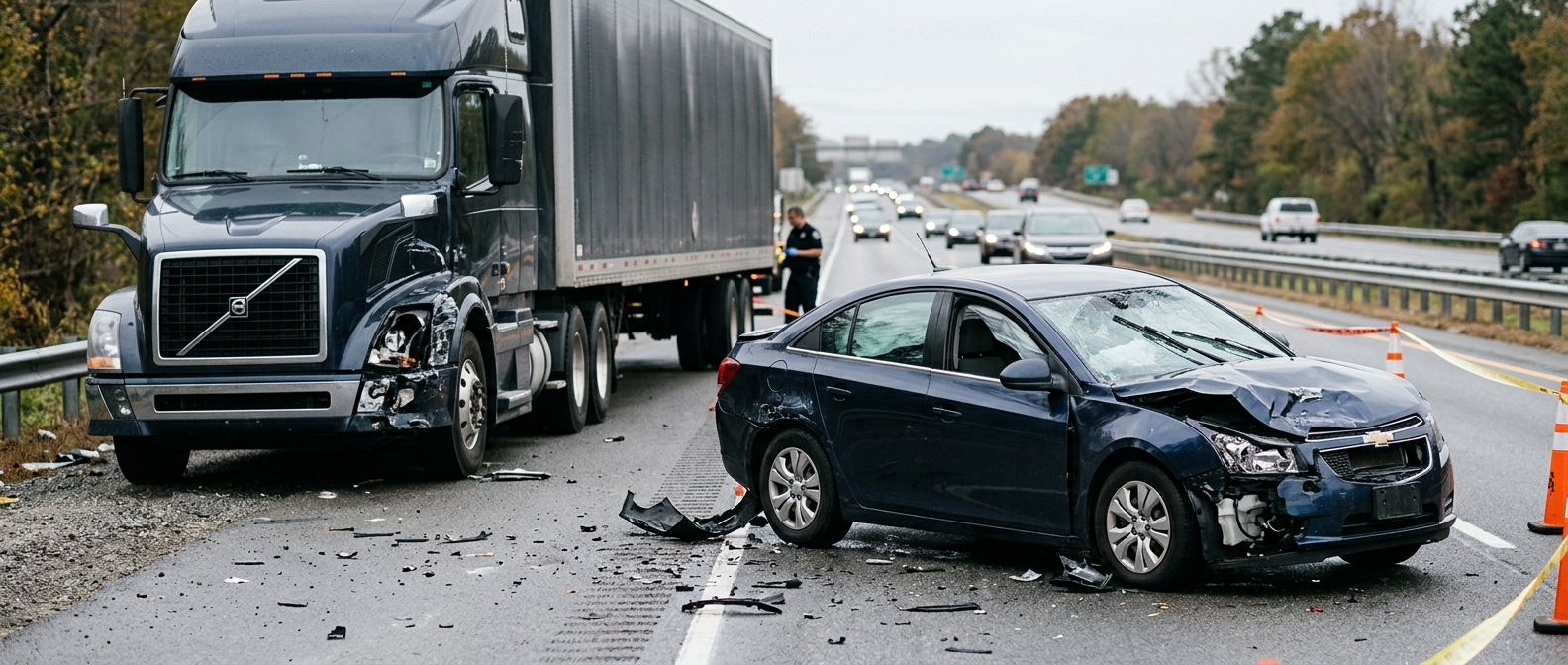
Truck accident cases differ from car crashes for three reasons: the size of the vehicles, the many parties who can be at fault, and the federal safety rules that apply. These differences make truck cases more complex — and often more serious.
Start with the physics. Federal rules cap most loaded tractor-trailers at 80,000 pounds (per 23 U.S.C. §127). A typical car weighs about 3,000 to 4,000 pounds. When that much weight hits a smaller vehicle, the forces are far higher. That’s one reason truck crashes so often cause permanent or fatal injuries.
Next, more parties can share the blame. A truck case may involve the driver, the trucking company, the company that loaded the cargo, a maintenance provider, a freight broker, or an equipment maker. Each may carry its own insurance policy.
Federal rules also come into play. Interstate trucking follows Federal Motor Carrier Safety Administration (FMCSA) rules. Take the hours-of-service rules. They limit how long a driver can drive. In general, a property-carrying driver can drive 11 hours after 10 hours off duty in a row (49 CFR §395.3). Logs that show a driver over those limits can become key evidence. Most car crashes never touch these layers.
Finally, the stakes are higher. Trucking companies often hold large insurance policies. They also send defense teams within hours of a serious crash.
The injuries that point to a serious truck accident case
The injuries most likely to support a serious truck accident case are permanent, life-altering harms — not minor cuts or soreness. These are the cases our firm focuses on.
They include:
- Spinal cord injuries and paralysis. Paraplegia affects the lower body. Quadriplegia (also called tetraplegia) affects all four limbs. Vehicle crashes are a leading cause of traumatic spinal cord injury, according to the Mayo Clinic.
- Traumatic brain injuries (TBI). A blow to the head can permanently change memory, mood, and daily life.
- Amputations and limb loss. A crash can crush a limb or force a surgical amputation.
- Severe burns. Fuel and fire can cause deep burns. These may need years of surgery and skin grafts.
- Catastrophic back and neck injuries. These go far beyond ordinary strains.
Doctors grade spinal cord injuries using a standard scale from the American Spinal Injury Association (ASIA). It sorts injuries as complete or incomplete. Long-term U.S. cost and outcome data comes from the National Spinal Cord Injury Statistical Center (NSCISC). Its figures on lifetime care needs are one reason these cases must be valued carefully, not quickly.
Wrongful death is the most catastrophic outcome of all. When a family loses someone in a truck crash, Florida’s Wrongful Death Act (Fla. Stat. §768.16–768.26) lets a personal representative bring a claim for surviving family members. See our wrongful death claims resource for how that process works.
First steps to take after a serious truck crash
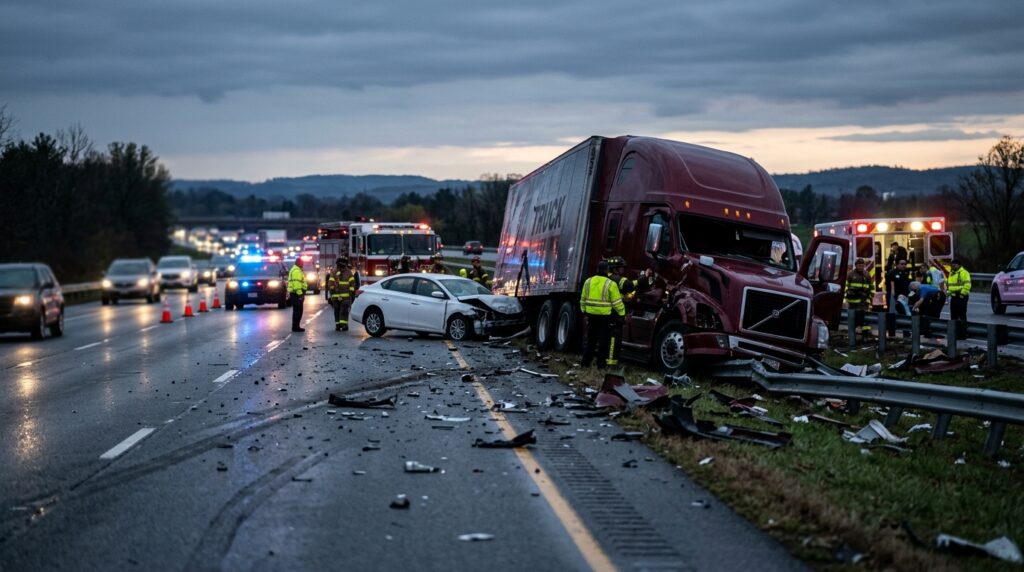
Your first steps after a serious truck crash are simple: get medical care, save evidence, and don’t talk to the trucking company’s insurer before you get advice.
Get medical care right away. Go to every appointment. Your health comes first. Your treatment records also become key evidence of what the crash caused.
Save evidence you can safely gather. Photograph the vehicles and scene if you’re able. Write down witness names and phone numbers. Keep anything law enforcement gives you.
Don’t give a recorded statement to the truck company’s insurer. And don’t sign anything until a lawyer reviews it. Early statements are often used to reduce or deny claims.
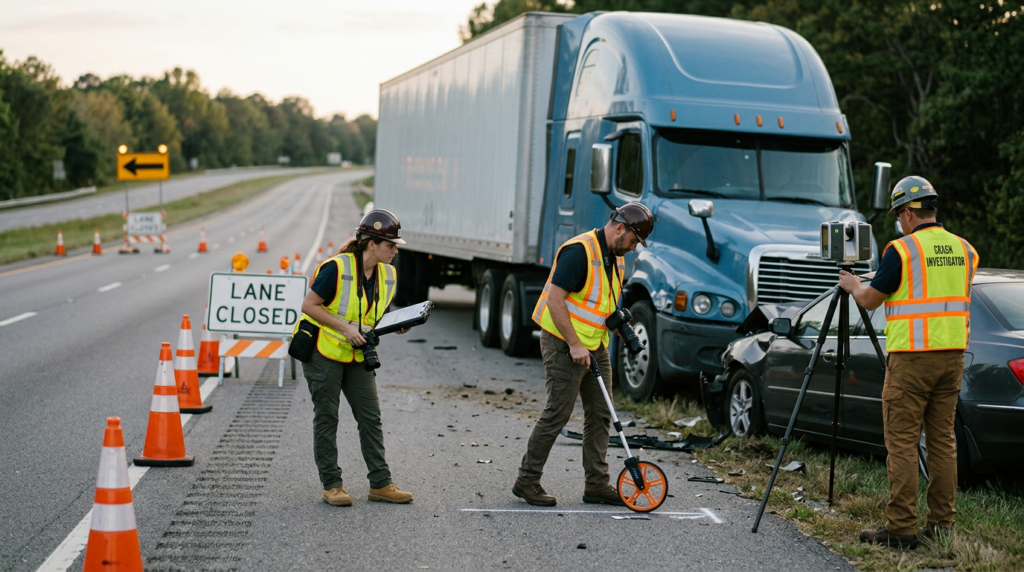
Protect the truck’s data. A truck’s “black box” is its engine control module (ECM). It can record speed, braking, and throttle before impact. Driver logs, dispatch records, and inspection reports also matter. All of this can be overwritten or lost quickly. A lawyer can send a written preservation notice before that happens.
For families after a fatal crash: keep every document, photo, and record tied to the crash. Under Florida’s Wrongful Death Act, a personal representative of the estate brings the claim for survivors — often a spouse, children, or parents. You don’t have to decide everything at once.
How to check the crash report and other records
You can request a Florida crash report through the state’s crash records portal. Most reports become public after a set time, with personal information protected until then. The report is a useful starting point. But it doesn’t decide your case.
In Florida, the Department of Highway Safety and Motor Vehicles (FLHSMV) manages crash reports through its crash portal. A report usually lists the drivers, vehicles, time, location, and the officer’s account of how the crash happened.
Are crash reports public? Mostly. Under Fla. Stat. §316.066(2), crash reports stay confidential for 60 days after the report is filed. Then they become public. People with a direct connection to the crash can get the report during that window. That includes the parties, their attorneys, and insurers.
Even so, the officer’s opinion on fault isn’t the final word. In serious truck cases, a lawyer gathers records you usually can’t get on your own. These include the trucking company’s driver-qualification file, maintenance logs, and ECM data.
Have questions about what happened?
Ask our team directly. The first conversation is free, confidential, and there is no obligation to continue.
Who may be liable, and how fault is determined
Fault in a truck crash can fall on the driver, the trucking company, or others. Florida uses a shared-fault rule that still lets many people recover.
Common causes of serious truck crashes include:
- Driver fatigue or breaking hours-of-service rules
- Speeding or reckless driving
- Impaired or distracted driving
- Cargo that was loaded wrong or overloaded
- Poor truck maintenance
- The company hiring, training, or supervising drivers carelessly
Liability can reach beyond the driver. A trucking company can be responsible for its own choices. That includes putting an unqualified driver on the road or ignoring known repairs.
Florida follows a modified comparative-fault rule. Under Fla. Stat. §768.81, a person found more than 50% at fault generally cannot recover. If your share is 50% or less, your recovery drops by your percentage of fault. So being partly at fault doesn’t automatically end your case. This is general information, not legal advice about your situation.
Deadlines: why time matters in a truck accident case
Florida sets a strict deadline to file injury and wrongful-death claims. Miss it, and you can lose the right to recover entirely.
For most negligence claims that started on or after March 24, 2023, Florida’s deadline is two years, under Fla. Stat. §95.11(5)(a). (Claims before that date had a four-year limit.) Different rules can apply depending on the facts. So confirm your exact deadline with a licensed attorney.
Deadlines aren’t the only reason to move quickly. ECM data, driver logs, and even the truck itself can disappear soon after a crash. Sometimes evidence is lost or destroyed after a party knew it might be needed. Lawyers call that spoliation. Prompt preservation notices help prevent it.
We can’t promise any specific deadline or result. But time truly matters more in truck cases than in many others. That’s because the most important evidence sits in someone else’s hands.
How long truck accident cases take and what compensation may cover
Truck accident cases vary widely in length. Compensation may cover medical costs, lost income, pain and suffering, and — in fatal cases — the family’s losses. No lawyer can honestly guarantee a timeline or an amount. Florida Bar rules forbid such promises.
Some cases resolve in months. Others take longer when injuries are severe, fault is disputed, or several parties are involved. Catastrophic injuries generally need more time. Lifelong costs must be documented and projected before a case can be valued fairly.
Compensation in a serious truck case may include:
- Past and future medical care
- Lost income and reduced earning ability
- Pain, suffering, and loss of quality of life
- In fatal cases, survivors’ losses recoverable under the Wrongful Death Act
Settlement figures you see advertised online are not predictions of what your case is worth. Every case turns on its own facts, injuries, and available insurance. A catastrophic injury can require care for decades. Valuing it accurately is detailed work. That’s one reason experienced help matters.
How an attorney helps — and how a free case evaluation works
A truck accident attorney saves evidence, finds every responsible party, deals with the insurer, and works with experts to calculate the full lifelong cost of a catastrophic injury.
Early on, a lawyer can send preservation notices for the ECM and logs. They can request the trucking company’s records. They can bring in crash-reconstruction and life-care-planning experts. That groundwork is hard to manage on your own while recovering from a serious injury.
In a free case evaluation, you explain what happened. An attorney then tells you honestly whether you may have a case — with no cost and no pressure to proceed.
Do you live outside Florida? We can still help. CHG Personal Injury Lawyers is based in Florida and takes catastrophic truck cases nationwide. We also publish educational content in English and Spanish.
If you or a loved one suffered a life-altering truck-crash injury, contact us for a free case evaluation.
Want to know where you stand?
Tell us what happened and our team will walk you through the options available to you, at no cost.
Learn more about catastrophic truck accident injuries
For a deeper look at truck-crash injuries, liability, and your options, see our pillar guide on catastrophic truck accident injuries. You can also read our resources on spinal cord injuries and paralysis and traumatic brain injuries.
Frequently asked questions
Do I have a truck accident case?
You may, if a serious, permanent injury came from a crash caused by someone else’s negligence involving a commercial truck. A free evaluation can confirm your options.
How are truck accidents different from car accidents?
Truck crashes involve much larger vehicles (loaded trucks can reach 80,000 pounds), more parties who could be responsible, and federal safety rules like FMCSA hours-of-service limits. That makes injuries more severe and cases more complex.
Who can be held liable in a truck accident?
Liability can fall on the driver, the trucking company, a cargo loader, a maintenance provider, a broker, or an equipment maker, depending on the facts.
How long do I have to file a truck accident claim in Florida?
Most Florida negligence claims starting on or after March 24, 2023 must be filed within two years under Fla. Stat. §95.11(5)(a). But you should confirm your exact deadline with a licensed attorney.
Can I still recover money if I was partly at fault?
Often, yes. Under Fla. Stat. §768.81, you can recover if you’re 50% or less at fault, with your award reduced by your percentage of fault.
Can a family file a claim after a fatal truck crash?
Yes. Under Florida’s Wrongful Death Act, a personal representative can bring a claim on behalf of surviving family members.
This article is general information, not legal advice, and does not create an attorney-client relationship.
First Steps to Take After a Truck Crash
1. Get Medical Care Right Away
Your health comes first. Serious injuries like spinal cord damage, traumatic brain injury, or internal harm are not always obvious at the scene. Prompt medical care protects you and creates a clear record of what happened.
2. Preserve What You Can
Keep photos, the police report number, names of witnesses, and the trucking company's information. In truck cases, evidence like driver logs and electronic data can disappear quickly, so acting early matters.
3. Be Careful What You Sign
Trucking companies and their insurers often move fast. You are not required to give a recorded statement or accept an early settlement before you understand the full extent of a permanent injury.
4. Talk to a Lawyer
A free evaluation can help you understand whether someone else's negligence caused the crash, who may be responsible, and what your options are — with no cost or obligation.
Why Time Matters
Critical evidence in a truck crash — driver hours-of-service logs, maintenance records, and electronic data — can be routinely overwritten or lost. Reaching out early helps make sure this information is preserved.
How Truck Cases Differ From Car Accidents
Much Larger Vehicles
A fully loaded commercial truck can weigh up to 80,000 pounds. That force is why truck crashes so often cause catastrophic, permanent injuries or fatal outcomes.
More Parties Involved
Beyond the driver, a trucking company, cargo loader, maintenance provider, or others may share responsibility — which affects how a claim is investigated.
Federal Rules & Records
Commercial trucking is governed by federal safety regulations. Logs, inspection records, and data recorders can all become important evidence.
Aggressive Insurers
Trucking insurers often have teams working to limit payouts from the start. Understanding your rights early helps level the field.