

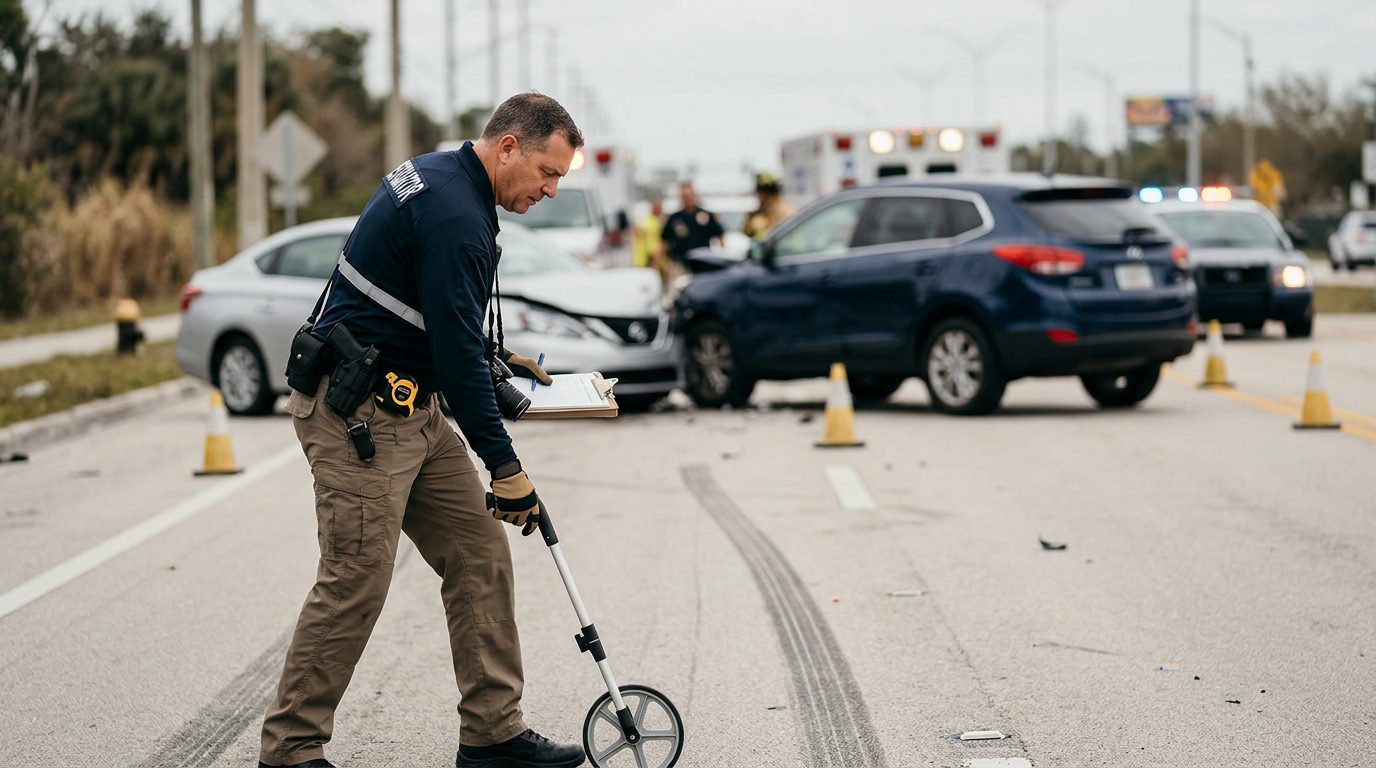
Car Accidents in Miramar
After a Car Accident: Know Your Rights & Next Steps
You may be entitled to recovery for medical bills, lost wages, pain and suffering, and other damages. CHG Personal Injury Lawyers focuses exclusively on helping accident victims in Miramar and across Florida.
By CHG Lawyers · Published September 26, 2026
Car Accidents in Miramar: Your Rights, Recovery Steps & Legal Path
You’ve just been in a car crash in Miramar. Your heart is racing. You’re checking for injuries. You’re worried about your car, insurance, and job. The decisions you make in the next few hours will directly affect your recovery and legal rights.
This guide walks you through what to do now, how Florida law works in your favor, and why calling an attorney early matters.
Not sure what your next step is?
Talk it through with our team — the first consultation is free, confidential, and carries no obligation.
The First Hour After Your Car Accident in Miramar
Safety first. Call 911 if anyone is hurt or traffic is blocked. Move your vehicle to a safe spot—a parking lot or shoulder—to prevent another collision.
Document everything before the scene changes. Take photos and video of: – All vehicle damage (wide and close-up shots) – Road conditions, traffic signals, and lane markings – Skid marks, debris, and impact signs – Where all vehicles ended up – Street signs, mile markers, and location landmarks
Get the other driver’s name, phone, address, driver’s license number, license plate, VIN, and insurance details. If witnesses are present—other drivers, pedestrians, business owners—get their names and phone numbers right away. Witnesses move and forget details.
Call the Miramar Police Department (non-emergency: 954-392-1234). An official crash report is filed with the Florida Department of Highway Safety and Motor Vehicles. Get the report number, officer’s name, and badge number.
Seek medical attention immediately, even if you feel fine. Whiplash, internal bleeding, head trauma, and spinal injuries often don’t show symptoms for hours or days. A doctor’s evaluation creates a medical record linking your injuries to the crash—essential for any claim. Keep every medical bill, prescription receipt, imaging report, and treatment note.
Why the “Serious Injury Threshold” Matters to Your Car Accident Claim
Florida law treats minor injuries differently from serious ones. This difference determines whether you can recover pain and suffering damages.
Medical documentation is critical. Your doctor’s written assessment of injury, prognosis, and functional limitations determines whether you can pursue the at-fault driver’s insurance for full damages.
How Florida’s No-Fault Insurance System Works
Florida is a “no-fault” auto insurance state. This is called Personal Injury Protection (PIP) coverage.
However, no-fault coverage has strict limits. If your injuries meet the serious injury threshold, you can pursue the at-fault driver’s insurance for: – Pain and suffering – Permanent injury and disability – Damages beyond your PIP limits – In catastrophic cases, lifetime care and lost earning capacity
The at-fault driver’s liability insurance pays these additional damages—and your own policy may also pay them if the at-fault driver’s coverage is less than your total damages.
Common Causes of Car Accidents in Miramar
Understanding how the crash happened is the foundation of your claim.
Distracted driving (texting, phone use, eating) is a leading cause. Speeding and aggressive driving are common on Miramar Parkway and University Drive during rush hours. Failure to yield at intersections and traffic signals causes many collisions. Rear-end collisions are frequent in heavy traffic; the following driver is almost always liable. Florida presumes the rear driver was negligent, but the presumption can be rebutted and fault can be shared. Weather-related crashes occur during Florida’s sudden thunderstorms, reducing visibility and traction. Impaired driving from alcohol or drugs is a leading cause of serious crashes.
Liability is established through: – The police crash report – Photos and video from the scene – Witness statements – Traffic camera footage from nearby businesses or signals – Your medical records showing injury consistent with the crash – Expert analysis (accident reconstruction in serious cases)
Injuries from Car Accidents in Miramar: From Soft-Tissue to Catastrophic
Whiplash and neck injuries result from sudden acceleration and deceleration. Soft-tissue damage causes chronic pain and limited range of motion.
Back injuries include muscle strain, disc herniation, and in severe crashes, spinal cord damage leading to partial or complete paralysis.
Head and traumatic brain injuries from impact with the steering wheel or dashboard cause long-term cognitive, memory, behavioral, and emotional effects.
Broken bones and fractures in arms, legs, ribs, or pelvis are common and may require surgery and prolonged rehabilitation.
Internal injuries—bleeding, organ damage, abdominal trauma—may not be immediately obvious but can be life-threatening and require emergency surgery.
Catastrophic injuries in high-speed or multi-vehicle crashes include spinal cord injury, paralysis (paraplegia or quadriplegia), amputation, severe burns, or disfigurement. These injuries cause permanent impairment and dramatically increase recoverable damages.
Wrongful death is the most devastating outcome. When a family member is killed in a car crash, surviving family has the right to pursue a wrongful-death claim against the at-fault driver for the value of lost financial support and services, and a surviving spouse may also recover for loss of companionship and for mental pain and suffering.
Have questions about what happened?
Ask our team directly. The first conversation is free, confidential, and there is no obligation to continue.
Settlement vs. Lawsuit: What Happens Next
Insurance claim: You report the crash to the at-fault driver’s insurance company. They investigate and may offer a settlement.
Settlement negotiation: Most cases resolve without trial. Your attorney and the insurer negotiate based on your medical evidence, lost income, and damages.
Lawsuit: If the insurer denies your claim or offers too little, your attorney files a personal injury lawsuit in Broward County Circuit Court in Fort Lauderdale. The case proceeds through: – Discovery (exchanging evidence with the other side) – Mediation (a neutral third party facilitates negotiation) – Trial (if no settlement is reached)
Damages you can recover include: – Medical expenses (past and future) – Lost wages and lost earning capacity – Pain and suffering – Permanent scarring or disfigurement – Loss of enjoyment of life – In wrongful-death cases: funeral costs, loss of companionship, and lost financial support
Why the Statute of Limitations Creates Urgency
Under Florida Statute § 95.11, you generally have two years from the crash date to file a personal injury lawsuit.
Two years sounds long. It isn’t.
Evidence disappears. Witnesses move, change phone numbers, or forget details. Medical records are archived. Surveillance footage is deleted. The longer you wait, the harder it becomes to prove your case. Insurance companies count on delay to weaken your position.
Consulting an attorney within weeks of your crash allows us to: – Preserve evidence and witness statements immediately – Obtain medical records while they’re fresh and complete – Photograph the crash scene and surrounding area – Identify and interview witnesses before they disappear – Investigate the at-fault driver’s history and insurance coverage – Begin settlement negotiations from a position of strength
How Much Can You Recover?
Settlement amounts vary based on injury severity, medical evidence, lost income, insurance policy limits, and liability strength.
Economic damages are calculable: emergency care, surgery, hospitalization, rehabilitation, ongoing treatment, medications, medical devices, lost wages, and future lost earning capacity.
Non-economic damages are harder to quantify but often represent the largest portion of recovery: pain and suffering, emotional distress, loss of enjoyment of life, and permanent disability.
Catastrophic injuries result in significantly higher damages because the victim’s life is permanently altered. A spinal cord injury causing paralysis may result in lifetime care costs, home modifications, specialized equipment, attendant care, and lost earning capacity spanning decades.
Wrongful-death damages include funeral and burial costs, the victim’s medical and funeral expenses, lost financial support, loss of companionship and guidance, and the value of the life lost.
An experienced attorney will review your medical records, calculate your true damages, and estimate a realistic settlement range based on comparable cases and evidence strength.
Your Action Plan After a Car Accident in Miramar
- Seek immediate medical care, even if you feel okay. Get a written evaluation and diagnosis.
- Report the crash to the Miramar Police Department and obtain the report number.
- Document everything: photos, witness contact information, the other driver’s details, and road conditions.
- Notify your insurance company promptly (but do not accept settlement offers without legal advice).
- Keep all medical records, bills, receipts, and correspondence organized in one place.
- Do not give a recorded statement to the other driver’s insurance company without legal counsel.
- Contact a personal injury attorney within weeks to protect your rights and preserve evidence.
Why You Need an Attorney
Insurance companies are skilled at minimizing payouts. They may: – Deny your claim outright – Undervalue your injuries by ignoring long-term effects – Pressure you into a quick settlement before you understand full injury extent – Argue that you were partially at fault to reduce their payout – Challenge your medical treatment as unnecessary or excessive
An attorney levels the playing field. We investigate the crash, gather and organize medical evidence, calculate your true damages, and negotiate aggressively on your behalf. We handle all communication with insurers and opposing counsel, so you can focus on recovery. If a fair settlement cannot be reached, we are prepared to take your case to trial.
You pay nothing upfront. We work on a contingency fee, meaning we are paid only if you recover. This removes the financial barrier to representation and aligns our interests with yours.
Miramar, Broward County, and Your Case
Miramar is part of Broward County, one of Florida’s most densely populated regions with heavy commuter traffic. Major roads like Miramar Parkway, University Drive, and Pines Boulevard see high accident rates during peak hours. Proximity to I-95 and the Florida Turnpike means many crashes involve commercial trucks or high-speed collisions.
The Miramar Police Department and Broward Sheriff’s Office investigate crashes and file reports with the Florida Department of Highway Safety and Motor Vehicles. Personal injury lawsuits from Miramar car accidents are filed in Broward County Circuit Court in Fort Lauderdale.
Want to know where you stand?
Tell us what happened and our team will walk you through the options available to you, at no cost.
If Someone Died in Your Car Accident in Miramar
Wrongful-death claims allow the family of a deceased victim to recover damages from the at-fault driver or responsible party.
The personal representative of the estate—usually a spouse, parent, or adult child—files the lawsuit on behalf of the deceased and surviving family members. Recoverable damages include funeral and burial costs, the victim’s medical and funeral expenses, lost financial support, loss of companionship and guidance, and the value of the life lost.
Wrongful-death cases are among the most serious and require experienced legal representation to navigate the emotional and legal complexity. If you have lost a loved one in a Miramar car accident, you have the right to pursue justice and compensation for your family.

Frequently Asked Questions
What is Florida’s comparative fault rule?
Florida law follows modified comparative negligence: if you are found more than 50% at fault, you cannot recover damages; if you are 50% or less at fault, you can recover, but your award is reduced by your percentage of fault.
How long do I have to file a lawsuit after a car accident in Miramar?
The statute of limitations is generally two years from the crash date, but waiting too long can result in lost evidence and witness testimony. Consult an attorney within weeks of your crash.
Can I recover if the other driver doesn’t have insurance?
Yes, if you have uninsured motorist coverage on your own policy, your insurance will cover your damages up to your policy limits.
What if the at-fault driver’s insurance policy limits are too low?
If the at-fault driver’s policy limits don’t cover your damages, you may pursue the driver personally, access your own underinsured motorist coverage, or explore other liable parties.
Do I have to go to trial?
No. Most car accident cases settle without trial, but we are prepared to take your case to trial if the insurance company refuses a fair offer.
If you’ve been hurt in a car crash in Miramar—whether you’re dealing with lingering pain or a life-altering injury—you deserve to know your options. The sooner you act, the stronger your position. Contact us for a free case evaluation. People in your exact situation can reach out, and we’re here to help you understand what you may be able to recover.
Act Quickly—Time Limits Apply
Florida law sets strict deadlines for filing a personal injury lawsuit after a car accident. The sooner you contact an attorney, the sooner we can protect your rights, preserve evidence, and begin building your case.
What to Do After a Car Accident in Miramar
At the Scene
Check for injuries. Call 911 if anyone is hurt. Move vehicles to safety if possible. Exchange names, phone numbers, addresses, insurance information, and vehicle details with the other driver. Take photos of vehicle damage, the accident scene, road conditions, and traffic signs. Get contact information from witnesses.
After You Leave
Seek medical attention even if you feel fine—some injuries appear hours or days later. Report the accident to your insurance company. Keep records of all medical treatment, prescriptions, and expenses. Document lost wages and time off work. Do not post about the accident on social media.
Legal Protection
Contact an attorney before speaking with the other driver's insurance company. An early conversation with a lawyer protects your rights and helps you avoid statements that could hurt your claim. We can handle communications with insurers and negligent parties on your behalf.
Your Claim
You may recover damages for medical bills, emergency care, rehabilitation, lost income, pain and suffering, property damage, and other losses caused by the accident. Fault is determined by Florida's comparative negligence rule—even partial fault may not bar recovery.
Why Choose CHG Personal Injury Lawyers
Focused on Car Accident Cases
We focus exclusively on personal injury claims, including car accidents. Our practice is built on understanding the laws, insurance tactics, and recovery process that apply to your situation.
Comprehensive Case Handling
From gathering evidence and medical records to negotiating with insurers and pursuing litigation if necessary, we manage every step of your claim so you can focus on healing.
Free Case Evaluation
We offer a free, confidential review of your accident and injuries. There are no attorney’s fees unless there is a recovery—you pay nothing out of pocket.
Local Knowledge, National Reach
Common Questions About Car Accidents in Miramar
What is Florida's comparative fault rule?
Florida follows modified comparative negligence: if you are found more than 50% at fault, you cannot recover damages. If you are 50% or less at fault, you can recover, but your award is reduced by your percentage of fault (Fla. Stat. § 768.81(6)). This is why early legal guidance is critical.
How long do I have to file a lawsuit?
Florida law sets strict deadlines for filing a personal injury lawsuit after a car accident. Waiting too long can result in losing your right to sue. Contact an attorney as soon as possible to protect your claim.
What damages can I recover?
You may recover economic damages (medical bills, lost wages, property damage) and non-economic damages (pain and suffering, emotional distress, loss of enjoyment of life). An attorney can help you calculate the full value of your claim.
Do I need an attorney?
While you can file a claim alone, insurance companies are experienced at minimizing payouts.