

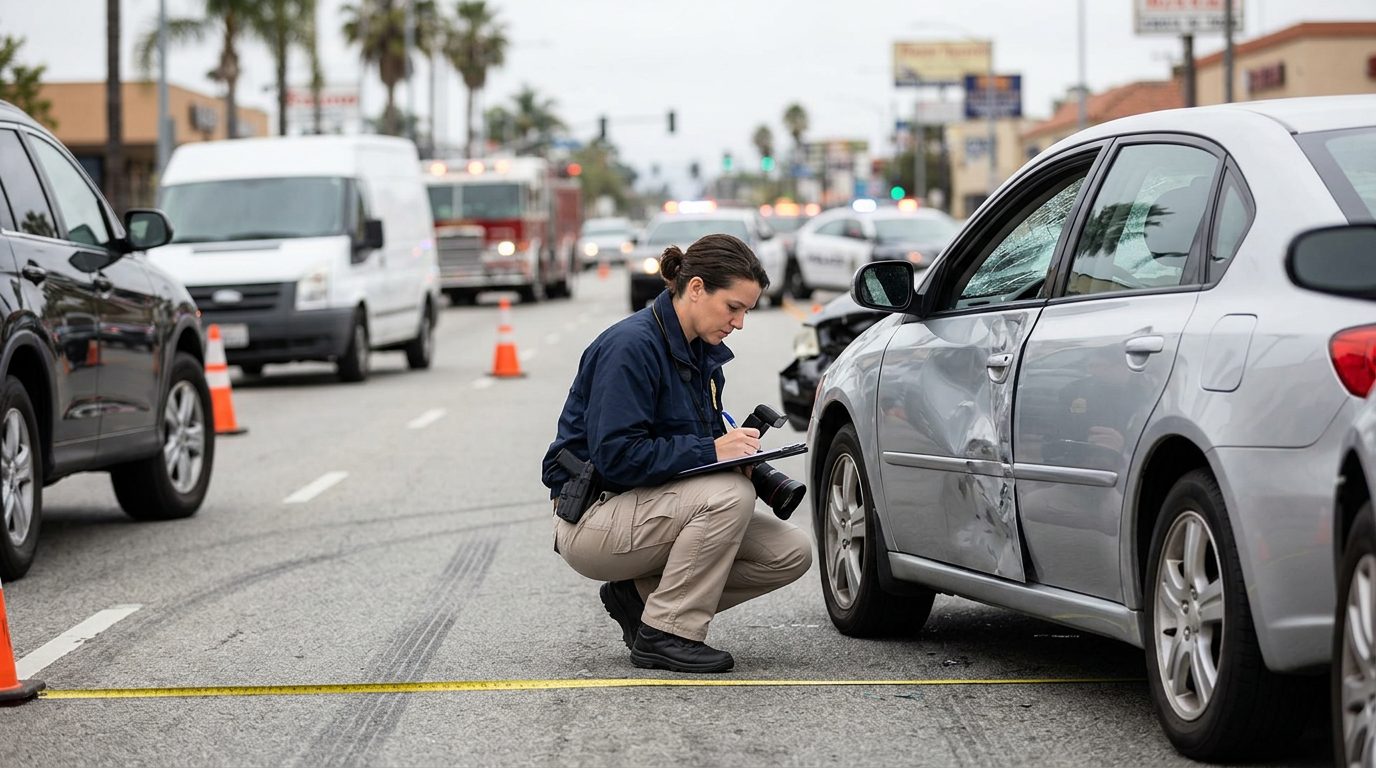
Car Accidents in Davie
After a Car Accident: Your Next Steps
Immediate actions matter. Here's what to do—and why getting legal guidance early protects your rights.
By CHG Lawyers · Published September 12, 2026
Car Accidents in Davie: Florida No-Fault Law, Your 2-Year Deadline & When to Sue
Davie sits on busy Broward County roads—State Road 7, Griffin Road, Davie Boulevard—where serious car accidents happen regularly. Whether you’ve been in a minor fender-bender or a collision that left you injured, the steps you take in the first hours and days matter enormously for your safety, health, and legal rights.
This guide walks you through what to do right after a crash in Davie. It explains how Florida’s no-fault insurance system works, shows you when you can sue, and covers the two-year deadline that’s closer than it feels.
Not sure what your next step is?
Talk it through with our team — the first consultation is free, confidential, and carries no obligation.
Immediate Steps After a Car Accident in Davie
Your first priority is safety and getting help if anyone is hurt.
Call 911 right away if there are injuries, vehicles are blocking traffic, or you feel unsafe. Move to a safe location if possible—pull to the shoulder or a parking lot—and turn on your hazard lights.
Exchange information with the other driver(s). Get their name, phone number, address, driver’s license number, vehicle make and model, license plate, and insurance company and policy number. Get names and contact information from passengers and witnesses too.
Take photos of everything immediately. Photograph vehicle damage from multiple angles, the accident scene, road conditions, traffic signs, weather, and skid marks. These images become critical evidence later. They are often lost if you wait.
Get the police report number. Ask the responding agency which office will handle the report. Request the report number for your records.
Seek medical attention even if you feel fine. Many injuries—whiplash, internal bleeding, traumatic brain injury—don’t show symptoms right away. A medical evaluation creates a documented record linking your injuries to the crash. This is essential if you later file a claim. Delaying medical care can be used against you by insurance companies to argue your injuries weren’t serious.
Understanding Florida’s No-Fault Insurance System and the Serious-Injury Threshold
Florida is a no-fault insurance state. Under Fla. Stat. §627.736, your own personal injury protection (PIP) coverage pays for your medical bills and up to 60% of lost wages after an accident. This is true regardless of who caused the crash—even if the other driver was entirely at fault.
But here’s the critical limit: PIP does not cover pain and suffering, emotional distress, permanent scarring, or the full scope of your other losses.
If your injuries are serious enough, you have the right to step outside the no-fault system. You can then pursue a claim against the at-fault driver’s liability insurance for those damages.
Under Fla. Stat. §627.737, you meet the “serious-injury threshold” if your injury involves a significant and permanent loss of an important bodily function, a permanent injury within a reasonable degree of medical probability (other than scarring or disfigurement), significant and permanent scarring or disfigurement, or death.
Meeting this threshold allows you to seek compensation for pain and suffering from the at-fault driver. Economic losses beyond PIP, such as lost earning capacity, can be pursued without meeting this threshold.
Comparative Negligence: The 50% Rule That Can Eliminate Your Claim
Florida follows a modified comparative-negligence rule under Fla. Stat. §768.81.
If you’re found to be more than 50% at fault for the accident, you cannot recover anything—not a dollar. Your claim is barred entirely.
If you’re 50% or less at fault, you can recover damages. However, the amount is reduced by your percentage of fault. For example, if your damages total $100,000 but you’re found 30% at fault, you recover $70,000.
This rule makes determining who was actually responsible critical to any claim. Insurance companies will argue you were more at fault than you were. Evidence—photos, witness statements, police reports, traffic camera footage—is what proves otherwise.
Types of Injuries from Car Accidents in Davie
Car accidents in Davie’s high-traffic areas produce a wide range of injuries:
Whiplash and neck injuries are common in rear-end collisions. Your head snaps backward and forward, straining the soft tissues of the neck. Symptoms—pain, stiffness, headaches, tingling in the arms—often appear hours or even days after the crash and can persist for months.
Back injuries range from muscle strain to disc herniation or, in severe impacts, spinal cord damage. A herniated disc can cause chronic pain, numbness, and weakness. It may require surgery and long-term physical therapy. Spinal cord injuries result in partial or complete paralysis (paraplegia or quadriplegia). They require lifelong medical care, adaptive equipment, home modification, and attendant care.
Traumatic brain injuries (TBI) occur when your head strikes the steering wheel, dashboard, or window. Even a seemingly mild TBI can cause long-term cognitive problems, memory loss, mood changes, difficulty concentrating, and physical disability. These may not be obvious at first but compound over time.
Broken bones and fractures require surgery, casting, and physical therapy. Recovery can take months or longer. You may face permanent limitations, lost wages, and ongoing pain.
Internal injuries—bleeding, organ damage, rib fractures—may not be visible but can be life-threatening. This is why immediate medical evaluation is so important.
Severe or catastrophic injuries—amputations, permanent paralysis, severe burns, or total disability—occur in high-impact crashes. These injuries transform a person’s life and require extensive, ongoing care, vocational rehabilitation, and adaptive equipment.
Wrongful death is the most devastating outcome. If a loved one is killed in a crash caused by another driver’s negligence, surviving family members may have the right to pursue a wrongful-death claim under Fla. Stat. §768.19. You can recover damages for loss of companionship, lost financial support, and funeral expenses.
Have questions about what happened?
Ask our team directly. The first conversation is free, confidential, and there is no obligation to continue.
Why Time Matters: Florida’s 2-Year Statute of Limitations and Evidence Preservation
Florida law gives you two years from the date of the accident to file a personal injury lawsuit under Fla. Stat. §95.11. That sounds like plenty of time, but it isn’t.
Evidence fades fast. Photos you took at the scene lose detail. Witnesses move away or forget specifics. Traffic camera footage is often overwritten after 30 to 90 days. Medical records can be lost or become harder to obtain. The police report sits in a file, and officers’ memories blur.
Insurance companies count on delay. They know injured people often procrastinate, hoping the injury will resolve on its own or that they can handle the claim alone. The longer you wait, the weaker your evidence becomes. The more leverage the insurer has to pressure you into a low settlement.
Acting quickly—within days or weeks of the crash—puts you in the strongest position. Fresh photos, recent witness statements taken while memories are sharp, prompt medical records, and early preservation of video evidence all strengthen your claim. If litigation becomes necessary, you’ll have the evidence you need.
When to Contact an Attorney About Your Davie Car Accident
You should consider reaching out if:
- You’ve been injured and face medical bills, lost wages, or ongoing treatment costs.
- The insurance company is offering a settlement that seems far too low or is pressuring you to accept quickly.
- Liability is disputed—the other driver or their insurer claims you were at fault.
- Multiple vehicles or parties are involved, making the claim complex.
- Your injury is serious or permanent, affecting your ability to work or enjoy life.
- Your claim has been denied or has stalled.
- A loved one was killed in the crash.
An attorney handles negotiations with the insurance company, gathers and preserves evidence, and protects your rights. Most personal injury attorneys work on contingency. This means you pay nothing upfront—they’re paid only if you recover compensation. This removes the financial barrier and aligns the attorney’s interests with yours: the more you recover, the more they earn.
What Happens in a Car Accident Claim
Investigation: Your attorney obtains the police report, medical records, witness statements, photos, and any available video or traffic-camera footage. This evidence establishes liability and the extent of your damages.
Demand: Your attorney prepares a detailed claim letter. It explains how the other driver was at fault, cites the evidence, and states what your injuries and losses are worth. This goes to the at-fault driver’s liability insurance company.
Negotiation: Most claims settle without trial. Your attorney handles back-and-forth discussions with the insurer, pushing for a fair offer based on the strength of your evidence and the seriousness of your injuries.
Settlement or litigation: If you and the insurer agree on a settlement, you receive compensation and the case closes. If not, your attorney can file a lawsuit and take the case to trial before a judge or jury.
Throughout this process, you don’t pay attorney fees unless you recover—that’s the contingency model.
Davie Car Accidents: Local Context
Davie’s roadways see regular serious crashes. The Flamingo Road corridor, State Road 7, and Griffin Road are high-traffic areas where rear-end collisions, intersection crashes, and multi-vehicle pileups occur. Rush-hour congestion, construction zones, and weather—especially Florida’s afternoon thunderstorms and occasional flooding—can all increase accident risk.
When a crash happens, the Davie Police Department or Florida Highway Patrol investigates and files a report. That report includes the officer’s assessment of fault, witness statements, scene details, and sometimes citations. It becomes crucial evidence in any claim.

Want to know where you stand?
Tell us what happened and our team will walk you through the options available to you, at no cost.
Frequently Asked Questions
What should I do immediately after a car accident in Davie?
Check for injuries and call 911 if anyone is hurt. Move to safety. Exchange information with the other driver. Take photos of damage, the scene, and road conditions. Get witness names and contact information. Report to police. Seek medical attention even if you feel fine.
How long do I have to file a claim in Florida?
You have two years from the date of the accident, but evidence and witness memories fade quickly. Evidence may be lost within weeks or months, so acting within days or weeks is wise.
What if I was partially at fault?
Under Florida’s comparative-negligence rule, if you’re more than 50% at fault, you cannot recover anything. If you’re 50% or less at fault, you can recover a percentage of damages reduced by your share of fault (Fla. Stat. § 768.81(6)). This is why evidence proving the other driver’s fault is critical.
Do I need a lawyer for a car accident claim?
For minor injuries and clear liability, you may handle a claim yourself. For serious injuries, disputed fault, low settlement offers, or injuries that meet the serious-injury threshold, an attorney protects your rights and typically costs you nothing upfront.
What is the “serious-injury threshold” in Florida?
Meeting the serious-injury threshold is what allows you to sue the at-fault driver for pain and suffering.
What does “no-fault insurance” actually mean?
It means your own PIP coverage pays for medical bills and lost wages after an accident, regardless of who caused the crash. However, PIP doesn’t cover pain and suffering or other non-economic losses. If your injury is serious enough to meet the threshold, you can sue the at-fault driver for those damages.
If you’ve been injured in a Davie car accident and are facing medical bills, lost wages, pressure from an insurance company, or uncertainty about your rights, reach out for a free case evaluation. People in your situation can contact us, and we’re here to help you understand your rights and next steps. Contact CHG Personal Injury Lawyers today.
What to Do Right After a Crash
Check for Injuries & Call for Help
If anyone is hurt, call 911 immediately. Move to a safe location if possible—away from traffic. Even if injuries aren't obvious, shock can mask pain. Medical attention should never wait.
Document the Scene
Take photos of vehicle damage, road conditions, traffic signals, and the overall scene from multiple angles. Get the names, phone numbers, and addresses of any witnesses. Write down the other driver's name, insurance company, policy number, and vehicle details.
Report to Police
Call the Davie Police Department to file an accident report. Request a copy of the report number. This official record is critical for your claim and protects you if liability is later disputed.
Seek Medical Care—Even if You Feel Fine
Some injuries appear days or weeks later. A medical evaluation creates a documented link between the accident and your injuries, which is essential if you later need to pursue a claim.
Don't Admit Fault or Settle Too Quickly
Never apologize or say 'it was my fault' at the scene—even if you think you were responsible. Don't accept a settlement offer from the other driver's insurance without understanding the full extent of your injuries and losses. Early settlements often undervalue serious harm.
Why Legal Guidance Matters After a Crash
Insurance Companies Protect Their Interests, Not Yours
Adjusters are trained to minimize payouts. They may pressure you to settle quickly or deny claims without proper investigation. An attorney levels the playing field.
Complex Rules Govern Your Claim
Florida law sets deadlines, determines fault, and limits damages in specific ways. Missing a deadline or misunderstanding the rules can cost you your right to recover.
Your Damages May Be Larger Than You Think
Medical bills are just the start. Lost wages, ongoing treatment, pain and suffering, and reduced quality of life all factor into what you may recover. An experienced attorney knows how to value your claim fully.
Time Is Critical
Evidence fades, witnesses move away, and memories blur. The sooner you document everything and get legal counsel, the stronger your position.
Common Questions About Car Accidents in Davie
What if I was partially at fault?
Florida law allows you to recover even if you share some responsibility—as long as you were not more than 50% at fault (Fla. Stat. § 768.81(6)). Your recovery is reduced by your percentage of fault. This is why proving exactly what happened matters.
When should I contact a lawyer?
The sooner, the better. Ideally, reach out within days of the accident. Early involvement helps preserve evidence, prevents you from saying something that hurts your claim, and ensures deadlines aren't missed.
What if the other driver was uninsured?
Your own uninsured motorist coverage may protect you. This is another reason to involve an attorney early—to identify all available sources of recovery.
How long does a claim take?
Simple claims may settle in weeks or months. Complex cases with serious injuries can take longer. An attorney will manage the process and keep you informed every step of the way.
How CHG Personal Injury Lawyers Can Help
Free Consultation—No Pressure
We listen to what happened, answer your questions, and explain your options. There's no obligation, and no attorney’s fees unless there is a recovery.
We Handle All the Paperwork & Negotiations
You focus on healing. We manage insurance companies, gather evidence, and fight for fair compensation on your behalf.
Bilingual Support
We serve Davie and the surrounding communities in both English and Spanish. Language is never a barrier to justice.